
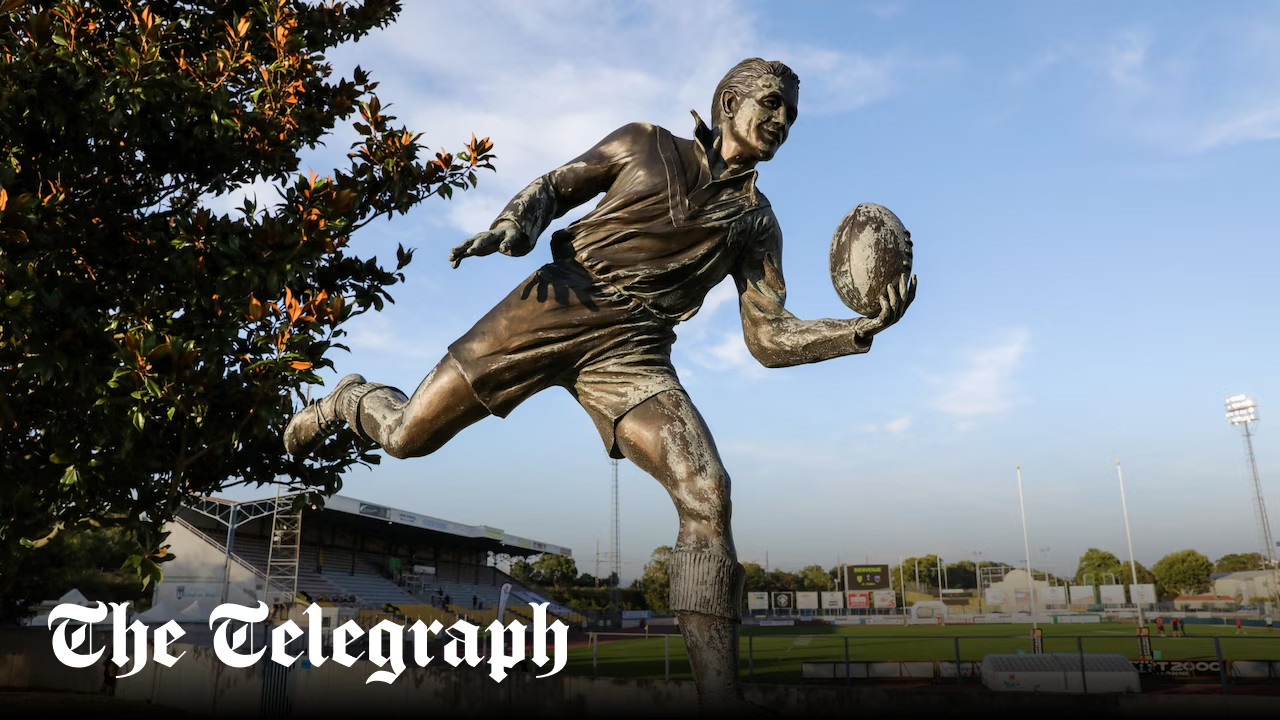
He carried on playing and winning throughout the 1950s. The story has it that, in a match against Wigan, he once caught a high ball with one hand simply because he had a cigarette in the other. By the time he retired in 1959, however, the convivial life had caught up with him. His waistline bulged and he had largely abandoned running. His kicking was still peerless, though, and visiting Australians sought him out. For them, he remained legendary.
Today, there’s a cracking statue of the great man outside the Albert Domec stadium in Carcassonne.
French rugby league prospered during the 1960s and 1970s, then dipped due to managerial and financial problems, leaving union in the ascendancy. League has, for instance, rarely made it on to mainstream French TV, but it remains infinitely appealing and not merely because it’s a fast-flowing exercise that wastes little time in endlessly reset scrums. It embodies a spirit of resistance that people in its Occitanie heartland would, with understandable romanticism, trace back to medieval heretic ancestors.
What I do know – because I’ve spent a lot of time knocking around rugby league matches, bars and banquets – is that its fans are as cordial and hospitable as French people get. Rugby union people are good, too, of course, but they’ve seldom been the underdogs and generally talk little about Wakefield Trinity.