
Your support helps us to tell the story
From reproductive rights to climate change to Big Tech, The Independent is on the ground when the story is developing. Whether it’s investigating the financials of Elon Musk’s pro-Trump PAC or producing our latest documentary, ‘The A Word’, which shines a light on the American women fighting for reproductive rights, we know how important it is to parse out the facts from the messaging.
At such a critical moment in US history, we need reporters on the ground. Your donation allows us to keep sending journalists to speak to both sides of the story.
The Independent is trusted by Americans across the entire political spectrum. And unlike many other quality news outlets, we choose not to lock Americans out of our reporting and analysis with paywalls. We believe quality journalism should be available to everyone, paid for by those who can afford it.
Your support makes all the difference.Read more
Nasa’s Maven spacecraft, a veteran explorer of the Martian atmosphere, has officially been declared defunct after six months of unexplained silence.
The space agency confirmed Wednesday that the mission, which launched in 2013, had concluded after more than a decade of observations.
Maven, an acronym for Mars Atmosphere and Volatile Evolution, mysteriously ceased communications in early December following a manoeuvre behind Mars.
NASA said the probe was operational before passing behind the Red Planet, and once it reappeared, only silence followed.
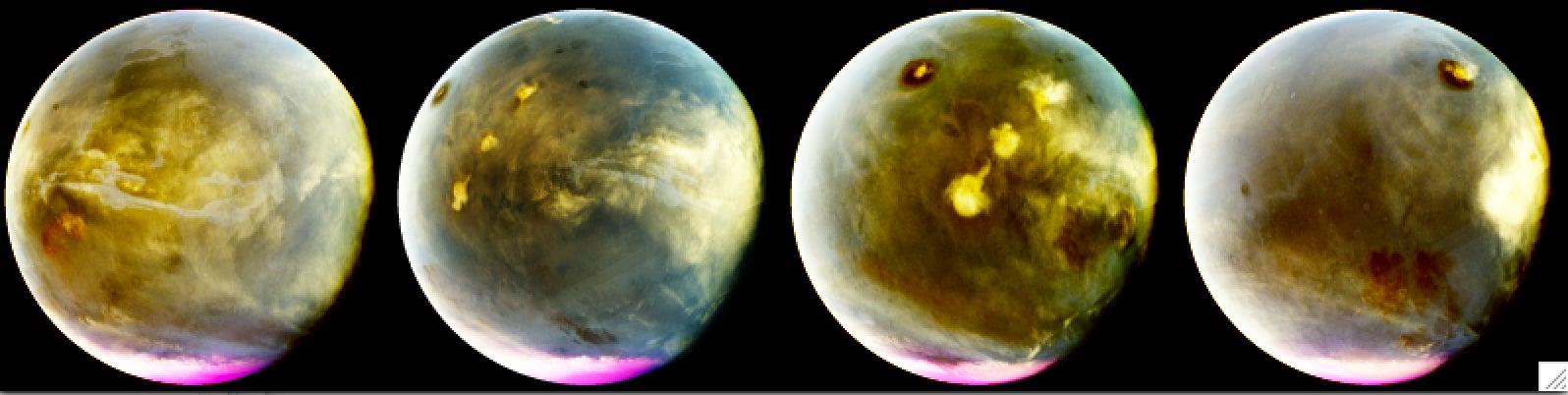 Four-in-one photos of Mars taken by NASA’s Maven spacecraft (NASA via AP)
Data indicated it entered a rapid spin, disrupting its orbit and depleting its onboard batteries.
A review board convened by NASA earlier this year concluded the spacecraft was beyond recovery. An investigation into the precise cause of the malfunction remains ongoing.
Maven celebrated its 10th anniversary in orbit last year.
From the research Maven provided, scientists ended up concluding that the sun and solar activity was responsible for Mars losing most of its atmosphere over eons, transforming it from a wet, warm world into today’s dry, cold planet.
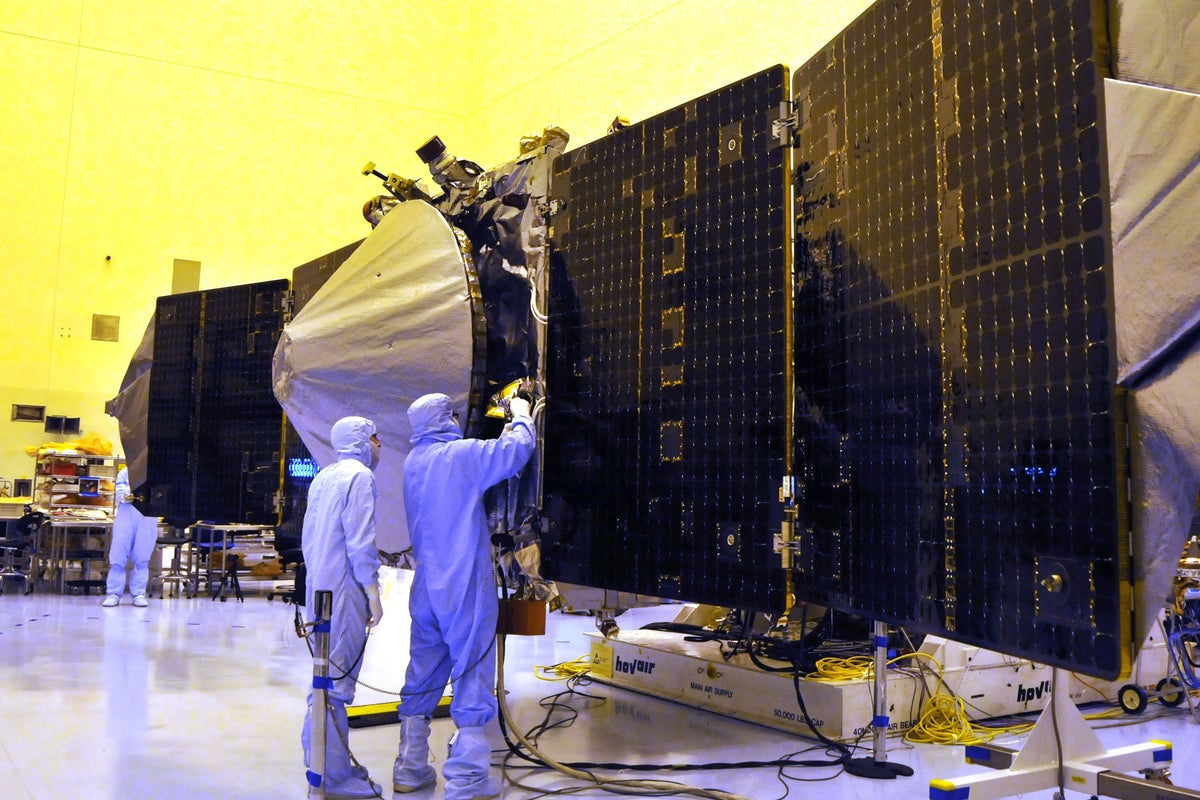
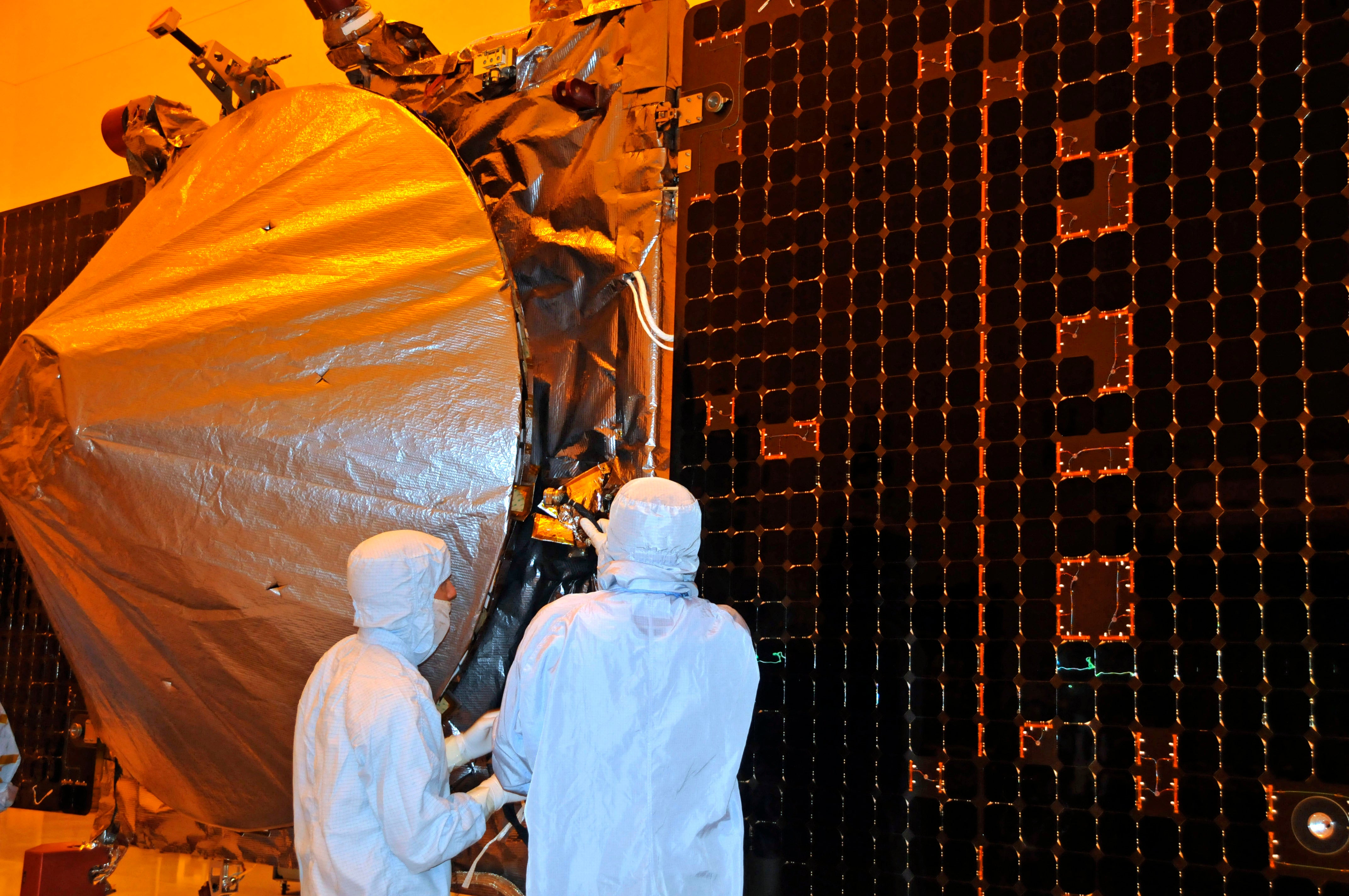 Maven is checked by technicians in preparation for launch at the Kennedy Space Center, Florida on Sept. 27, 2013 (AFP via Getty Images)
Beyond its primary role of studying Martian weather and observing an interstellar comet last year, Maven also played a crucial part in relaying data from NASA’s Curiosity and Perseverance rovers on the planet’s surface.
Maven’s lifetime was estimated to last only a year at the time of launch.
Shannon Curry, Maven’s lead scientist at the University of Colorado Boulder, lauded the spacecraft’s “amazing discoveries,” stating it “has truly advanced our understanding of the Martian atmosphere and evolution.”