
Your support helps us to tell the story
From reproductive rights to climate change to Big Tech, The Independent is on the ground when the story is developing. Whether it’s investigating the financials of Elon Musk’s pro-Trump PAC or producing our latest documentary, ‘The A Word’, which shines a light on the American women fighting for reproductive rights, we know how important it is to parse out the facts from the messaging.
At such a critical moment in US history, we need reporters on the ground. Your donation allows us to keep sending journalists to speak to both sides of the story.
The Independent is trusted by Americans across the entire political spectrum. And unlike many other quality news outlets, we choose not to lock Americans out of our reporting and analysis with paywalls. We believe quality journalism should be available to everyone, paid for by those who can afford it.
Your support makes all the difference.Read more
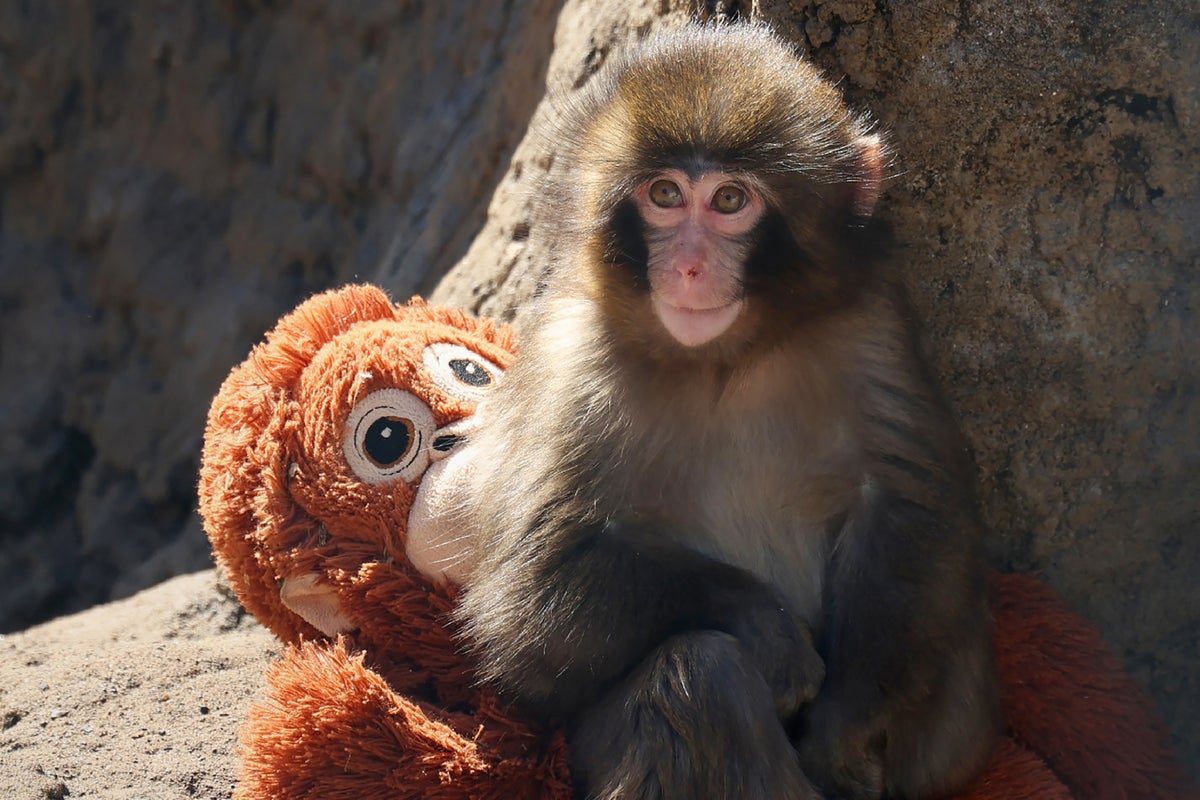
Punch, the baby macaque who became popular online after being abandoned by his mother and clinging to a stuffed toy for comfort, is getting air conditioning at his Japanese zoo as the country’s worsening summers take a growing toll on captive animals.
The city of Ichikawa has set aside 70 million yen (£370,000) in its supplementary budget for 2026 to improve conditions for Punch and the rest of the macaque troop at the city’s zoological and botanical gardens.
Sunshades and a soil area will be installed at Monkey Mountain, where Punch lives, and the backyard where the monkeys rest will be expanded. Air conditioning is expected to be in place by this summer.
The improvements have been partly funded by the public. The city launched a donation drive in March and had received 43 million yen (£228,000) from supporters by late May. It has extended the drive through the end of December after calls to keep it running.
Punch was born on 26 July 2025 at the zoo during a brutal summer heatwave. His mother, a first-time parent who had endured a difficult and prolonged labour in the heat, abandoned him the following day.
Later, two zookeepers stepped in, bottle-feeding the infant around the clock and giving him an oversized stuffed orangutan for warmth and comfort, which he immediately clung to. He was named after the late manga artist Monkey Punch, creator of the Lupin the Third series.
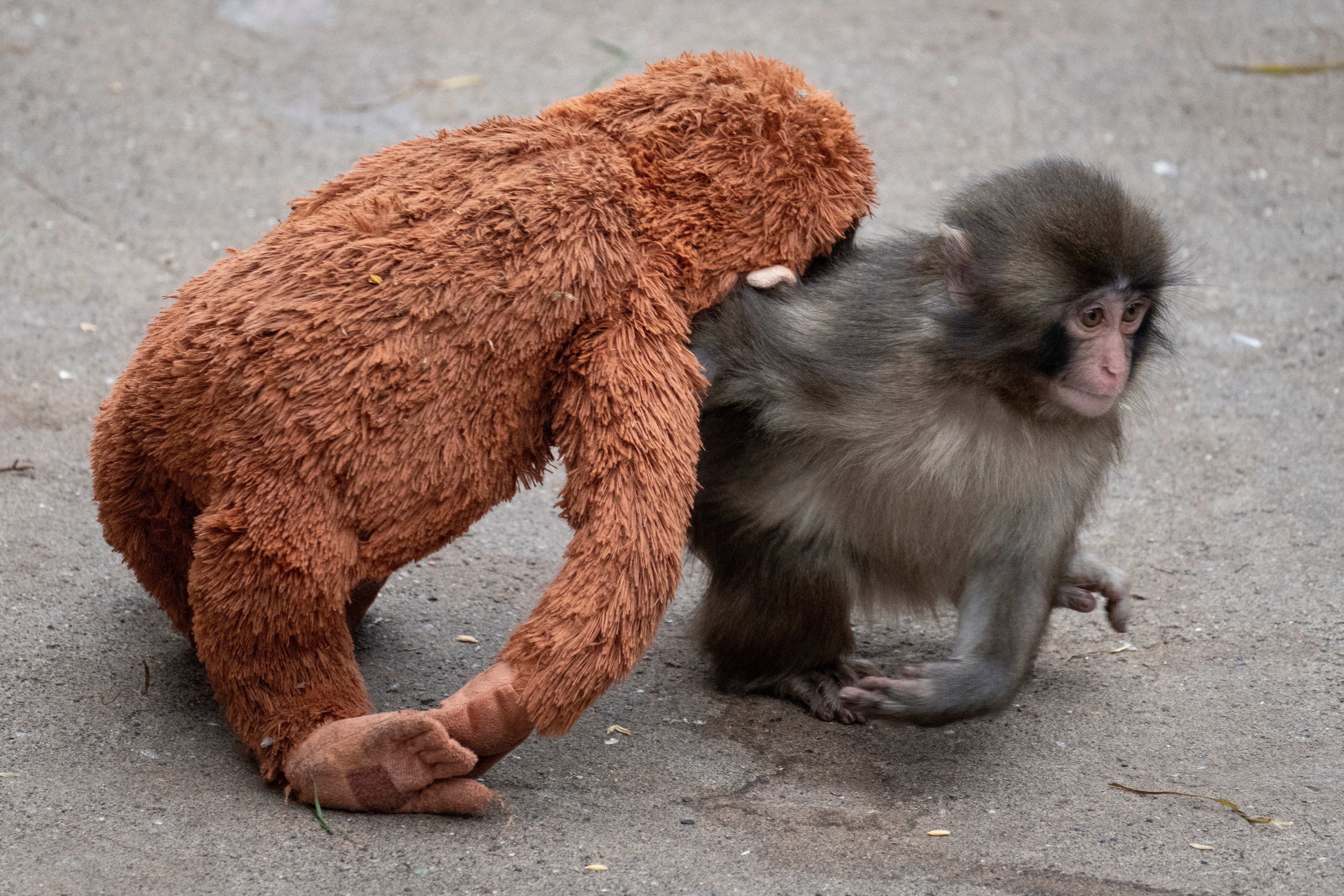 A seven month-old male Japanese macaque monkey named Punch, who was abandoned by his mother shortly after birth, drags a stuffed orangutan toy at Ichikawa City Zoo (AFP/Getty)
The photos and videos of the little monkey walking with his stuffed toy and clinging to it for warmth went viral online, with millions of people sharing daily updates of his life.
In January this year, zookeepers introduced Punch to the troop of roughly 60 macaques at Monkey Mountain. The transition was difficult for the little monkey without a maternal figure to model behaviour from. Videos of older macaques pushing him away while he immediately ran back to his stuffed companion began circulating online.
Japanese macaques, also known as snow monkeys, are native to Japan and adapted to cold climates, making the increasingly brutal summers particularly difficult for them in captivity.
Unlike animals in the wild, those in enclosures cannot seek shade or cooler terrain on their own, leaving zoos to manage the consequences. Extreme heat can place stress on animals and affect maternal behaviour, particularly in first-time parents, zoologists say.
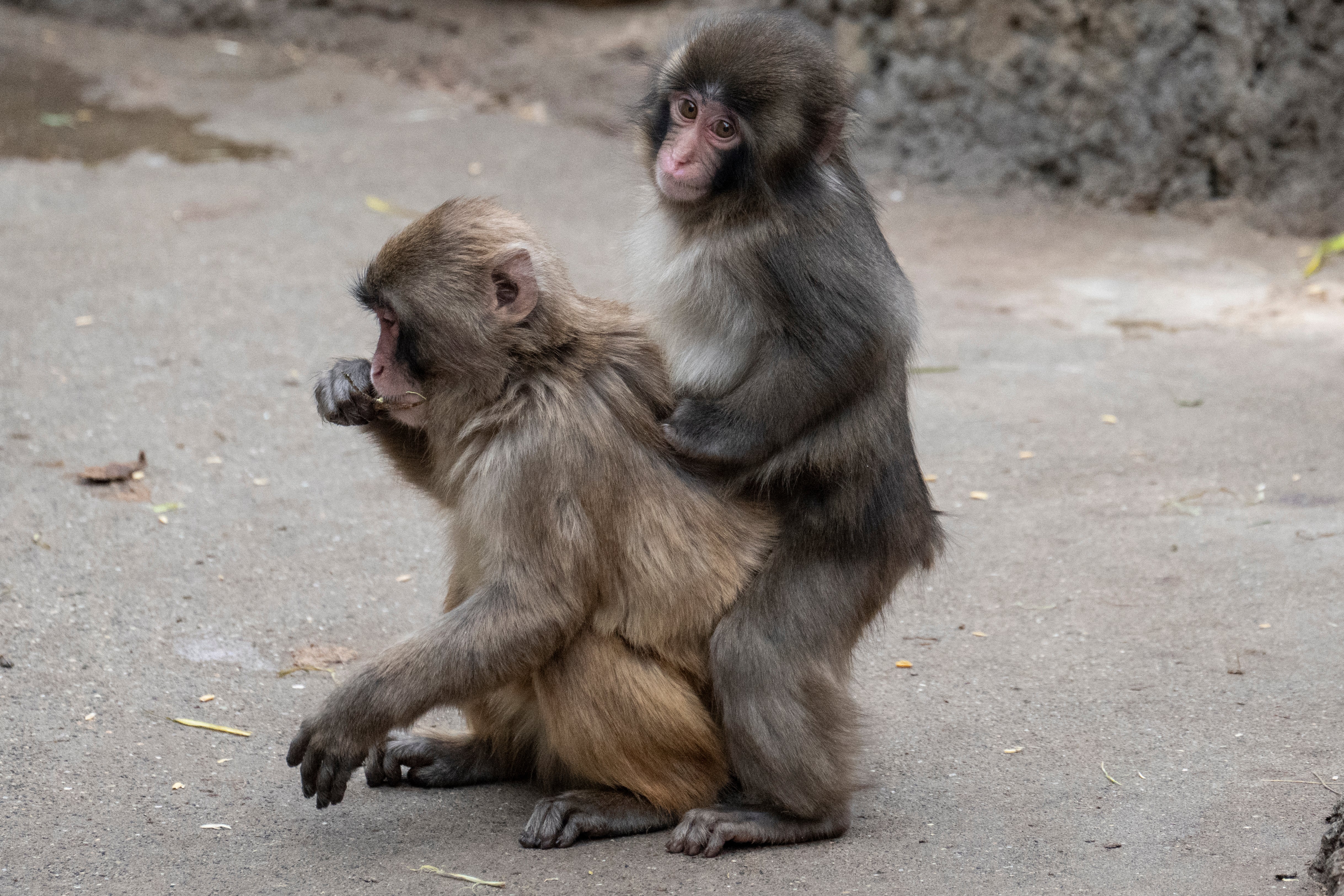 A seven month-old male Japanese macaque monkey named Punch (R), who was abandoned by his mother shortly after birth, interacts with another monkey at Ichikawa City Zoo (AFP/Getty)
Polar bears begin to experience heat stress when temperatures rise above 20C. Goats and pandas feel the effects above 25 degrees, which affect their reproductive performance and milk production.
Japan‘s summers have been growing more and more intense in recent years, data shows. Tokyo and several other parts of Japan were already experiencing warmer-than-usual temperatures in mid-May, with temperatures reaching above 35C days ahead of the peak summer.
In 2024, the Japan Meteorological Agency recorded temperatures that were the highest in April and July since record-keeping began in 1898, with at least 62 weather observation posts breaking records. The frequency, intensity and duration of heatwaves are projected to keep rising, according to Japan’s International Research Centre for Agricultural Sciences.