
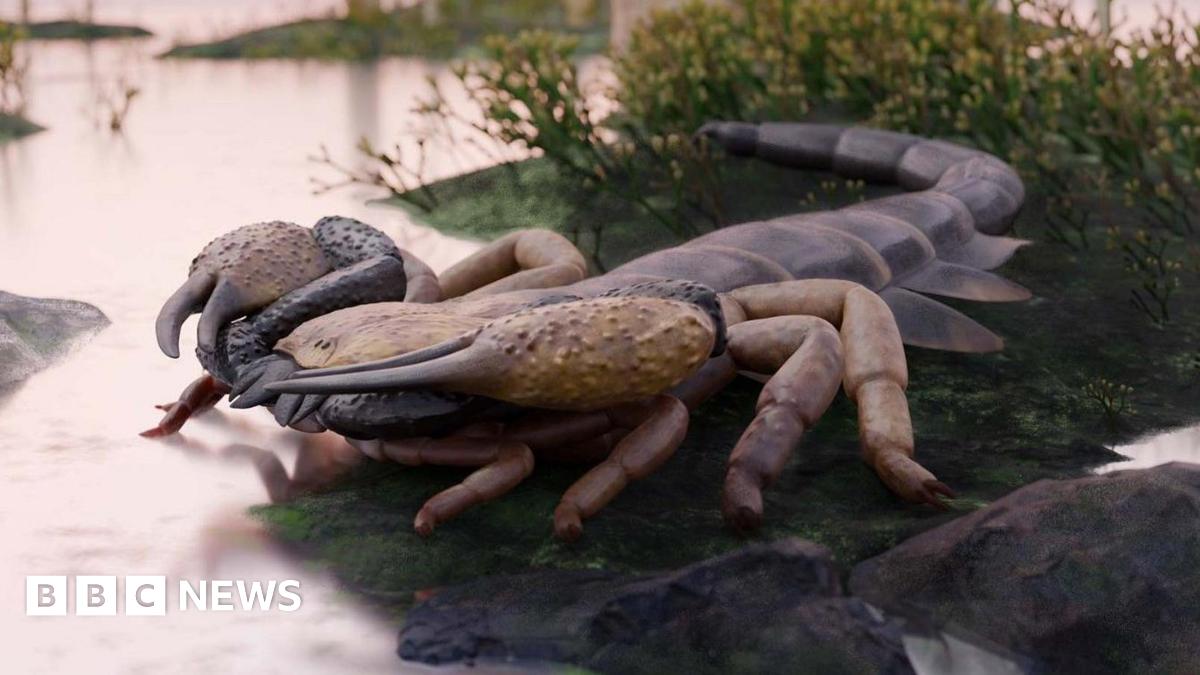
Addressing the view that there were bigger scorpions in water, Howard said the sea scorpion (known as a eurypterid) was a different extinct group of arthropods.
He said the team did not have a “whole animal”, only fragments from three sites.
“We’re working with lots of fragments, so we can’t say precisely how big,” Howard said.
“We can’t just give you a measurement of how big it was from the end of the pincers to the end of the tail.”
However, he added they could compare preserved parts to other scorpions.
One claw alone measured about 16cm – similar to, or larger than, modern giant scorpions like the emperor scorpion, which reaches about 15–20cm.
“So we can safely say it’s extremely large and there’s no other scorpion in the fossil record that has claws anywhere near that size,” he said.
Howard added the species lived about 415 million years ago, long before later giant arthropods of the Carboniferous period, “which is when the earth had forests and jungles and swamps and land-based ecosystems were very developed”.
Therefore, he suggested, its unusual size may be linked to early land ecosystems with little competition from other large animals.