
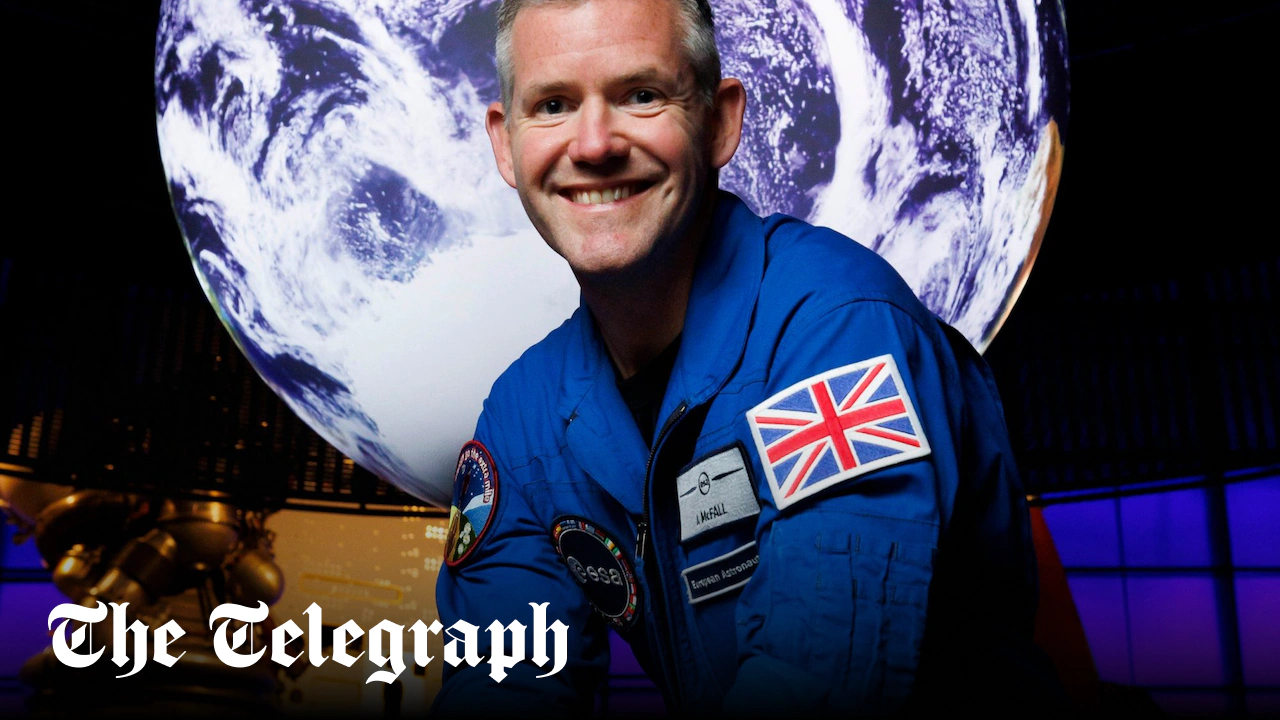
His medical training also makes him the perfect candidate for trying out procedures in space that have never been attempted.
In microgravity, astronauts suffer from a condition called space-associated neuro-ocular syndrome, as fluid in the body rises, leading to swelling in the optic nerve and damaging vision.
“Really, the only way to fully understand the pressure changes is to potentially do a lumbar puncture, or spinal tap, so having someone who is medically trained to be able to do that is unique,” said Mr McFall.
“When you think about where we will be in 50 to 100 years from now, when we are exploring deeper space, we are going to want to provide medical and surgical services, so I am certainly interested in looking at surgery in space as a possibility in the future.”
If funding can be found, Mr McFall will be conducting pioneering research into human physiology, prosthetics in microgravity, and movement in low Earth orbit.
The findings could have significant benefits for disabled people on Earth, such as the design of lighter, more adaptable prosthetics.
The mission is dependent on finding sponsors, which could include pharma or engineering companies looking to carry out experiments in microgravity, or firms keen to secure product placement in space.
It would make Mr McFall not just the first disabled working astronaut, but the first commercial astronaut, his spacesuit perhaps carrying branding of sponsors, similar to Formula 1 racing drivers.