
This post is the fourth in a five-part series exploring strengths associated with coexisting autism and ADHD. Without minimising the real challenges of AuDHD, the series draws on clinical practice and research to highlight strengths from a person-centred, strengths-based perspective. If you’d like to read the previous articles in this series, you can find them here: Part 1, Part 2, and Part 3.
In my article Understanding Strengths With Coexisting Autism and ADHD (Storace, 2025), which considers the strengths associated with coexisting autism and ADHD, I described five interconnected capacities: attuned, unified, dynamic, heartfelt, and driven. Among these, the quality of being heartfelt speaks most directly to how individuals relate to themselves, to others, and to the values that guide their lives (Taylor et al., 2023).
Heartfelt expression reflects something deeper than emotional sensitivity alone. It involves authenticity, sincerity, ethical awareness, and a strong desire to live in alignment with what feels true. This article highlights how Heartfelt Strength is experienced in everyday life.
Understanding “Heartfelt” as a Strength
To be heartfelt is to engage with the world through authenticity and sincerity. While many social environments encourage people to adapt, perform, or present versions of themselves that fit expectations, heartfelt individuals feel most comfortable when they can communicate openly and relate genuinely.
For many people with AuDHD, this quality emerges alongside a strong awareness of fairness, sincerity, and emotional truth. They can be highly sensitive to inconsistency between what people say and what they do. Relationships tend to feel meaningful when they are based on frankness, trust, and mutual respect rather than social convention alone (Milton, 2012).
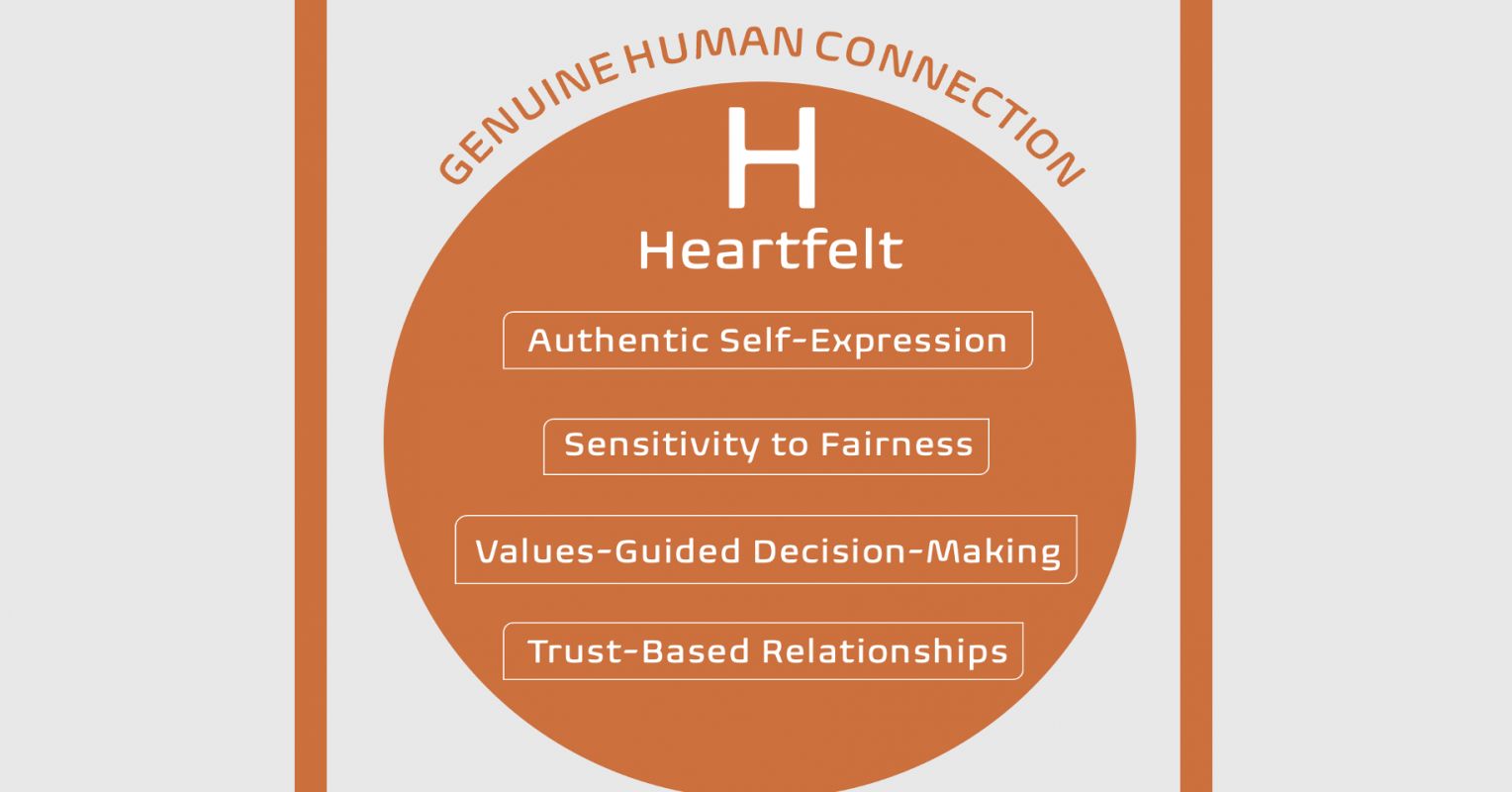
Four Dimensions of the Heartfelt Experience
1. Authentic Self-Expression
Authenticity involves communicating in ways that reflect what one genuinely thinks, feels, and believes. Honesty, transparency, and consistency become important features of interpersonal engagement. Connection generally feels most comfortable when it is grounded in truthfulness rather than performance (Milton, 2012). Although direct communication can occasionally be misunderstood when it does not conform to expected social conventions, it can also foster respect and relationships characterised by sincerity and mutual understanding.
2. Sensitivity to Fairness
Awareness of fairness shapes how situations, relationships, and social systems are interpreted. Exclusion, inequality, hypocrisy, and inconsistency may be identified quickly, particularly when actions appear misaligned with stated values or expectations. When in conversation with people with AuDHD, I’ve noticed that this awareness is often accompanied by a strong commitment to inclusion, equitable treatment, and individual dignity. While concern for fairness may sometimes be interpreted as idealism, it actually reflects a desire for consistency between values and behaviour, as well as a willingness to question practices that appear unjust or exclusionary.
3. Values-Guided Decision-Making
Decision-making is usually informed by an internal set of values that provides direction and purpose. Questions such as “Does this feel right?” or “Is this consistent with who I am?” can carry significant weight when navigating choices, relationships, and life transitions. Decisions are evaluated through the lens of personal alignment, with external approval carrying less influence. Values-based decision making provides stability and resilience, particularly during periods of uncertainty. When actions remain aligned with personal values, a stronger sense of purpose, identity, and wellbeing follows (Taylor et al., 2023).
4. Trust-Based Relationships
Trust is a key element in building the foundations of interpersonal relationships. Enduring friendships, supportive partnerships, and strong professional relationships can grow from this foundation. The emphasis is not solely on emotional warmth, but on creating conditions in which openness, respect, and psychological safety can develop naturally over time.
Heartfelt Strength in Education
In educational settings, Heartfelt Strength reveals itself through a deep connection to people, values, and purpose. Students with this quality are motivated not only by achievement but also by a desire for their learning to feel meaningful and relevant. They often:
Learn best in environments where they feel respected and understood
Respond strongly to fairness and consistency
Become deeply engaged when learning connects with human issues and real-world scenarios
Struggle in classrooms characterised by humiliation, excessive criticism, or relational disconnection
Practical Implications for Education
Learning is often enriched when relationships and values are recognised alongside academic achievement. To support students with heartfelt qualities, educators can:
Create emotionally safe and respectful learning environments
Model fairness and consistency
Encourage discussions about ethics, values, and social responsibility
Encourage authenticity and integrity through respectful and inclusive classroom practices
Heartfelt Strength in Employment
In workplaces, employees with heartfelt qualities bring integrity, trustworthiness, and values-based leadership. While these qualities are not always immediately visible, they frequently influence organisational culture in significant ways. Their contribution extends beyond task completion, helping create workplaces where people feel valued, respected, and safe. Employees who express Heartfelt Strength often:
Prioritise ethical standards and fairness
Build trusting professional relationships
Advocate for inclusive and respectful workplaces
Thrive in roles involving care, education, counselling, leadership, advocacy, community development, and human services
Practical Implications for Employers and Organisations
People with AuDHD who express heartfelt qualities help strengthen organisational integrity. They are seen as respected leaders and champions of the values that underpin a workplace. These strengths can be fostered by:
Encouraging psychologically safe workplaces
Recognising ethical leadership at all levels
Valuing authenticity as well as achievement
Supporting staff who advocate for fairness and inclusion
AuDHD Way of Being
The AuDHD strength of being heartfelt reminds us that strengths can be found not only in what people achieve or produce but also in the standards they set for themselves, the principles they uphold, and the relationships they seek to build. Heartfelt expression contributes something enduring: A commitment to living in ways consistent with deeply held convictions. It reflects a determination to remain fully oneself while participating in the shared human experience.
This post is the fourth in a five-part series exploring strengths associated with coexisting autism and ADHD. Without minimising the real challenges of AuDHD, the series draws on clinical practice and research to highlight strengths from a person-centred, strengths-based perspective. If you’d like to read the previous articles in this series, you can find them here: Part 1, Part 2, and Part 3.