
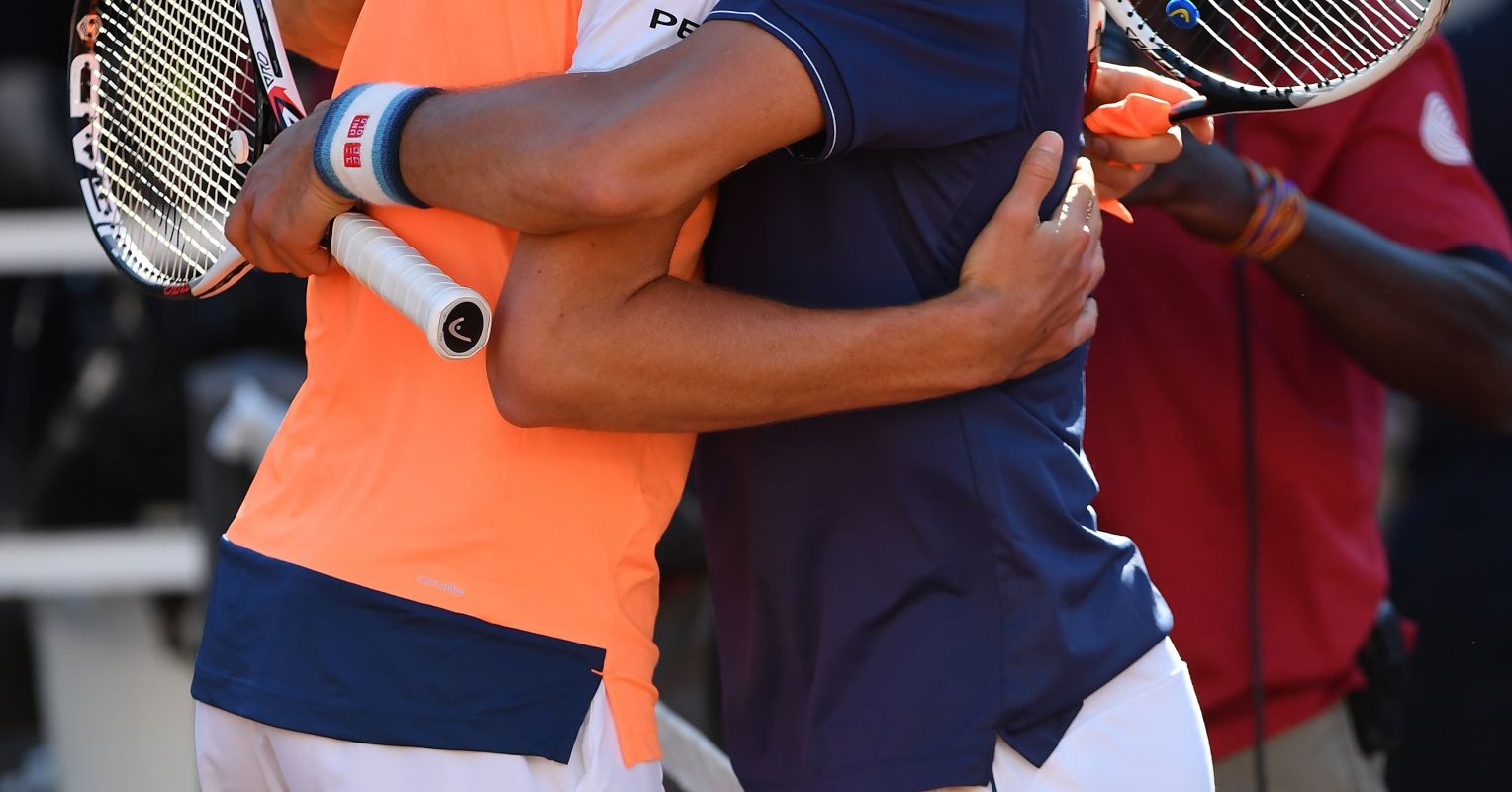
Sports, and especially team sports, embody many values we hold dear—hard work, commitment, the pursuit of competence, teamwork, camaraderie, and working together toward a shared goal. They give us the chance to navigate challenge, rely on others for support, offer support in return, and experience being part of something where we feel valued, seen, and included, and a sense of belonging.
For me, this is one of the most powerful possibilities of sport and competition. They give us a place to develop these values while also learning how we respond to the pressure to perform, be evaluated, and belong.
Interestingly, the root of the word competition comes from the Latin competere, meaning to seek, strive, or come together in pursuit of something. In this original sense, more than defeating an opponent, competition carries the idea of coming together around a shared challenge.
When I reflect on my childhood, sport and being part of a team originally felt like that. Competition was about play, friendship, shared effort, learning, challenge, and belonging. It was about practicing something over and over again, until we became competent in it, and confident we could repeat it, even under pressure. It was about the joy of being part of something, working together, and discovering what we could become was more than I could pull off on my own.
But somewhere along the way, that experience began to change. It started to become about being better than someone else, earning my spot, or proving my value. It became less about fun, exploration, and curiosity, and more about winning, performing well, and not falling short.
This is part of the inherent tension in team sports. We are working together toward a shared goal, while also competing with our own teammates for roles, recognition, playing time, leadership, or the chance to be the one with the ball when the moment matters most. That tension is real at every level of sport.
Managing the Tension Between Competition and Belonging
The question is how we recognize and respect this tension without allowing it to organize the player, the team, and the team culture around fear, comparison, and conditional belonging.
Can we create environments where competition still motivates us, but does not separate us from ourselves or one another? Can we pursue excellence without making belonging dependent on performance? Can we respect the reality of selection, roles, and standards while still feeding the biological benefits of shared effort, support, trust, and unconditional belonging?
This is one of the most important possibilities of sport. Sport gives us a living experiment in how to hold both truths at once: the pressure to perform and the need to belong; the drive to compete and the need to connect; the pursuit of winning and the biological quest for safety, trust, and support just as we are.
Sport gives us the chance to work hard at something, get better at something, and belong to something. But there is also the pressure to earn our role, win a spot, or prove our value. In many ways, we can feel only as good as our last performance.
When we learn to hold this tension more consciously and honestly, team sport becomes more than a place to win, acquire, or conquer. Although we may have to fight at times, it is not a quest to dominate or destroy. Instead, it becomes a place to practice being human. It becomes an environment for sharing pressure together, sometimes leading, sometimes following, and sometimes battling alongside one another, but always being part of something.
The Importance of the Individual “I” in Team Dynamics
We often hear that there is no “I” in team. But there must be. An effective team is not built by erasing the individual, but by including each “I” in the collective. We give voice, dignity, and value to each teammate. We respect the biological needs and responses of each body. We create the conditions where individual differences contribute to the shared vision, purpose, and potential of the group.
When the “I” is encouraged and welcomed into the “we,” the team can become more than a battlefield where roles, status, and belonging are constantly being fought for. It can grow into a place where effort, purpose, and belonging can be experienced together. Where each member of the team is met exactly where they are. And where we commit to competence and competition not as a way to acquire something for ourselves, but as a way to contribute to something bigger than ourselves.
Sport and Competition Essential Reads
This capacity is part culture, part perspective, and part physiology. We need a capacity to feel safe enough, resourced enough, and already enough to compete not as an attempt to acquire something we lack, but as an expression of something we already have. Culture, perspective, and physiology all play a role, either supporting or interrupting this process.
This same capacity can be cultivated not only in team sports, but also in individual sports like tennis or golf. The opponent does not have to become the enemy standing in our way. Instead, they can be seen as someone just like us, committed to the craft, sharing similar values and goals, and feeling the same pressures to perform. In that sense, the opponent can become an opportunity, much like a teammate, to elevate our potential and pursue a level of competence we couldn’t reach on our own. We recognize the sameness within our differences.
When we meet competition this way, the opponent is no longer simply someone to defeat, and the teammate is no longer simply someone to outperform. Sport becomes an experiment, a place to practice what it means to be human. Competition becomes a chance to pursue excellence and challenge ourselves without compromising connection, belonging, and the deeper reasons that brought us to the game in the first place.
Would we still love watching and playing sports if players and teams were not fighting for their lives or trying to dominate and destroy one another? Would we still be moved by the courage of putting it all out there, the commitment to showing up, the contrasting styles of play, the creativity and problem-solving, and the unexplainable momentum shifts and comebacks? Would we still be drawn to the beautiful, imperfect, and unpredictable qualities that make the game, and the athlete, so compelling?
I know I would.