

People are being warned to cover up with suitable clothing when visiting beaches and the countryside in North Wales. It follows anecdotal reports that disease-carrying ticks are “rampant” in parts of the region this year.
Dogs also need regular checks and if possible walkers should stick to clearly marked paths to avoid walking through long grass. Public Health Wales (PHW) said it was aware of reported tick infestations in northwest Wales but cautioned this may only be because people flooded outdoors during last week’s heatwave.
In the past week, social media reports have centred on the west Gwynedd coast. One woman claimed to have removed 35 unattached ticks from a single dog, while a man said he’d been targeted by “20 so far this year”.
Online, a dog owner wrote: “Went to Harlech beach this week and came home to find both dogs absolutely covered it ticks from the sand dunes.”
A farmer added: “Ticks are everywhere this year and earlier too, cattle and sheep here look like they’re wearing chainmail – dogs too.” Sign up for the North Wales Live newsletter sent twice daily to your inbox
Ticks are the most common source of vector-borne diseases in Britain. Each year around 1,500 laboratory-confirmed cases of Lyme disease are reported in England and Wales, with a further 1,000-2,000 people diagnosed via clinical assessment.
Since 2005, UK cases have been slowly increasing, though they tailed off after 2019 before rising again last year. Figures show that older people are more susceptible to Lyme bacteria and that women – traditionally at lower risk – are now just as likely to fall ill. Here’s what happened to one young woman bitten in Gwynedd.
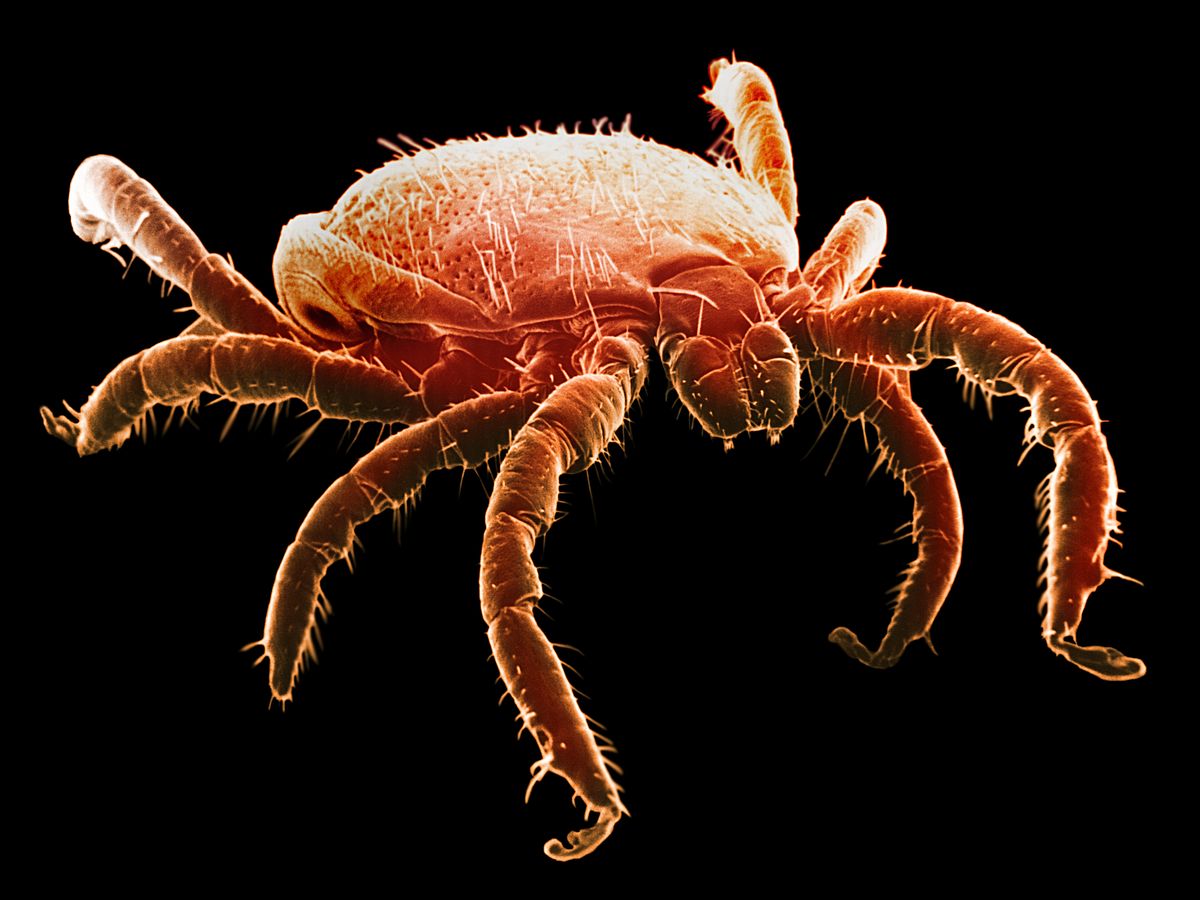
Electron microscope image of a deer tick(Image: Dr David M Phillips)
On average, around 4% of ticks are infected, though this can be higher in some areas. Studies estimate that 1% to 5% of tick bites result in Lyme disease. In other words, as stressed by the UK Government, “the majority of tick bites will not cause Lyme disease”.
In North Wales, online tick hotspots have centred on Gwynedd coastal spots like Harlech, Llanfair and Llandanwg. More have been reported on Anglesey, including in the dunes at Newborough.
It’s surmised by some people the warm winter may have boosted tick numbers. PHW said this may or may not be coincidental.
Dr Andrew Nelson, Zoonoses Lead at PHW, said: “Tick activity can vary from year to year depending on a range of environmental factors, including weather conditions, vegetation growth and the abundance of wildlife that ticks feed on.
“Warmer weather can also lead to more people spending time outdoors, increasing the likelihood of people encountering ticks.
“Public Health Wales is aware of reports from members of the public about increased numbers of ticks in some parts of North Wales. However, it is difficult to determine whether this reflects a genuine increase in tick populations or increased exposure and reporting following recent periods of warm weather.”
Emerging tick threat
Ticks are small, spider-like creatures which feed on the blood of birds and mammals, including humans. They are usually tiny but swell considerably after gorging on blood. They have either six or eight legs.
They are found across Wales, typically in areas with long grass, bracken, heathland and woodland where they can attach to people and passing animals. If you drag a white sheet over long grass, you may be amazed to see how many tiny ticks attach to it.
Tick bites aren’t usually painful and often only cause a small red lump where bitten. If “bullseye” rash appears you should see your GP as it’s an indicator of Lyme disease. It’s not a fail-safe symptom – one in three cases don’t present with this circular rash.

A circular or oval-shaped rash around a tick bite is an early symptom of Lyme disease in some people(Image: Getty)
Another emerging threat is Tick-Borne Encephalitis (TBE) which, until 2019, was considered an “imported disease”. Since then, six UK cases have been confirmed, including two in 2025. No cases have yet been reported in Wales.
TBE infection causes minimal symptoms in most people. But in some cases the virus can enter the central nervous system and potentially lead to long-term neurological symptoms and, very rarely, death. A vaccine available and is recommended for high-risk sectors such as forestry and farming.
PHW said UK-wide surveillance for TBE is ongoing. Dr Nelson added: “The risk to the general public remains very low, but awareness is important.”
Stopping ticks
Tick prevention is possible and a host of remedies are available – though the UK Government recommends using insect repellents containing DEET. PHW said the best approach is to cover up during tick season – this runs April from to October, though ticks can be active all year round.
Dr Nelson said: “When enjoying the outdoors during the tick season, we advise people to stick to clearly marked paths where possible, avoid walking through long vegetation, wear clothing that covers the skin and check themselves, children and pets for ticks after spending time outdoors.
“Prompt removal of ticks remains the most effective way to reduce the risk of infection.” Walkers are also advised to tuck trousers into socks – and wear light-coloured clothing so ticks are easier to see and brush off.

In 2015, a five-year-old boy was hospitalised with suspected Lyme disease after being bitten by two ticks on the Great Orme, Llandudno
The UK Government recommends using a tick-removal tool – these can be bought at vets, pet shops or online retailers. Fine-tipped tweezers can also be used – not regular tweezers that might be used to remove eyebrow hair. Ticks should be grasped as close to the skins as possible – the aim is to ensure they are not squashed during removal, leaving their infective “heads” still embedded.
Alternative solutions, such as applying Vaseline or nail varnishes, or “burning” ticks off, should not be used as this may agitate the tick and force infected fluid into the skin, according to Lyme Disease Action.
Dr Nelson stressed: “Most tick bites do not result in illness, but it is important that ticks are removed as soon as possible. Avoid squeezing the body of the tick during removal.
“After a tick bite, people should watch for symptoms such as a circular or expanding rash, flu-like symptoms, fever, tiredness, muscle aches or headaches and seek advice from their GP or NHS 111 Wales if they are concerned.”
Join the North Wales Live WhatsApp community group where you can get the latest stories delivered straight to your phone