
Benzinga and Yahoo Finance LLC may earn commission or revenue on some items through the links below.
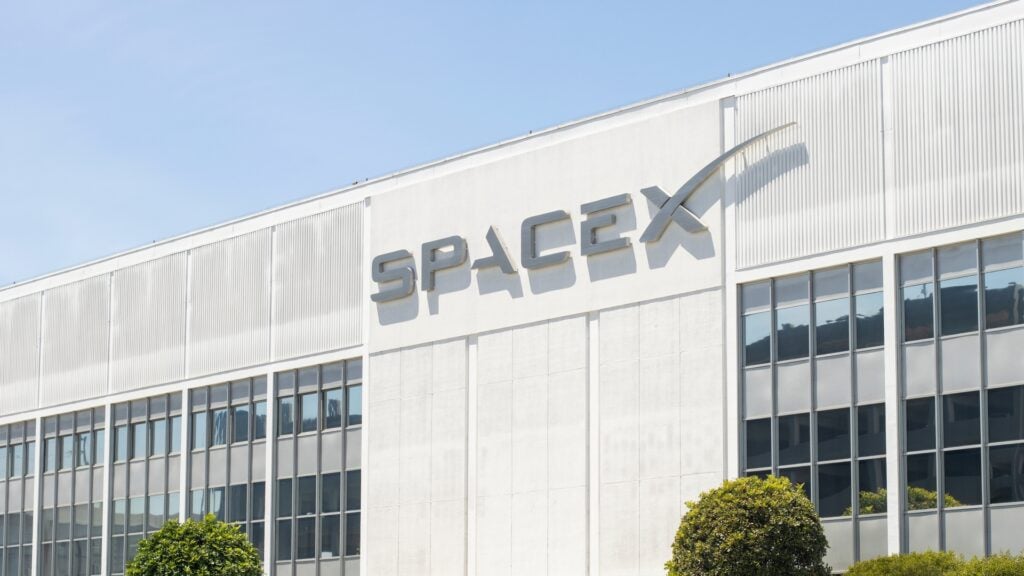
S&P Dow Jones Indices said on Thursday that it would not change the requirements for entry into its major indexes, dealing a setback to Elon Musk’s SpaceX by effectively ruling out a quick path into the benchmark S&P 500 after what could become the largest initial public offering in history.
S&P Keeps Rules In Place
The index provider said in a press release late on Thursday that it would not shorten the 12-month seasoning period for newly public companies or waive existing profitability and public-float requirements based only on a company’s size. The decision diverges from changes adopted by rival index providers Nasdaq and FTSE Russell.
S&P said it will not change eligibility rules to fast-track index inclusion for megacap IPOs like SpaceX or Anthropic.
So even if SpaceX goes public at massive scale, it will likely have to wait for S&P 500 inclusion and settle for a faster path into the Nasdaq 100. pic.twitter.com/UQ8GBz2yvz
— Polymarket Money (@PolymarketMoney) June 4, 2026
Don’t Miss:
The move comes as Wall Street confronts a new reality. Some companies are reaching unprecedented valuations before they ever enter public markets, forcing index providers to decide whether rules written for a different era should bend for newly public giants.
S&P Dow Jones Indices opened a consultation earlier this year on how to treat so-called megacap companies, a process that effectively asked whether “fast entry” rules should apply to companies arriving at public markets at a scale once reserved for mature blue chips.
Fast Entry Debate Splits Wall Street Investors
The push for quicker inclusion has split investors. Critics say profitability, float and trading-history rules exist to keep benchmarks from chasing hype. Adding IPOs too quickly, they argue, could expose passive funds to greater volatility and force them to buy shares before the market has established reliable pricing.
Supporters, meanwhile, say indexes should quickly include large companies to better reflect the market investors actually own. They argue that trillion-dollar firms can become economically important long before they satisfy traditional index requirements.
Trending: Avoid the #1 Investing Mistake: How Your ‘Safe’ Holdings Could Be Costing You Big Time
Nasdaq And FTSE Move Faster Than S&P
The outcome means SpaceX would not be eligible for the S&P 500 until at least one year after its listing. It would also need to meet existing rules on profitability and public float.
SpaceX is seeking to raise $75 billion at a roughly $1.75 trillion valuation. The company posted a $4.94 billion net loss in 2025 even as revenue rose 33% to $18.67 billion.
Nasdaq recently changed its rules so that SpaceX could join the Nasdaq-100 after 15 trading days, down from a three-month minimum. FTSE Russell adopted a similar fast-entry approach, allowing eligible large IPOs to enter after five trading days.
Photo courtesy: Shutterstock
Read Next:
Building Wealth Across More Than Just the Market
Building a resilient portfolio means thinking beyond a single asset or market trend. Economic cycles shift, sectors rise and fall, and no one investment performs well in every environment. That’s why many investors look to diversify with platforms that provide access to real estate, fixed-income opportunities, precious metals, and even self-directed retirement accounts. By spreading exposure across multiple asset classes, it becomes easier to manage risk, capture steady returns, and create long-term wealth that isn’t tied to the fortunes of just one company or industry.
Arrived
Backed by Jeff Bezos, Arrived Homes makes real estate investing accessible with a low barrier to entry. Investors can buy fractional shares of single-family rentals and vacation homes starting with as little as $100. This allows everyday investors to diversify into real estate, collect rental income, and build long-term wealth without needing to manage properties directly.
Vinovest
Fine wine and rare whiskey have historically moved independently of the stock market, making them a compelling alternative asset. Vinovest manages authenticated, insured portfolios of investment-grade wine and whiskey starting at $5,000 — sourcing, storage, and insurance all handled for you.
FarmTogether
Farmland has historically held its value through market volatility and delivered returns uncorrelated to stocks and bonds. For accredited investors, FarmTogether offers direct access to high-quality U.S. farmland starting at $15,000 — fully managed, with no landlord headaches.
EquityMultiple
For accredited investors looking beyond stocks and bonds, EquityMultiple provides access to vetted commercial real estate deals starting at $5,000, with only ~5% of opportunities passing their due diligence process.
Fundrise
Private real estate and private credit can add income and stability to a stock-heavy portfolio. Fundrise offers access to diversified private real estate and credit strategies through an easy-to-use platform, with professionally managed portfolios designed to generate passive income and long-term growth.
EnergyX
EnergyX is a clean energy technology company focused on direct lithium extraction and refinery technologies for the lithium-ion battery supply chain. Its proprietary DLE systems are designed to recover lithium from brine resources more efficiently and with less environmental impact, supporting efforts to expand lithium supply for electric vehicles, grid-scale storage, and other battery applications.
American Hartford Gold
American Hartford Gold is a precious metals dealer that helps clients buy physical gold and silver coins and bars, either for direct delivery or within self-directed precious metals IRAs. The company’s services include gold and silver IRAs, IRA rollovers, and home delivery of bullion, giving investors a way to use tangible metals to diversify portfolios and seek protection against inflation and market volatility.
© 2026 Benzinga.com. Benzinga does not provide investment advice. All rights reserved.