
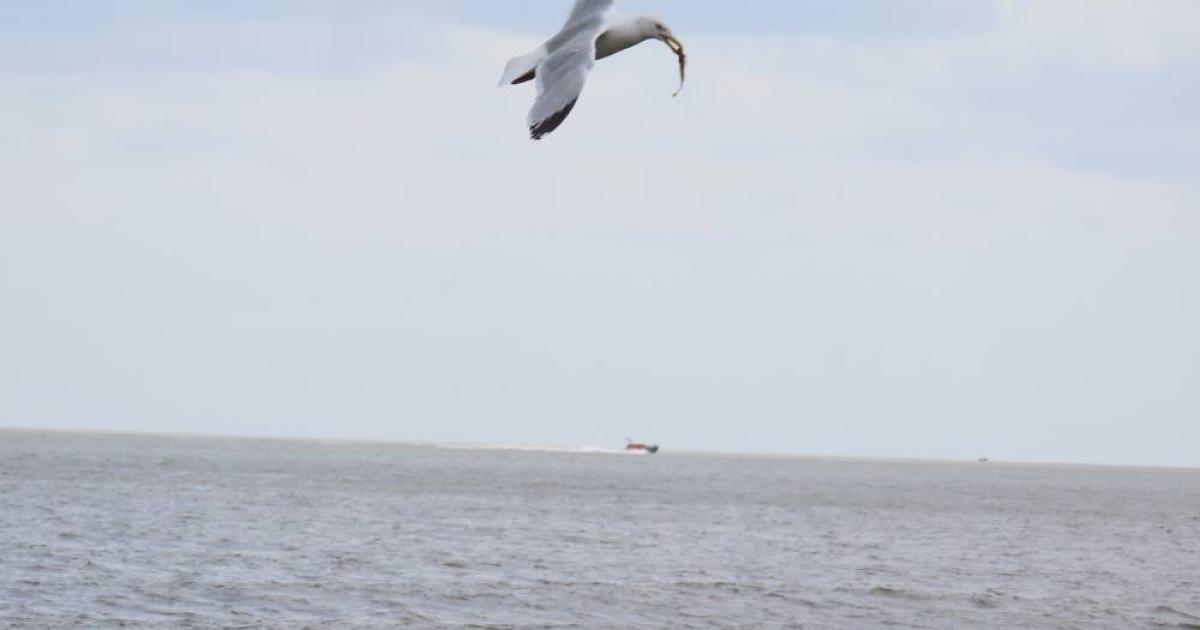
The incident was captured by Simon Crutchley at Gorleston Pier, with the fisherman who caught the fish warning that it could be “dangerous”.
Mr Crutchley, who was visiting the pier near the coastguard watch station, said he had never seen one of the venomous fish before.
A weever fish that was caught by a fisherman at Gorleston Pier. (Image: Simon Crutchley)
He said the fisherman explained the risks, and while they spoke, a seagull quickly grabbed the fish and flew off with it.
The weever fish has venomous dorsal spines that can deliver a painful sting to humans and animals. (Image: Simon Crutchley)
The weever fish has venomous dorsal spines that can deliver a painful sting to humans and animals.
They are commonly found buried in sand near the shoreline.
If stung, people are advised to rinse the area with seawater, remove any visible spines using tweezers, and soak the affected area in very warm water for at least 30 minutes to help neutralise the venom.
There are two types of weever fish found in the UK – the lesser and the great.