
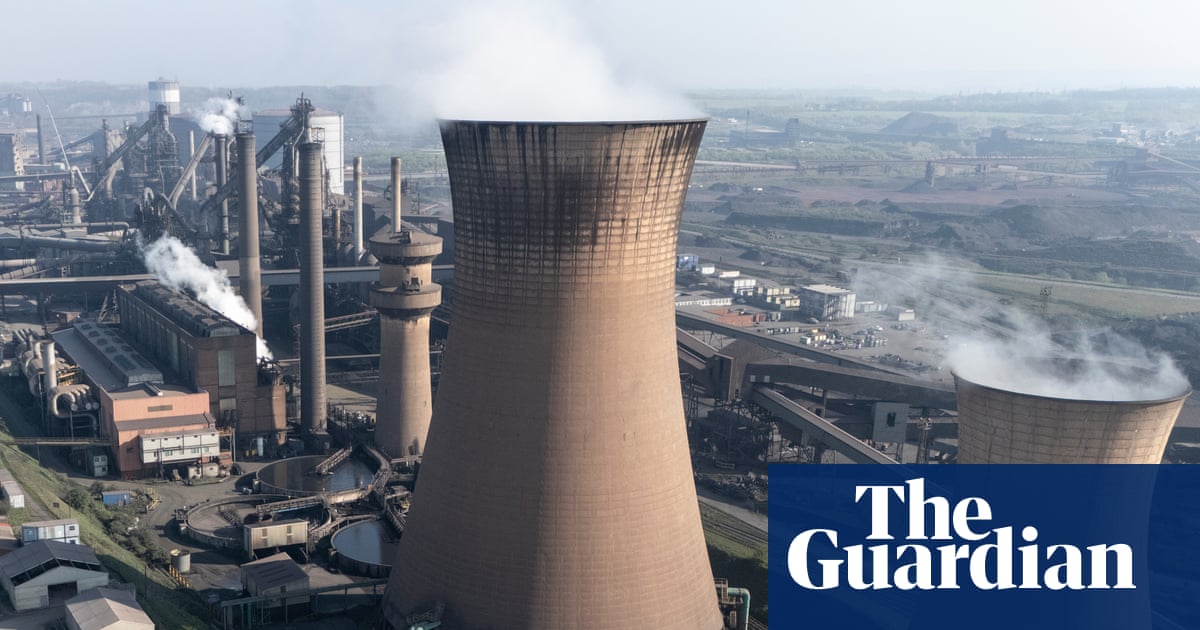
The Chinese owner of British Steel has started a formal process under an international treaty to win compensation from the UK government over its decision to nationalise the Scunthorpe steelworks.
Jingye Steel said it would seek to recover money via China’s bilateral investment treaty with the UK, after more than a year of negotiations over the size of any payout. The dispute could put pressure on the relationship between China and the UK.
The decision to seek a resolution under the UK-China investment treaty is expected to give Jingye leverage in negotiations. In June last year it revealed it planned to try to recover as much as £711m in debts owed by British Steel, although people in the industry have said the company is seeking more than £1bn.
Keir Starmer announced the UK government was taking control of British Steel last April on national security grounds, saying it was crucial for the country to retain the ability to make steel from iron ore at the company’s plant in Scunthorpe, Lincolnshire.
Insiders suggested that fears of 2,700 immediate job cuts in a historical British industry also played a more significant role. Jingye had planned to close the plant within days, rendering it impossible to reopen and leaving it with huge losses.
Since the takeover, Jingye has remained the economic owner of the plants. However, Starmer, under pressure to resign last month after disastrous local elections, said the government planned to nationalise British Steel fully, in a rare expropriation of a privately owned asset.
Jingye, in a statement on its WeChat account, said it had “recently initiated consultation procedures under the bilateral investment treaty with the UK government”, Reuters reported.
The statement said the company hoped the UK government could fully safeguard the legitimate rights and interests of Jingye and other Chinese businesses as well as global investors.
Jingye bought British Steel in 2020 in a government-brokered deal, but the company struggled amid a global glut of the metal, mainly as a result of overcapacity in China.
After a period of six months the dispute could be sent to an international arbitrator to decide, according to the China-UK treaty. While Jingye had been prepared to walk away from the Scunthorpe steelworks, the UK takeover may have increased its likelihood of recovering some money.
The UK has since announced plans to dramatically lower the amount of steel that can be imported into the country tariff-free. That could make British Steel a much more attractive business, industry insiders said.
The government is likely to seek new private owners of British Steel after a brief period under national ownership. Any new owner will probably demand large subsidies to invest in the new electric arc furnaces needed to decarbonise the company’s products.
The government was approached for comment.
Get in touch
Contact the Guardian Business team
The best public interest journalism relies on first-hand accounts from people in the know. If you have something to share on this subject you can contact the Business team confidentially using the following methods:
Secure Messaging in the Guardian app
The Guardian app has a tool to send tips about stories. Messages are end to end encrypted and concealed within the routine activity that every Guardian mobile app performs. This prevents an observer from knowing that you are communicating with us at all, let alone what is being said.
If you don’t already have the Guardian app, download it (iOS/Android) and go to the menu. Scroll down and click on Secure Messaging.
When asked who you wish to contact please select the ‘Business (UK & Global)’ team.
SecureDropIf you can safely use the tor network without being observed or monitored you can send messages and documents to the Guardian via our SecureDrop platform.
Our guide at theguardian.com/tips lists several ways to contact us securely, and discusses the pros and cons of each.
Show more