
Around 85% of sewers in Merseyside are combined, meaning rainwater and wastewater flow through the same pipes.
“Over time we’ve lost a lot of the green and natural spaces in and around the city as we’ve urbanised, and we’ve paved over our gardens to accommodate more cars and we’ve built over old rivers that used to exist,” Phillips said.
“Making our towns and cities more spongy means capturing the rainwater.
“By adding the sponge back into our towns and cities, we not only manage rainwater in a much better way, where it falls, we are also able to deliver so many more wider environmental benefits in terms of nature, and bringing nature back to towns and cities.”
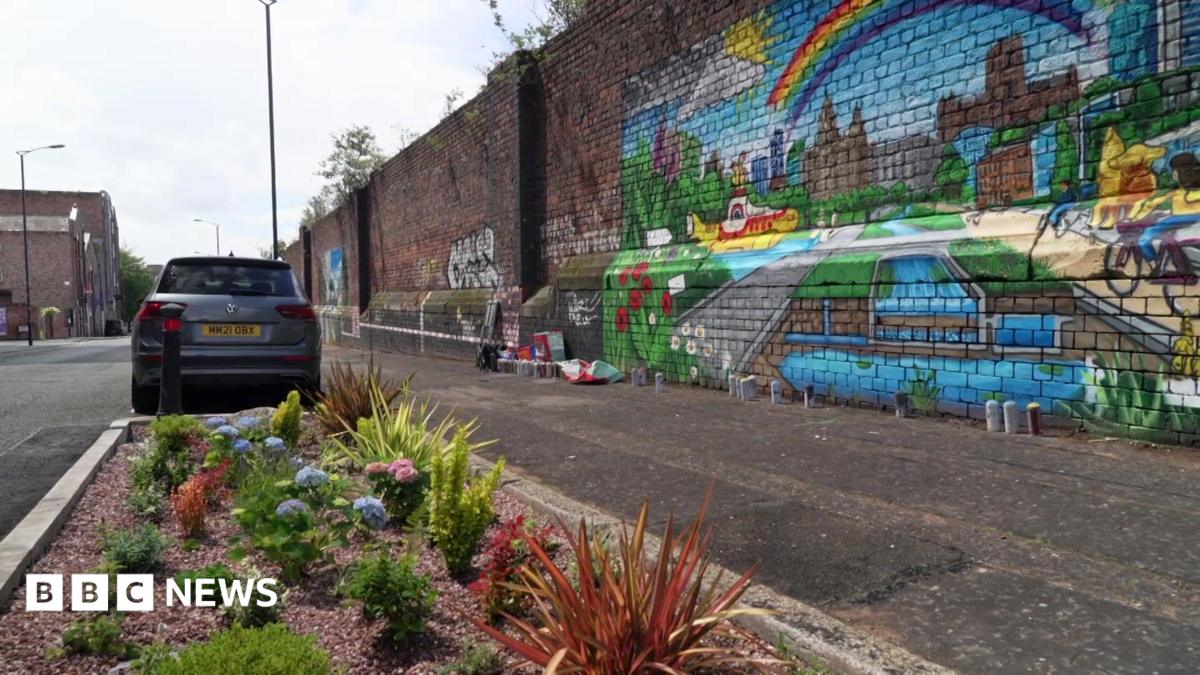
Blundell Street and the Baltic area in Liverpool have already had gardens installed.
Peter Allen, assistant headteacher at St Vincent de Paul Catholic Primary School said before the gardens were introduced the playground would regularly be flooded after heavy rainfall.
“Before this project, because of the surface water, I’d have to wade out up to my ankles and clear the grids,” he said.
“Now the children can get out, this is just exactly what we needed.”