
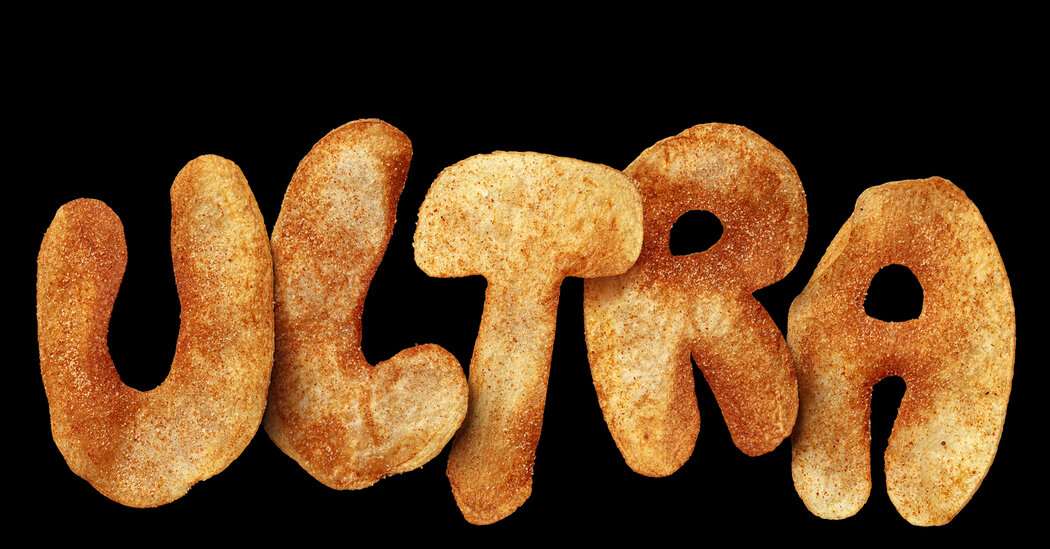
The same prefix in English soon brought us ultra-Anglicans, ultrademocrats, ultraradicals, even Ultra-Goths. (That was 1866, in reference to architecture, not black-clad music fans.) Today words like “ultraconservative” or “ultraliberal” tend to suggest a kind of Overton-window violation: The implication is that there’s a normal way to hold certain beliefs, but the subject has veered beyond that into questionable territory.
One of the main places you still see “ultra-” in positive use is marketing. Odds are decent that your kitchen currently contains Dawn Ultra dish soap, Hefty Ultra Strong trash bags or Michelob ULTRA, now America’s best-selling beer. (“Live Fit. Live Fun. Live Ultra.”) You might apply Systane Ultra Eye Drops, chug a Monster Energy Ultra, lace up your Adidas Ultraboost sneakers and head off to Miami’s Ultra Music Festival. U.S. registered trademarks contain every imaginable variation: Ultra Lube, Ultragrain, Plasmajet Ultra+, Ultra MAGA Beer.
What have these products gone beyond? Regular old Dawn or Hefty bags or Plasmajets or MAGA beer, presumably. Makers of consumer electronics use similar words to mark the different tiers of their products: “If you, as a manufacturer, want to show that you mean business,” the site ITdaily said last year, “stick words like Pro, Max, Ultra, Plus, Premium (or a combination of them) behind the product name.” Some companies try to lean in fresher directions, as with AMD’s “Halo” processors and Lenovo’s very Gen-Z “Aura Edition” — but even Apple, long reliant on its Airs and Pros, is said to be working up an Ultra line.
Even in marketing, though, you might begin to sense that “ultra” is slipping toward the old-hat and déclassé. It’s a zoomy, energy-drink, lasers-and-polymers, “X-Treme” sort of label: Just as with food, screen time, cinema and politics, it suggests a kind of muchness, a cheap intensity. Food manufacturers still offer their Cheezy Blast varieties and wildly artificial flavors; if anything, these options have grown ever more novel and intentionally grotesque, appealing to your very disbelief at their existence. But you’ll also notice, say, PepsiCo’s denuded “Simply NKD” Cheetos and Doritos, “now reimagined without any colors or artificial flavors” — as if freshly picked from the Dorito bush and crisped in an elderly doritero’s brick oven. Trade publications talk periodically about the advantages of quieter advertising, promising an escape from muchness into simplicity and peace: Do you really crave more extremity, more beyondness, more more?
You might; you might even enjoy them more as vices and indulgences. But if there were some kind of market for the connotations of prefixes — for their vibes — it does feel like the neutral “ultra-” would be hitting a bit of a slump. Count up the uses you encounter, and there’s every chance you’ll see it attached to very few good things and pinned on a lot of things you’d suspect are bad for the body, the mind, the polity, the soul.