
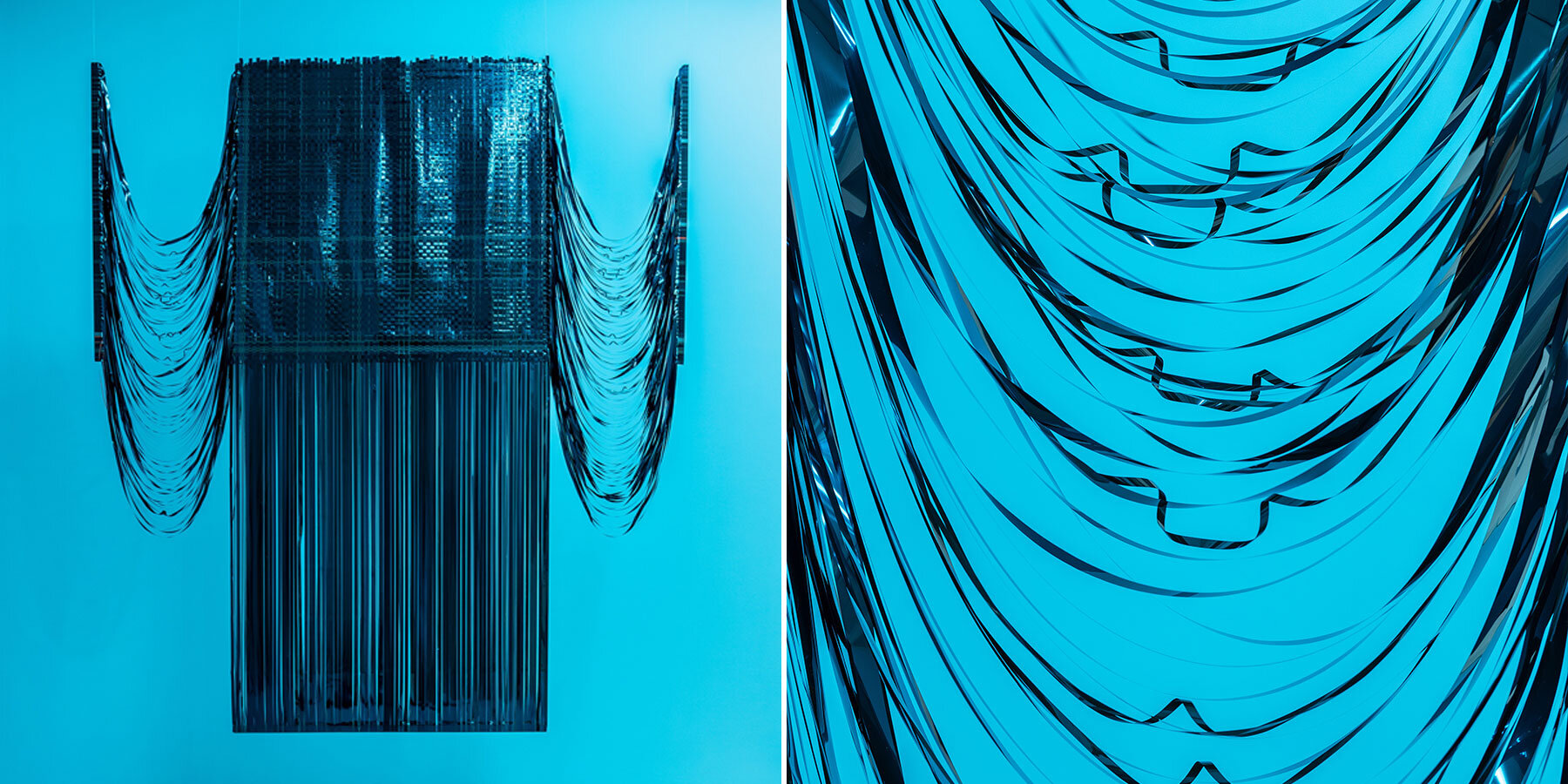
woven VHS tapes transform obsolete media into a tapestry
In Stories Seen and Heard (2025), Polish artist Kuba Święcicki transforms discarded VHS tapes and cassette recordings into a monumental woven installation, asking what happens when obsolete technology becomes a craft material. Encountered as part of Visteria Foundation’s Craft Days exhibition, the work explores how memories survive long after the devices designed to store them have disappeared.
Suspended against the gallery wall, the installation unfolds as a dense black tapestry constructed entirely from magnetic tape. At its center, hundreds of interwoven strips create a reflective surface that catches and diffuses light, producing an almost metallic sheen. Long strands spill from either side in symmetrical drapes, while a curtain of vertical tapes extends downward, giving the piece the appearance of an oversized handwoven textile. From a distance, the work resembles a ceremonial hanging or a contemporary tapestry. Only upon closer inspection does its true materiality reveal itself. ‘The process of creating works from VHS tapes and cassette tapes is a several-week meditation and a personal journey back to childhood. Each piece is made entirely by hand, without the use of a specialist loom,’ the artist shares with designboom. ‘The lack of a loom suitable for this type of material forced me to develop a method that would make weaving with these fragile tapes possible.’
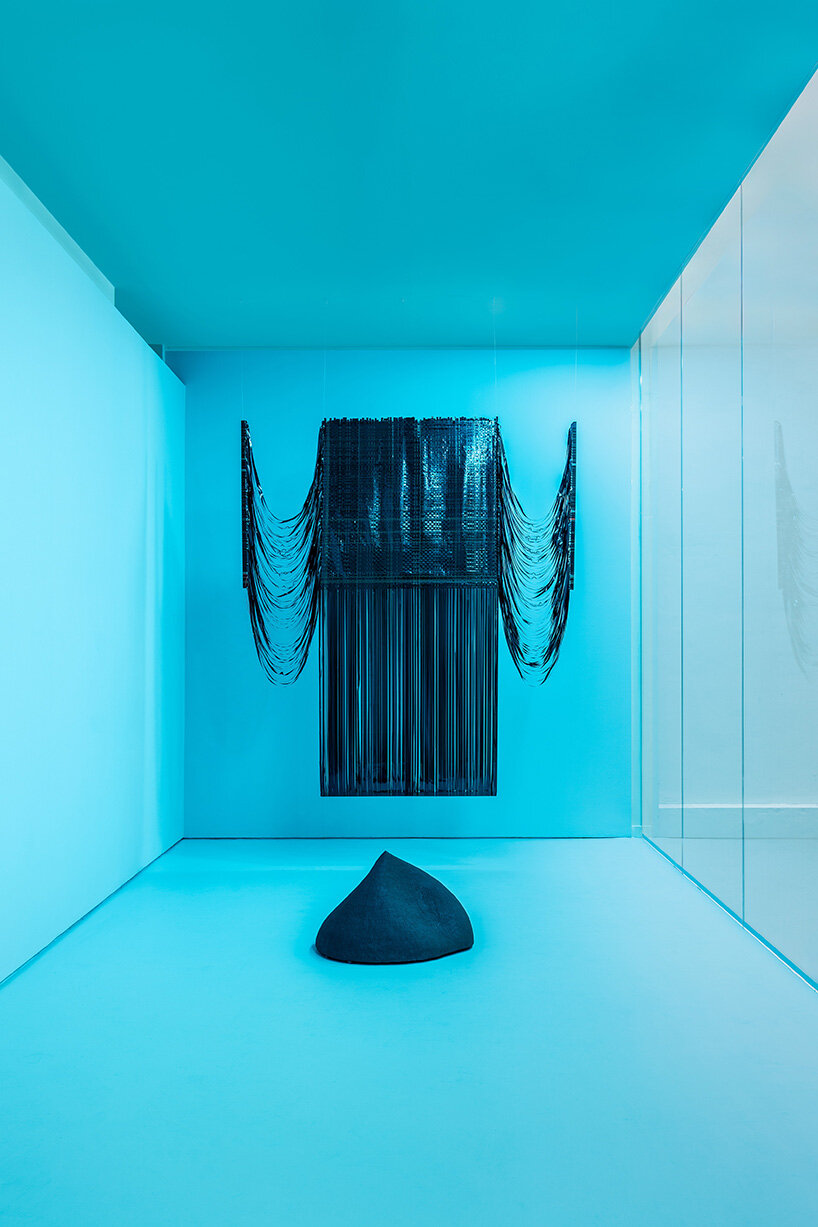
all images by Alicja Kielan, unless stated otherwise
memory, archives, and the afterlife of analog technology
Święcicki created the installation using VHS tapes and cassette recordings collected from family members, friends, and his own personal archive. Embedded within the woven structure are fragments of television broadcasts, children’s stories, radio programs, favorite songs, home movies, wedding celebrations, communions, and countless other moments of everyday life. Once functioning as carriers of information, these media objects have been stripped of their original purpose and transformed into a new material language.‘As a designer working in a sustainable way, I often reach for materials that are usually considered no longer useful. By giving discarded tapes a second life and a new quality, I transform them into objects filled with meaning – carrying memory, time, and personal associations.’ Kuba Święcicki tells us.
The conceptual force of the artwork lies precisely in this transformation. Although the recordings remain physically present within the installation, they can no longer be accessed through conventional means. The information survives, yet it remains silent. What was once designed for playback becomes instead a tactile surface, shifting attention from content to material presence. The Polish artist preserves the archive, but its stories are no longer available through technology.
More recently, in Heard Stories (2026), Święcicki shifted his attention from moving images to sound. Constructed from handwoven magnetic tape, the shimmering curtain-like installation draws from cassette recordings collected from the artist, his friends, and family members, including radio compilations, language-learning tapes, and childhood conversations recorded with his sisters. While the recordings remain physically embedded within the work, access to their contents is deliberately withheld.

long strands spill from either side in symmetrical drapes
craft, collective rituals, and material storytelling
Stories Seen and Heard focuses on the social rituals that surrounded the disappearance of analog media. Borrowing cassettes from friends, recording songs from radio broadcasts, labeling tapes by hand, and gathering around a television to watch family videos were all acts that produced relationships as much as recordings. By weaving these objects together, Święcicki converts those collective experiences into a physical structure, allowing memory to exist as material rather than data.
The installation also reveals an unexpected connection between contemporary craft and digital culture. Magnetic tape, originally engineered for storage and transmission, becomes raw material for an intensely manual process of weaving and assembly. Through hours of repetitive handwork, a technology associated with recording is transformed into an object of making. The resulting work occupies a compelling space between preservation and disappearance, suggesting that memory does not always survive through access or playback. Sometimes it endures through transformation.
In Stories Seen and Heard, Święcicki turns a fading technological infrastructure into a woven monument to collective experience. The installation demonstrates how craft can function not simply as a method of production, but as a way of reinterpreting the materials, histories, and systems that shape everyday life.

the piece adopts the appearance of an oversized handwoven textile
Kuba Święcicki explores memory through textile-based practice
Kuba Święcicki operates at the intersection of fiber art, craft, and design. Trained in both product design and applied arts, the artist has developed a practice that combines traditional textile techniques with contemporary forms of material experimentation. Working with embroidery, sewing, tufting, macramé, and woven structures, he approaches textiles as active systems capable of storing memories, transmitting experiences, and shaping social interactions.
Across his projects, Święcicki repeatedly investigates how materials can become repositories of collective knowledge. Whether working with fabric, thread, found objects, or obsolete technologies, he is interested in the relationship between touch, memory, and place. His research-driven practice frequently engages questions of sustainability, accessibility, and material heritage, exploring how contemporary craft can generate new forms of participation and embodied experience.
Stories Seen and Heard forms part of an ongoing investigation into memory and material transformation that has appeared throughout Święcicki’s recent body of work. In the 2023 installation Woven Stories, first presented at the Central Museum of Textiles in Łódź and later at KODE Lysverket in Bergen, the artist similarly transformed VHS tapes into a woven textile surface.‘This structure is based on content coded in VHS tapes — taken from their spools, woven into a thick, slippery, and reflective fabric. The installation was built of recordings chosen by the artist, belonging to family and acquaintances,’ notes Marta Lisok, Curator of the exhibition Second Skin at The Central Museum of Textiles in Łódź, Poland. ‘Joining them into one surface symbolically resurrects the past, in the form of a spiritualistic séance. It comes from the desire to create a community of images from having watched the same programs, cartoons, advertisements, and films.’
By merging recordings gathered from family members and acquaintances into a single reflective structure, the work proposed a collective archive of shared cultural experiences, from television programs and cartoons to films and advertisements. Together, these projects reveal a sustained interest in how technologies of recording can be reimagined through the language of textile making, allowing information to persist as material presence.
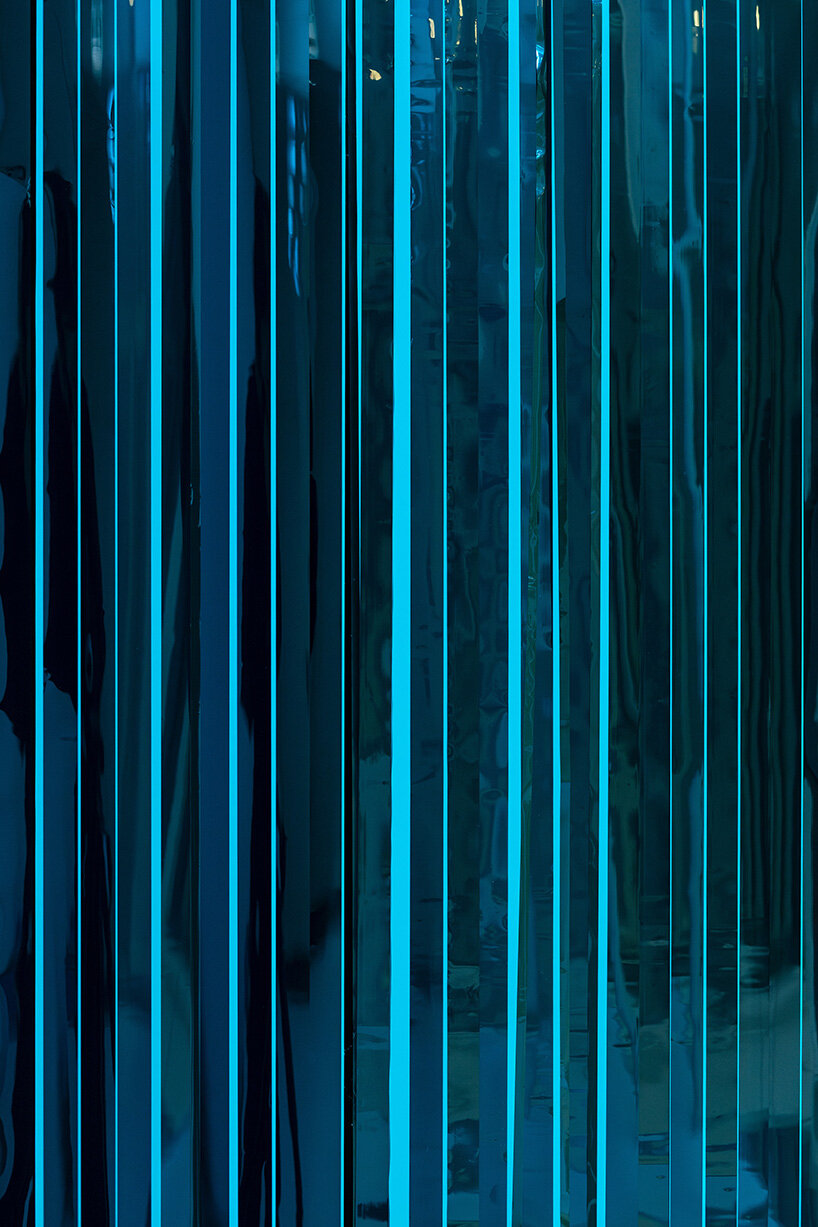
the information survives, yet it remains silent
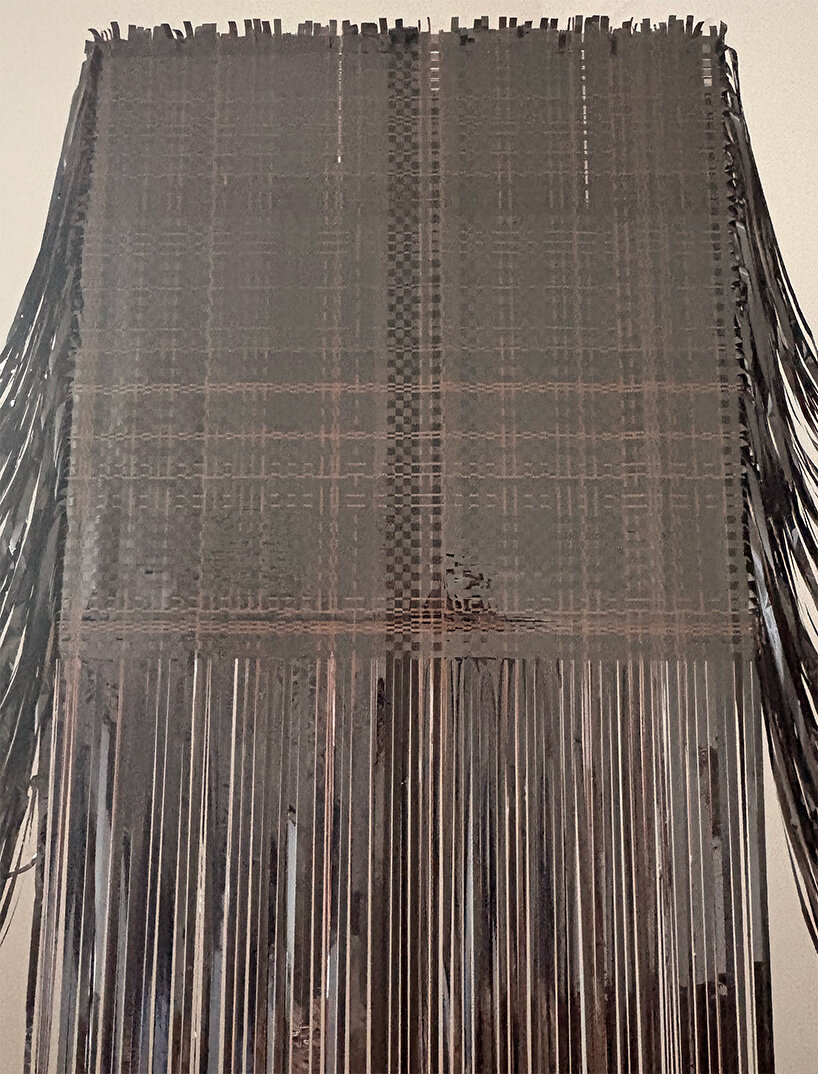
the work resembles a ceremonial hanging or a contemporary tapestry | image © designboom
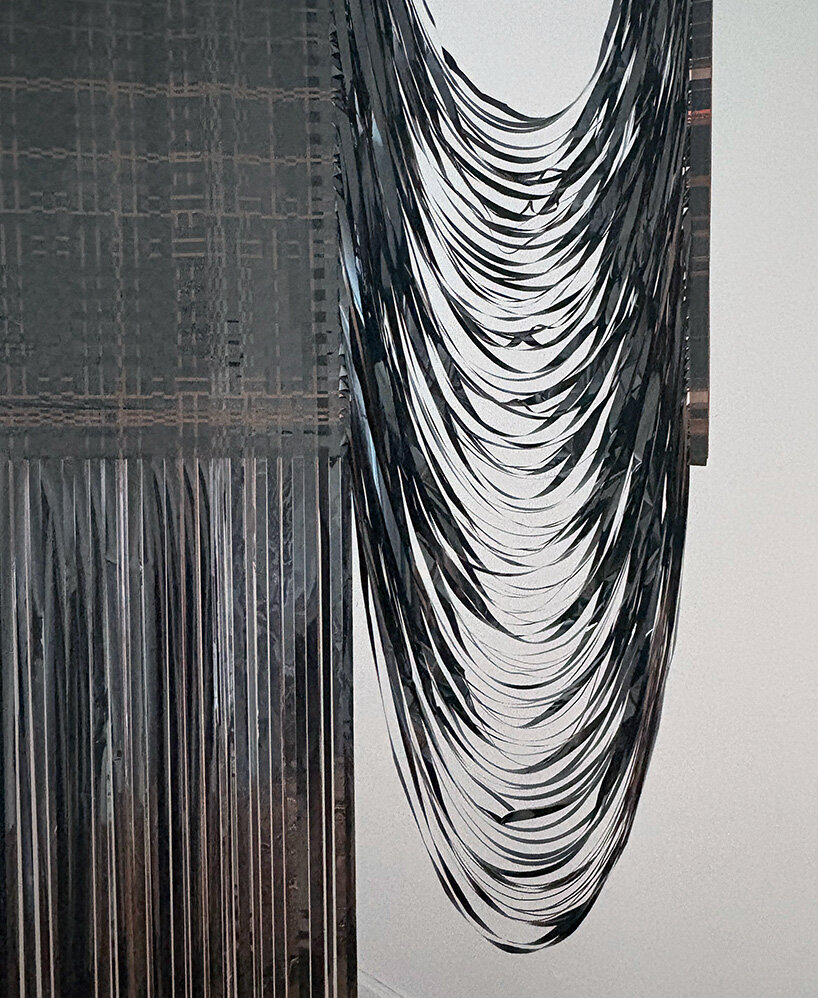
encountered as part of Visteria Foundation’s Craft Days exhibition | image © designboom
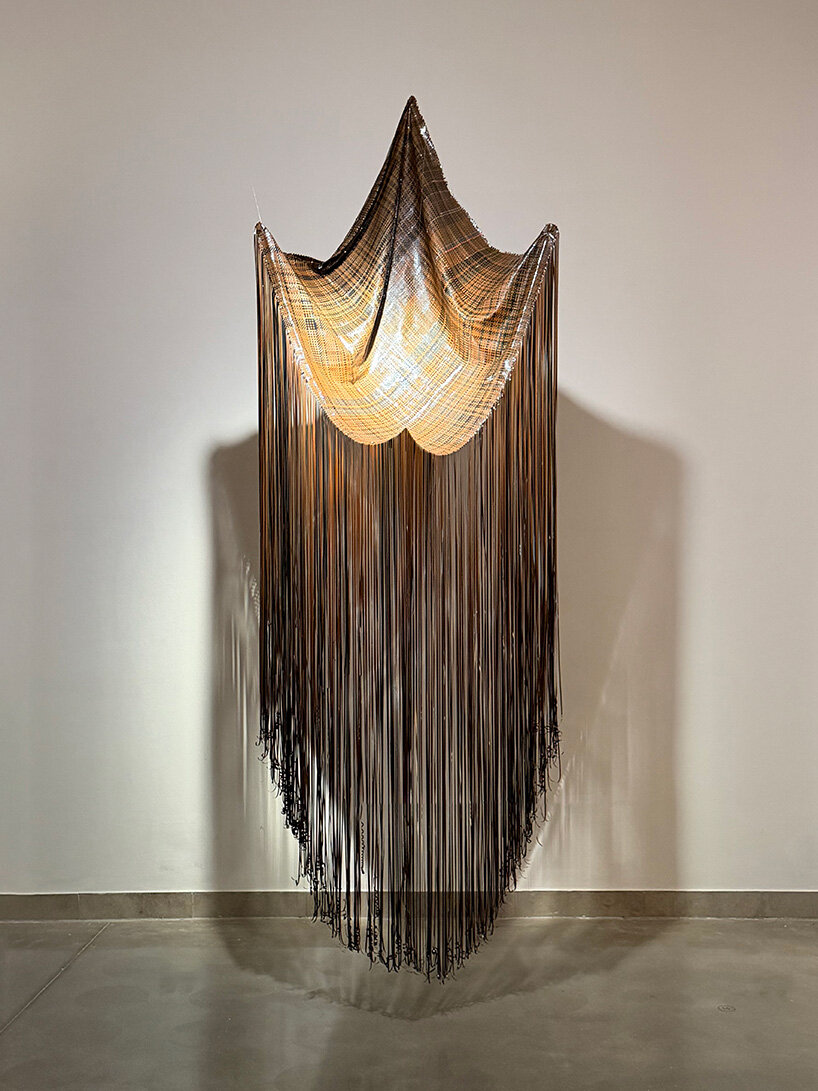
Heard Stories (2026) | image by Kuba Święcicki
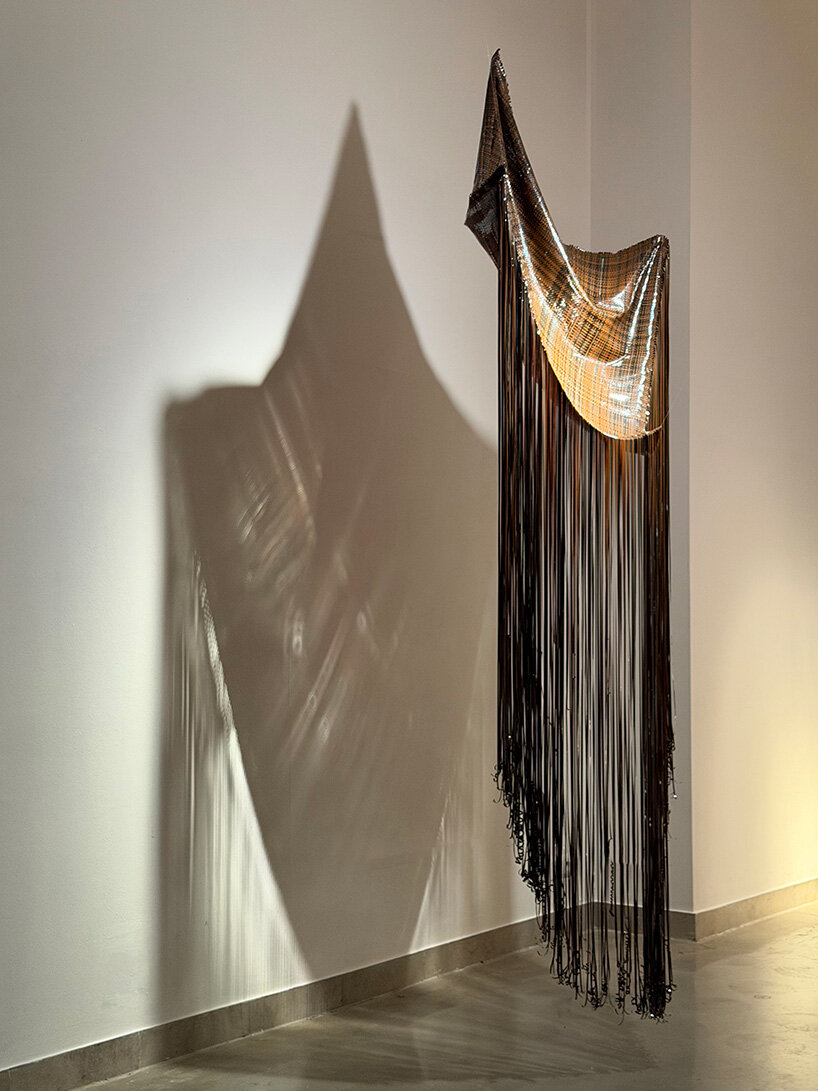
Święcicki shifts his attention from moving images to sound | image by Kuba Święcicki
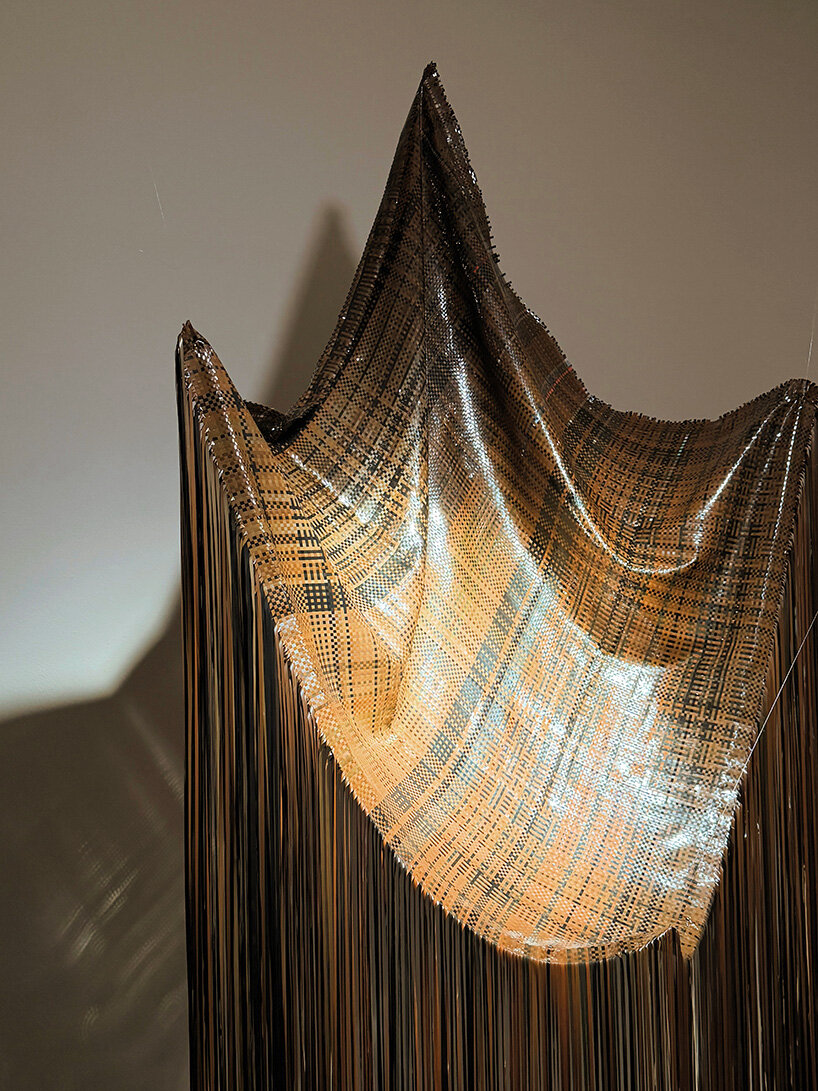
the shimmering curtain-like installation draws from cassette recordings collected from the artist | image by Kuba Święcicki
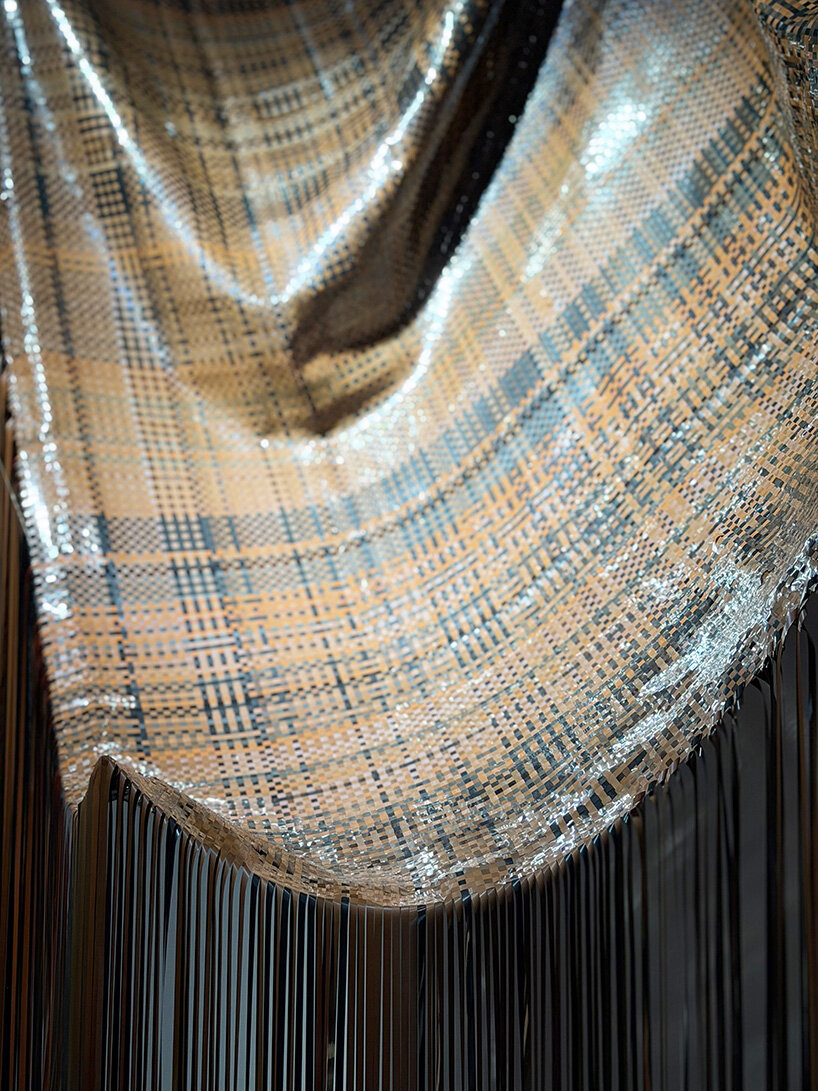
what was once designed for playback becomes instead a tactile surface | image by Kuba Święcicki
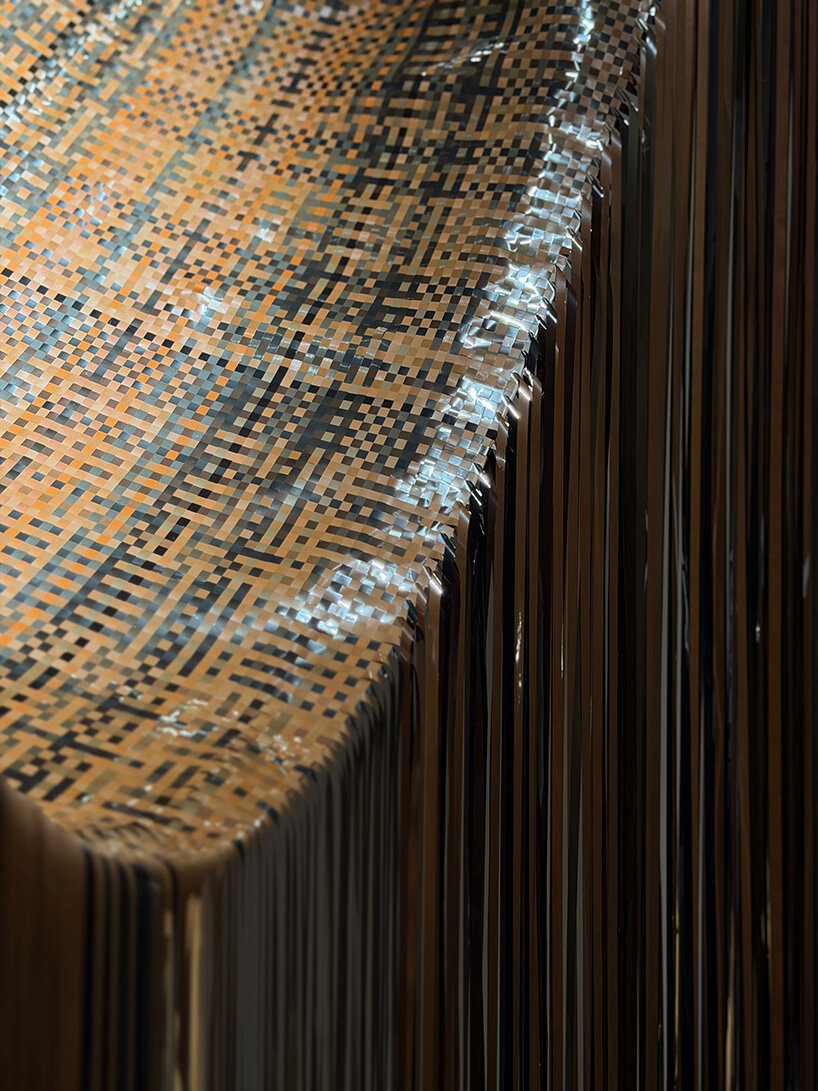
shifting attention from content to material presence | image by Kuba Święcicki
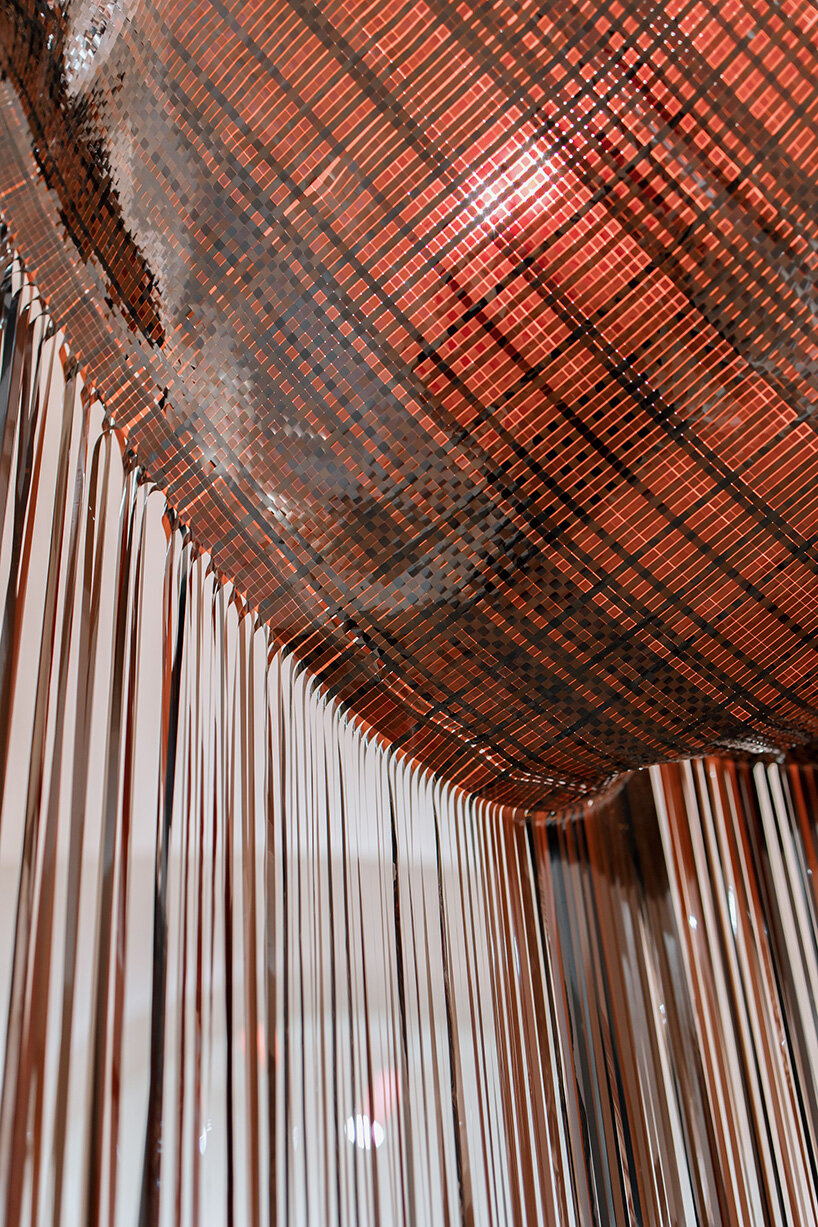
Święcicki investigates how materials can become repositories of collective knowledge | image by Piotr Seweryn