
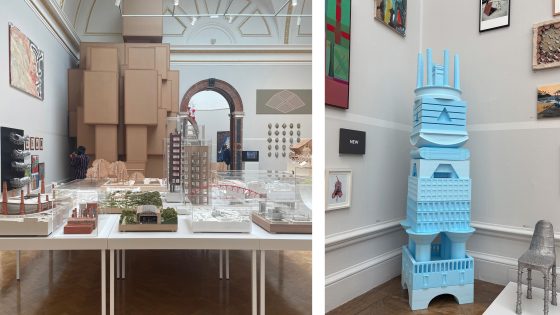
This year’s Royal Academy Summer exhibition follows recent ones in not having a dedicated architecture room, mixing architecture with art throughout the show. In one room, an Eva Jiricna blueprint-like plan is skyed on a wall of paintings; in another, a Hugh Strange model of his Stirling-shortlisted Hastings house nestles on a table next to a sculpture of a prone Bambi. More prominently, in a third, a large baby-blue sentinel-like Sam Jacob Studio model stands in a corner surrounded by other 3D sculptures.
Sometimes it works – the Sam Jacob holds its own eyeing up a striking, red-spotted sculpture in the opposite corner – but often the pieces get a bit lost – like less engaging, quieter pieces of art randomly scattered around the exhibition.
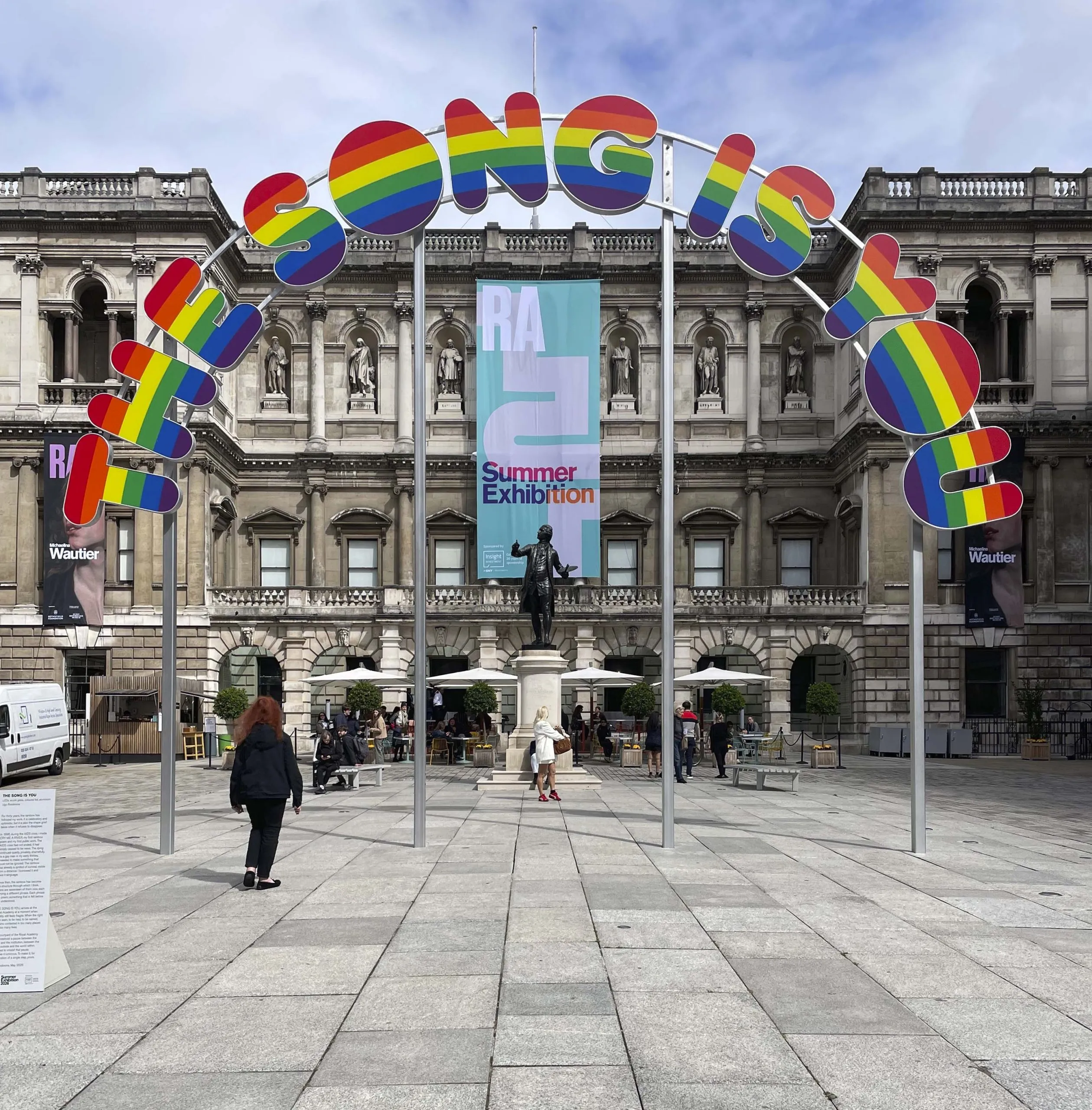
This year’s architecture co-ordinator, Peter St John – an RA since 2018, together with his partner at Caruso St John, Adam Caruso – sees this mix, however, as a fundamental part of the show.
‘I think in the context of the summer exhibition, where you’re trying to talk about architecture to a wide audience and not to a professional audience, it’s good to mix the two things and see them together,’ he says. ‘The whole idea is that the summer exhibition is not a professional but a popular exhibition. People go there to be moved.
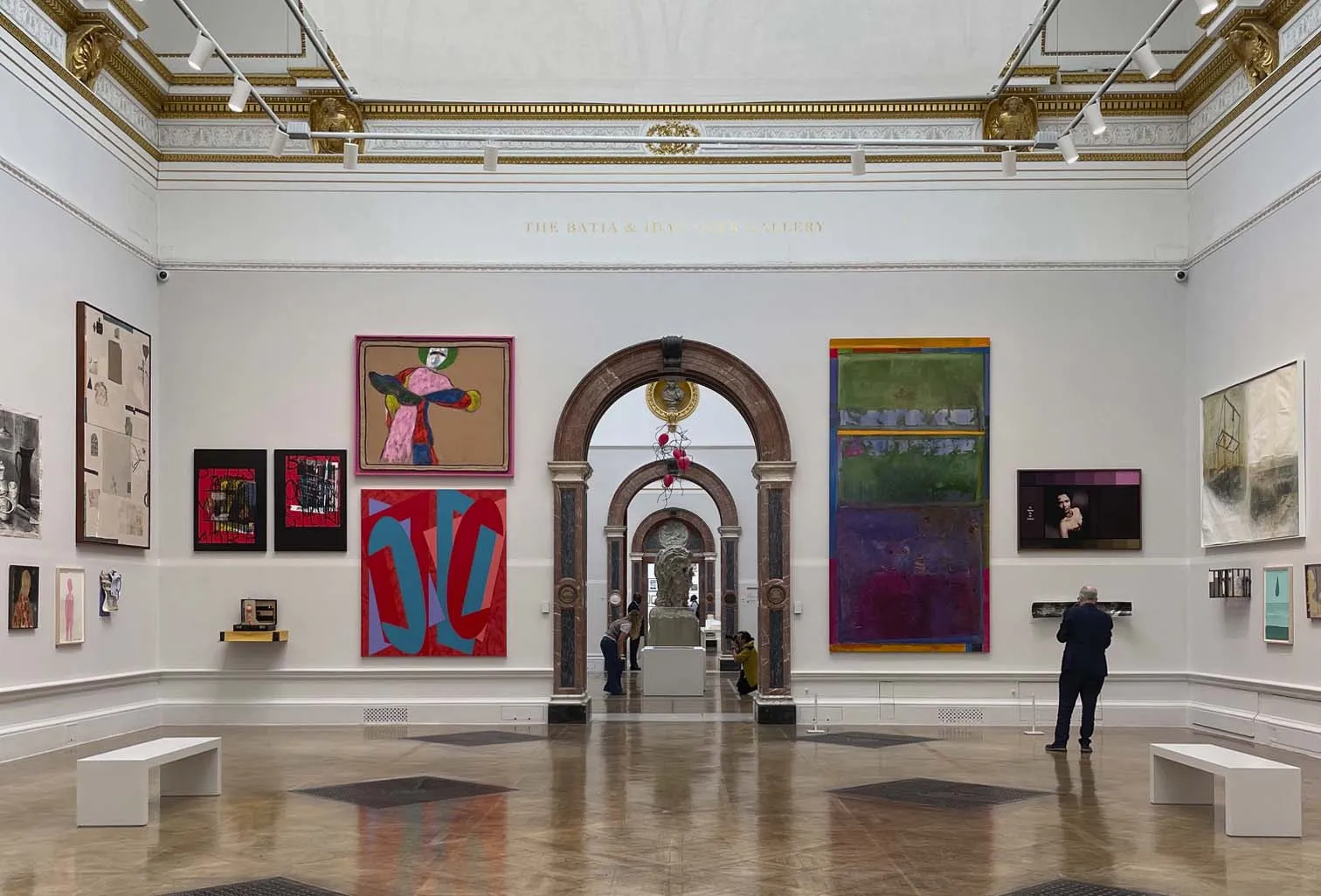
‘It’s interesting to see architecture models, like little sculptures, infiltrating the other rooms. There’s a conscious attempt to try and show architecture as ideas, as things in themselves.’
The show’s overall coordinator, artist Ryan Gander, chose the theme of the exhibition: ‘interconnectedness’. ‘So the most obvious thing I could do was to genuinely mix art and architecture’, says St John.
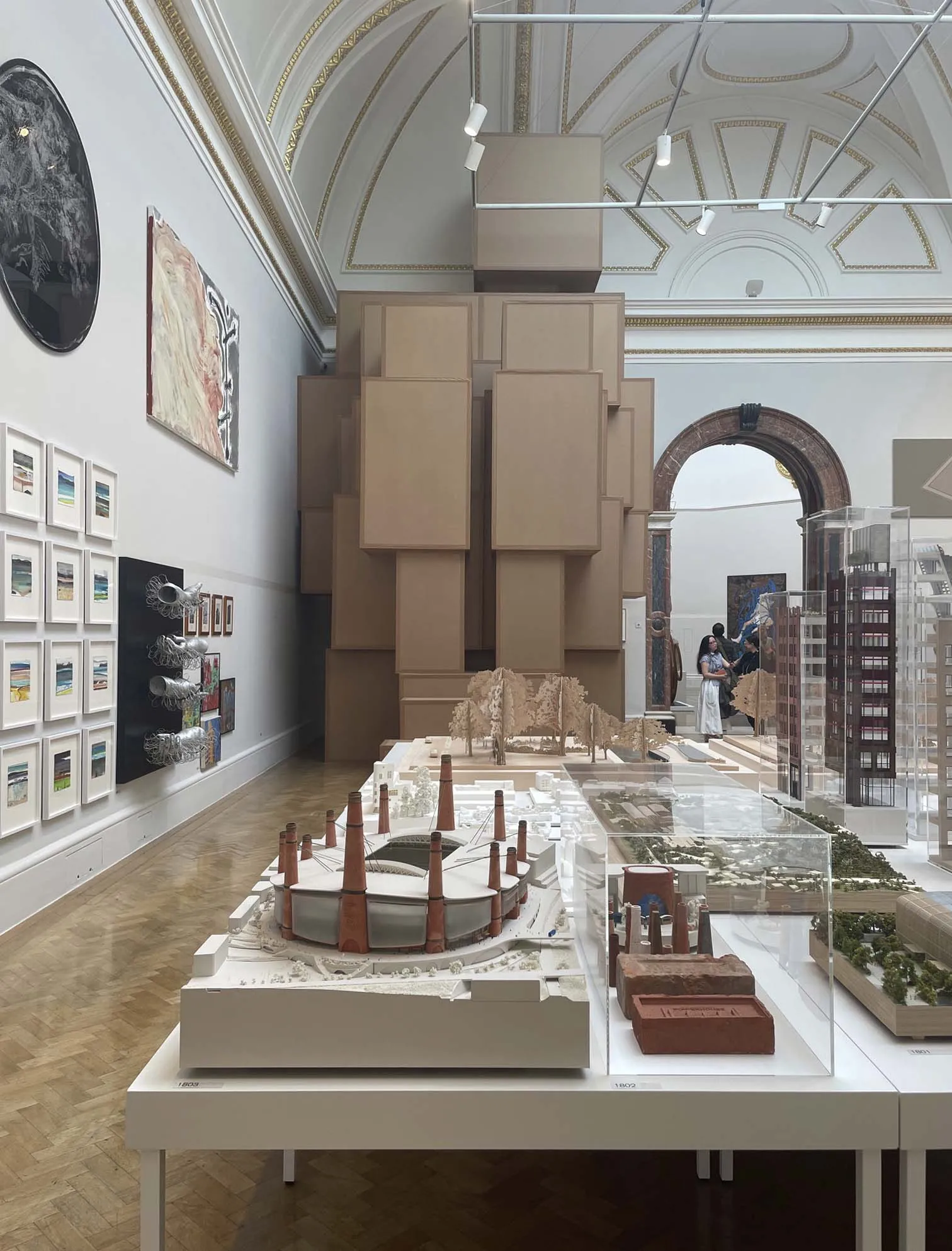
That said, the most concentrated room of architecture is the one curated by St John himself. Known as the Lecture Room, it sits to the right of the central rotunda and is one of the largest of the galleries. Even here, though, where the exhibits are a 50/ 50 split between art and architecture – it’s the art that is bigger and louder – with several large abstract works dominating the upper walls above gentler more intricate architecture drawings and photographs below.
And while much of the space is taken up with two large tables of architectural models, many quite chunky, these are overshadowed by a huge cardboard Antony Gormley sculpture in one corner – ironically, the only architecture-scaled piece in the show. You can even go inside this – although the interior is like an underwhelming orthogonal Merzbau. ‘I like how it’s crouching in the corner and somehow hidden when you come in, and then it’s enormous!’ says St John.
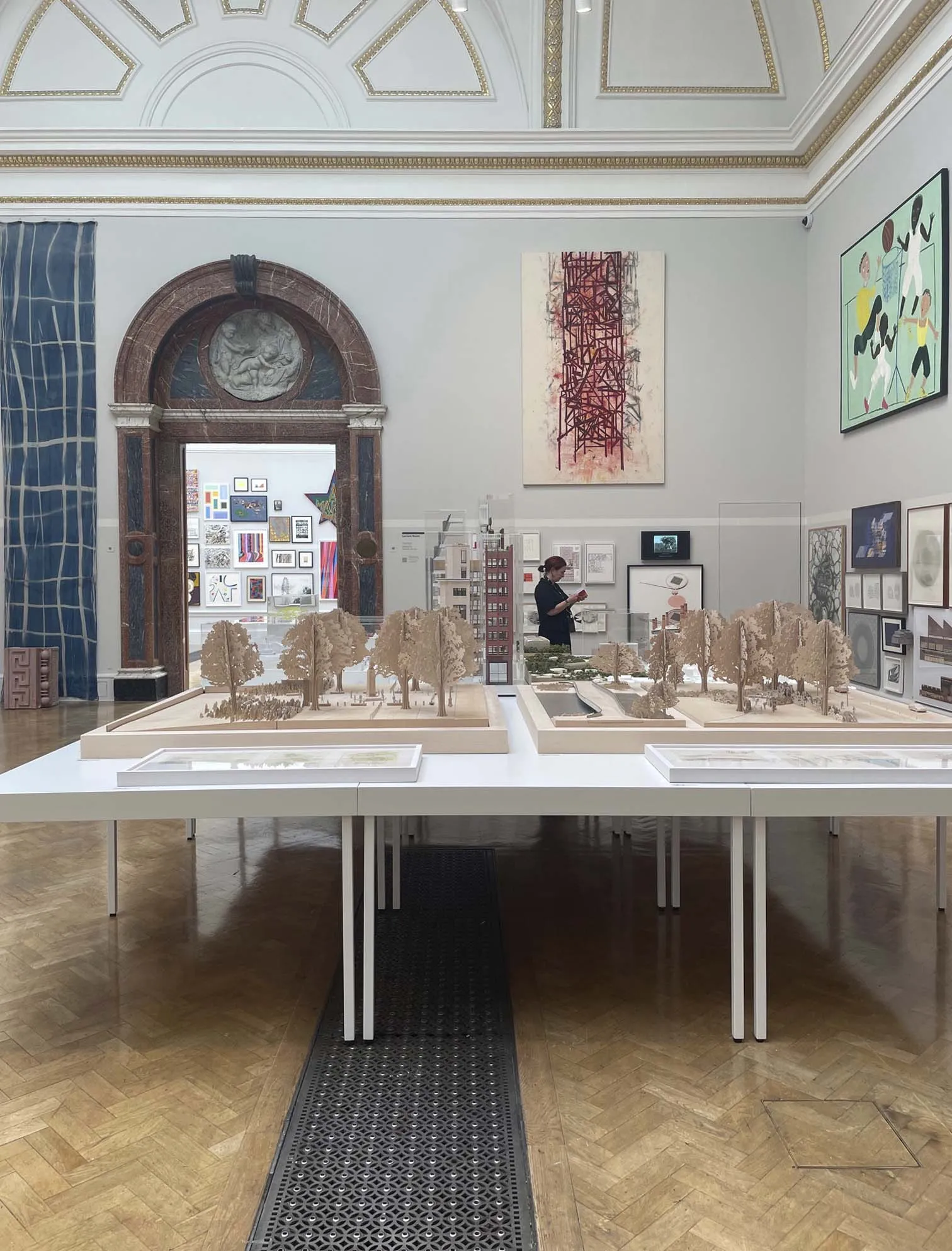
Once you zero in on the architecture exhibits, there is a lot to enjoy, including some gem-like drawings from Peter Märkli, one of the architects whom St John specifically invited to exhibit– alongside Tony Fretton and Stephen Taylor and others. Some of the 2D works that shine the most are plans that nicely talk graphically about interconnectedness in their tracing of the embedded servicing and structuring of buildings, including a couple of works from Farshid Moussavi of her Houston and Montpellier projects, a lighting plan of Paisley Museum at Night by Amanda Levete and Price & Myers’ structural reinforcement plan of David Kohn Architect’s New College Oxford building.
In choosing which 3D work and models to show, St John says: ‘I’ve tried to select models that are spatially, sculpturally engaging – that hold your attention themselves as objects – rather than those types of architects’ models that try to explain everything at once.’
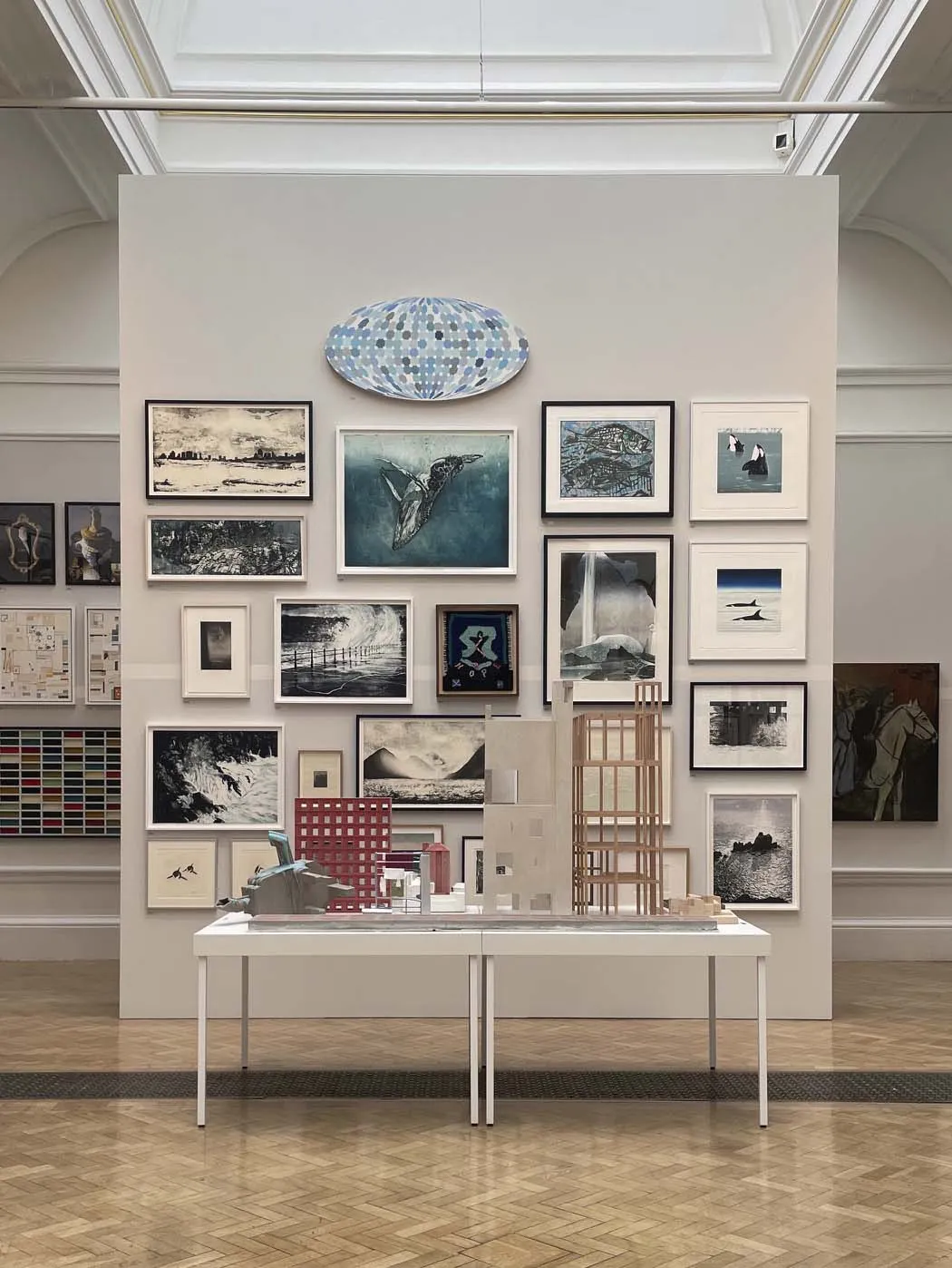
And here, certainly, are models that do just that: an abstracted Arts and Crafts-like house with Lutyenesque curves by Stephen Taylor, and Heatherwick Studio’s Birmingham Powerhouse Stadium, its factory-like chimneys emphasised by being picked out in colour.
St John is fairly phlegmatic about the process of curating and making it all hang together as a show. ‘I tended to choose paintings and drawings that were more abstract and not so figurative, so there’s more connection with the architecture,’ he says.
‘You select a drawing for the quality of its line or use of colour and put it in the context of a painting, which is in some way related, visually or in content. So I was experimenting with that and trying to make the room work together. It’s a kind of interesting but hopeless task!’
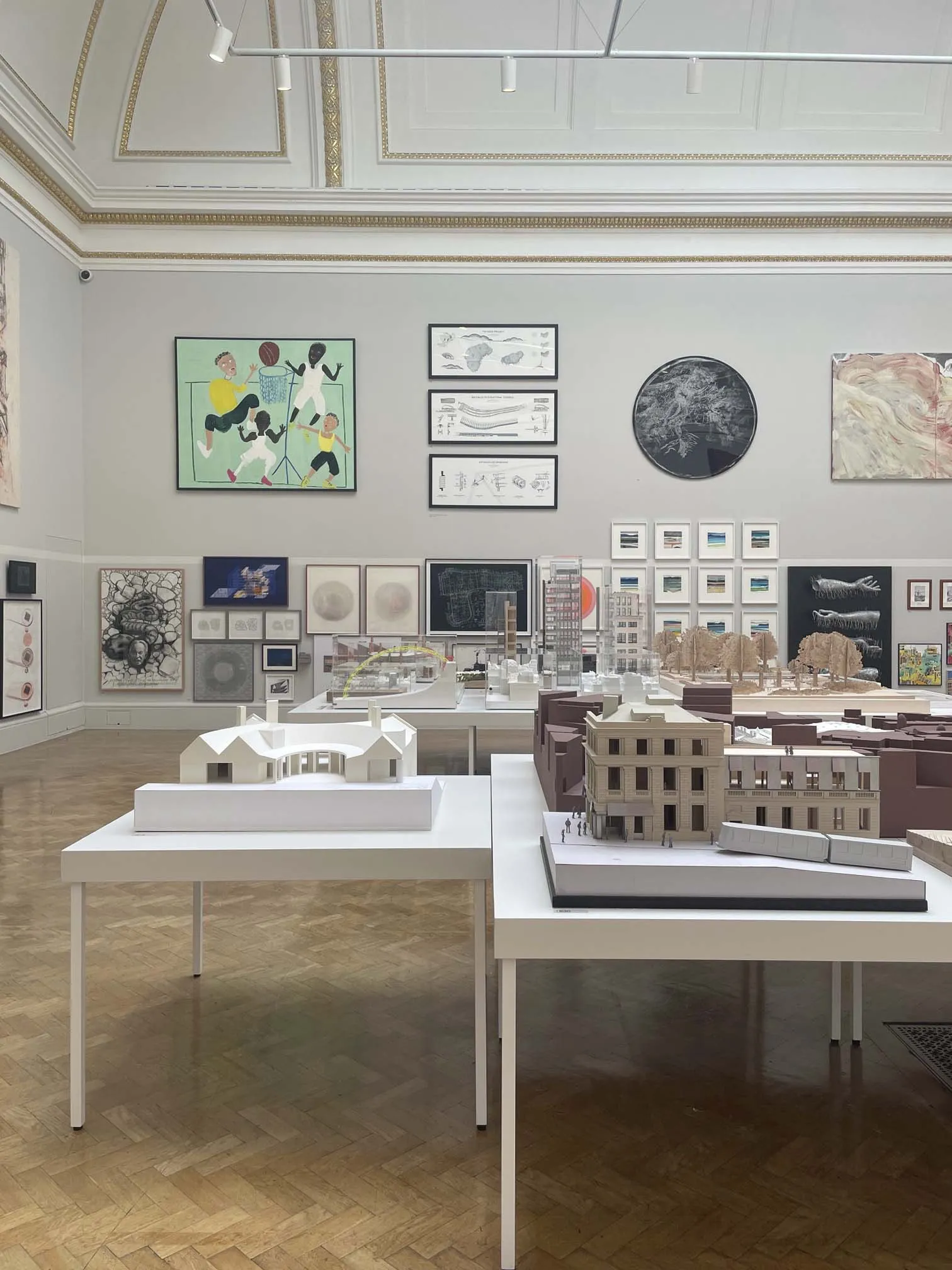
What has resulted is undoubtedly a calmer, more ordered show than some in recent years, with less of a messy maker’s feel – fewer chunks and bits of real material on display. As a result, it also feels a bit flat, with the architecture exhibits across the galleries too buried among the rest. I’d vote for the return of the full-on cacophony of a curated architecture room in future years.
The 2026 Royal Academy Summer Exhibition is open from 16 June until 23 August