
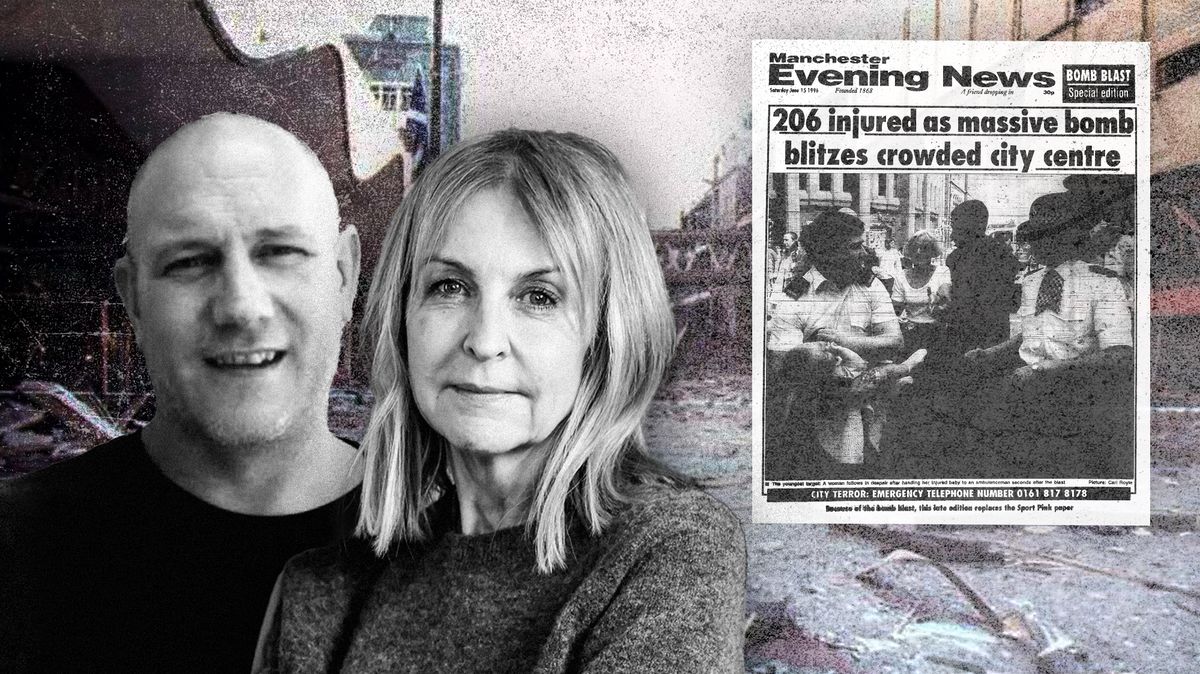
The 1996 IRA bomb helped kickstart the remarkable transformation of Manchester city centre, but for some of the people caught up in the blast it had very different consequences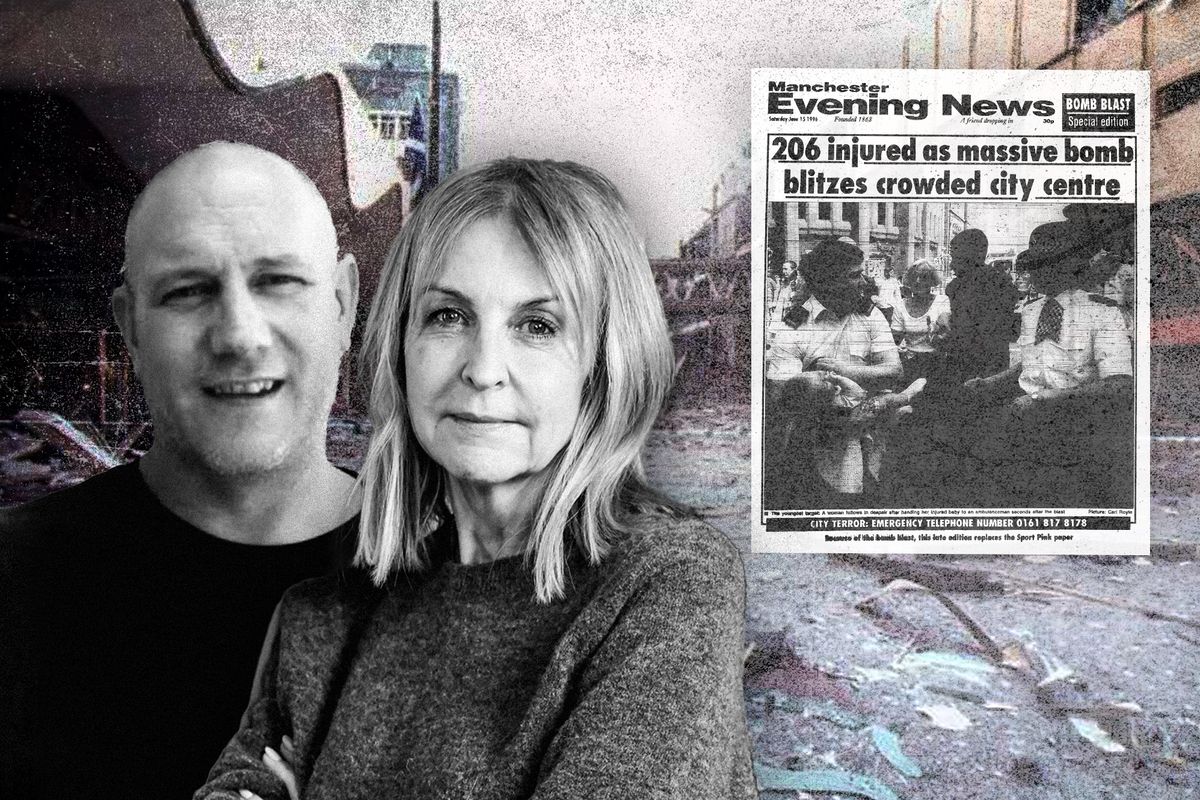
“You feel like you’re on a big dipper. It’s the pressure, it’s the dust, it’s the debris”
For Steve Cope Saturday, June 15, 1996 was the day the ‘skies went dark’ – literally and metaphorically. The then 20-year-old shop worker was one of the few people who wasn’t evacuated when the UK mainland’s biggest bomb since World War Two ripped through Manchester city centre.
Three decades on he’s still living with the consequences. Speaking about his experiences of that day for the first time, to mark the 30th anniversary of the attack, Steve told the Manchester Evening News how he’s faced on ongoing battles with PTSD, anxiety and panic attacks.
And he told of his anger at the lack of support he received and his frustration at how the stories of those caught up in the explosion have been forgotten amid the remarkable transformation of the city centre the bomb helped kickstart.
Click here to get the biggest stories straight to your inbox in our Daily Newsletter
Steve, originally of Hyde, said the day that changed his life started pretty much like any other. It was the day before Father’s Day and that afternoon England were due to play Scotland at Wembley in a Euro 96 group match at Wembley that would be remembered for Gazza’s virtuoso goal and infamous ‘dentist chair’ celebration.
Steve was late for work after a ‘few beers’ the night before and as he hurried along Corporation Street towards Debenham’s, where he worked in Principles menswear, he walked past the van containing the bomb as it was being ticketed by a parking warden. At around 10am staff word came that there was a suspected explosive device in the city centre.
But, Steve says, despite a city-wide evacuation being carried out, staff at Debenhams were told told to remain open. That meant that when the 3,300lb bomb went off at 11.17am, as he was stood talking to friends in the cosmetics department on the ground floor, he felt the full force of the explosion.
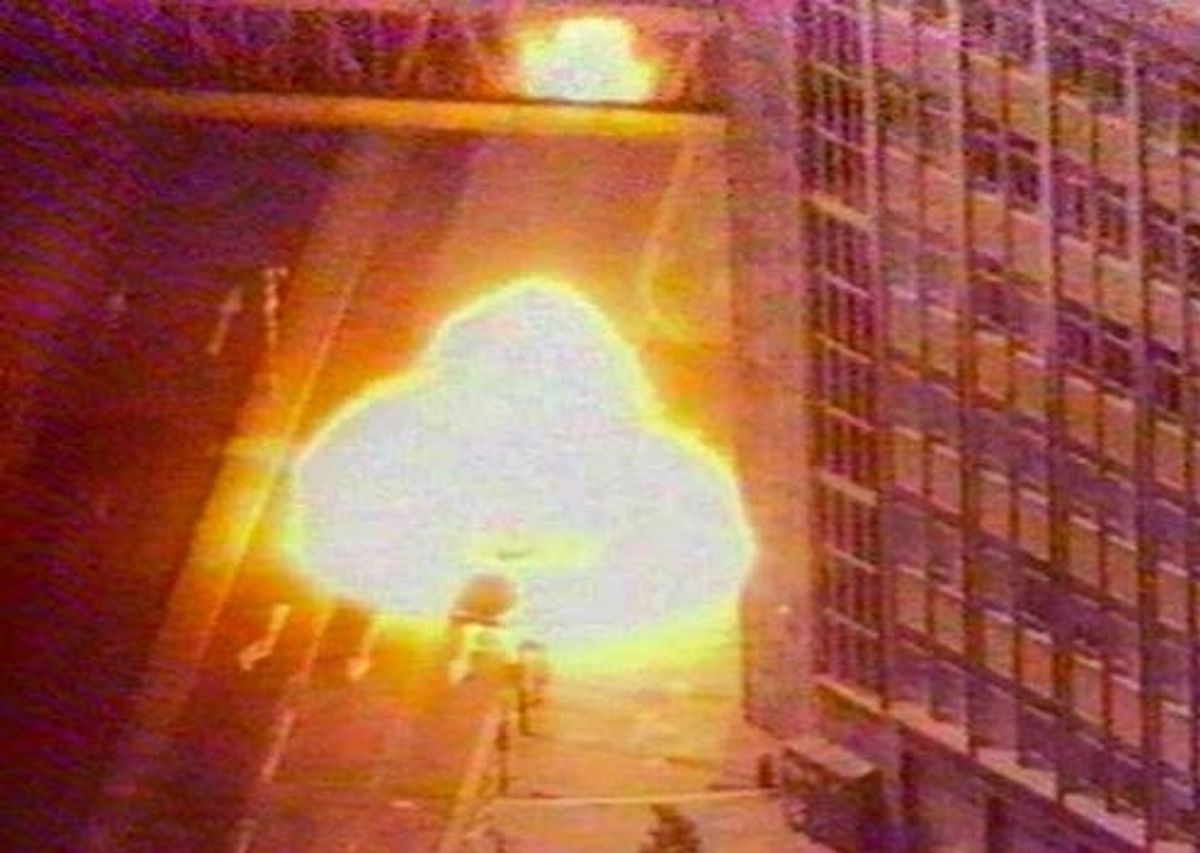
CCTV captured the moment of explosion(Image: MEN)
“The skies went dark,” said Steve, now 50. “The bottom of Market Street just disappeared. After the bang there was a second or two of complete silence.
“I was put on my arse and in that second or two I thought I was dead. Then you heard the alarms, the sirens and the screams.”
In the terror and confusion, Steve and his workmates ran from the scene, sheltering first in the car park at Sacha’s hotel, then near Piccadilly station, both times being moved on by armed police who told them, in no uncertain terms, to ‘F*** off’ out of the city centre, before they found themselves near the barracks in Ardwick.
They sheltered there until around 6pm when, stunned and still struggling to come to terms with what had happened, they were finally allowed to go home. Steve says it was the start of a long journey to understand and get help for the trauma of what he’d just been through.
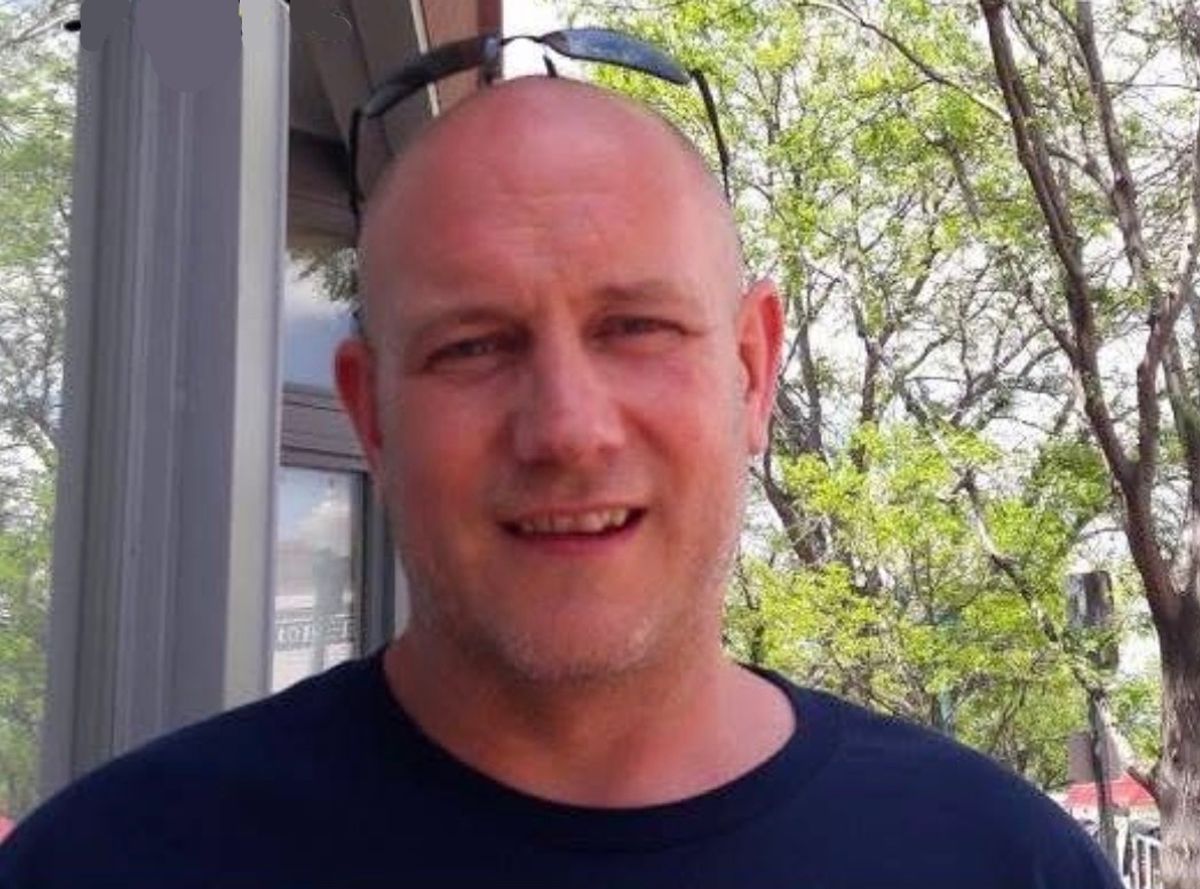
Steve Cope(Image: Submitted)
Although more than 200 people were injured in the blast, mostly from falling debris, remarkably no-one was killed. And when the city centre was reopened Steve was called back into work to help with the clean-up. It was then he had what he now believes to be his first panic attack.
“It was f***** up, ” he says. “We were pretty much told come in or you will lose your job.
“I started to do a bit of cleaning up, then all of a sudden I was on my backside having what I now believe was a panic attack.”
It was the start of a struggle with PTSD and anxiety – and a battle to get any kind of support or treatment – that continued for years. In the aftermath of the bomb he tried to get help from his GP, but was told because he hadn’t been a member of the armed forces or in a war zone there was nothing they could do.

A scene of devastation on Corporation Street
“I was a 20-year-old kid who didn’t understand why his world collapsed,” said Steve. “Nobody could help. What you do is you shove it all down and eventually you get some sort of control. But when you don’t know how to deal with the panic attacks and the anxiety, the ways you do deal with it are not healthy.”
In the years following the attack Steve went through through a series of jobs and saw relationships breakdown as a result of his mental health issues. It was only after he suffered a breakdown in the aftermath of the 2017 Manchester Arena attack that he started getting the help he needed via the Northern Ireland-based terror attack survivors charity SEFF.
Now living in the Hague in the Netherlands, where he’s spent the last 20 years, and receiving treatment for PTSD, he says ‘things are so much better’.
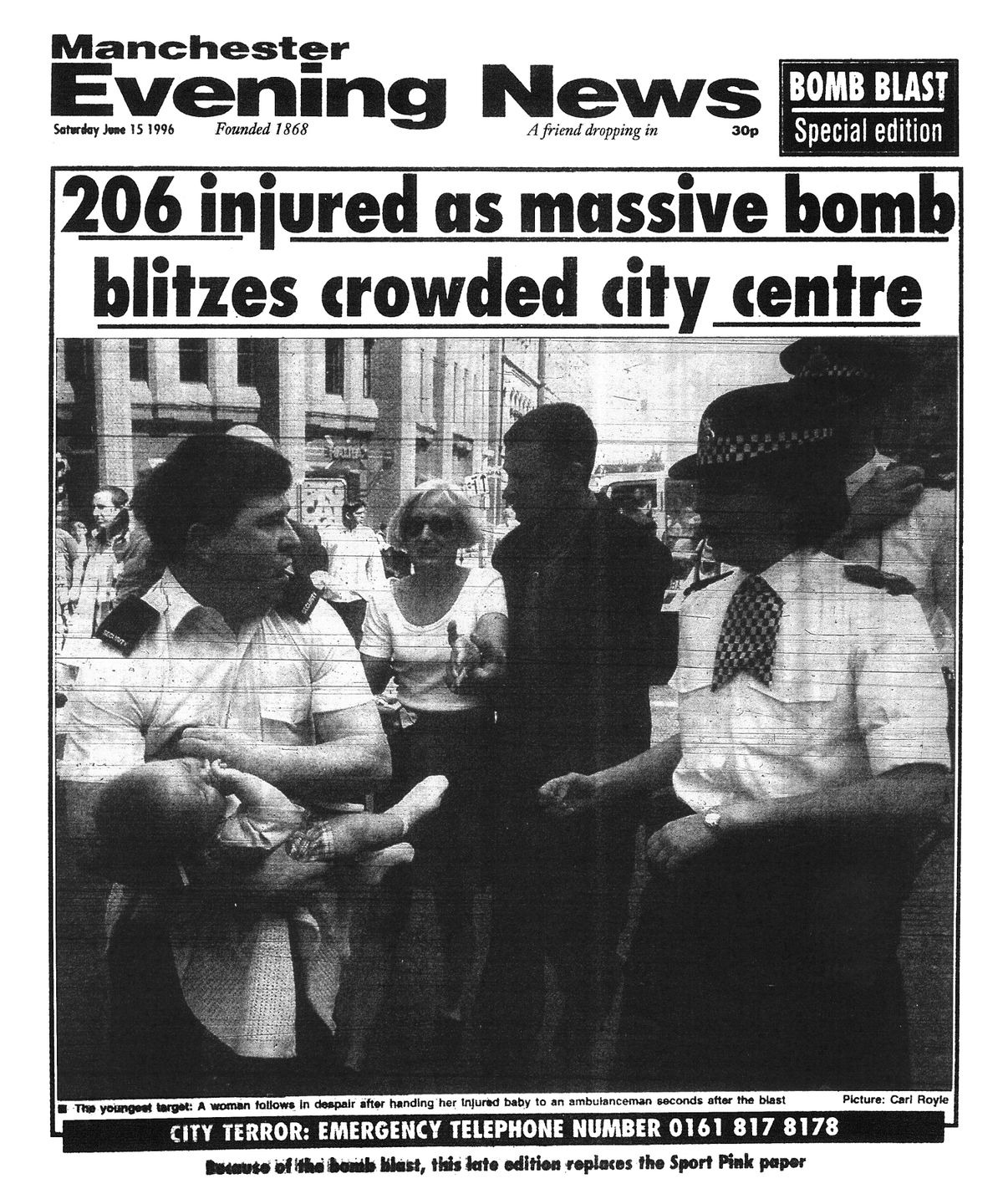
Front page of the Manchester Evening News on the day of IRA bomb on 15th June 1996(Image: Manchester Evening News)
But he says the anger at the lack of support he received still remains. As does the fear that the stories of the people caught up in the bomb have been forgotten.
“I know we were so lucky it didn’t kill anyone,” he said. “People talk about it being a great thing for Manchester, but it wasn’t for me and the other poor b******* who were there. I live with it every day.
“We spend £600m-800m rebuilding the city, we moved pubs, we did all sorts of amazing things, but we couldn’t give a shit about the poor b******* who went through it that day.
“It’s ridiculous that it’s taken an Irish charity and the Dutch health service to finally get the help I needed,” he added. “That’s why it’s important we remember, because I know I am not the only person couldn’t get the help. It’s important we remember how it affected so many people.”
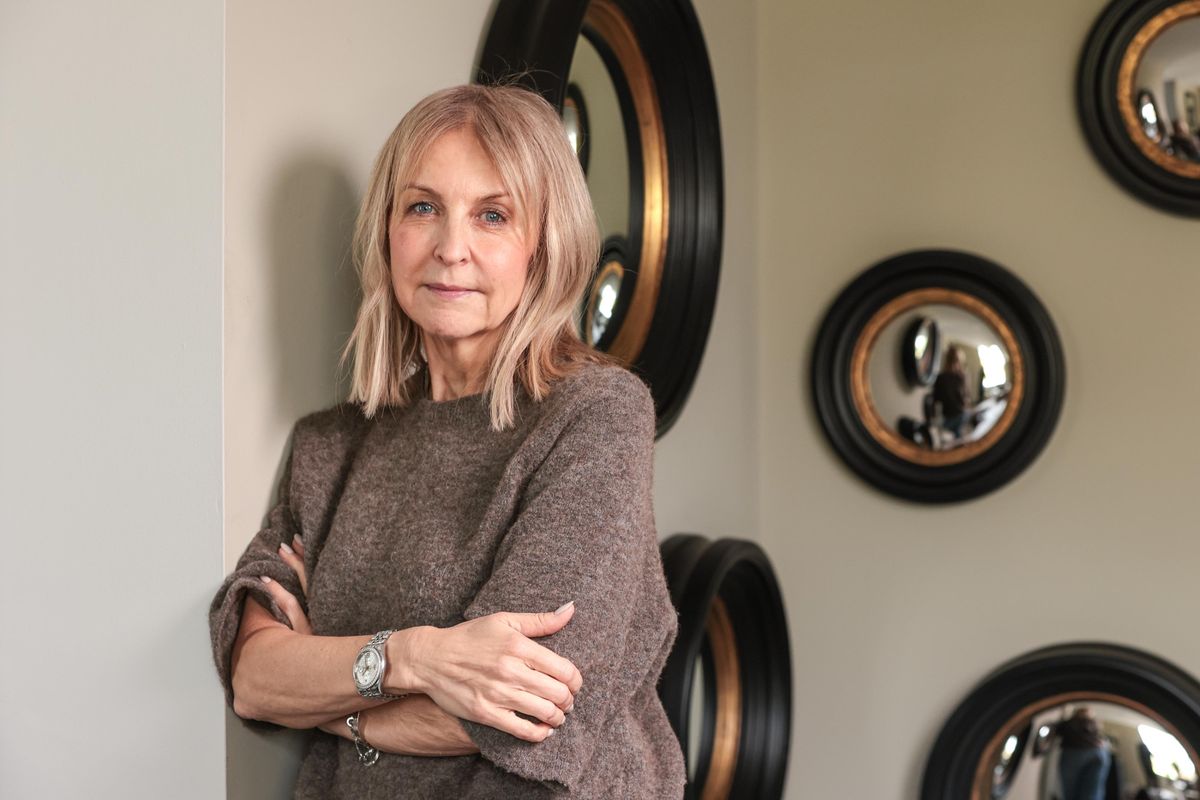
Samantha Shaw pictured at her home in Cheshire(Image: Kenny Brown | Manchester Evening News)
Samantha Shaw is among those people. She describes the explosion as a ‘sliding doors’ moment.
Then aged 29 she was working in a second floor office of the Halifax bank on Cross Street, doing extra time on a Saturday to catch up on some work, when the bomb went off just 200 yards away.
“We’d been left in the building by mistake,” said Samantha. “We were in an L-shaped office and were sat round the corner. When they did the security check they just looked through the window and didn’t see us. So the first I knew about it was when the bomb went off.”
At the moment of the explosion Samantha says she was collecting something from the photocopier, which stood at the back of the office away from the windows. It was a stroke of luck she believes may have saved her life.
“When a bomb goes off there’s like a suction afterwards,” she said. “It’s a weird feeling.
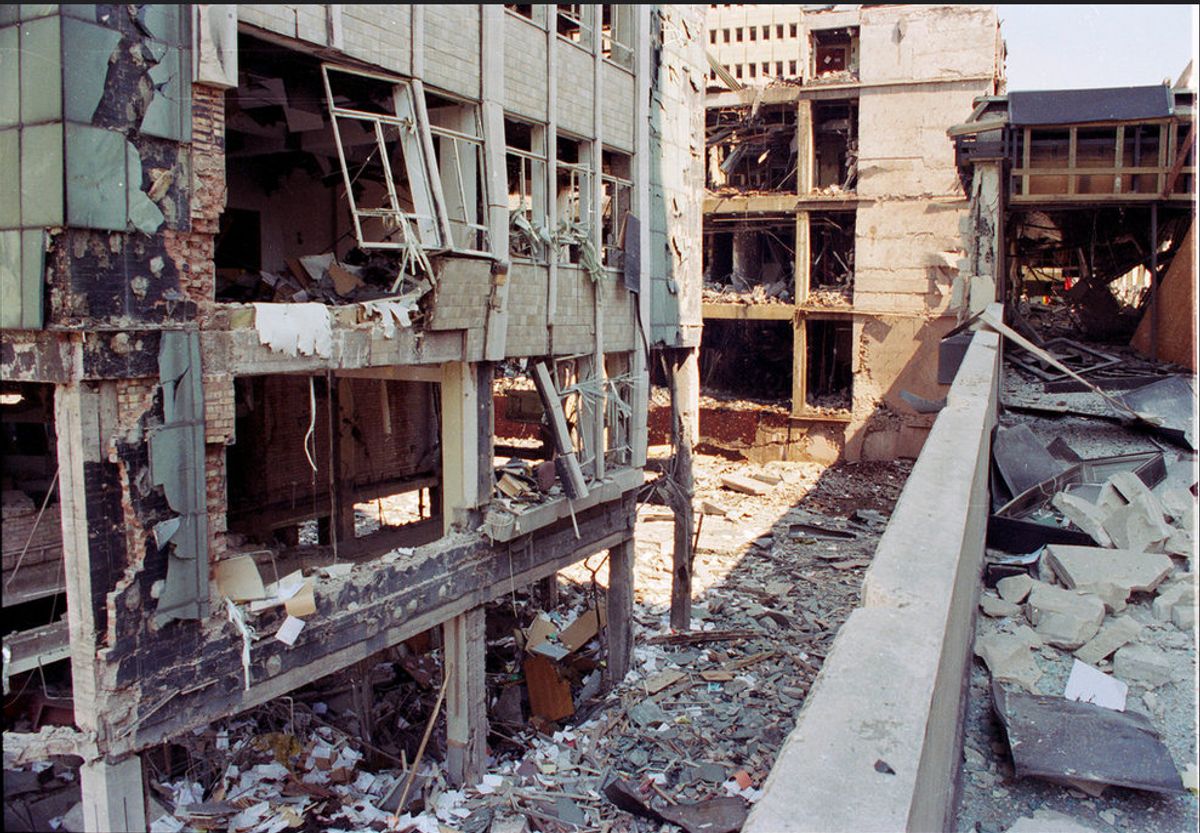
The aftermath of the blast
“You feel like you’re on a big dipper. It’s the pressure, it’s the dust, it’s the debris. The only thing I could think was ‘It must be a wrecking ball coming through the window’.”
Still dazed from the blast, Samantha and her workmate made their way downstairs and were greeted with a scene of utter devastation.
“There was glass everywhere,” she said. “The steel doors to the bank had been blown open.
“There was an officer from the bomb unit outside. I remember he was bald and he blood running down his face. He shouted to me asking if there were anymore of us inside.
“We had to stay cowering round the corner for what felt like forever, but was probably only half and hour or so, because they thought there might be another bomb in the area. I could see the debris everywhere. All the windows had been smashed in.
“Then they walked us down the road towards the town hall. There were three men who looked like they were in charge. One of them said to me ‘Are you alright?’ and when I said yes, he said ‘Right, you can go home’. That was it.
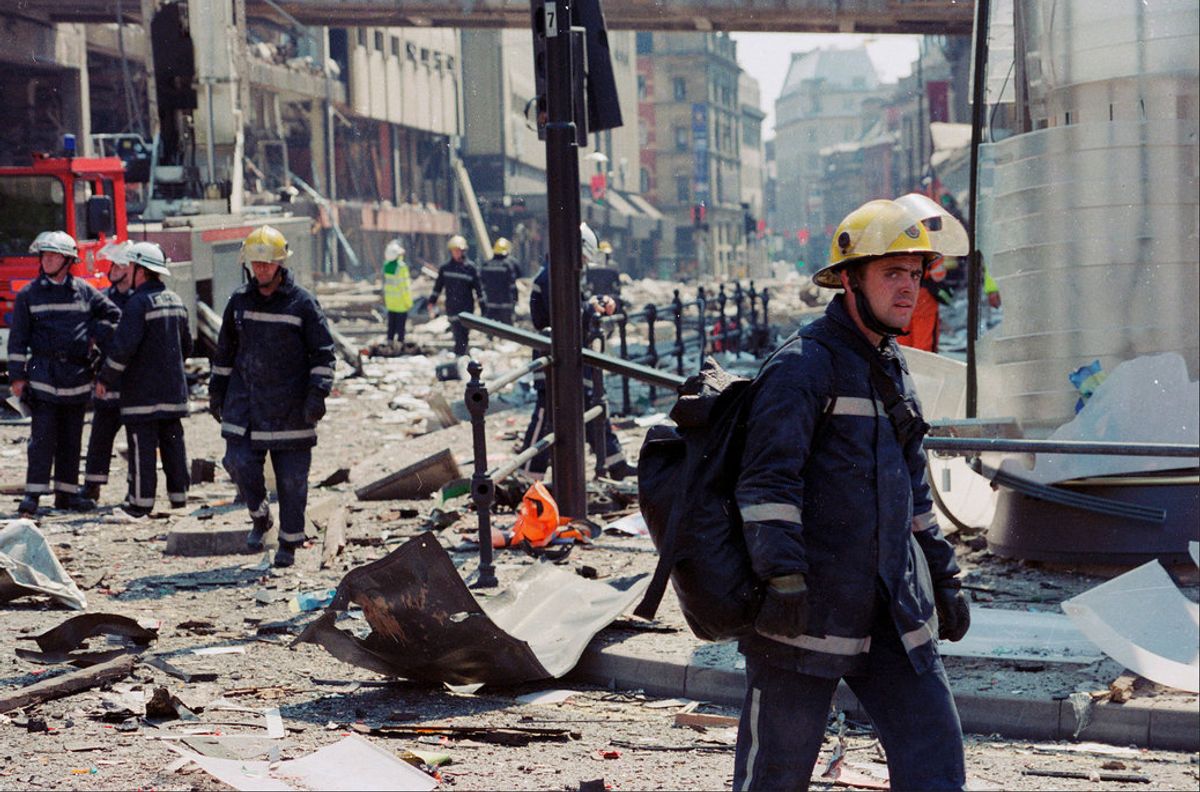
Firefighters at the scene of the explosion
“I walked all way the back to Reddish. It was a red hot and my feet were blistered.”
The next day Sam went to hospital because she was experiencing severe pain in her neck, but was told there was nothing that could be done. She didn’t know it at the time but, like Steve, she now believes she was suffering from post traumatic stress disorder.
The psychological trauma was accompanied by physical issues, including constant pain and hearing loss. Over the years she estimates she’s spent around £40,000 of her own money on physios, chiropractors and psychiatrists. And even now she says she still suffers from memory loss and wears hearing aids.
“At first I couldn’t remember words,” she says. “I didn’t realise how much it had affected my hearing until Covid. When everyone started wearing masks I realised how much I’d been relying on lip-reading.
“I’m not as eloquent as I was, I can’t think like I used to, I don’t have the drive I used to. I still have counselling to this day. It just makes you feel so worthless.”
Thirty years on from the attack that changed her life, Samantha says it’s vital that stories like hers are not forgotten.
“When these horrific things happen it’s always Joe Public that suffers,” she said. “Everybody pulls together at the time, but then everyone just forgets and you’re expected to just get on with your life.
“It’s not just the fact of remembering that’s important. We have to remember so we can move forward and so it doesn’t happen again.”
A memorial service to mark the 30th anniversary of the bomb, organised by the Northern Ireland-based terror attack survivors charity SEFF, will be held at Manchester Cathedral on Sunday, June 14, at 5.30pm.