
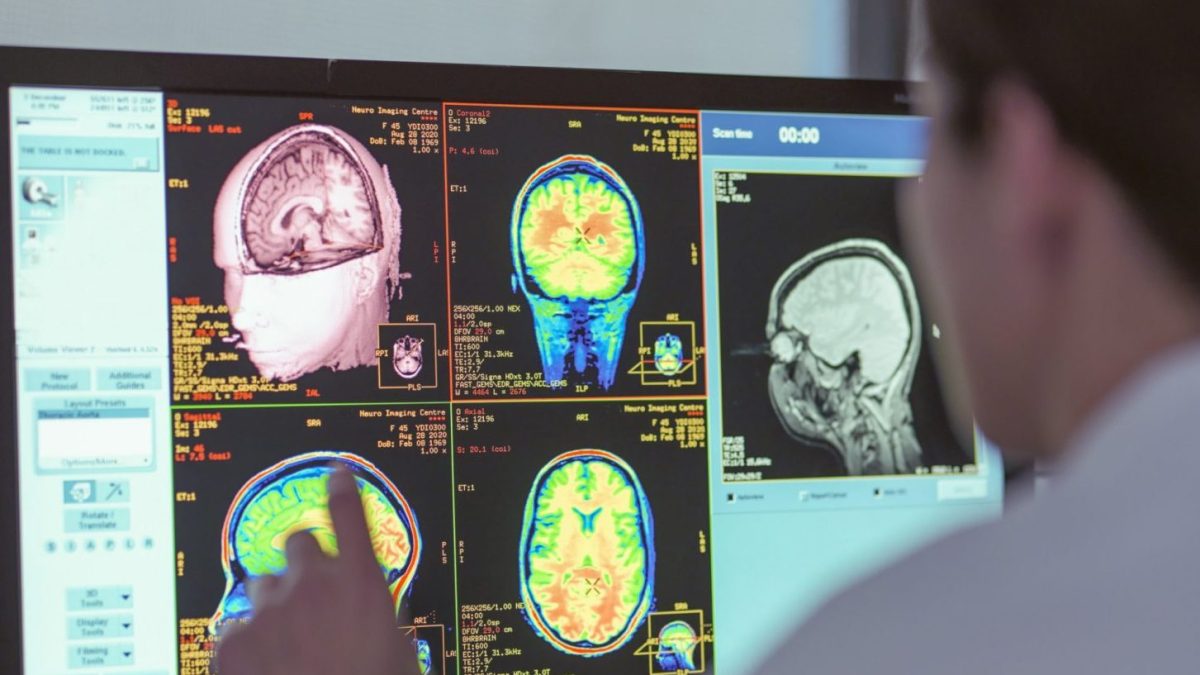
This is Everyday Science with Clare Wilson, a subscriber-only newsletter from The i Paper. If you’d like to get this direct to your inbox every week, you can sign up here.
Hello, and welcome back to Everyday Science.
In medicine, it is common for a drug designed for one illness to eventually find a second use for a different condition.
But in the case of lithium – currently a treatment for bipolar disorder – the change in how we view this medicine might go deeper. Some researchers say that lithium has been fundamentally misunderstood.
Shorts
Scroll to previous short
Scroll to next short
What Burnham as PM would mean for your pensions and benefits

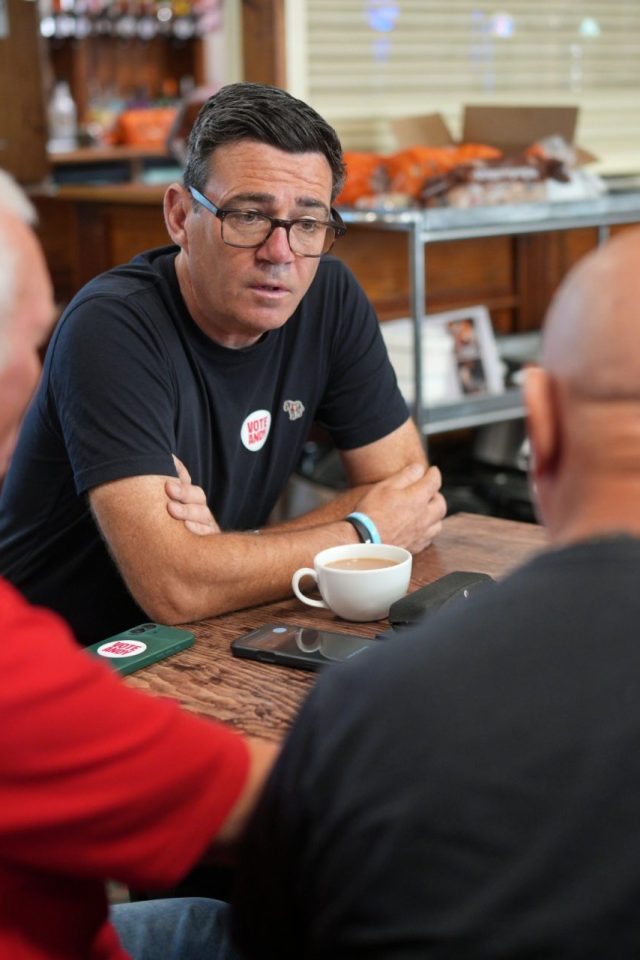
 Caption: ASHTON-IN-MAKERFIELD, ENGLAND – MAY 30: Andy Burnham, Labour’s candidate in the Makerfield by-election, attends a traditional Saturday breakfast club in Ashton-in-Makerfield to meet with retired miners and local organisers on May 30, 2026 in Ashton-in-Makerfield, England. Miners from the area have a long-running campaign regarding the Mineworkers’ Pension Scheme, they are demanding a fairer multi-billion pound restructuring of the pension surplus sharing arrangement originally set up during privatisation. (Photo by Christopher Furlong/Getty Images)
Photographer: Christopher Furlong
Provider: Getty Images
Source: Getty Images Europe
politics
What Burnham as PM would mean for your pensions and benefits
Andy Burnham is being urged by Labour MPs to abandon a manifesto commitment to the triple lock on state pensions to free up cash for defence and young people.
Here’s what that could mean for you if the Mayor of Greater Manchester wins his by-election bid and makes his way to No 10.
Burnham urged to be ‘bold’
Party insiders are pushing Burnham to axe the controversial policy on the tide of “goodwill” following his arrival, reinvesting the money in policies to support young people and bolster the defence budget.
The policy, introduced by the Conservatives in 2010, has been blamed for the ballooning welfare budget under Labour.
 A lot of thought needs to be put into transferring a DB pension to a DC pot (Photo: Getty Images)

OPINION
3 min read
How much does the triple lock cost?
The state pension now costs
£146bn
A year, three times what the Office for Budget Responsibility says it should.
This means the policy itself, which ensures the state pension rises in line with the highest of inflation, wage growth or 2.5 per cent, is set to cost.
£13.8bn
Higher a year by 2029-30.
This is due to higher-than-expected inflation and wage growth in the last few years, causing the state pension to rise by 10.3 per cent in 2023 and 4.3 per cent this year.
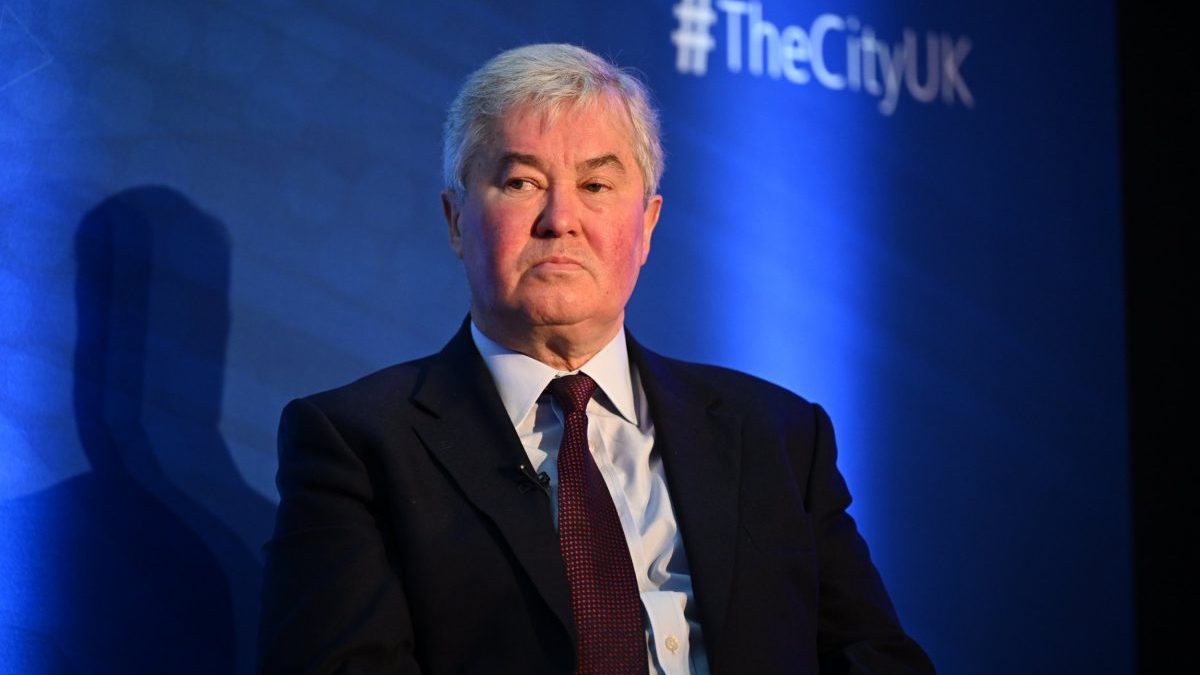 Caption: LONDON, ENGLAND – APRIL 18: General Sir Richard Barrons, Co-Chairman, Universal Defence and Security Solutions attends TheCityUK International Conference on April 18, 2024 in London, England. (Photo by Leon Neal/Getty Images)
Photographer: Leon Neal
Provider: Getty Images
Source: Getty Images Europe
Copyright: GETTY IMAGES
Spend to protect
There’s no point me having a glamorous, comfortable retirement if the country that I bequeath to my children is at great military risk.
The words of Sir General Richard Barrons, chair of the strategic defence review, in the wake of the departure of the defence secretary and armed forces minister over meagre defence spending.
Labour MPs ready for reform on welfare after last year’s backlash
Dame Meg Hillier told The i Paper Labour MPs are now ready to back welfare reform, after Alan Milburn’s due to review youth joblessness.
Burnham himself recently admitted there is “no debate” welfare spending should come down, despite opposing measures to get costs under control last summer.

Exclusive
4 min read

Exclusive
2 min read
Watch more from The i Paper
Could football stadiums help solve Britain’s youth unemployment crisis? The Government plans to open 360 new youth hubs in places like football grounds, libraries and community centres, as the number of young people not in education, employment or training passes one million. Inspired by a Dutch model credited with helping to keep youth unemployment low, ministers hope the hubs can connect young people with jobs, training, housing and mental health support all in one place. Read Vicky Spratt’s piece for more information at the link above ⬆️ #NEET #YouthUnemployment #JobMarket #Footballstadium
♬ original sound – The i Paper – The i Paper
Lithium is an unusual drug as it wasn’t developed in a lab but is a chemical element, meaning it is naturally present in food and water in tiny amounts.
As well as being a medicine, it could even be seen as an essential mineral component of the diet, similar to other elements like iron and zinc, according to a review just published in JAMA Psychiatry.
What’s more, a lack of lithium may be part of the reason some people are more susceptible to developing the memory problems with ageing that progress into Alzheimer’s disease.
“Seventy-five years after its introduction to medicine, lithium may be our best tool for handling the cellular complexities of the ageing brain,” says Professor Husseini Manji, a psychiatrist at the University of Oxford, who wrote the review.
Lithium’s benefits – and limits
Lithium has a surprisingly long history of use. From the 1800s it was known to be present in some mineral-rich springs, claimed to be good for health.
The chemical was once an ingredient of the soft drink 7Up – marketed as Lithiated Lemon Soda – and there was a brief phase in the 1940s when lithium chloride was sold as a table salt in the US.
Such products were banned in 1949, as people started getting sick and even dying from consuming too much lithium.
But about the same time, psychiatrists were realising that, when the dose was properly controlled, lithium could be of great help for those with what was then known as manic depression, now called bipolar disorder.
In this condition, people swing through polar opposites of mood, cycling from mania – when they feel euphoric and energetic – to crashing depression.
Doctors still don’t know why lithium works, but for many people with bipolar disorder, it eases both mania and depression symptoms.
Its main drawback is that at too-high levels, lithium can be toxic to the heart and kidneys, so people need regular blood tests to make sure the dose is just right. But because bipolar disorder can be so devastating, lithium is the first medicine doctors recommend.
“It’s the drug with the most evidence of benefits in helping people with bipolar disorder to stay on an even keel,” says Professor Rob Howard, a psychiatrist at University College London.
While not approved specifically for this use, lithium also helps to improve mood in people with ordinary depression who are not gaining relief from standard antidepressants, the Prozac class of drugs called SSRIs.
Lithium branches out
About 20 years ago, hints emerged that lithium may also help in dementia – particularly Alzheimer’s disease, its main form.
Bipolar patients taking lithium had lower rates of dementia. And studies showed that people living in areas with naturally higher levels of lithium in the water were also less likely to get dementia.
A small randomised trial also suggested that low doses of lithium may slow the rate at which people progress to Alzheimer’s from mild cognitive impairment, an initial stage of mild memory loss and confusion. But larger trials are needed before we know for sure if it really works.
There are several plausible biological mechanisms by which lithium could protect against Alzheimer’s. The leading one is that it inhibits the production of two proteins in the brain thought to be involved in Alzheimer’s, called amyloid and tau.
Lithium also seems to boost levels of other compounds that promote the survival of brain cells.
Whichever mechanism is most important, because lithium is naturally present in the diet in varying amounts, some argue that it is really an essential trace mineral with a biological role in the brain.
Lithium deficiency disease?
Last year the journal Nature published an article titled: “Does lithium deficiency contribute to Alzheimer’s disease?”
Lithium is sold as a supplement, with people usually buying it because they believe it improves their mood or mental abilities, according to a survey by Dr David Cousins, a psychiatrist at Newcastle University.
But as with all supplements, it is unclear whether lithium really is effective or could just be having a placebo effect. The dose in a supplement is much lower than in people prescribed lithium as a treatment for bipolar disorder.
Dr Cousins believes it is premature for people to be self-medicating with lithium in this way. One complication is that lithium supplements come in different chemical forms, and some may lead to higher levels in the body than others.
One form, lithium orotate, is claimed to get into the brain at higher concentrations than in other organs of the body.
But Dr Cousins has recently done brain scans of nine supplement takers, and the results suggest they did have lithium in their brain at very low levels – although there was marked variation in the amount, suggesting individuals might process the chemical differently.
“This is why I’m a bit cautious about this,” he said. “I think there is a lot to learn yet about it.”
Ultimately, the only way to learn more about the effects of lithium on the body is more research – including larger randomised trials to see if it really can help stave off Alzheimer’s.
Professor Manji is now planning one such trial, using a dose that is about a third of the level used to treat bipolar, but still higher than what people would typically take in a supplement. “It’s a low dose that gets away from side effects, but is not a trace dose,” he said.
Professor Howard said that if lithium does prove to work against Alzheimer’s it would be more useful than the more expensive antibody infusions that have so far been approved because, as a chemical element, it is not under a patent and so is relatively cheap.
“Lithium is something that lots of us are genuinely excited about,” he said.
I’ve also written
Angina, the feeling of pain or tightness in the chest, can be a prelude to a heart attack.
But a group of doctors are deliberately triggering the symptoms of angina in patients in their hospitals.
This world-first study is for a good reason – to understand more about exactly what is causing the chest pain, and how it can best be treated.
I’ve been reading
Middletide: A Novel, by Sarah Crouch, is a murder mystery with a difference. The clues all point to one person, so the puzzle is over how the murderer could not be this individual.
The story is just as much about the characters’ difficult personal lives as the unfolding crime puzzle. It is also a fascinating portrait of the homesteading way of life in an isolated town in the Pacific North-West.