
Speaking about who the first inhabitants might be, Mr Shelley added: “Haven-1 and Haven-2 are fundamentally science platforms, so it may be a private individual who flies, but it’s a private individual who will go with a science programme in mind.
“Then there are high net worth individuals who are looking for sort of the next chapter, the next challenge in their life,” he said. “They have the financial resources to be able to take on this very unique adventure, but are looking to invest their time and try to advance human capability,
“It’s a little bit like the new Everest. It may be ticking somebody’s life to-do list, but we layer on top of that some science that is truly valuable for life and health on Earth.
“There’s a lot of work that’s being done around stem cells, around protein crystal growth, where the private individuals can contribute, they can contribute data towards that, as well as then they can submit their body to being tested and sampled and add that biometric data to the various databases that are looking at how different types of humans react to the space environment.”
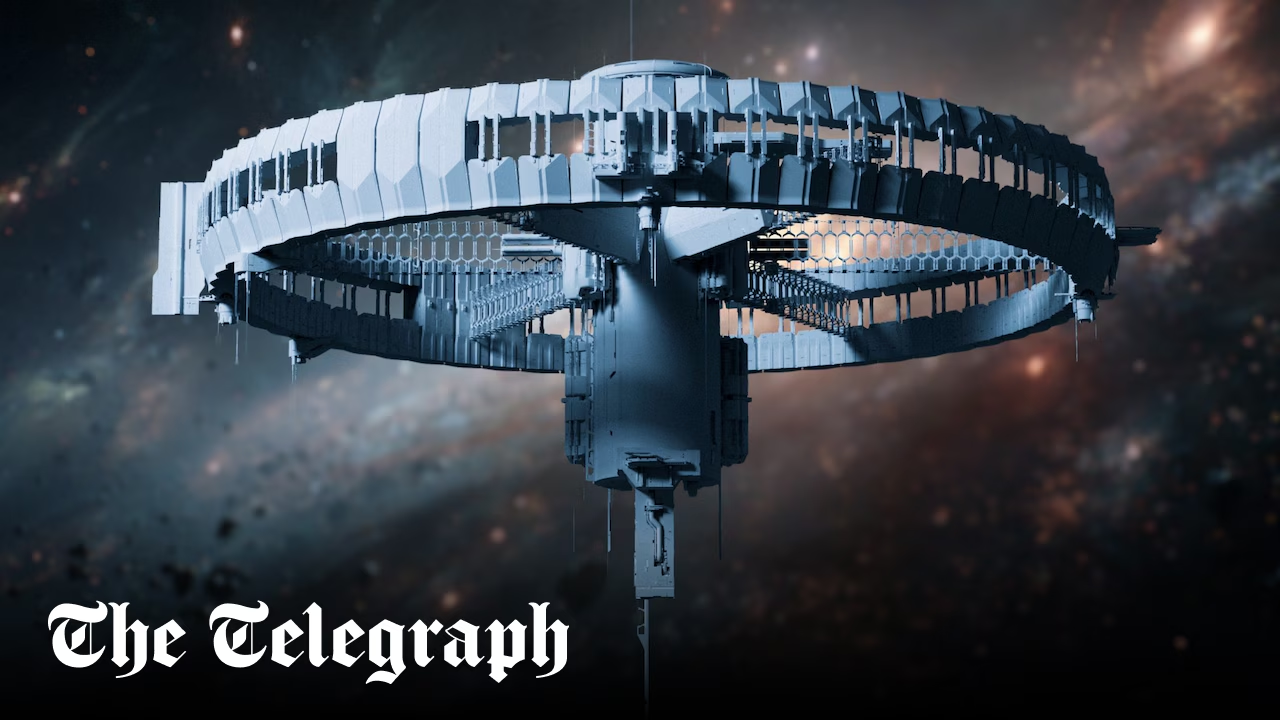
Nasa and Stanford University came up with the idea of a rotating space station in 1975, and called it the Stanford Torus. The ring-shaped station was designed to be more than a mile in diameter and house 10,000 permanent residents.
In 2011, Nasa also began development of the Nautilus-X rotating wheel space station, but the project was cancelled because of budget constraints.