
Photo: Norachai Kajchapanont/Lionsgate/Everett Collection
The Furious takes place in an unnamed city “somewhere in Southeast Asia,” which is as much a spiritual triangulation as a vague general location. It’s a Hong Kong production that was shot in Bangkok, directed by Japanese stunt coordinator turned director Kenji Tanigaki, with dialogue that’s primarily in English. One of its leads is Xie Miao, a regular on mainland Chinese streaming who as a kid in the ’90s twice starred alongside Jet Li as his onscreen son, and the other is Joe Taslim, the Indonesian judo champ turned Warrior and Mortal Kombat actor. The supporting cast extends those Pan-Asian sensibilities across the Pacific to Japanese American Alice in Borderland cast member Joey Iwanaga and Vietnamese American YouTuber-cum-Everything Everywhere All at Once fight choreographer Brian Le. But while watching the opening sequence — in which an investigative journalist named Matia, played by Chocolate star JeeJa Yanin, attempts to uncover a child-trafficking ring, only to end up facing down multiple henchmen in a bruising skirmish — I had a thought. The Furious’s true setting is the realm of action-heads, where Scott Adkins (who does not appear in the movie) and Yayan Ruhian (who very much does) are marquee names, and plot will always be secondary to the incredible feats a well-trained human body turns out to be capable of.
There is a nominal story line in The Furious, which concerns two missing women and the men looking for them. Wang Wei (Xie) is a mute handyman whose daughter, Rainy (Yang Enyou), gets snatched off the street while visiting him from China, lured away by a boy claiming to be in need of assistance. Wang’s efforts to figure out what happened to her bring him into the orbit of Navim (Taslim), Matia’s husband and fellow reporter, who has been living out of a van since his wife disappeared two months earlier, passing himself off as a potential buyer to figure out who’s been running the operation she’s been looking into. They team up to track down Mr. Song (Sahajak Boonthanakit), a gangster with pretensions of being a cowboy, though he’s really just a middle manager, reporting up to a syndicate of powerful, corrupt men being run by the unassuming Paklung (Joey Iwanaga), a fresh-faced suit whose wife is expecting their first child. But all this setup, and the sparse and sometimes clumsy writing, is just scaffolding to support the mind-boggling set pieces and fight sequences, which come frequently and involve a rewarding variety of settings, from your classic split-level nightclub to a freezer room full of bodies frozen into slabs of ice.
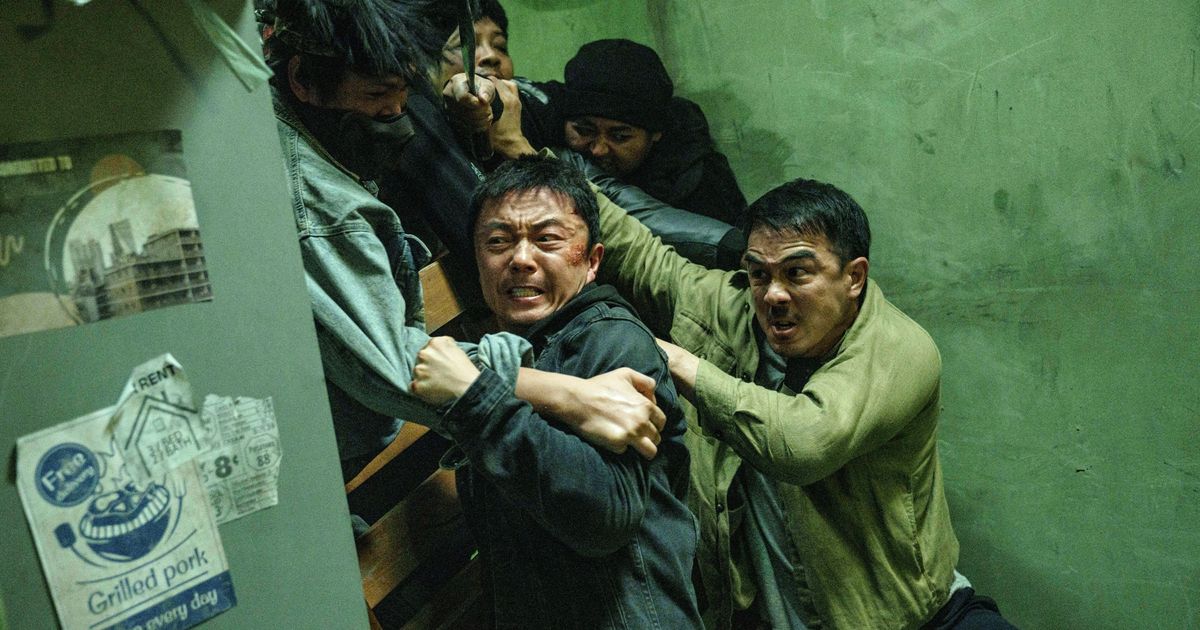
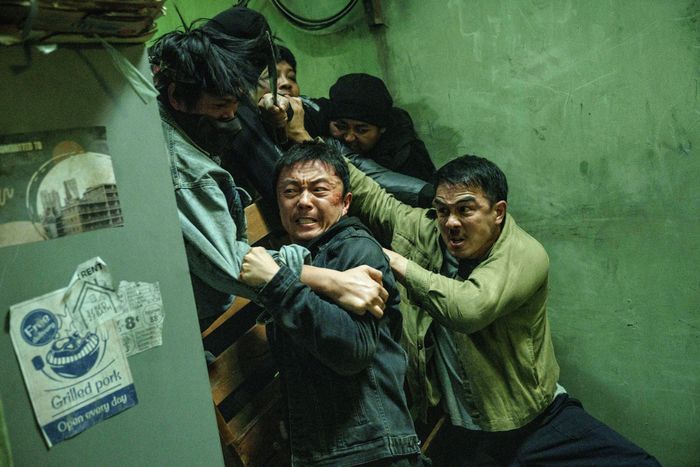
When Rainy is kidnapped and thrown onto a trash truck manned by the enormous henchman Ho (Le), Wang chases them down in a pair of flip-flops, hurtling across the countertops of an empty wet market and after the moving vehicle like someone who knows “appropriate footwear” is just a state of mind. Wang has been living in exile for reasons never explained, and, in the absence of a backstory, the wushu-trained Xie turns his character’s extreme determination into his chief quality, throwing himself into fights in the manner of someone who doesn’t care if he lives until tomorrow if he isn’t able to get his kid back — and who happens to be incredible at beating people up. The sequence in which Wang and Navim first cross paths takes place in a Muay Thai venue in which Wang somehow finds himself in the ring at one point, scrambling up an impromptu human pyramid of foes while efficiently slamming a ball peen right into his opponents’ spines in a spectacle of such delirious violence you can feel a little drunk just watching it.
Tanigaki is one of a spate of directors, like David Leitch, Chad Stahelski, and Sam Hargrave, who made their way into the role from a stunt background, and he showcases action rather than shooting around it. It’s an old saw that fight sequences are a lot like dance numbers, but The Furious approaches its clashes the same way, using longer takes and wide shots so you can see the entirety of the actors’ bodies as they collide and retreat. Its cast is made up of trained martial artists who are doing the work themselves, so there’s nothing to cut around. When Le, who has a surprising, Sammo Hung–like litheness in defiance of his formidable build, takes on both Wang and Navim, it’s obviously him in the frame and him swinging a sledgehammer around like a Norse god with a head injury. The Furious doesn’t treat its subject matter with anything other than bleakness — it takes place in a not-unfamiliar world in which the rich operate with impunity and the systems intended to keep order, including the police, are all corrupt. But it makes room to acknowledge the absurd excess of the action it puts onscreen and takes an obvious pleasure in the people who enable it. When Ruhian, the diminutive Pencak Silat master who became an action nerd shibboleth after his role in The Raid, turns up in a tracksuit and with a malevolent grin while wielding a bow and arrow, The Furious takes palpable delight in his presence, even before he climbs someone like a ladder to attack them. Look what the guy can do, it seems to say, hands outspread. Isn’t it incredible that we get to witness it?
Sign up for The Critics
A weekly dispatch on the cultural discourse, for subscribers only.
Vox Media, LLC Terms and Privacy Notice