
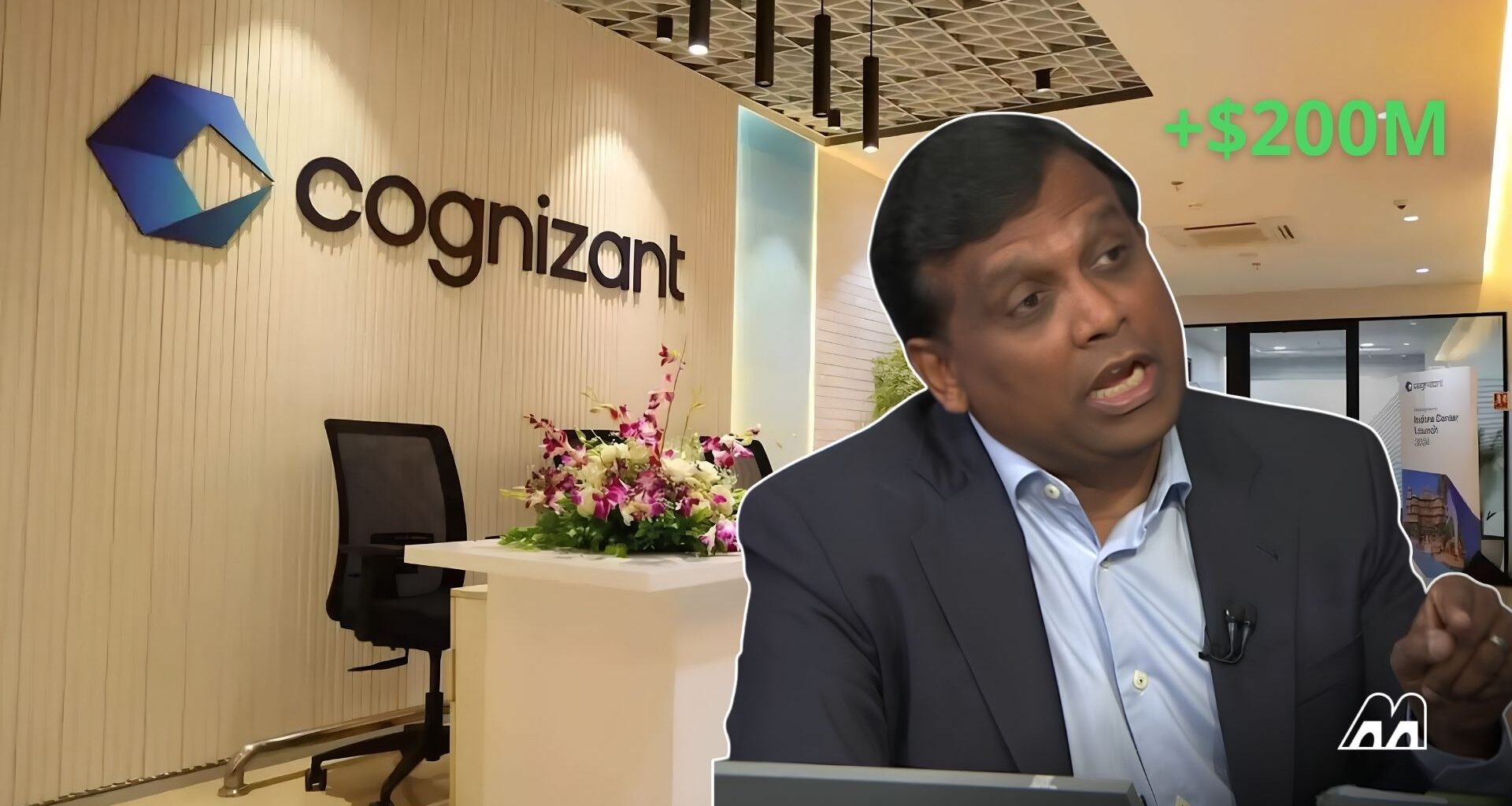
Cognizant just revealed something striking. Its AI employee data analysis system has generated close to $200 million in new sales opportunities in 2026. It did this by reading staff emails, meeting notes, and chats. This isn’t a small lab test. It’s a live system at one of the world’s biggest IT firms. Here’s what Cognizant built, how it works, and why it matters to you.
What did Cognizant actually build?
Cognizant’s CEO, Ravi Kumar, shared these numbers at the company’s AI Forum. The system scans huge amounts of internal data. This includes emails, meeting notes, support tickets, contracts, and chat logs. It looks for patterns that a busy human might miss. Kumar said the company has “roughly $200 million of pipeline generated incrementally through this extraordinary effort of doing a sprawl on the systems, emails, meetings, chats, everything else, and generating it.”
In plain terms, pipeline means potential future sales that haven’t closed yet. So Cognizant’s AI spotted $200 million in opportunities that human sales teams missed.
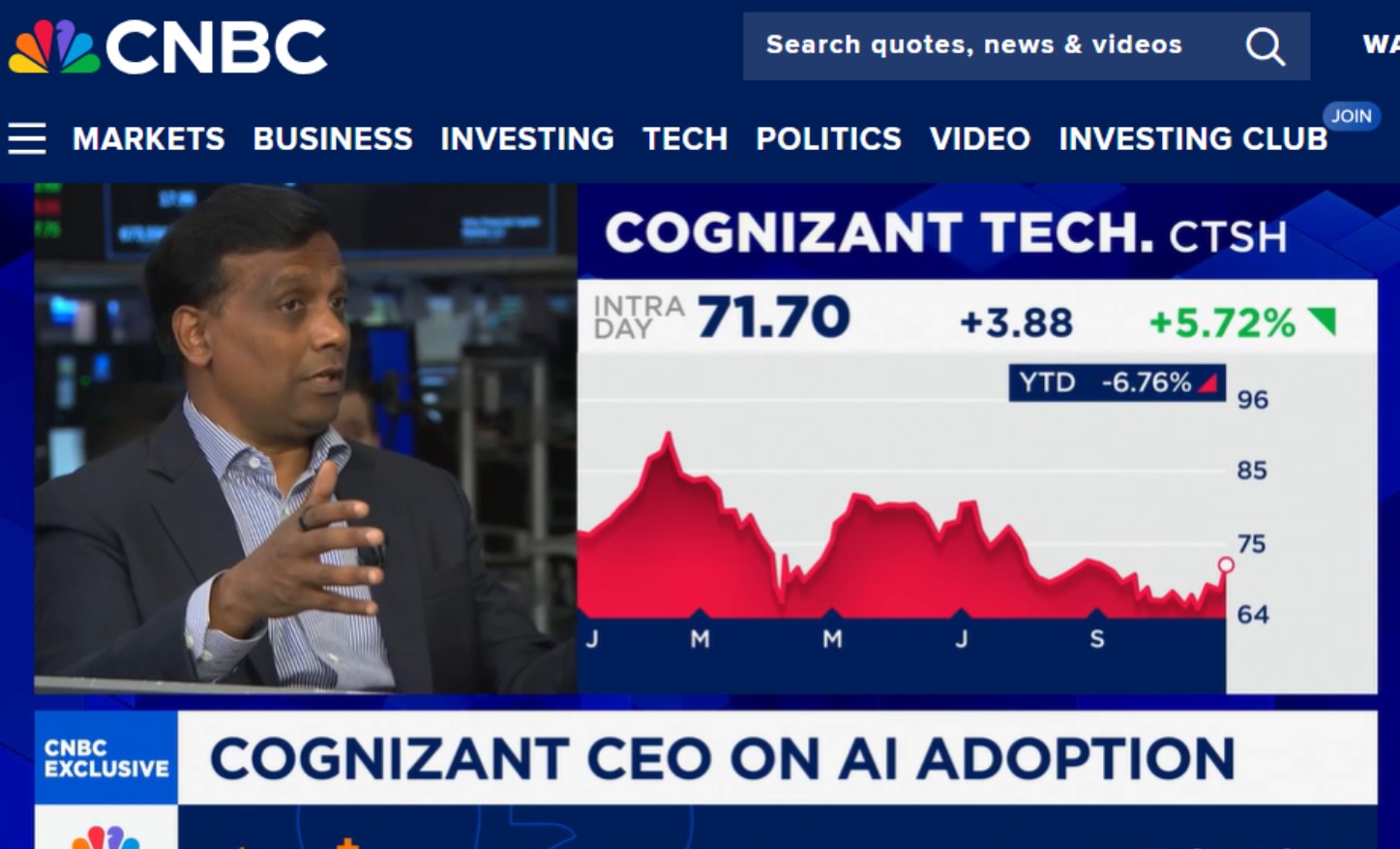
(CEO Ravi Kumar had talked about AI adoption on CNBC)
This is a form of agentic AI. These systems don’t just answer questions. They take action on their own. Big IT firms now use this kind of tool to justify their AI spending to clients and investors.
Meet “context engineering” — the strategy behind the AI employee data analysis
This project sits under what Cognizant calls “context engineering.” You may have heard of prompt engineering, where people write clever instructions for tools like ChatGPT. Context engineering goes further. It feeds an AI system a constant stream of real, messy company data. This helps the AI understand how a business actually runs.
Cognizant built this with Workfabric, a startup founded by Rohan Murty. He’s the son of Infosys founder N.R. Narayana Murthy. Workfabric’s platform, called ContextFabric, pulls scattered information from sales, delivery, support, and finance teams. It turns this data into a “digital twin” of each client account.
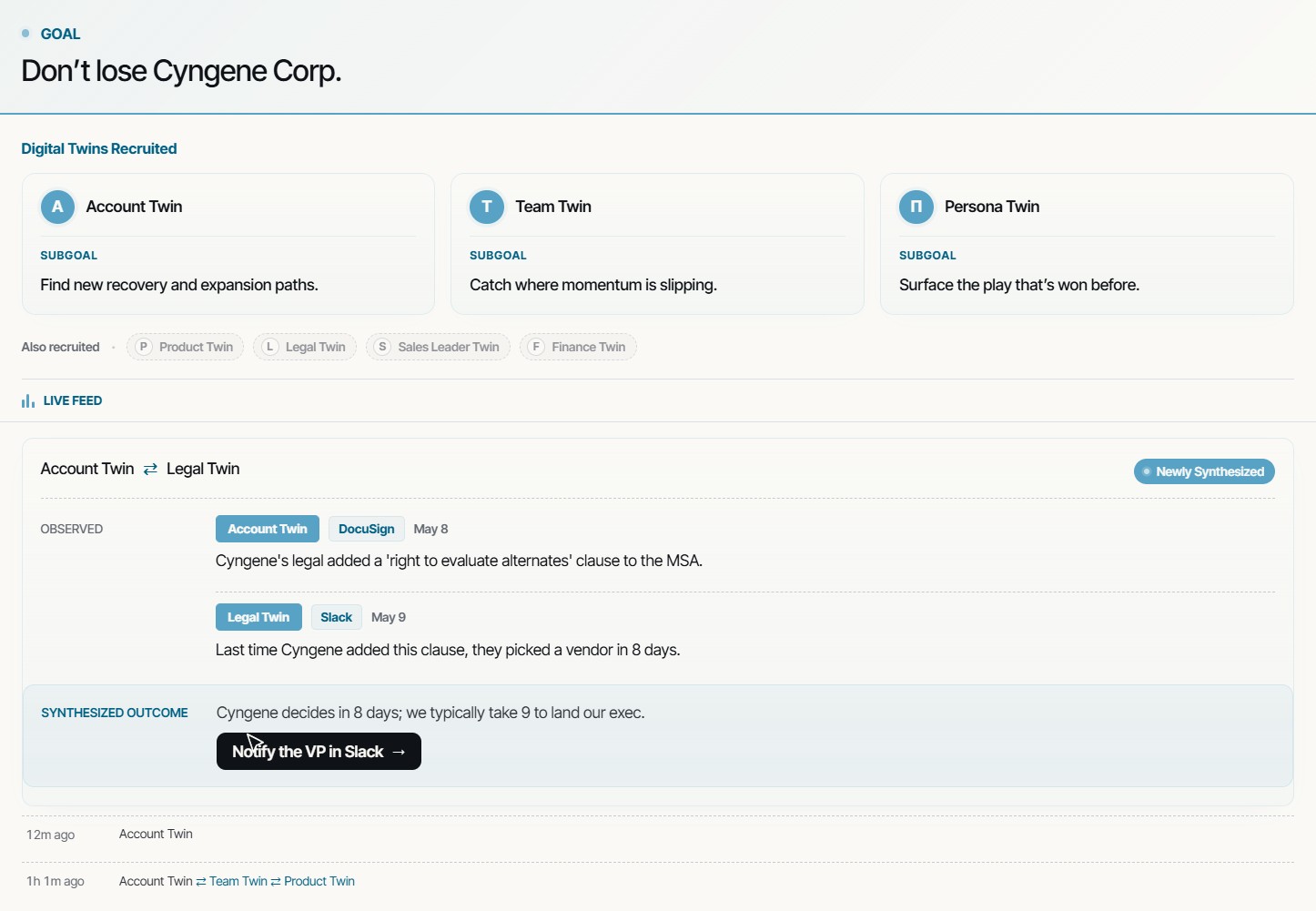
(Describe how WorkFabric works)
A digital twin isn’t a robot clone of a person. It’s a digital profile of a client’s business that updates constantly. It tracks their priorities, their problems, and their spending habits. The AI builds this profile from real conversations between Cognizant staff and that client. The AI then flags opportunities. For example, it might suggest a cost-cutting service after noticing a client complaining repeatedly about engineering bills.
Cognizant has big plans here. The company has already committed to training 1,000 dedicated “context engineers” over the next year. It’s betting this new role will become as important as cloud migration specialists were a decade ago.
Why $200 million is just the start
Cognizant doesn’t see this as a one-off experiment. The company expects its AI employee data analysis to generate $1 billion in pipeline by the end of the year. That’s five times what it has reportedly achieved so far.
This goal lines up with a wider shift in IT services. Companies want to move past simple productivity gains from generative AI. They now want AI to find new revenue streams directly. Instead of just writing code faster, firms want AI that hunts down new customers and new money on its own.
The system also tackles project risks, not just sales. It studies information from teams working on customer accounts worldwide. Then it flags risks and recommends responses, experts, and communication strategies. So if a project starts going wrong in one country, the AI might catch the warning signs early. It could spot trouble before a client even files a complaint.
Cognizant has started using this tool internally, too. The AI can identify employees with the right project experience. It does this by looking at work people have actually done, not just resumes or skills databases. Your old project notes might now double as your work CV.
A bigger restructuring sits behind the AI push
Cognizant’s AI employee data analysis project is part of a larger shake-up. On 29 April, alongside its first-quarter results, the company announced “Project Leap.” This restructuring programme will cut about 4,000 jobs, roughly 1% of its workforce.
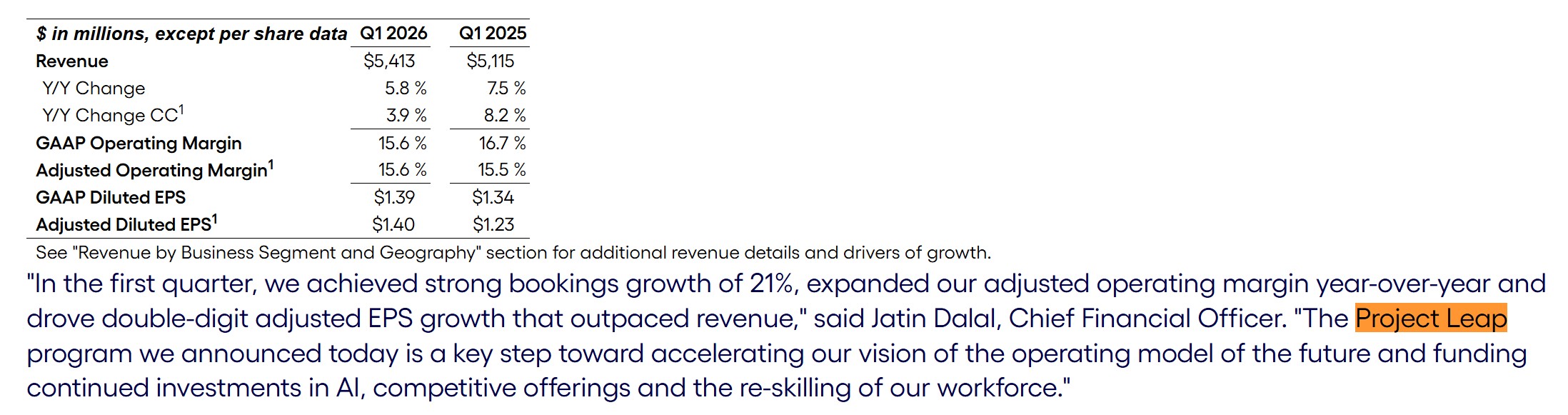
Cognizant set aside $200 million to $270 million for severance payments between April and December this year. It earmarked another $30 million to $50 million for other personnel-related costs. Together, this brings the total Project Leap budget to $230 million to $320 million.
The timing matters. Cognizant is cutting roles even as it leans harder into AI tools that scan employee data and automate sales work. Yet the company insists this isn’t a simple story of “AI replaces humans.” Cognizant’s CEO has pushed back against that narrative before, pointing to thousands of new graduate hires even as restructuring continues elsewhere. Whether that balance holds as Project Leap rolls out remains an open question.
The bigger picture: your inbox is becoming an AI training ground
Cognizant’s project doesn’t exist alone. Several major tech companies now mine employee activity to feed their AI systems. Not everyone feels comfortable with this trend.
Meta started installing tracking software on employee computers. This software captures mouse movements, clicks, and keystrokes. Meta wants this data to train AI agents that can carry out workplace tasks. The move sparked hundreds of staff to push back over privacy concerns. It’s a useful comparison: Meta’s project tracks how employees use their computers. Cognizant’s system focuses on what employees say and write to clients.
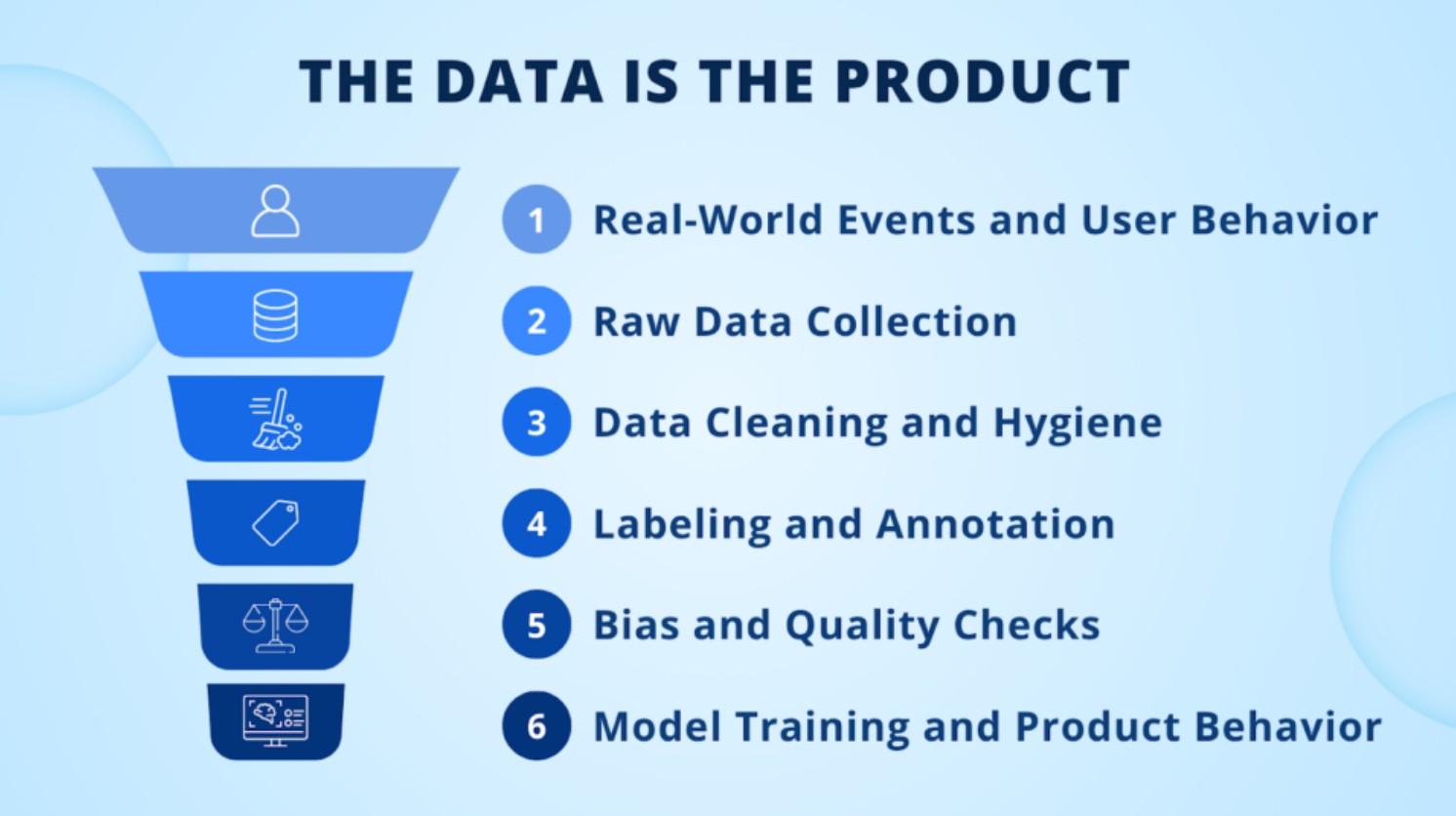
Both raise the same question. If your daily work becomes raw material for an AI product, who benefits? And who gets a say in how that data gets used?
For now, Cognizant frames its tool as a way to help employees work smarter. It connects people to useful experts and helps teams avoid repeating mistakes. Staff may see this differently once the $1 billion target gets closer.
What this means for you
This story matters even if you’ve never used a crypto wallet or AI chatbot. It shows how AI is changing what counts as company data. Employers once saw work emails and chats as private or purely functional. Now they view this data as a goldmine of business intelligence.
Workers might benefit from this shift. An AI could quietly connect you with a colleague who solved your exact problem before. For businesses, this points to where enterprise AI value comes from next. It won’t come from flashy chatbots. It will come from reading the room across thousands of conversations at once.
FAQsWhat is “agentic AI” and how is it different from a chatbot?
Agentic AI refers to AI systems that can take multi-step actions on their own — like flagging a risk, drafting a recommendation, and notifying the right person — rather than just responding to a single question, the way a typical chatbot does.
Has any other big tech company tried something similar to Cognizant’s project?
Yes. Meta has rolled out software that tracks employee computer activity, including keystrokes and mouse movements, to train AI agents — though that project focuses on how people use their computers rather than the content of their conversations.
What laws apply if a company analyses employee emails and chats with AI?
This depends on where the company operates. Many regions have data protection laws — such as POPIA in South Africa or GDPR in Europe — that require employers to be transparent about what workplace data they collect and how it’s used.
What is a “digital twin” in a business context?
A digital twin is a continuously updated digital profile that mirrors something real — in this case, a client account. It pulls together data on a client’s needs, spending, and challenges so a company can respond faster and more accurately.
Why are IT services companies like Cognizant investing so heavily in AI right now?
IT services firms are under pressure to show that AI investments translate into real revenue, not just efficiency gains. Projects like Cognizant’s AI employee data analysis tool are designed to prove AI can directly generate new business, helping these companies justify billions in AI spending to investors.