
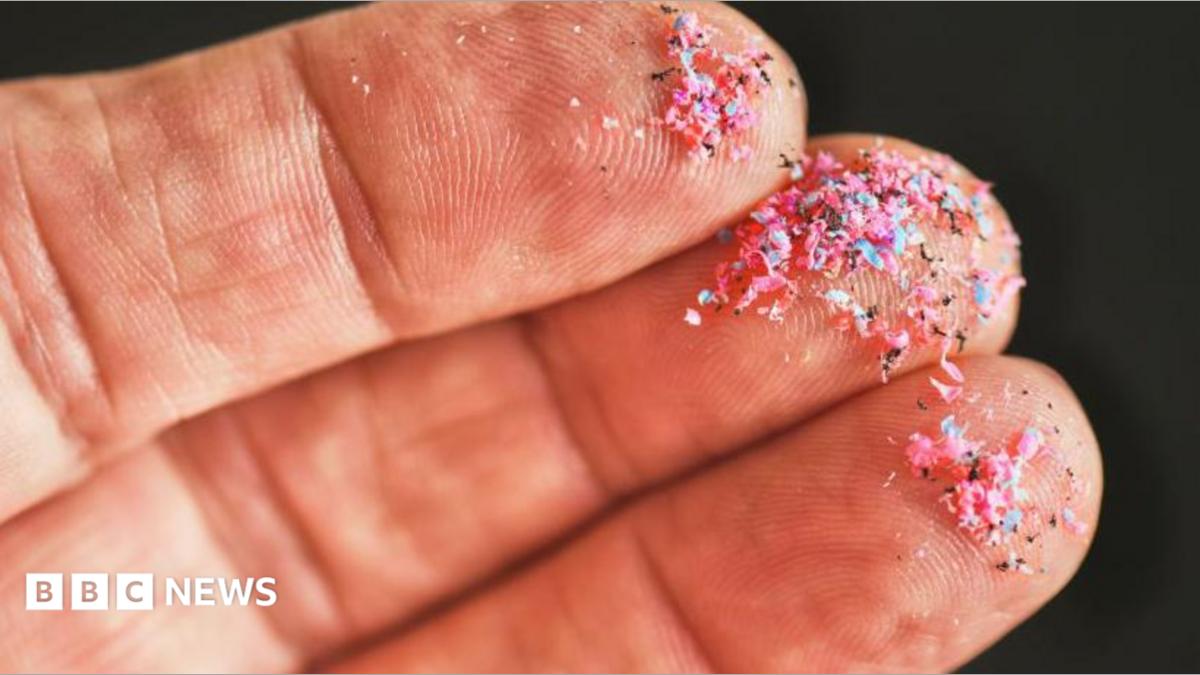
There are several definitions. One widely used approach defines microplastics as any fragment of plastic that is less than 5mm – about the width of a wedding band.
Primary microplastics are those like the microbeads intentionally added to face washes and other personal care products.
But most microplastics come from the slow disintegration of larger plastic products, including plastic wrap, takeaway containers, polyester clothes, tyres, paint and artificial turf. These are known as secondary microplastics.
Very. They are found in water, soil and the air. According to one estimate, 2.7 million tonnes of microplastics seeped into the environment in 2020, an estimate expected to double by 2040.
There are several ways. Over time discarded plastic products – such as water bottles and clingfilm – can break down into microplastics. Synthetic fabrics like polyester can shed microplastic fibres when they are washed. Microplastics also get released into the environment when people use products laced with the particles.
Microplastics can enter the human body through ingestion and inhalation. It remains to be confirmed if nanoplastics – which are less than one micrometre across – may even slip through the skin, as some research suggests.
One study found they can slow the growth of a microscopic marine algae known as phytoplankton, the base of several aquatic food webs.
Another report found microplastics can make soil less fertile, hampering harvests.
Microplastics may speed the melting of snow and ice in places such as the Arctic, limiting the planet’s ability to reflect sunlight and speeding global warming, one study suggested.
Source: United Nations Environment Programme
Listen to the best of BBC Radio London on Sounds and follow BBC London on Facebook, external, X, external and Instagram, external. Send your story ideas to hello.bbclondon@bbc.co.uk, external