
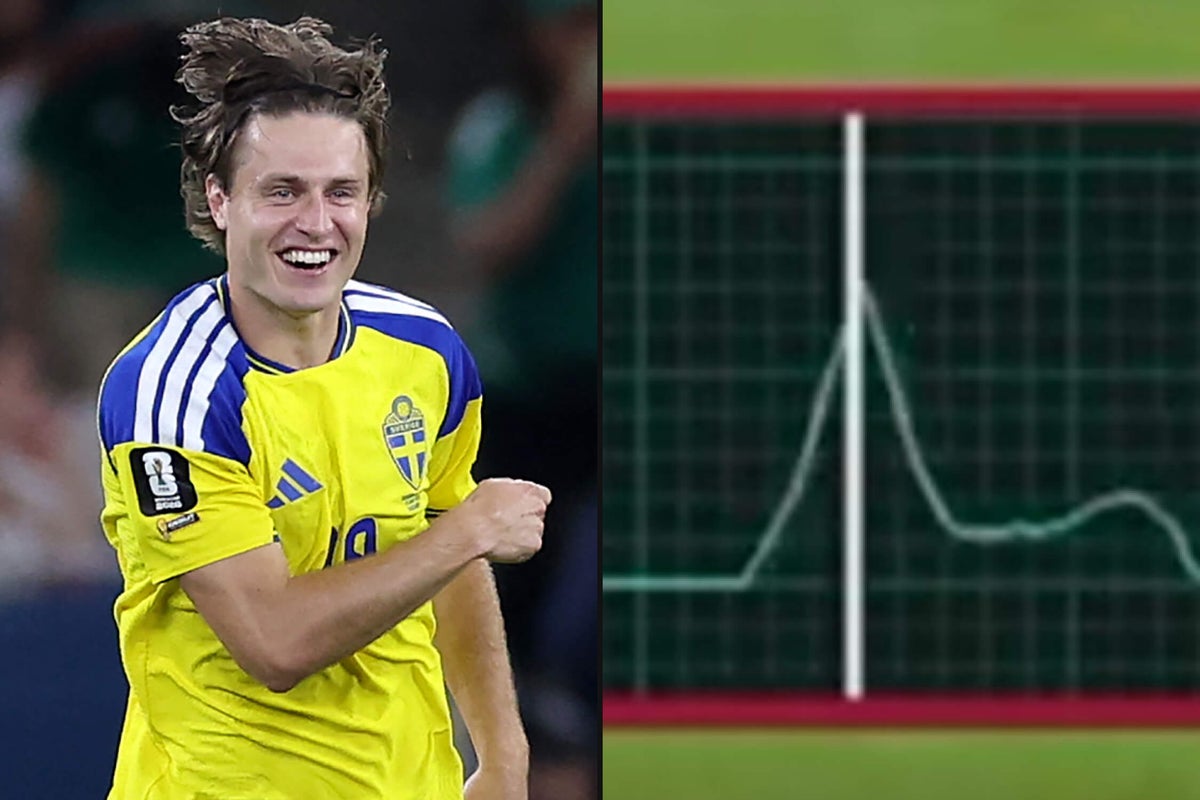
Mattias Svanberg’s impact could barely have been more immediate when he came off Sweden’s bench on Sunday night.
Eighteen seconds were all it took for the substitute to score his side’s fourth in an emphatic 5-1 win over Tunisia but his big moment in Monterrey also owed much to the intervention of technology.
The match official team detected a faint touch on the ball by Liverpool striker Alexander Isak in the build-up to Svanberg’s goal, which meant the original offside call was overturned and the goal allowed to stand.
The Athletic looks at how the process worked and how it leaned on technology used in cricket.
What happened in the incident?
Svanberg was sent on to make an impact and did just that with his very first touch. Yasin Ayari’s free kick from the right was swept into the net by the Wolfsburg midfielder but his celebrations were initially cut short by an offside flag.
UK readers watch here:
That is incredible! 😲
Mattias Svanberg scores for Sweden within seconds of entering the pitch 🔥 pic.twitter.com/IDhpWDfN89
— ITV Football (@itvfootball) June 15, 2026
Svanberg was clearly standing beyond the last defender as the free kick was taken before arcing his run back to meet the cross. Sweden were adamant that team-mate Alexander Isak had got a touch on the way through, meaning that Svanberg’s initial offside had become irrelevant — he had returned to an onside position by the time Isak met the ball.
That was when technology came into play. The video assistant referee (VAR) team on duty identified that all-important touch from Isak and confirmed to the match official, Yael Falcon, that the goal should be given.
Much like the Snicko technology used in cricket, broadcasters could even show a graphic illustrating the precise moment that Isak had flicked the ball on.
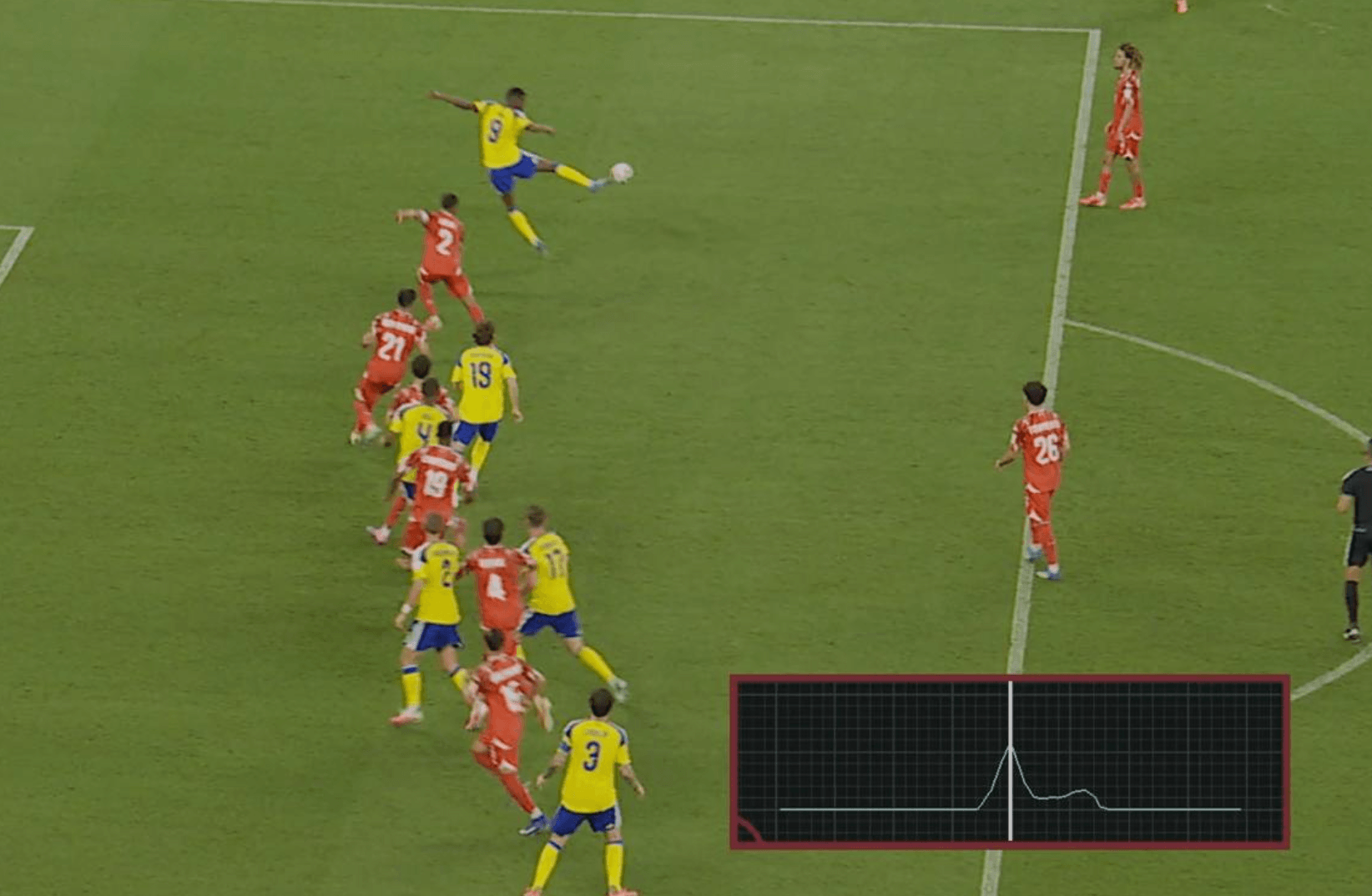
The graphic showed a spike when Alexander Isak touched the ball (BBC Sport)
What’s the technology being used?
From the good to the bad, football has made clear technological advances in recent times, and the match balls used at modern tournaments underline that new era.
Adidas, FIFA’s oldest commercial partner, manufactures the balls used in World Cups and since Qatar 2022, a 500Hz inertial measurement unit (IMU) motion sensor has been embedded to track data and enhance the VAR system.
The ‘Connected Ball Technology’ (CBT), as Adidas calls it, is combined with player position data and, through artificial intelligence, they offer real-time information to streamline the semi-automated offside process. By delivering data 500 times a second, the sensor helps make the precise moment a ball was touched clear.
Its primary purpose is to help with offside calls but it can also detect whether a player has touched the ball.
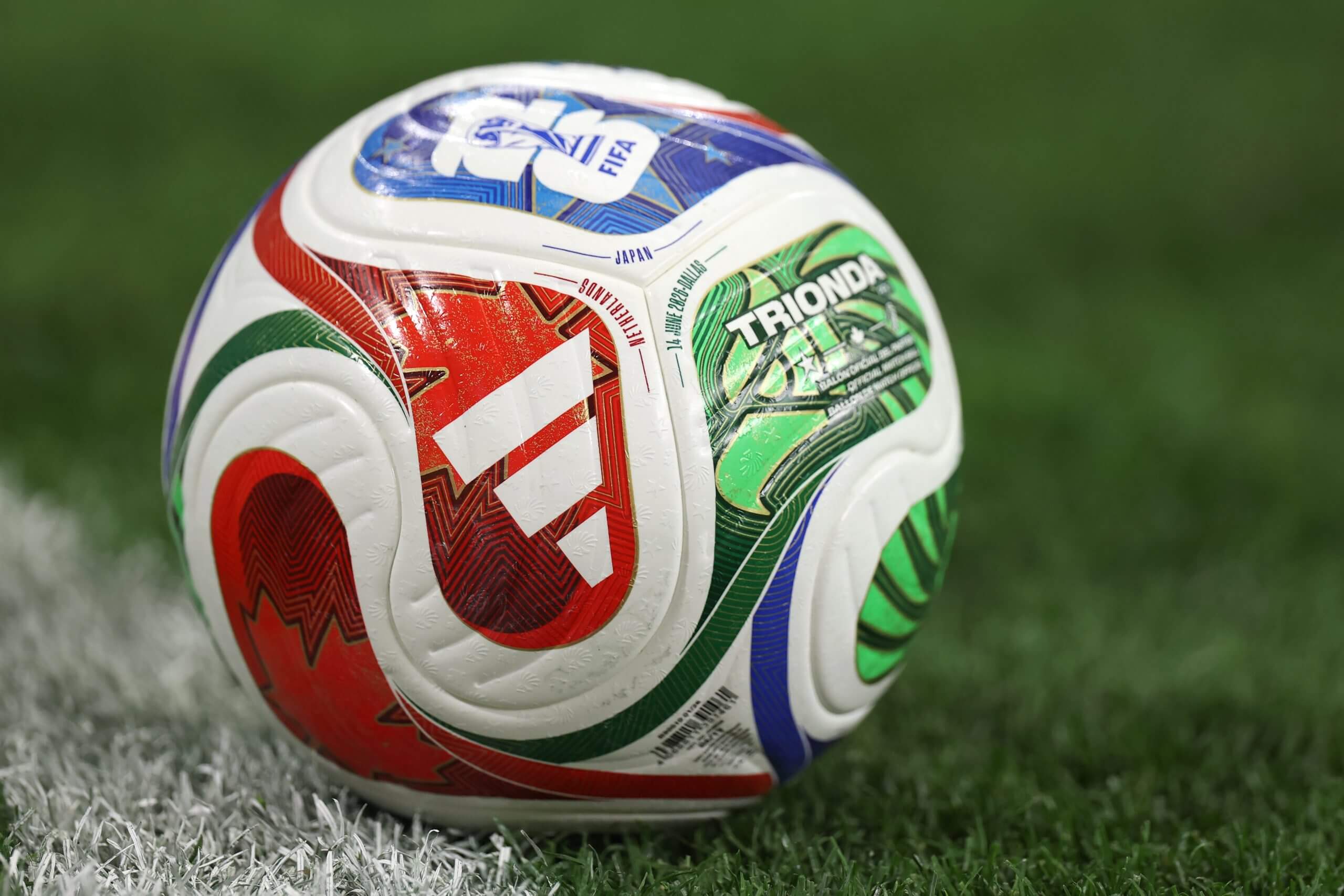
Adidas’ Trionda World Cup ball (Francois Nel/Getty Images)
Just ask Cristiano Ronaldo, who learned to his goalscoring detriment four years ago. Ronaldo claimed he had got a slight touch on Bruno Fernandes’ cross in a 2-0 win over Uruguay in Lusail, celebrating as though he had, but FIFA would later credit the goal to Fernandes.
The tournament organisers said in a statement that “no external force on the ball could be measured as shown by the lack of heartbeat in our measurements” and the same logic was applied four years on to give Svanberg the green light to celebrate.
Adidas’ latest World Cup ball, the Trionda, also carries a sensor developed alongside FIFA and the German technology company Kinexon. It could detect that crucial “external force” on the ball as it passed Isak’s boot, ensuring that Svanberg was not offside when firing in his first World Cup goal.
The CBT can also record the speed at which balls travel. Adidas said today that the two goals scored by Yasin Ayari against Tunisia were the fastest of the tournament so far, clocked at 120kph (74.6mph) and 118kph (73.3mph).
The technology used by Adidas was also seen at the European Championship in 2024 but the Premier League, whose match ball partner is Puma, have not yet adopted a motion sensor.
Wasn’t this all a bit reminiscent of cricket?
The graphic that FIFA showed certainly was. In cricket, the decision review process (DRS), whether through Ultra Edge or Snickometer technology, has long been able to show the ball passing the bat and indicate with a spike whether contact has been made.
That technology can adjudicate on catches and leg before wicket calls but is largely reliant on sensitive microphones positioned at the base of the stumps, rather than a sensor within the ball.
During last winter’s Ashes series between Australia and England, there were calls for ‘Snicko’ to be dropped as the technology used by Cricket Australia following a series of controversial moments where the spike on the graphic did not appear to align with the ball passing the bat in the accompanying footage.
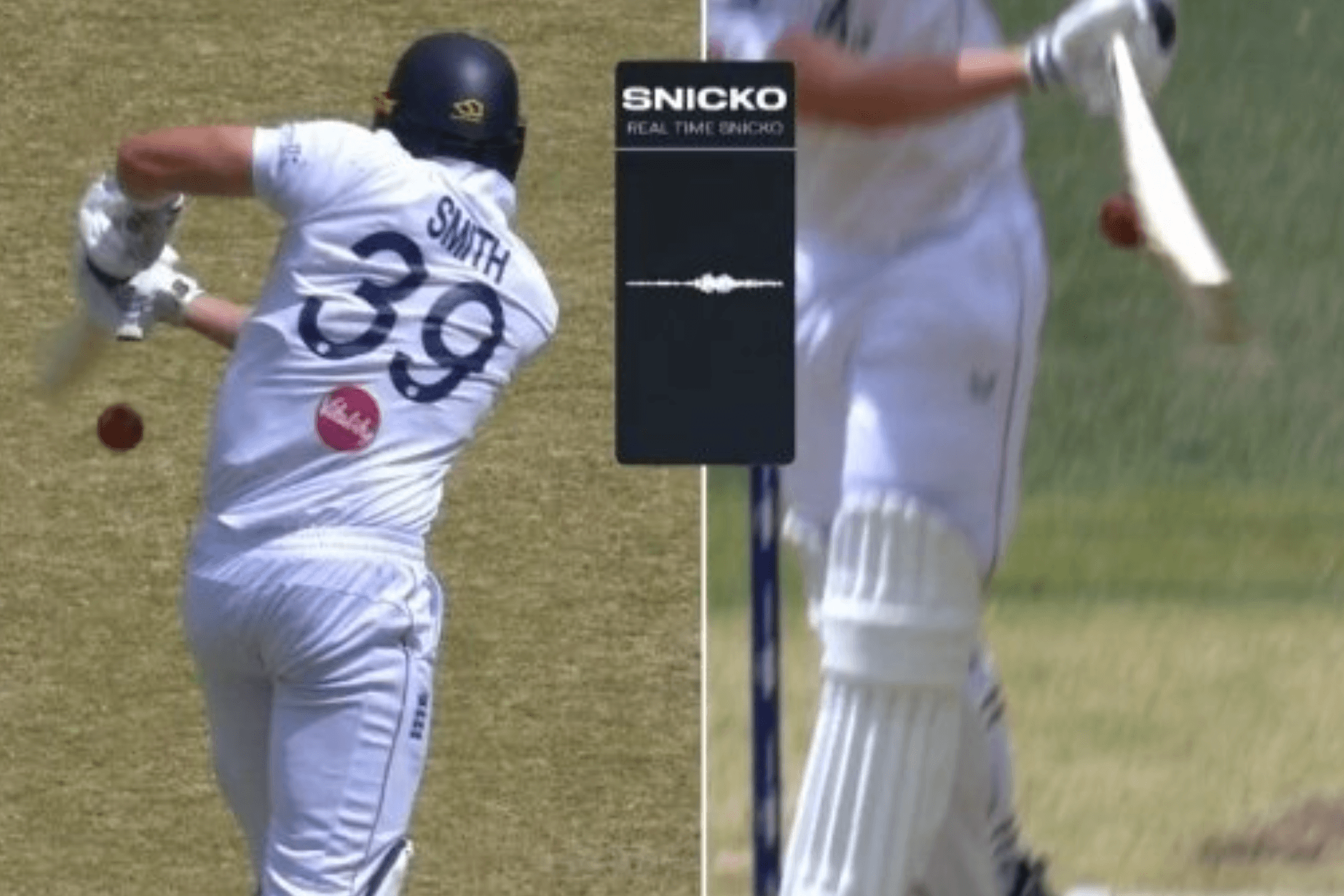
Jamie Smith was controversially given out for this ‘Snicko’ decision in Australia (Fox)
FIFA’s grasp for transparency resulted in them showing viewers Isak’s touch through a graphic that resembled a cardiac monitor, with the telling spike as it flicked his right boot.
That only came, though, after the goal had been confirmed, meaning the moment did not quite have the same sense of theatre enjoyed in cricket.