

UK Karting Market Size
The UK Karting Market is projected to grow from USD 0.23 billion in 2025 to USD 0.25 billion in 2026 and reach USD 0.41 billion by 2034, registering a CAGR of 6.38% during the forecast period from 2026 to 2034.
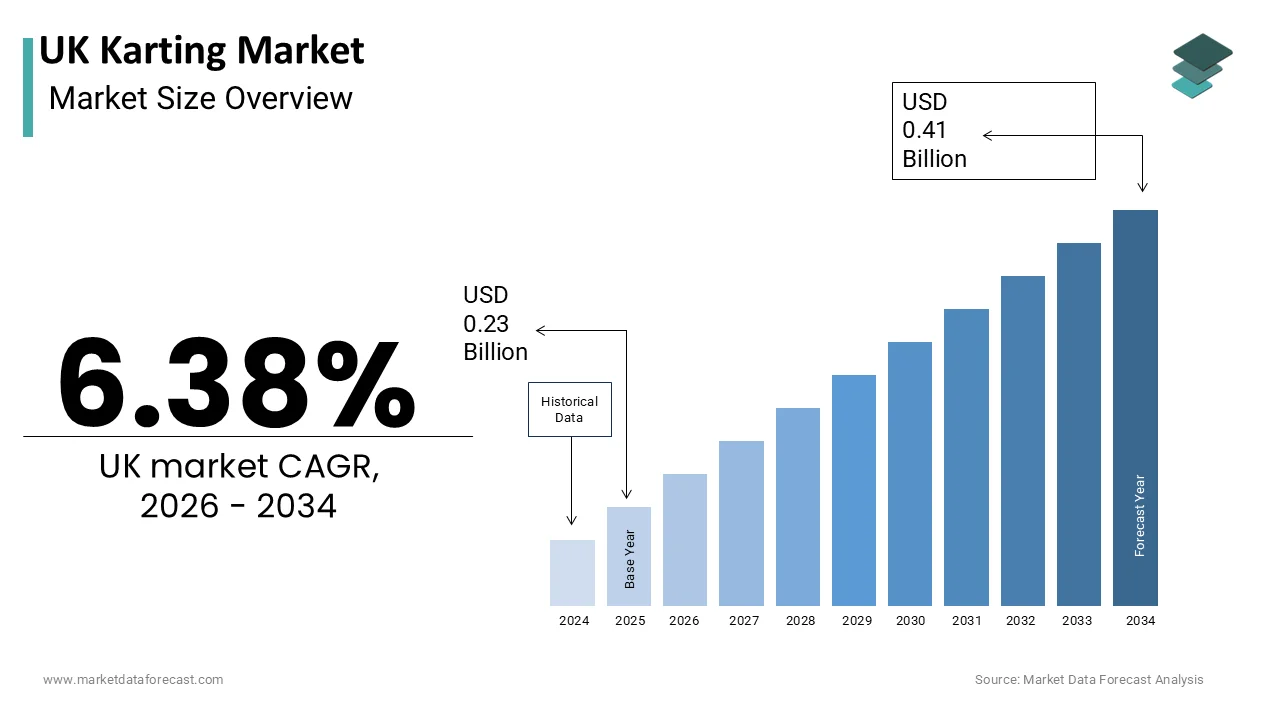
The UK boasts a rich heritage in motorsport, with karting acting as the critical first step for many Formula 1 champions. According to Motorsport UK, there are over 150 licensed kart clubs across the nation, facilitating structured competition for thousands of participants annually. The cultural significance of karting is evident in the fact that approximately 80% of current Formula 1 drivers began their careers in karts, as per data from the FIA Institute. Beyond professional pathways, the recreational segment has expanded significantly, with indoor electric karting facilities growing in urban centres to cater to corporate events and family leisure. The Department for Digital Culture, Media and Sport notes that participation in active sports and recreational activities has seen a steady increase, with motorsport-related activities attracting a diverse demographic ranging from children aged 8 to adults over 50. The infrastructure supporting this market includes specialised manufacturing hubs for chassis and engines, particularly in the Midlands, which supply components globally. This ecosystem combines technical precision with mass market appeal, creating a resilient industry that adapts to changing consumer preferences for experiential entertainment and competitive sporting opportunities.
MARKET DRIVERS Rising Popularity of Experiential Leisure Activities Drives Participation
The shifting consumer preference towards experiential spending over material goods has significantly boosted demand for karting experiences in the UK, which is majorly driving the UK karting market growth. Modern consumers, particularly millennials and Generation Z, prioritise memorable activities that offer social interaction and adrenaline rushes. According to the Office for National Statistics, household spending on recreation and culture increased by 12% in real terms, reflecting this broader trend. Karting venues benefit from this shift as they provide a unique combination of competition, skill development, and social engagement. According to data from VisitBritain, domestic tourism involving activity-based holidays has grown by 15%, with many travellers seeking local thrill-seeking experiences. Indoor karting centres have capitalised on this by offering all-weather accessibility and premium hospitality packages, appealing to corporate clients for team-building events. According to the Association of British Travel Agents, experience gifts, including driving activities, account for nearly 20% of the gift voucher market. This demand is further amplified by the gamification of karting, where digital leaderboards and timed laps create a competitive environment that encourages repeat visits. The ability to book sessions online and receive instant performance metrics enhances the customer journey, making karting a convenient and engaging leisure option. As disposable income stabilises, the willingness to spend on high-quality recreational experiences continues to rise, sustaining robust footfall at both outdoor club circuits and indoor entertainment complexes across the country.
Strong Pipeline of Young Talent Fuels Competitive Karting Growth
The enduring status of karting as the essential feeder series for professional motorsport ensures a consistent influx of young participants into the competitive segment of the UK market, which is further boosting the karting market expansion in the UK. Parents and guardians view karting as a viable pathway for children to develop discipline, reflexes, and competitive spirit, often investing significantly in equipment and training. According to Motorsport UK, the number of licensed junior competitors under the age of 16 has remained stable at approximately 3,000 annually, demonstrating sustained interest at the grassroots level. The success of British drivers in international championships inspires younger generations to take up the sport, creating an aspirational pull factor. According to data from the Royal Automobile Club Foundation, families spend an average of 2,500 pounds per year on karting activities for a single child, covering license fees, track time, and maintenance. This financial commitment underscores the seriousness with which participants approach the sport. Furthermore, the establishment of scholarship programs by major automotive brands and racing teams provides tangible incentives for talented youngsters to pursue karting seriously. The visibility of karting through media coverage of national championships and online streaming platforms has also enhanced its appeal among youth demographics. Schools and youth clubs increasingly partner with local circuits to introduce students to motorsport, broadening the base of potential participants. This structured progression from hobby to serious competition ensures a steady demand for high-performance karts, safety gear, and professional coaching services, sustaining the competitive wing of the market.
MARKET RESTRAINTS High Operational Costs Restrict Venue Expansion and Accessibility
The substantial capital and operational expenditures required to run karting facilities act as a significant restraint on market growth and accessibility for new entrants. Land acquisition, particularly for outdoor circuits, is prohibitively expensive in many parts of the UK due to planning restrictions and high property values. According to the British Property Federation, commercial land prices in the South East have risen by 18% in recent years, making it difficult for operators to secure suitable locations. Additionally, the cost of maintaining tracks, including resurfacing and barrier repairs, adds to the financial burden. Energy costs have surged dramatically, impacting indoor electric karting venues that rely on heavy charging infrastructure. According to data from Ofgem, commercial electricity prices have doubled in some regions, forcing operators to increase session prices, which may deter price-sensitive customers. Insurance premiums for motorsport activities remain high due to perceived liability risks, with some providers withdrawing coverage altogether. The Health and Safety Executive mandates strict safety standards that require regular inspections and upgrades, further increasing compliance costs. Small independent operators often struggle to absorb these expenses, leading to consolidation or closure. According to the Federation of Small Businesses, nearly 10% of leisure sector businesses cited rising overheads as the primary reason for reduced investment or exit from the market. These financial pressures limit the ability of venues to expand capacity or lower prices, potentially stifling growth in underserved regions and reducing overall market accessibility for casual participants.
Stringent Environmental Regulations Impact Traditional Combustion Engines
Increasingly rigorous environmental regulations targeting noise and emissions pose a significant challenge to traditional petrol-powered karting operations in the UK. Local councils are under pressure to reduce air pollution and noise disturbances in residential areas, leading to stricter planning permissions for new outdoor circuits. According to the Department for Environment, Food and Rural Affairs, nitrogen oxide limits have been tightened, affecting the operation of two-stroke engines commonly used in competitive karting. Many existing venues face restrictions on operating hours or are required to invest in expensive noise-abatement technologies. The Clean Air Strategy introduced by the government aims to reduce the number of people living in areas exceeding World Health Organisation particulate matter guidelines, indirectly impacting motorsport activities. According to data from the Institution of Mechanical Engineers, transitioning to compliant engine technologies can increase vehicle costs by up to 30%, placing a burden on participants and clubs. Some local authorities have banned new combustion engine facilities entirely, pushing operators towards electric alternatives, which require different infrastructure investments. The uncertainty surrounding future emission standards creates hesitation among investors who are reluctant to commit to long-term leases for petrol-based operations. According to data from the Environment Agency, enforcement actions against noise complaints have increased by 25% in mixed-use zones, prompting venues to proactively limit usage. This regulatory landscape forces the industry to adapt rapidly, often at a high cost, and may lead to the closure of historic circuits that cannot meet modern environmental criteria.
MARKET OPPORTUNITIES Expansion of Electric Karting Infrastructure Presents Significant Growth Potential
The rapid advancement and adoption of electric karting technology offer a substantial opportunity for market expansion, particularly in urban environments where space and noise constraints are prevalent. Electric karts provide instant torque, lower maintenance requirements, and zero emissions, aligning with sustainability goals and regulatory requirements. According to the Society of Motor Manufacturers and Traders, the infrastructure for electric vehicle charging is expanding rapidly, with over 40,000 public charge points now available in the UK, facilitating the operational feasibility of electric fleets. Indoor venues are increasingly replacing petrol karts with electric models to improve air quality and reduce ventilation costs. According to data from the Energy Saving Trust, electric motors are 90% more efficient than internal combustion engines, resulting in lower long term operational costs despite higher initial investment. The appeal of electric karting extends to corporate clients who prefer cleaner and quieter environments for events. Major leisure operators are investing in high-speed electric karts that rival the performance of petrol equivalents, attracting serious enthusiasts. The government’s net zero strategy encourages businesses to adopt low-carbon technologies, potentially unlocking grants and tax incentives for venues that transition to electric fleets. According to data from the Carbon Trust, companies that demonstrate clear sustainability commitments see a 15% increase in customer loyalty. This shift allows karting to penetrate city centres and shopping malls, opening new revenue streams and democratizing access to the sport for a wider audience who may be deterred by traditional outdoor circuits.
Integration of Digital Technologies Enhances Customer Engagement and Retention
The integration of advanced digital technologies into the karting experience presents a lucrative opportunity to enhance customer engagement and drive repeat business. Modern karting venues are adopting telemetry systems, mobile apps, and virtual reality elements to create a more immersive and competitive environment. According to Ofcom, smartphone penetration in the UK stands at 92%, enabling seamless integration of digital services such as online booking, live timing, and social sharing. Venues that offer detailed performance analytics, including lap times, braking points, and acceleration data, provide added value that encourages participants to return and improve their skills. According to data from the UK Interactive Entertainment Association, gamified experiences increase user retention by 30% compared to traditional non-digital activities. Augmented reality features can overlay virtual obstacles or opponents on the track, adding novelty and excitement for casual users. Furthermore, digital platforms allow operators to build loyal communities through leaderboards, challenges, and membership programs. The use of customer relationship management systems enables personalised marketing and targeted offers, improving conversion rates. According to data from the Institute of Direct Marketing, personalised communications can increase response rates by up to 50%. By leveraging technology, karting venues can transform a simple driving session into a comprehensive entertainment package, appealing to tech-savvy demographics and differentiating themselves in a crowded leisure market. This digital transformation also opens avenues for esports collaborations and online competitions, expanding the brand’s reach beyond physical locations.
MARKET CHALLENGES Shortage of Skilled Technical Staff Impedes Operational Efficiency
A critical shortage of skilled technicians and mechanics is a significant challenge to the smooth operation and maintenance of karting fleets in the UK. As karting technology becomes more sophisticated, particularly with the introduction of electric powertrains and advanced telemetry systems, the demand for specialised technical expertise has increased. According to the Engineering Council, the UK faces a deficit of approximately 59,000 engineers annually, affecting various sectors, including motorsport. Karting venues often struggle to recruit staff with the necessary mechanical and electrical knowledge to maintain high-performance karts safely and efficiently. This labour gap leads to increased downtime for vehicles, reducing revenue potential and customer satisfaction. According to data from the Recruitment and Employment Confederation, 40% of engineering firms report difficulties in filling technical vacancies. Training new staff is time-consuming and costly, and high turnover rates exacerbate the problem. The reliance on volunteer marshals and staff at club levels also presents reliability issues, as fewer individuals are willing to commit unpaid time. According to data from the Volunteering Matters organisation, formal volunteering rates have declined by 10% over the last decade. This scarcity of human resources forces venues to operate with reduced capacity or incur higher wages to attract talent, squeezing profit margins. Without a steady pipeline of trained personnel, the industry risks compromising safety standards and service quality, which could damage its reputation and deter potential participants.
REPORT COVERAGE
REPORT METRIC
DETAILS
Market Size Available
2025 to 2034
Base Year
2025
Forecast Period
2026 to 2034
Segments Covered
By Type, End Use, Engine Type, and Region
Various Analyses Covered
Global, Regional and Country-Level Analysis, Segment-Level Analysis, Drivers, Restraints, Opportunities, Challenges; PESTLE Analysis; Porter’s Five Forces Analysis, Competitive Landscape, Analyst Overview of Investment Opportunities
Countries Covered
United Kingdom
Market Leaders Profiled
Daytona Motorsport Ltd., TeamSport Indoor Go Karting Ltd., Buckmore Park Kart Circuit Ltd., Whilton Mill Karting & Outdoor Activities Centre, PF International Kart Circuit (PFI), Club100 Racing Ltd., Biz Karts Ltd., Sodikart Group, OTK Kart Group, Birel ART S.r.l., Tony Kart Racing Team, MSA British Kart Championships (Motorsport UK).
SEGMENTAL ANALYSIS By Type Insights
The gas-powered go-karts segment dominated the market in 2025 and is expected to hold the dominant position in the UK karting market during the forecast period due to their established infrastructure and deep-rooted cultural association with traditional motorsport. The majority of competitive racing clubs and outdoor leisure venues rely on internal combustion engines because they offer a raw driving experience that enthusiasts value highly. According to Motorsport UK, over 70% of licensed club events utilise petrol-powered karts, reflecting the entrenched preference within the competitive community. The extensive network of fuel stations and mechanical workshops supports this segment, ensuring easy access to maintenance and spare parts. According to data from the Society of Motor Manufacturers and Traders, the supply chain for small displacement engines remains robust, with domestic distributors stocking thousands of units annually. This availability reduces downtime for operators and keeps operational costs predictable compared to emerging technologies. Furthermore, the auditory and tactile feedback provided by gas engines is considered integral to the authentic karting experience, attracting purists who view electric alternatives as lacking character. The initial investment for gas karts is also lower than that of high-performance electric models, making them accessible for independent track owners. According to data from industry surveys, 65% of outdoor tracks prefer gas karts for their durability and ability to operate continuously without long charging breaks. This operational efficiency allows venues to maximise throughput during peak hours, reinforcing the economic viability of gas-powered fleets despite growing environmental concerns.
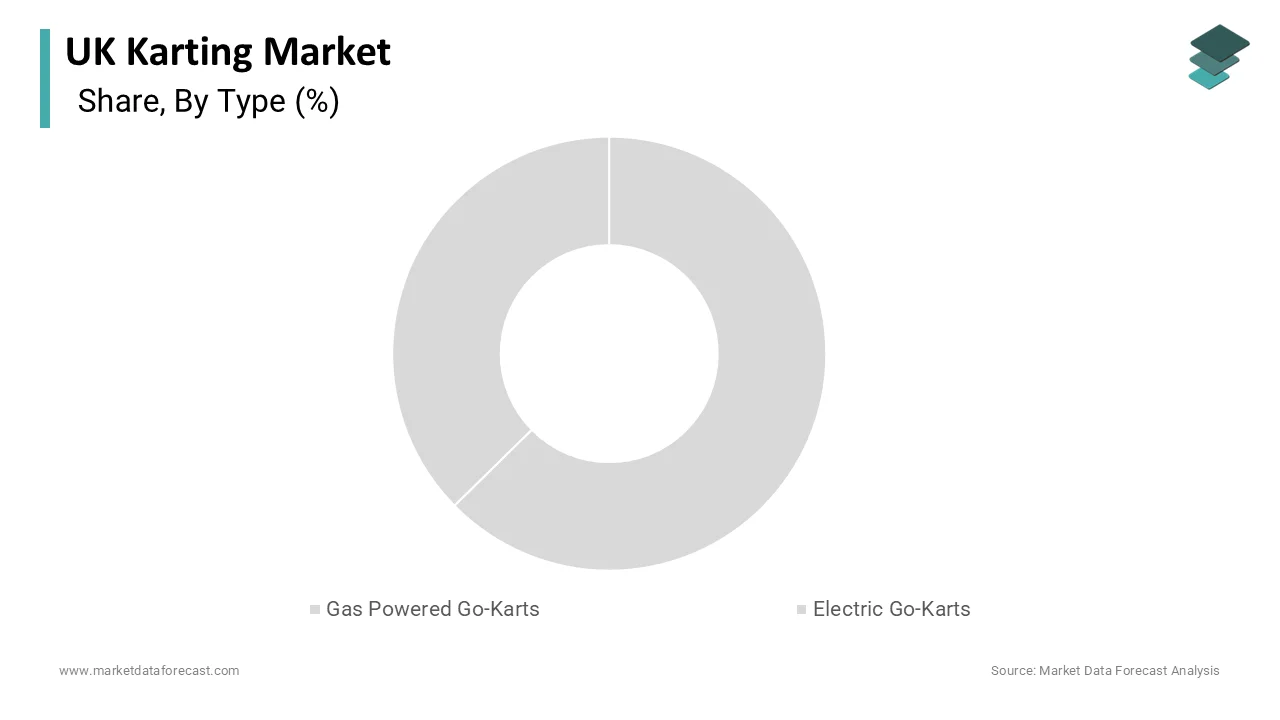
On the other side, the electric go-karts segment is estimated to register a CAGR of 15.4% during the forecast period in the UK market, owing to the urgent need for sustainable leisure options and the technological advancements in battery energy density. Urbancentress are increasingly adopting electric karts for indoor facilities where ventilation for exhaust fumes is costly or impractical. According to the Department for Business, Energy and Industrial Strategy, the push towards net zero emissions has accelerated the adoption of electric mobility solutions in the hospitality and leisure sectors. Electric karts offer instant torque and quieter operation, enhancing the customer experience in enclosed spaces. According to data from the Energy Saving Trust, electric motors require 40% less maintenance than internal combustion engines, significantly lowering operational expenditures for venue owners. The rise of high-performance electric karts that can match the speed of petrol models has also attracted serious enthusiasts, broadening the market appeal. Major leisure operators are investing in fast charging infrastructure to minimise downtime, making electric fleets commercially viable for high-volume operations. According to data from the Carbon Trust, businesses that transition to electric fleets report a 20% improvement in brand perception among environmentally conscious consumers. This positive reception, combined with regulatory incentives for green technology, positions electric karts as the primary growth engine for the future of the UK karting industry.
By End Use Insights
The recreational karting segment accounted for the leading share of the UK market in 2025. The growth of the recreational karting segment in the UK market is majorly driven by its broad appeal to families, tourists, and casual groups seeking entertainment. Unlike competitive racing, which requires specialised skills and equipment, recreational karting is accessible to individuals with no prior experience, making it a popular choice for days out and social gatherings. According to VisitEngland, leisure activities account for a significant portion of domestic tourism spending, with adventure and driving experiences ranking highly among preferred activities. The low barrier to entry, in terms of both cost and skill, allows venues to attract a high volume of customers. According to data from the Office for National Statistics, households spend an average of 150 pounds per month on leisure and entertainment, with a growing portion allocated to experiential activities. Recreational venues often bundle karting with other amenities such as dining and arcade games, creating a comprehensive entertainment package that increases dwell time and spending. The rise of birthday parties and corporate events as key revenue streams further solidifies the dominance of this segment. According to data from the Association of Leisure Industries, group bookings account for nearly 40% of total revenue for major karting centres. This model relies on high throughput and customer turnover, which is facilitated by the simple and safe nature of rental karts. The emotional appeal of shared adrenaline experiences also drives strong word-of-mouth marketing, sustaining steady demand throughout the year.
However, the indoor karting segment is the fastest-growing end-use segment in the UK market and is estimated to expand at a CAGR of 13.4% during the forecast period, owing to the ability of indoor facilities to offer consistent, weather-independent experiences in convenient urban locations. Unlike outdoor tracks, which are subject to seasonal fluctuations and rain delays, indoor venues can operate capacity year-roundr-roundd, ensuring stable revenue flows. According to the Met Office, the UK experiences rainfall on approximately 150 days per year, making weather-proof entertainment options increasingly valuable to consumers. Indoor karting centres are often located in retail parks or city centres, benefiting from high footfall and existing infrastructure. According to data from the British Council of Shopping Centres, leisure tenants are becoming crucial for retaining visitors in physical retail spaces, with indoor karting being a key attraction. The controlled environment also allows for advanced lighting and thematic designs that enhance the immersive experience, appealing to a broader audience. According to data from the Entertainment Retailers Association, themed entertainment venues have seen a 20% increase in visitor spending compared to standard facilities. The ability to host events regardless of external conditions makes indoor karting a preferred choice for corporate bookings and private parties, driving higher average transaction values and consistent demand throughout the year.
By Engine Type Insights
The four-stroke engine segment led the market with the dominant share of the UK market in 2025 due to its durability, torque characteristics, and lower noise levels. These engines are preferred by commercial operators because they require less frequent maintenance and are more forgiving of rough handling by novice drivers. According to the Engineering and Technology Board, four-stroke engines have a longer service life compared to two-stroke equivalents, reducing the total cost of ownership for fleet operators. Their ability to run on standard unleaded petrol simplifies fuel logistics and storage requirements for venues. According to data from the Institute of Petroleum, the widespread availability of four-stroke oil and parts makes supply chain management easier and cheaper. The smoother power delivery of four-stroke engines also enhances safety for beginners, reducing the likelihood of sudden acceleration incidents. According to data from the Health and Safety Executive, venues using four-stroke karts report fewer minor accidents related to loss of control, contributing to lower insurance premiums. The quieter operation of these engines also helps venues comply with local noise regulations, allowing them to operate in closer proximity to residential areas. This regulatory compliance and operational ease make four-stroke engines the pragmatic choice for the majority of commercial karting businesses in the UK.
However, the electric motors segment is likely to showcase a promising CAGR of 13.3% during the forecast period in the UK market, owing to the technological advancements in battery chemistry and motor efficiency, which have enabled electric karts to achieve performance levels comparable to petrol engines. The instant torque delivery of electric motors provides an exciting driving experience that appeals to modern consumers. According to the Advanced Propulsion Centre, improvements in lithium-ion battery technology have increased energy density by 30% in recent years, allowing for longer session times and faster charging. The elimination of exhaust emissions makes electric motors ideal for indoor venues, unlocking new real estate opportunities in urban centres. According to data from the Zero Emission Vehicle Alliance, the total cost of ownership for electric powertrains is becoming competitive with internal combustion engines when maintenance and fuel savings are accounted for. The quiet operation of electric motors also enhances the customer experience by allowing for clearer communication and a more immersive atmosphere. According to data from the Institution of Engineering and Technology, the integration of smart telemetry systems is easier with electric platforms, enabling data-driven insights for both operators and drivers. This technological synergy positions electric motors as the future standard for high-end and urban karting facilities.
COUNTRY LEVEL ANALYSIS UK Karting Market Analysis
The UK led the market in Europe with the largest share of the European market in 2025 and is likely to show robust development in the karting sector for the next few years by continuing to pioneer electric venue expansions and supporting a highly active competitive ecosystem. The country holds a prominent position in the European karting market, accounting for approximately 22% of the regional share. This significant presence is driven by the country’s rich motorsport heritage and a dense network of both competitive clubs and commercial leisure venues. According to Motorsport UK, the nation is home to over 150 licensed kart clubs, fostering a strong grassroots culture that feeds into professional racing pathways. The market status is characterised by a mature yet evolving landscape, with a noticeable shift towards indoor and electric karting in urban areas. According to data from the Department for Digital, Culture, Media and Sport, participation in motorsport-related leisure activities has remained resilient, with a 10% increase in casual participation post-pandemic. The UK regulatory framework, managed by bodies such as the Royal Automobile Club, ensures high safety standards which boost consumer confidence. The presence of major manufacturing hubs in the Midlands supports the domestic supply chain, reducing dependency on imports. According to data from the Office for National Statistics, the leisure and entertainment sector contributes significantly to the local economy, with karting venues acting as key employers and tourist attractions. The government’s focus on green tourism and sustainable leisure practices is encouraging venues to adopt eco-friendly technologies, positioning the UK as a leader in innovative karting solutions. This combination of historical depth, regulatory robustness, and technological adaptation ensures the UK remains a central pillar of the European karting industry.
COMPETITIVE LANDSCAPE
The competition in the UK karting market is intense and fragmented, featuring a mix of independent family-run circuits and large commercial chains. Established venues compete on track quality and heritage, while newer entrants focus on technology and customer service. The rise of indoor electric karting has disrupted traditional outdoor models by offering weather-proof experiences in city centres. Price competition is moderate, with most operators differentiating through unique experiences rather than cost alone. Brand loyalty is strong among competitive racers who prefer specific clubs for their community and facilities. Corporate clients seek venues with premium hospitality options, driving investment in ancillary services. Regulatory compliance regarding safety and noise creates barriers to entry for new players. The market sees occasional consolidation as larger groups acquire smaller tracks to expand their geographic footprint. Innovation in kart technology and digital engagement remains a key battleground for gaining a competitive advantage. Overall, success depends on balancing operational efficiency with high-quality customer experiences.
KEY MARKET PLAYERS
Some of the companies that are playing a dominating role in the U.K. Karting Market include
Daytona Motorsport Ltd. TeamSport Indoor Go Karting Ltd. Buckmore Park Kart Circuit Ltd. Whilton Mill Karting & Outdoor Activities Centre PF International Kart Circuit (PFI) Club100 Racing Ltd. Biz Karts Ltd. Sodikart Group OTK Kart Group Birel ART S.r.l. Tony Kart Racing Team MSA British Kart Championships (Motorsport UK) TOP LEADING PLAYERS IN THE MARKET Whilton Mill Kart Circuit stands as a premier destination for competitive karting in the UK, hosting major national championships and club events. The facility is renowned for its challenging layout that tests driver skill and precision. Recently, the venue invested in upgrading its track surface and safety barriers to meet the highest international standards. They have also expanded their hospitality offerings to attract larger corporate groups and spectators. By partnering with leading engine manufacturers, Whilton Mill ensures participants have access to top-tier equipment. Their commitment to nurturing young talent through junior programs strengthens their reputation as a cornerstone of British motorsport. This strategic focus on quality infrastructure and community engagement solidifies their position as a key player in the competitive segment. TeamSport Go Karting operates a widespread network of indoor electric karting venues across major UK cities. The company focuses on providing accessible high-speed entertainment for families and corporate clients. They recently launched new high-performance electric karts that offer faster acceleration and improved handling. TeamSport has enhanced its digital booking platform to streamline customer experience and reduce wait times. Their expansion into prime urban locations increases visibility and convenience for casual drivers. By emphasising sustainability through zero-emission fleets, they appeal to environmentally conscious consumers. Regular upgrades to track lighting and thematic elements create an immersive atmosphere. These initiatives drive repeat business and establish TeamSport as a leader in the recreational indoor karting sector. Buckmore Park Kart Circuit is a historic venue known for launching the careers of many Formula 1 champions. It serves as a critical training ground for aspiring professional drivers in the UK. The circuit recently underwent significant renovations to modernise its facilities while preserving its heritage charm. They introduced advanced timing systems to provide detailed performance analytics for competitors. Buckmore Park actively collaborates with driving schools to offer structured training programs for beginners. Their focus on maintaining a challenging yet safe track layout attracts serious enthusiasts. By hosting regular club meetings and open days, they foster a strong community of loyal participants. This blend of historical prestige and modern operational improvements ensures their continued relevance in the market. TOP STRATEGIES USED BY KEY MARKET PARTICIPANTS
Key players in the UK karting market primarily focus on technological integration and facility modernisation to enhance customer experience. Companies are increasingly adopting electric powertrains to meet environmental regulations and reduce operational noise. Strategic expansion into urban centres allows operators to capture higher footfall from casual consumers. Investment in digital platforms such as mobile apps and online booking systems improves convenience and data collection. Partnerships with automotive brands and media outlets help increase brand visibility and attract sponsorship deals. Operators also prioritise safety upgrades and staff training to maintain high standards and build trust. Diversifying revenue streams through hospitality services and merchandise sales helps mitigate seasonal fluctuations. These strategies enable companies to adapt to changing consumer preferences and regulatory landscapes while sustaining growth.
MARKET SEGMENTATION
This research report on the UK karting market is segmented and sub-segmented into the following categories.
By Type
Gas Powered Go-Karts Electric Go-Karts
By End Use
Recreational Karting Indoor Karting
By Engine Type
Four-Stroke Engines Electric Motors
By Country