
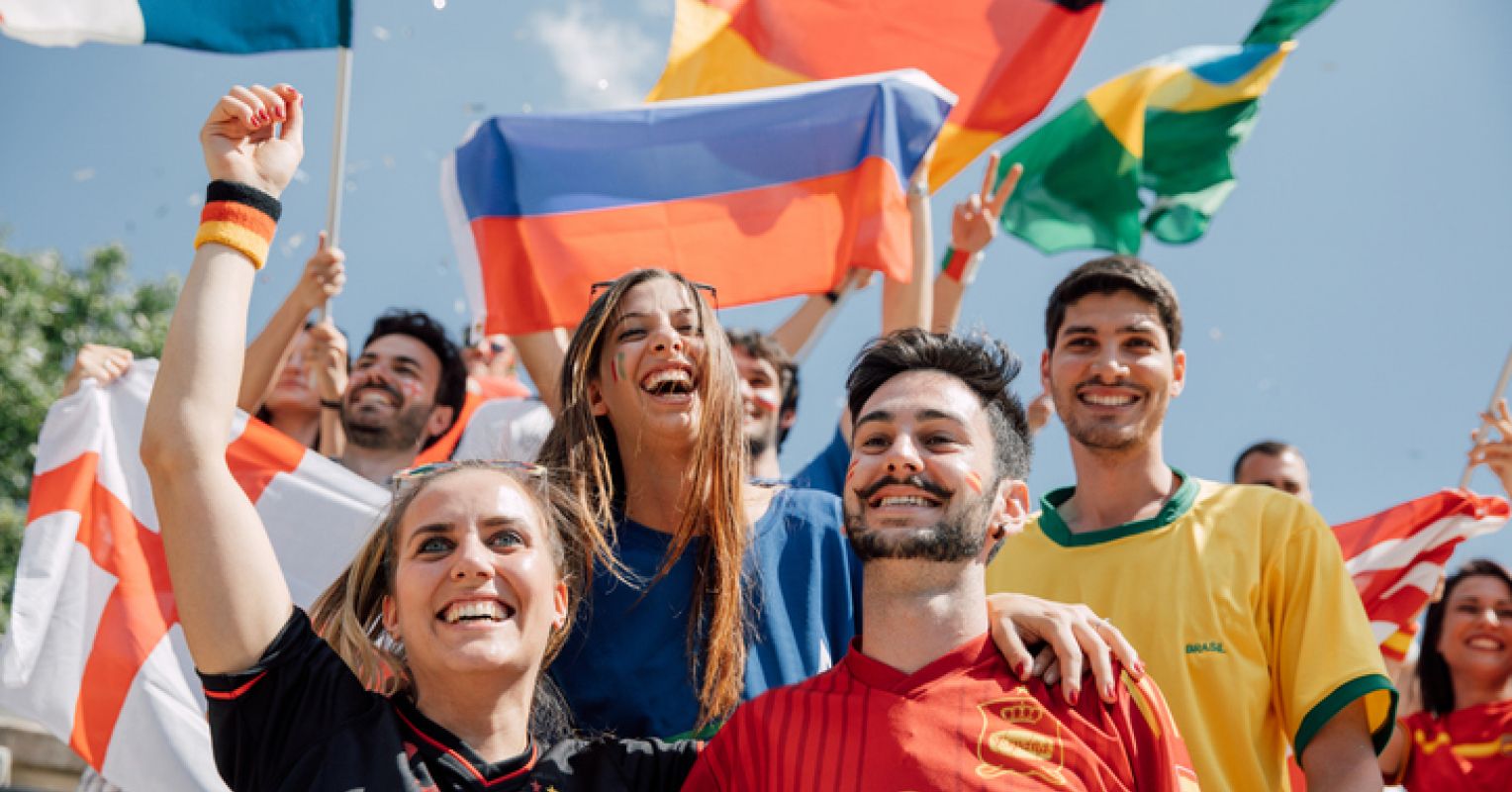
I have been enjoying watching some of the FIFA World Cup matches this summer from Vancouver, one of the tournament’s host cities. I have not made it to a match in person, but I have found myself just as fascinated by what is happening around the matches. Families crowd around televisions. A restaurant down the street fills with jerseys and flags. Friends text each other to organize watch parties, and strangers who have never met end up trading smiles after a spectacular goal. Entire communities seem to share the anticipation before kickoff and the heartbreak or elation that follows.
Watching this collective enjoyment unfold, I began to wonder whether what draws us to events like the World Cup is about more than sport.
Perhaps it is about our need to matter together.
Research on sports fandom suggests that people derive part of their identity from the groups to which they belong. Fans do not simply watch games; they become part of something larger. Victories become “our victories,” and losses become “our disappointments.” Researchers have even described an “enlarged sense of we-ness” that develops through shared group membership.
But identity alone is not enough.
Sports are emotional experiences, and those emotions are rarely felt in isolation. Joy and hope, disappointment and relief, are social experiences as much as private ones. Anyone who has held their breath during a penalty shootout or leaped off the couch after a dramatic goal knows the feeling. Even those of us watching from our living rooms know that millions of others around the world are feeling it too, at the very same moment.
Perhaps this is why sports can stir emotions unlike almost anything else. Joy feels bigger when it is shared, and heartbreak feels more bearable when we carry it together. In a fragmented world, these moments remind us that we are part of something beyond ourselves.
How the World Cup Creates Collective Mattering
Three things seem to work together here, and they build toward a fourth.
Shared identity. We become part of a “we.” Whether it is our national team or simply the city hosting the match, we feel connected to something larger than ourselves.
Collective emotions. We celebrate together, and when it goes wrong, we grieve together. The highs and lows of the tournament are experienced not only individually but collectively.
Belonging and connection. Families gather, and neighborhoods that are usually quiet come alive with strangers talking to one another. Shared experiences strengthen our sense of belonging and remind us we are not alone.
Collective mattering. Together, these build toward something larger — the sense of being valued by, and contributing to, a whole that none of us could create alone. It is what my mentor, the psychologist Dr. Isaac Prilleltensky, called “mattering,” experienced collectively.
Everyone adds something, the players and volunteers, yes, but also the host city and the families gathered at home. Whether in the stadium or on a couch across town, people from very different backgrounds come together around the same moment.
In doing so, we are not merely spectators. We are participants in a shared experience.
Beyond the Stadium
The lesson extends far beyond sport. We see the same process in faith communities and in the cultural festivals that fill a city’s summer calendar. A shared identity gives rise to shared emotion, and that shared emotion deepens belonging — which is where mattering together begins.
Perhaps this is one reason volunteering or showing up for a cause we believe in so often leaves people feeling fulfilled. We are not only chasing personal happiness. We are seeking experiences that let us matter together.
In an age when loneliness and polarization are increasingly common, perhaps we should pay closer attention to the experiences that bring us together.
Because beneath the goals and the rivalries lies something profoundly human.
We all want to feel valued, and we all want to feel that we add something worth adding.
And sometimes, as millions of people around the world gather around a single game, we are reminded that some of life’s greatest moments are not the ones in which we matter alone, but the ones in which we discover that we matter together.