The £1.3 million research project, funded by the Engineering and Physical Sciences Research Council, was developed on a pro bono basis by Chetwoods in partnership with the University of Cambridge, the University of Birmingham and Cleveland Steel & Tubes.
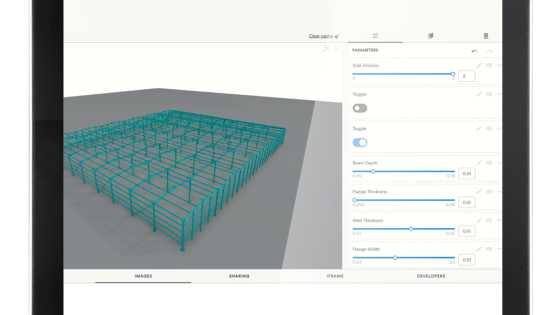
RESTOR is a digital approach to scanning and cataloguing the properties of used steel beams and logging them into a parametric warehouse. From here, they can be accessed by designers and engineers to integrate used steel beams into new projects. The objective is to promote steel reuse, rather than the much more energy-intensive steel recycling.
‘There is a lot of interest in the specification of second-hand steel, and RESTOR could be really impactful in opening up the market. This is a project with momentum behind it,’ said the judges. The panel applauded the project as an approach that can be scaled globally, in contrast with in-house tools that are difficult to access, replicate and scale.
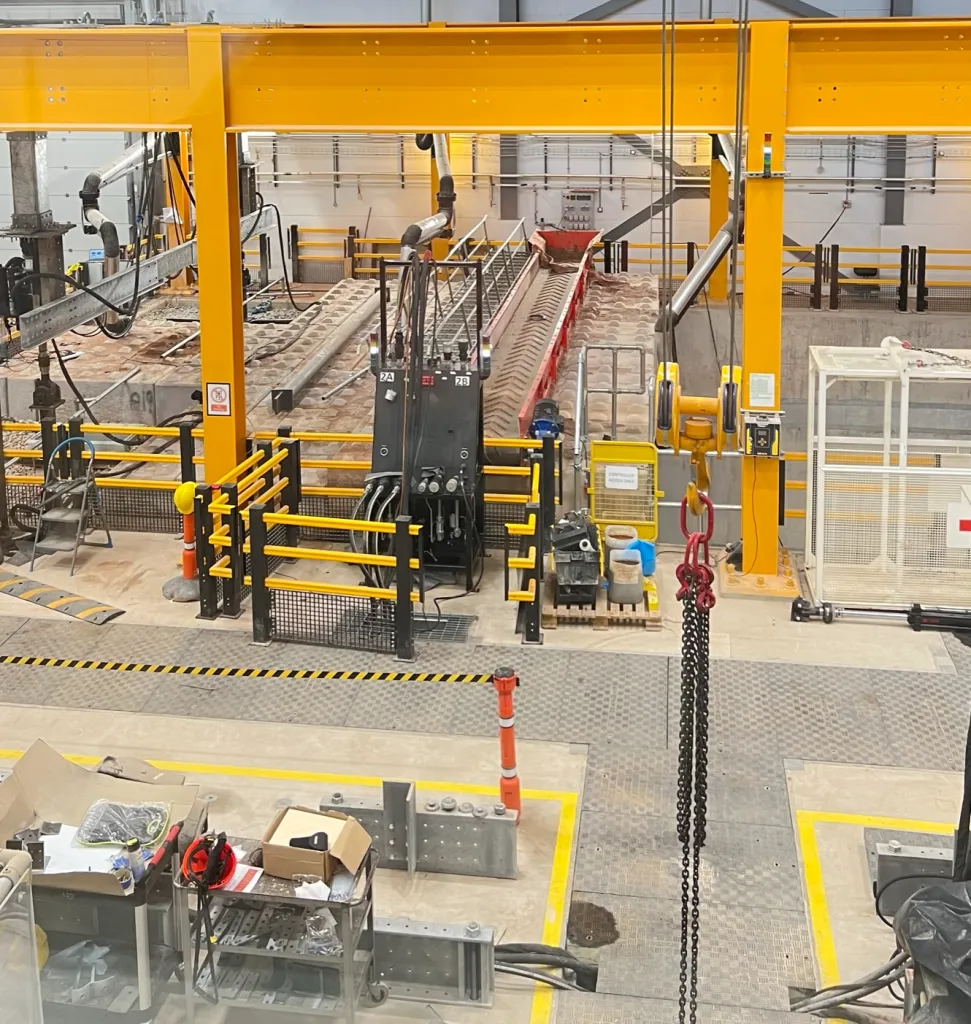
Project RESTOR lab testing of used steel beams to determine potential for reuse
Source: University of Cambridge, University of Birmingham, Chetwoods
RESTOR uses non-destructive testing, machine learning, BIM and digital twin technology to assess the condition, performance and reusability of reclaimed steel members. The researchers describe the digital twin as similar to an MRI of a steel beam that captures its structural integrity in computational terms. These can then be used by structural engineers in their own calculations. This means steel that is currently discarded after visual inspection due to dents and other imperfections can be reused.
Generative AI is then used to find optimal design performance using both reclaimed steel members and new steel. According to the researchers, RESTOR could increase steel reuse in the UK from its current rate of 15 per cent to over 50 per cent.
The judges queried whether the carbon footprint left by the AI model to undertake the calculations for RESTOR had been included in the overall embodied carbon savings. To date, it has not. However, the judges observed that the thrust of the project represents a ‘good use of AI’ that the industry can learn from.
The judges applauded the high quality of this year’s Climate Initiative shortlist, a strong field with real potential to deliver change.
Shortlist
Architype The Estate Retrofit Toolkit
Arup Architecture 1 Triton Square – Life Sciences Fit-out
Bond Bryan Project Briefing Tool
Gensler Gensler Materials Library Platform
Hawkins\Brown Fixing Our Broken Planet
Sponsored by