
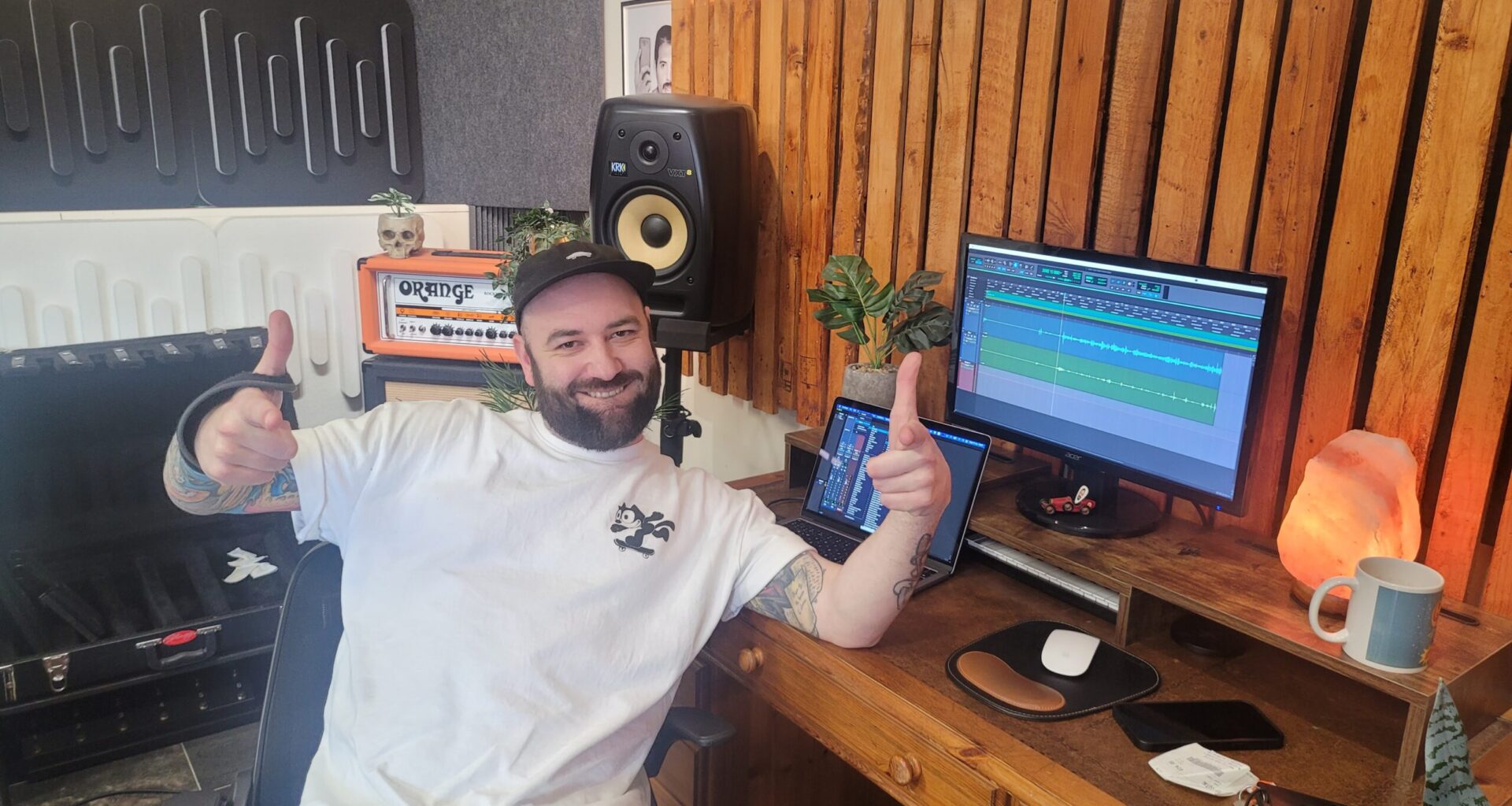
Tucked away in an unassuming corner of Andover sits a studio that, at first glance, could easily be mistaken for the creative workspace of any talented local musician.
Listen to the full interview here:
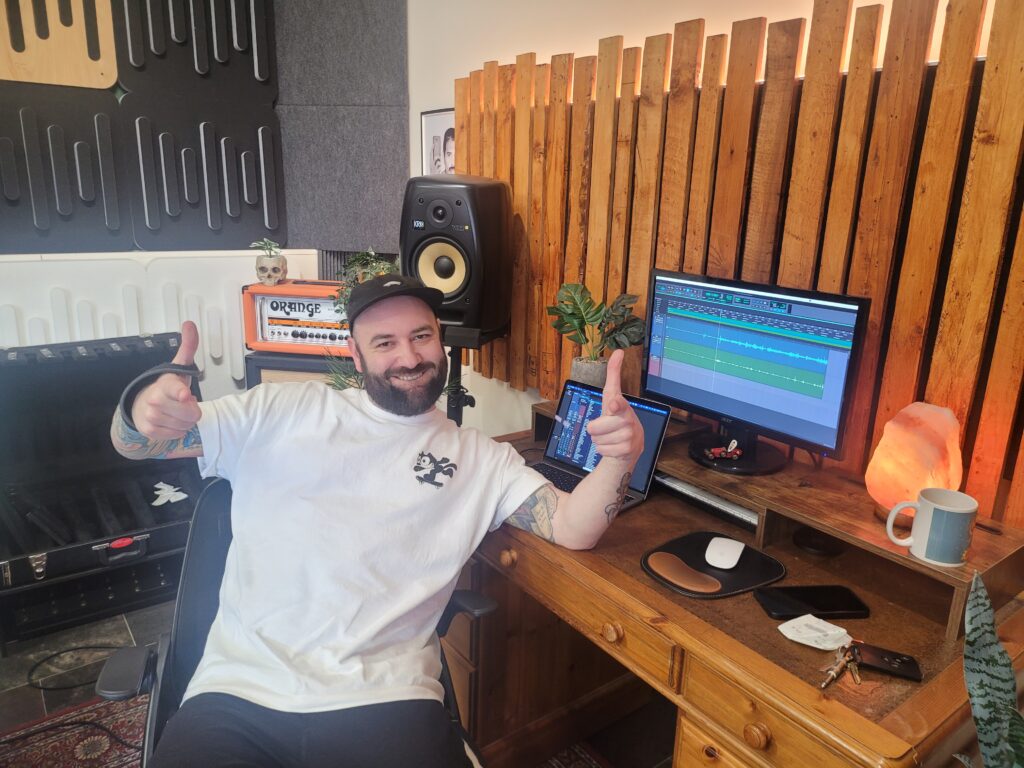
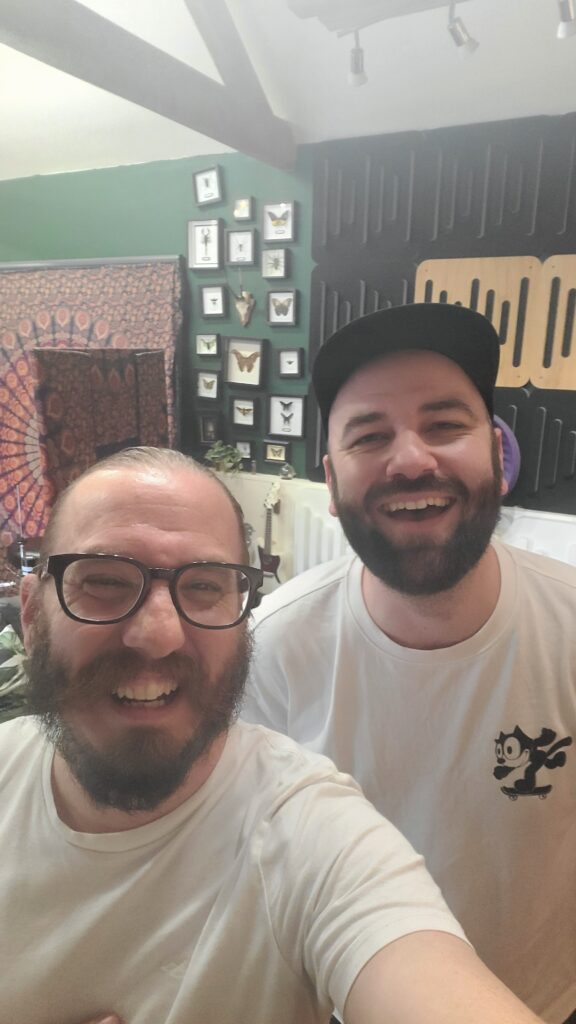
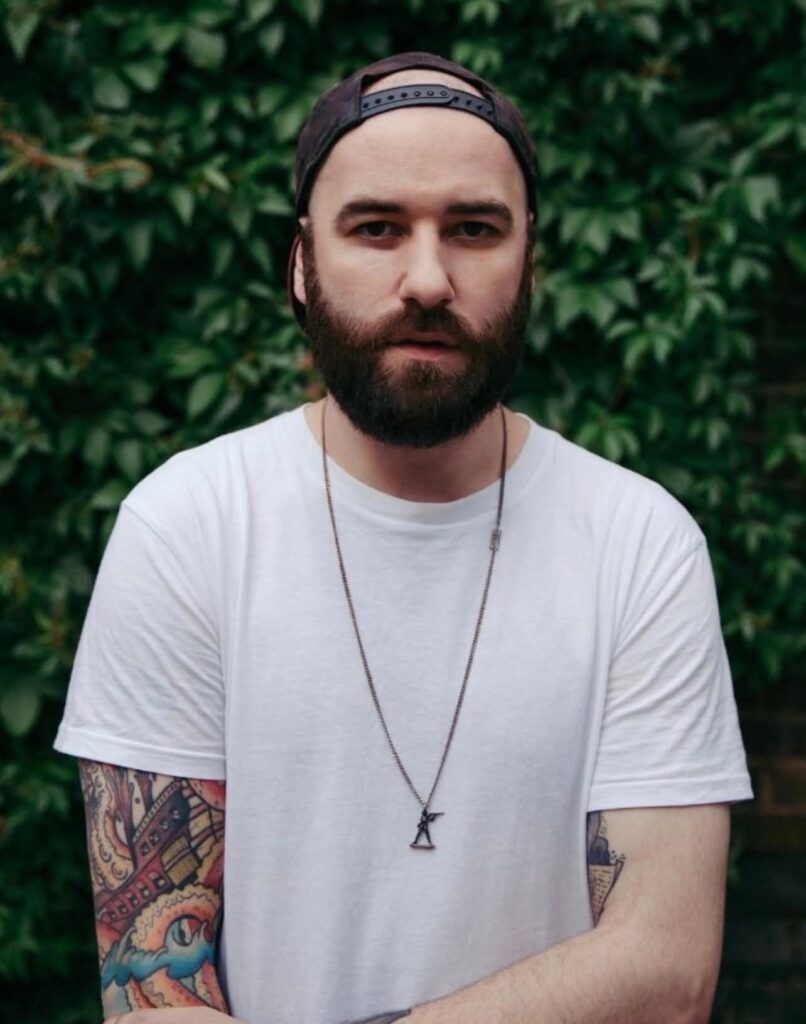
There are keyboards, guitars, cables, microphones and an abundance of plants. It feels welcoming rather than intimidating. Yet from this room, producer, musician and songwriter Dan Parkinson has quietly built a career that has taken him from local radio jingles, producing albums and social media sketches to standing side-stage with one of the most influential bands in modern music.
Just days before heading back out on a 40-day European festival run with The Cure, Parkinson welcomed Andover Radio into his studio to talk about music, creativity and the remarkable chain of events that led him to become bass technician for Cure bassist Simon Gallup.
For someone now travelling Europe with a Rock & Roll Hall of Fame band, Parkinson remains remarkably grounded.
“I’m a music producer and session musician,” he explains. “I’m normally out on tour playing with bands and stuff. When I’m not doing that, I’m in the studio producing other artists.”
Although he has released music under his own name, Parkinson is quick to point out where his true passion lies.
“I don’t really see myself as an artist,” he says. “I like producing other people. Solo artists will come to me that can’t play all the instruments. They’ve got a song idea and I turn it into a full track. That’s what I love doing. I love getting the best out of other people.”
That mindset has become the foundation of his career.
While many musicians dream of being centre stage, Parkinson has found fulfilment in the craft behind the scenes; whether that’s helping artists realise their vision in the studio, performing as a session musician, or ensuring every detail is perfect before thousands of fans watch a band take to the stage.
The accidental social media star
Long before The Cure came calling, Parkinson had already built a sizeable online following thanks to his brilliantly inventive “Dan’s TV Jams” videos.
Created during the pandemic, the videos saw him transform television theme tunes and familiar melodies into impressive multi-instrument performances.
The series became a viral hit and even landed him a feature on ITV’s This Morning.
“It was really weird,” he laughs. “When they cut away from the interview you’d see Holly and Phil just being normal people. Holly would get up and grab something, Phil would have a cup of tea. Someone came over with an iPad and Holly was looking through my Instagram saying, ‘Oh, that’s quite fun.’”
The experience taught him something important.
“I realised Instagram became my CV.”
It proved to be more than just entertainment. The online visibility generated new opportunities, leading to further session work, BBC attention and a growing reputation within the music industry. But even with television appearances and viral success, Parkinson never lost sight of what mattered most.
“I always try to make my videos funny or engaging,” he says. “I didn’t want to be just another musician trying to promote something.”
Life as a session musician
Away from social media, Parkinson has become one of the UK’s most reliable musical hired guns. One of his most enjoyable projects sees him performing alongside celebrity chef James Martin. “I play keyboards in James Martin’s band,” he explains. “It’s a really fun project. We play festivals like Pub in the Park and he treats us really well. He’s a really nice guy to work with.”
Parkinson laughs as he describes watching Martin switch from television chef to rock star.
“He’ll take his chef’s uniform off, put on his leather jacket and then he’s in full rock star mode.”
It’s the kind of varied career many musicians dream about; one day producing records in Andover, the next performing in front of festival crowds. Yet nothing could have prepared him for what happened next.
The radio advert that changed everything
The story of how Dan Parkinson ended up working with The Cure sounds almost too unlikely to be true. And remarkably, it begins with Andover Radio. Years ago, Parkinson recorded the station’s much-loved “Sleeps Till Santa” feature, which is still featured every Christmas on Andover Radio.
Later, when he wanted to advertise his studio services, he created a commercial that aired on the station.
Then came an email.
“I get an email from Simon saying, ‘I’ve just heard your advert on the radio. Can you set up a couple of my basses?’”
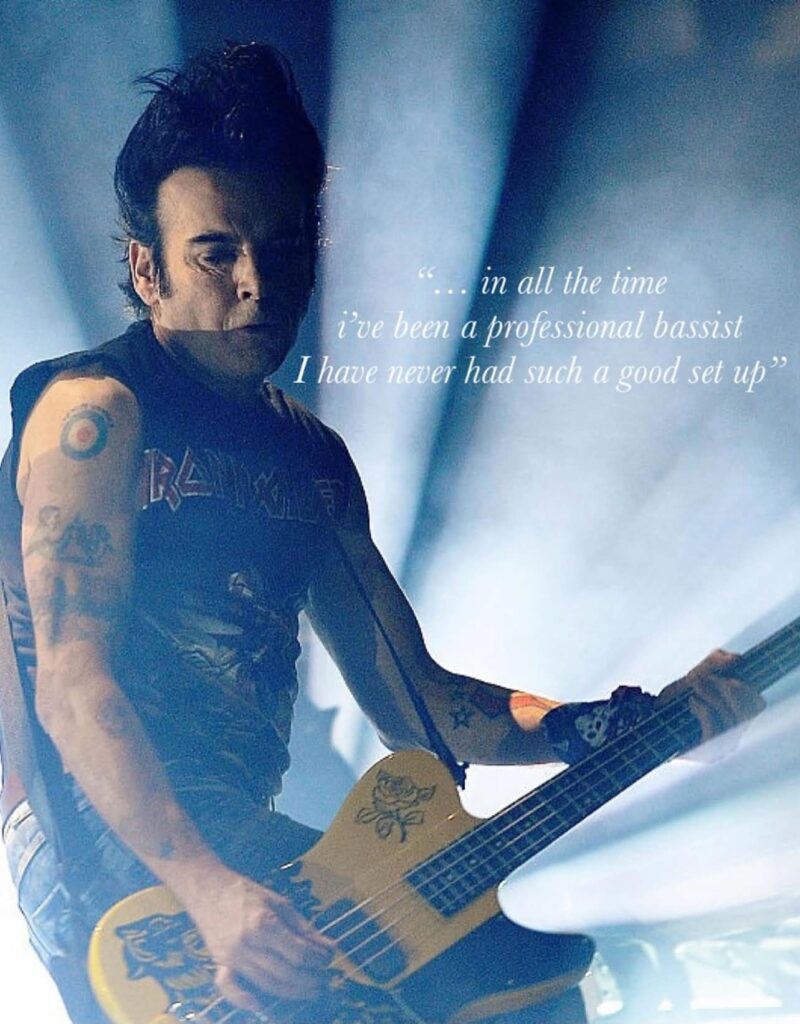
That Simon was, of course, Simon Gallup, the legendary bassist whose melodic playing has helped define The Cure’s unmistakable sound for more than four decades.
Parkinson agreed.
What followed was the beginning of an unlikely friendship.
“He turns up. He’s the loveliest dude. So humble.”
The two musicians stayed in touch, meeting for coffee and talking music.
Then came the question.
“Last year he said, ‘I know you’re busy, but do you want to come on tour and be my bass tech?’”
Even then, Parkinson had to think carefully.
“I genuinely had to think about it because it’s a big commitment. I’d be giving up production work.”
Thankfully, he said yes.
Inside The Cure machine
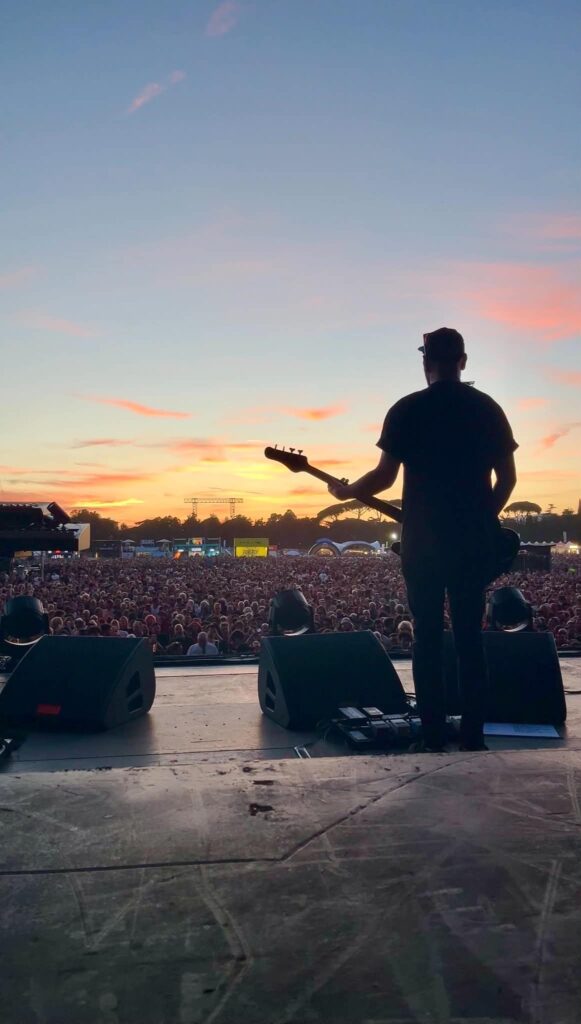
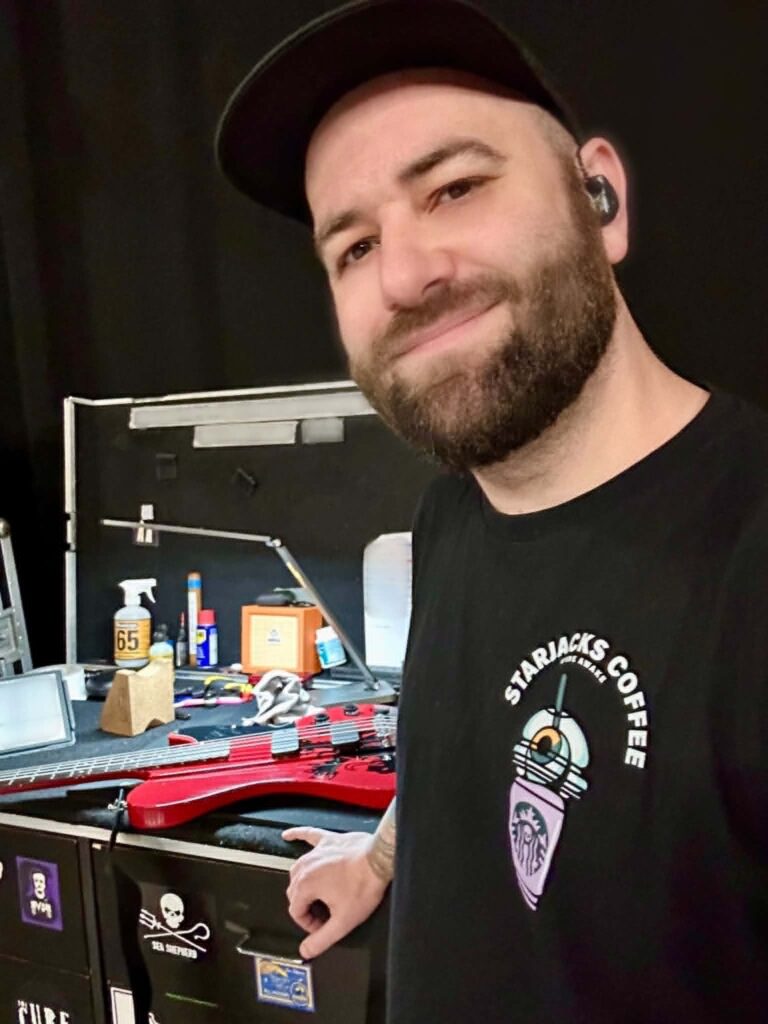
To many fans, touring with The Cure sounds glamorous. Parkinson quickly discovered the reality is something far more complex. His responsibility is simple in theory but carries enormous pressure. Every bass Simon Gallup uses on stage passes through Parkinson’s hands. “I do everything,” he explains. “Simon just walks on stage, picks up his bass, plays, puts it down and goes.”
Before every show, Parkinson ensures each instrument is perfectly prepared, tuned and ready. Once the performance begins, his focus becomes relentless.
“I’ve got a list of all the tunings. Every time Simon changes basses, I swap them, check them, clean them and get the next one ready.”
When things break, they have to be fixed immediately.
“I had to fix two guitar knobs the other day during the show.”
For Parkinson, those moments are where the real challenge lies.
“This is where I prove myself.”
The nerves never completely disappear.
“The most nerve-wracking bit is when Simon walks on stage. You hear ‘no more tests’ in your headphones and you think: Did I turn the tuner off? Did I turn the amp on?”
Then the first note rings out.
“You hear the bass sound and think, yep, cool.”
Learning from legends
One of the biggest surprises for Parkinson has been discovering what The Cure are really like behind the scenes.
“They’re all lovely.”
Particularly frontman Robert Smith, a figure often viewed as one of rock’s most enigmatic characters.
“Honestly, he’s hilarious. You wouldn’t think it, but he’s one of the funniest people.”
The experience has also deepened Parkinson’s appreciation of the band’s artistry.
Like many people, he knew the obvious hits growing up.
But spending time inside the touring operation has revealed another level entirely.
“There’s a reason they’re one of the top five bands in the world.”
He speaks with genuine admiration when discussing Smith’s attention to detail.
Every night, the singer reviews the previous performance before making adjustments.
“Robert will go home and watch the show from the previous night and make changes. It constantly changes. He’s a genius like that.”
The bass catch
Every great touring story needs a moment of rock-and-roll mythology.
For Parkinson, it happened in Florence.
During rehearsals, Gallup asked a simple question.
“‘Dan, can you catch a bass?’”
Parkinson answered yes.
Without warning, Gallup launched one across the room.
Fortunately, the former goalkeeper was equal to the task.
“I used to be a goalkeeper for RPM Andover, so I caught it.”
Nothing more was said.
Months later, during a live show in Florence, Gallup appeared ready to throw his bass again.
At first, he thought better of it.
Then, moments later, Gallup looked at Parkinson, winked and launched the instrument through the air.
“I caught it and walked off stage.”
The crowd probably barely noticed.
For Parkinson, it felt like a badge of acceptance.
“I hope a super Cure fan caught that on video.”
From Andover to Europe
As Parkinson prepares for another festival run that includes the Isle of Wight Festival, Pinkpop in the Netherlands and dates across Europe, he remains refreshingly aware of how fortunate he is.
“I’m really lucky to be in this situation.”
Yet he is also honest about the sacrifices.
People often see the glamour of touring without understanding the reality.
“There are 20 crew members. They’re all missing their families. There are weddings and parties at home they’re missing.”
The work never stops.
One day you’re backstage with one of the world’s biggest bands.
The next you’re back home taking the bins out.
“You get home and your wife says, ‘Well, you’ve got to put the bins out.’”
Reality returns quickly.
The next chapter
The Cure may be the headline story right now, but Parkinson’s journey appears far from over.
He hints at future touring opportunities already waiting in the wings.
“There are potentially two other tours I can’t really mention yet.”
For now, however, his focus remains firmly on the road ahead.
From a studio in Andover to festival stages across Europe, Dan Parkinson’s story is a reminder that music careers are rarely linear.
Sometimes they are built through hard work, creativity, relationships and being ready when opportunity arrives.
And sometimes, just sometimes, they begin with a local radio advert.
For Parkinson, that advert ultimately led to one of the most iconic bands in music history.
Not bad for a producer from Andover.