
A culture war
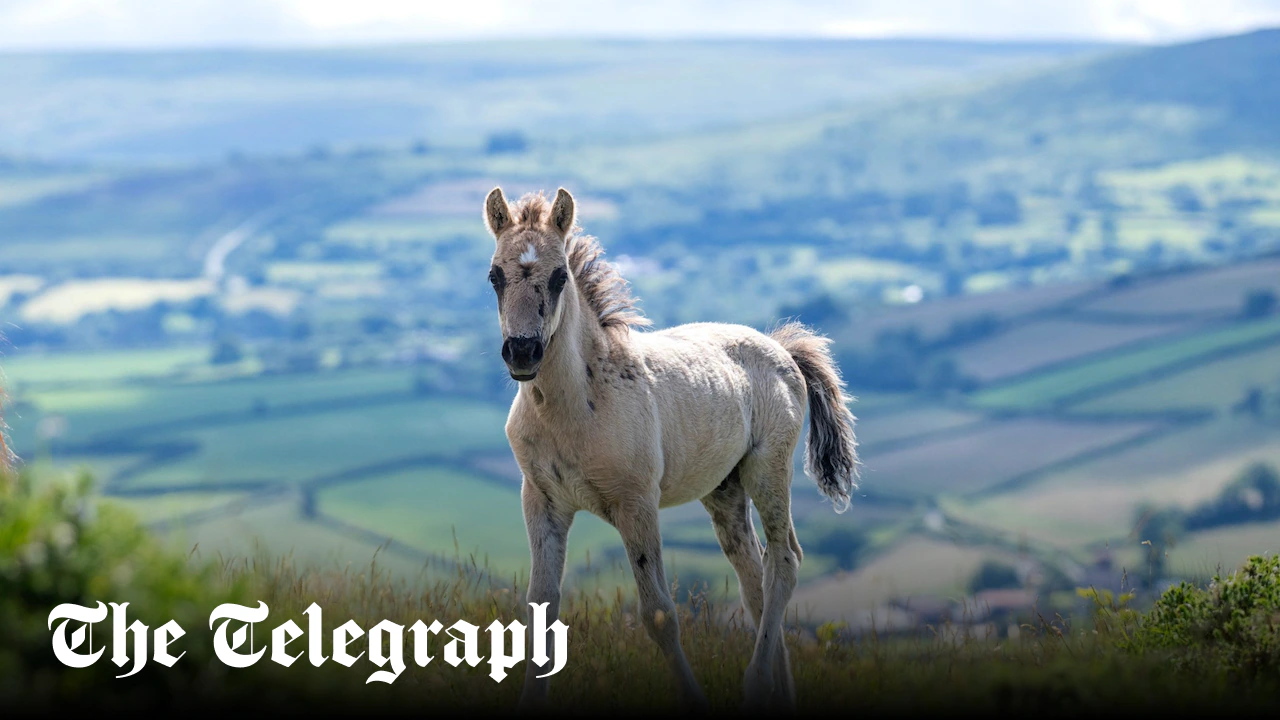
A short drive away, where the ponies are, the land looks very different. A dozen or so Dartmoor ponies mooch in the sun, and Hibbs points to the flowers coming up among the molinia.
There are buttercups, foxgloves and ferns.
Before the ponies were here, she says, “the molinia was literally waist-high”. She says if left unchecked, the grass also becomes a fire risk.
Lower down on the side of the moor in a beautiful farmhouse, a tenant of the Duchy of Cornwall who keeps Dartmoor ponies as well as cattle and sheep says there is more at stake than ponies.
The farmer, who is very keen on wildlife conservation, says there are parts of the moor where she believes Natural England’s low stocking density approach isn’t working.
“Maybe we need to turn it on its head and look at putting more stock up,” she says.
“Without the animals grazing on the common and producing dung, you don’t have insects for the wading birds,” she says.
“You also end up with a large fuel load and a risk of fire,” she adds.
For some residents of Dartmoor, the pony issue represents a culture war between radical environmentalists and traditionalists seeking to preserve the landscape.
In the middle are ecologists, who tend to be more nuanced.
Paul Lunt, an associate professor of environmental science at the University of Plymouth, has warned against the ponies’ removal, noting they “will eat vegetation that other species won’t”.
The last time Dartmoor really hit the headlines was when Alexander Darwall, the financier, attempted to get so-called “wild camping” banned on his 4,000-acre Dartmoor estate in 2023.
Darwall is keen on shooting pheasant, which many environmental campaigners oppose, and the issue of wild camping became a cause célèbre for them.
Cat Frampton, a local cattle farmer, thinks that the trouble with battles like that one is that they politicise the moor. The issue turned Dartmoor into a cultural battlefield.
“It puts a spoke in everything. It becomes really toxic really quickly,” says Frampton.
“It’s the same with the pony stuff or the stocking density stuff.”
Frampton claims there are only a few genuine green rabble-rousers, and most are incomers, but they have made her local farmers feel isolated.
“They don’t want ecologists on the land because it’s that sense of you’re either with us or against us, and the other side is going, ‘But we know how to make this really beautiful.’”