
Machrihanish, a former RAF base on the Kintyre Peninsula, has previously hosted testing of Concorde and the B-2 stealth bomber. The airspace is far less congested than Cornwall and it is just a 20-minute flight from Glasgow airport.
“The only flights are the occasional private flights for people like Paul McCartney, who lived nearby, and the air ambulance service,” said Mr Stevenson.
“Remoteness is a huge plus when you’re test-flying aeroplanes and testing rocket engines, and we’re pretty much at the end of the road in Kintyre, but you can be in Glasgow in 20 minutes and back in the world.”
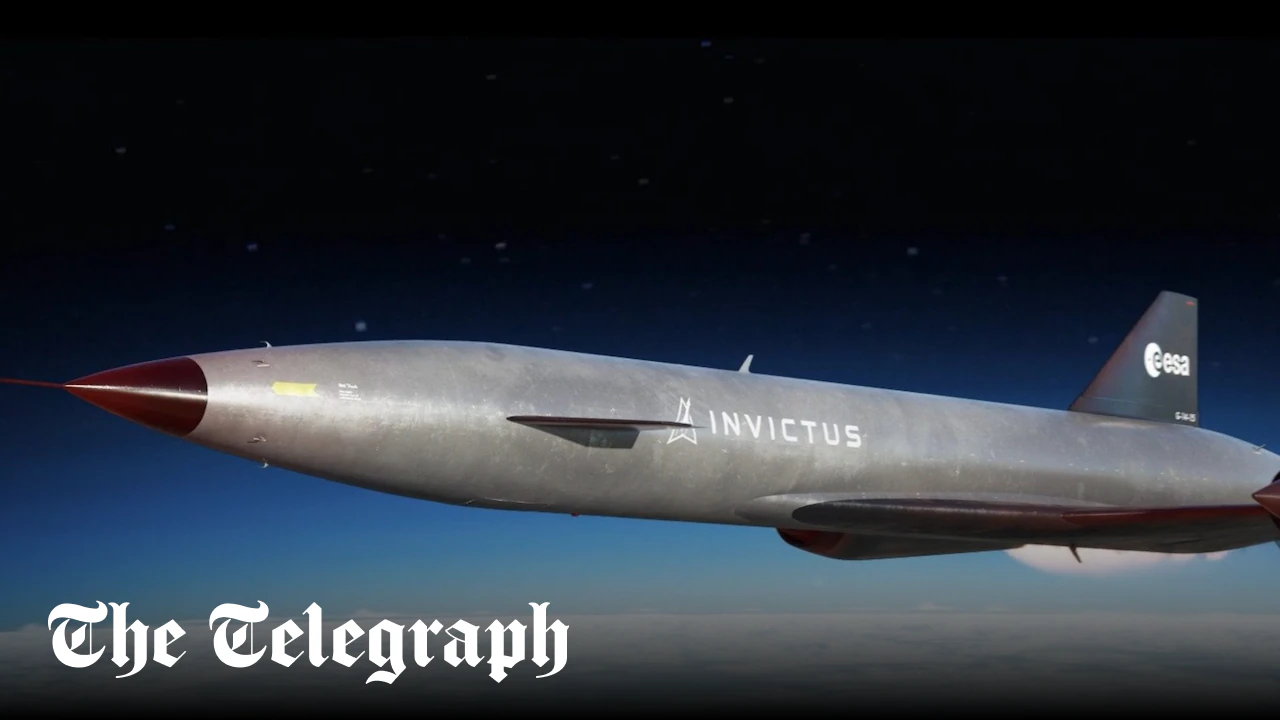
The design phase for Invictus is expected to be completed this year, with testing of smaller-scale engines and hydrogen systems scheduled for next year and propulsion trials towards the end of the decade.
The first flight could take place by 2034 at slower speeds, followed by true hypersonic testing by 2036. If all goes to plan, Invictus would break the Lockheed SR-71 Blackbird’s record for the fastest and highest-flying operational manned jet aircraft.
James Cornish, space business development manager at Frazer-Nash, which is acting as the prime contractor, said: “Invictus’s primary roles are enabling runway-based access to space, such as future spaceplanes and flexible satellite launch.
“It will support defence applications by testing propulsion, materials and control systems at extreme speeds. While it is not a passenger aircraft, the technologies it proves could ultimately underpin much faster long-haul travel in future civil platforms.”