
Richard Louv’s name is globally known and synonymous with spending as much time outdoors as possible. Whenever I think of the positive ubiquity of getting kids and older folks outside, I think of Louv’s seminal ideas about, and research into, what he calls the Nature-Deficit Disorder.1
I fondly remember my parents always saying in a thoroughly caring way, “You can never spend too much time outdoors, so get out of here, go into the woods.” Those experiences also were extremely important for Louv as they were for Jane Goodall. We all were imprinted on nature and I’m sure all kids would benefit from these sorts of early experiences.
One important aspect of being outside is what philosopher Matthew Halteman calls “slow watching.” There is no better example of the importance of “taking time to smell the roses” and to appreciate the animal beings with whom we share space—often in our backyards—than Louv’s new outstanding book Noticing: Intimate Encounters With the Natural World. When I think of what Louv calls “noticing,” I immediately think of what I call “Soft Personal Rewilding“—deeply connecting with nature because it’s easy, cheap, and accessible. What could be better?
Marc Bekoff: Why did you write Noticing, and how do you pick the title?
Richard Louv: As a boy, I spent much of my time exploring the Missouri fields and woods beyond the back hedge. I climbed trees and inspected colonies of aphids and ants traveling through the grooves and cracks in the bark. I sat for hours, watching banks of clouds build in the East or a crow watching me from the next tree over. I felt held by something larger than myself. I felt then (though I would not admit it to my friends) that the woods were filled with magic. As an adult, I missed that feeling. I wanted it back.
Seven years ago, my wife and I moved to these mountains to deal with our own nature deficit. The idea for Noticing occurred to me one morning during the pandemic. I was walking up our hill in the mountains east of San Diego.
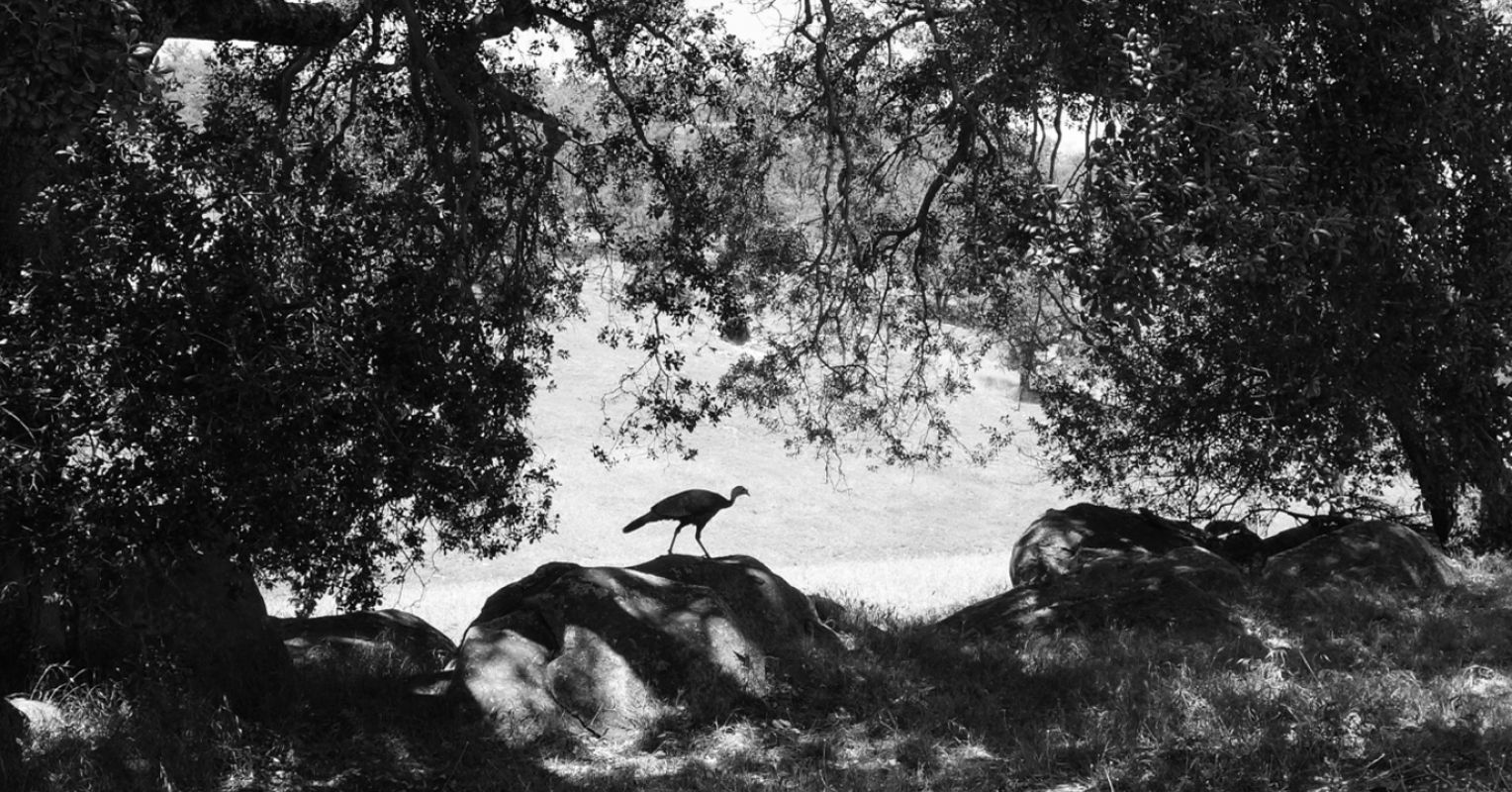
A group of turkeys, two females and a gaggle of chicks, shot across the road in front of me. One chick held back. I stopped to wait for it to catch up with the others. I was curious about how they noticed the life in their world. Where did they sleep? What were their stories? Did they sense a predator on the road? What did they sense that I did not?
MB: How does Noticing relate to your background and general areas of interest?
RL: It’s a personal extension of the work I’ve been doing for two decades. In 2005, my book Last Child in the Woods introduced the term Nature-Deficit Disorder, not as a known medical diagnosis but as a beginning language to help us talk about the widening divide between humans and the rest of the natural world.
That was followed by three more books that extended the concept to adults, communities, and natural systems. In Noticing, I consider a deeper deficit: our disconnection from the hidden worlds around us.
As a species, we’ve always sensed more than we know—the light behind the light—and have struggled to understand. Some people and cultures have anthropomorphized the inhabitants of these other worlds, turning them into spirits, elves, and fairy circles. That interpretation should not be dismissed. It represents a deeper understanding.
I’ve come to believe that the forest really is enchanted, but not in the way we typically think of enchantment. A confluence of trends in science and culture suggests a different way to think about the magic many of us first felt as children. I’ve come to think of this as bioenchantment.
MB: What are some of the topics you consider, and what are some of your major messages?
RL: How artists, photographers, educators, scientists, and others are finding new tools to engage with and learn from the natural world. Four bodies of scientific research have rapidly accelerated and are now converging. The first explores the surprising number of human senses—perhaps 30 or more—and how they interact. Parallel to this is new knowledge about how other animals and plants use their senses and the complex forms of communication within and between plant and animal species.
What I call the Great Conversation is going on all around us, between and among plant and animal species. This conversation includes us if we notice. Our kin include the mountain lion moving up the walkway before dawn, the black oak forest we now know is connected by a network of mycelium fungus through which they communicate, and the vast colonies of insect life beneath our feet. These invisible civilizations consume and renew the planet.
Environment Essential Reads
MB: Who do you hope to reach?
RL: The educators, scientists, businesses, children, and adults with the capacity for imaginative hope. Great opportunities are opening. Scientists are showing greater respect for Indigenous wisdom. In some cases, what once seemed primitive is now seen as prescient. Our prehistoric ancestors developed hundreds of noticing skills from a young age and didn’t wait for research to come in. Today, those skills are essential to the planet’s survival. Few of us protect what we don’t love, and none of us love what we don’t notice.
Noticing is a response to the hunger so many of us feel for authenticity in this age of artificial intelligence, unreal politics, and the erosion of our connection to our communities and the natural world. Counterintuitively, we can find relief in nature itself.
MB: Are you hopeful that as people learn more about the value of spending time “out in nature” and taking in the sights, sounds, odors, and touch of their surroundings, they will come to treat their surroundings with greater compassion and respect?
RL: In the past twenty years, an international movement to heal the broken bond between humans, especially children, and the rest of nature is gaining traction. Among many people, respect for and compassion toward the natural world is increasing.
In the US, Canada, and other countries, pediatricians now write “nature prescriptions.” We are seeing rapid growth in the number of nature-based schools. School districts are replacing concrete and asphalt playgrounds with natural play spaces and gardens that serve not only students but also the surrounding communities. Architects and urban planners are incorporating more natural elements into the design of schools, workplaces, and entire cities, often leading to increased productivity, creativity, and health.
Some of us call this the New Nature Movement, which includes children and adults, incorporates traditional environmentalism, and delves more deeply into health issues. But it’s time to move faster and go deeper. It’s time to enter the next stage of the New Nature Movement, an age of deep noticing.