
Your support helps us to tell the story
From reproductive rights to climate change to Big Tech, The Independent is on the ground when the story is developing. Whether it’s investigating the financials of Elon Musk’s pro-Trump PAC or producing our latest documentary, ‘The A Word’, which shines a light on the American women fighting for reproductive rights, we know how important it is to parse out the facts from the messaging.
At such a critical moment in US history, we need reporters on the ground. Your donation allows us to keep sending journalists to speak to both sides of the story.
The Independent is trusted by Americans across the entire political spectrum. And unlike many other quality news outlets, we choose not to lock Americans out of our reporting and analysis with paywalls. We believe quality journalism should be available to everyone, paid for by those who can afford it.
Your support makes all the difference.Read more
2023 Wimbledon champion Marketa Vondrousova has been suspended for four years for refusing a drugs test.
Vondrousova, the former world No 6, refused an out-of-competition test by a doping control official on 3 December 2025 and was subsequently charged by the International Tennis Integrity Agency (ITIA), which oversees tennis’ anti-doping policy, for failing to provide a sample in April this year.
The ITIA announced on Monday that an independent tribunal ruled Vondrousova’s evidence during the hearing offered “no compelling justification” for her refusal of the test.
Vondrousova released a statement this April saying that she had “reached a breaking point after months of physical and mental stress” at the time of the random visit and suffered an “acute stress reaction” which had prevented her from thinking rationally.
Tennis players are required to log their whereabouts for an allotted hour each day with anti-doping authorities so they can be tested outside of competition, although tests can also occur outside these set windows.
The officer who visited her in December arrived at 8.15pm, outside her whereabouts submission slot for the day, and demanded an immediate test, which Vondrousova described as a “serious intrusion into my privacy”.
The ITIA said on Monday: “Under anti-doping rules, the starting point for a sanction when a player refuses a test must be the same as if they had tested positive. This is to ensure that anyone who is doping cannot serve a shorter ban simply by refusing to be tested.”
The ITIA’s chief executive Karen Moorhouse said: “We understand that the testing process is uncomfortable, and acknowledge that it is an additional burden for players whose jobs already come with a high level of pressure and scrutiny, but it is essential to protect fair competition.
“Safety and welfare of players and our testers is really important to us. Our testers are well-trained, professional, and the gender of our testing witness always matches the player. They carry ID at all times, and players are able to verify their identity in other ways if they are ever unsure.”
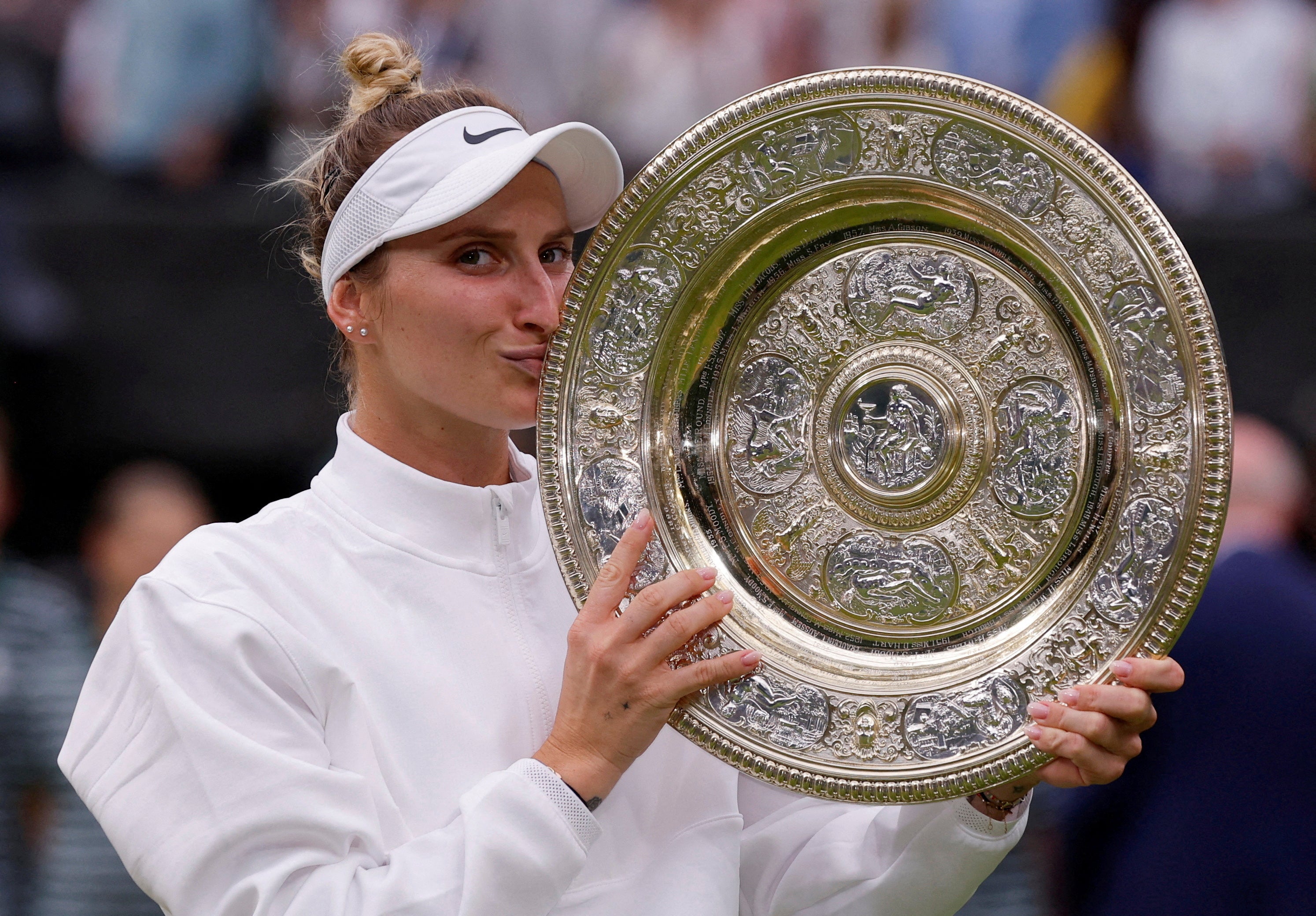 Marketa Vondrousova won Wimbledon in 2023 (Reuters)
Vondrousova explained during the hearing that stress and poor mental health affected her decision making, as well as concerns for her safety, and said that the tester failed to properly identify themselves.
The tribunal considered her explanations as well as evidence from the doping control officer who had attempted to conduct the test, and determined there was “no compelling justification” for her refusal.
The full written decision will be released in “due course”, the ITIA added.
Moorhouse said: “Unpredictable testing is an essential tool to protect clean sport.
“The independent tribunal ultimately supported that principle. This case is an important reminder that players can be tested at any time, in any place, and that refusal comes with significant risk.”
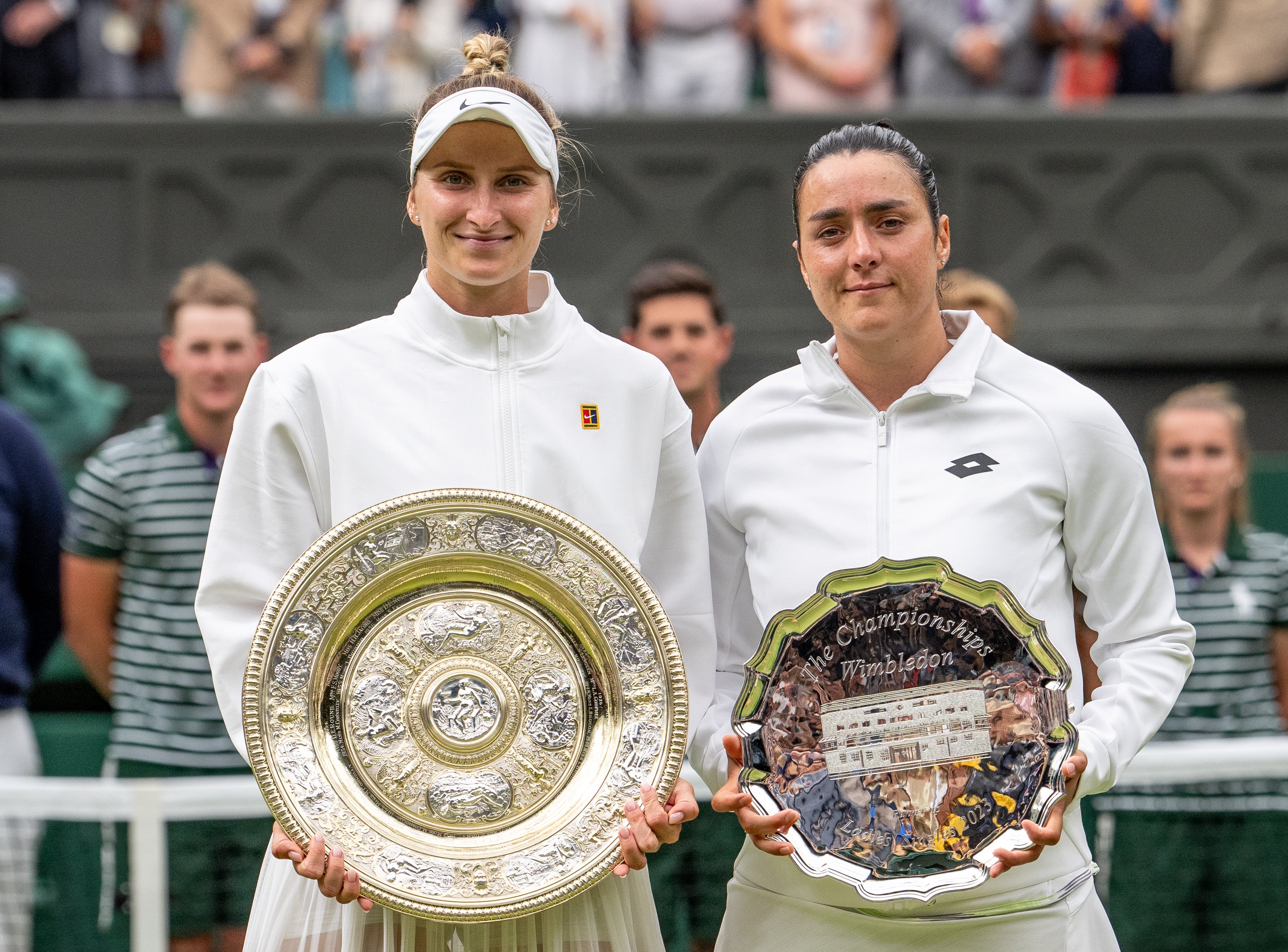 She defeated Ons Jabeur in the Wimbledon final and rose to a career high of world No 6 later that year (PA Archive)
In her statement in April, released on Instagram, Vondrousova cited the case of double Wimbledon champion and her compatriot Petra Kvitova, who was brutally attacked by an intruder at her home in 2016, suffering severe stab wounds to her left playing hand.
Vondrousova said: “After what happened to Petra, we don’t take strangers at our door lightly.”
She continued: “The recent doping control incident happened because I reached a breaking point after months of physical and mental stress.
“Years of hateful messages and threats have affected how safe I feel in my own space. When someone rang my door late at night without properly identifying themselves or following protocol — I reacted as a person who felt scared.
“In that moment, it was about feeling safe, not about avoiding anything.”
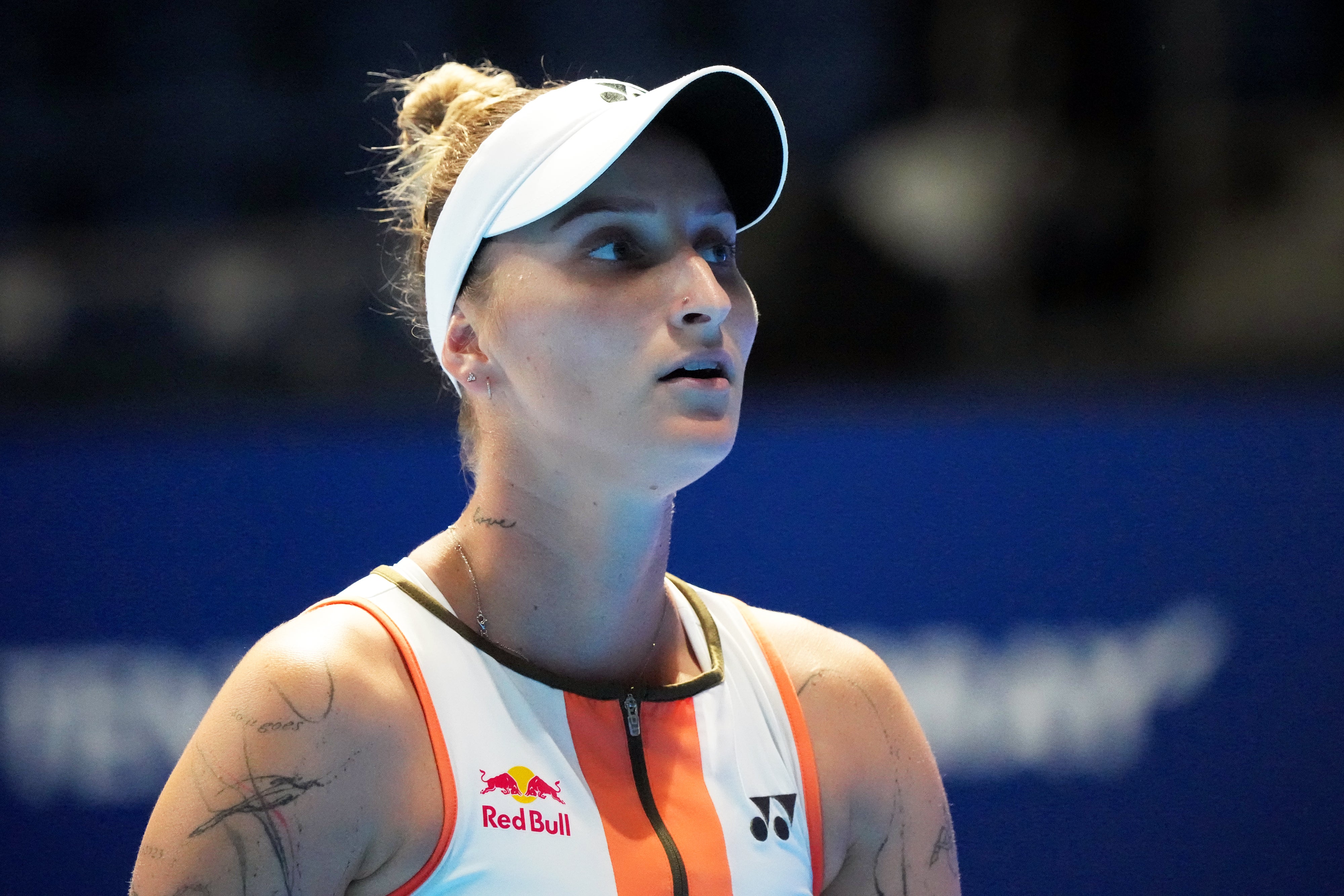 Vondrousova, pictured last October, last played on the WTA Tour this January (Getty)
She revealed that experts confirmed she suffered an Acute Stress Reaction and Generalised Anxiety Disorder, adding: “In that moment, fear clouded my judgment and I just couldn’t process the situation rationally.”
Now ranked 122nd in the world, Vondrousova last played on the WTA Tour in Adelaide this January.
The 26-year-old has the right to appeal to the Court of Arbitration for Sport, as do the ITIA and the Czech national federation. She not be allowed to play in, coach at, or attend any events organised or sanctioned by any of tennis’ four major bodies: the ITF, ATP, WTA, or the grand slams, as well as any organised by any national association, during her four-year ban.
Her suspension will end on 21 June 2030. She had originally been slated to appear at Wimbledon next week.