
The party didn’t get a majority in the Senedd which means it will need support from across the Senedd chamber, yet it is struggling to find support for its supplementary budget
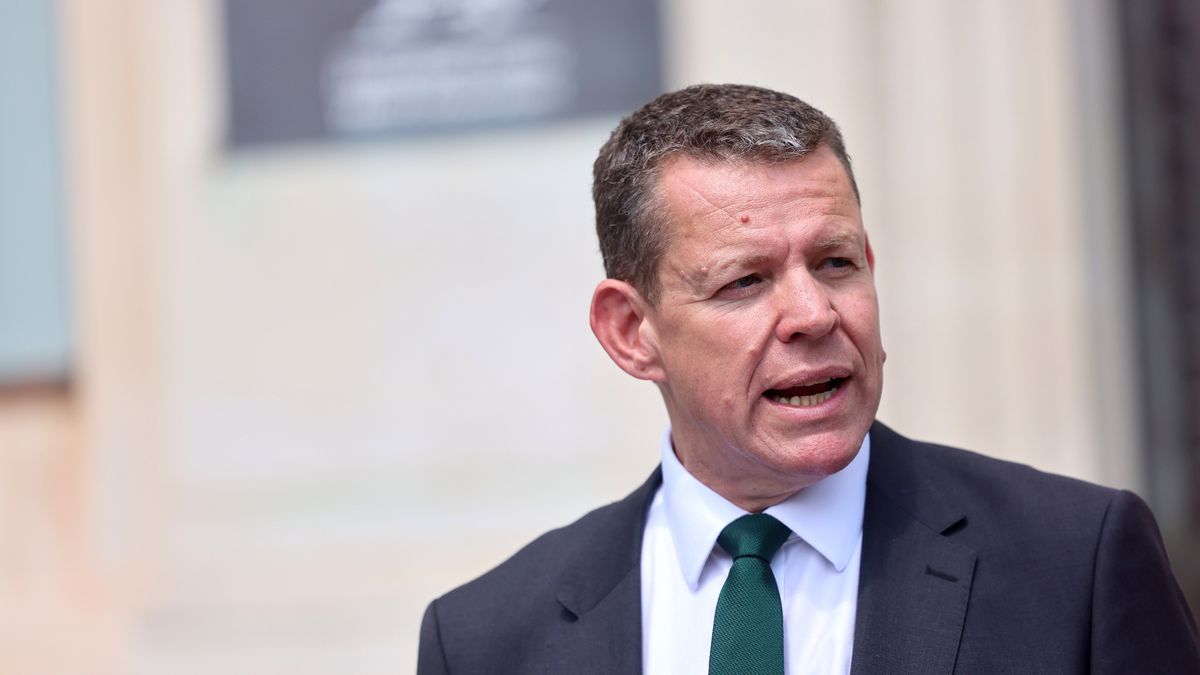
First Minister of Wales Rhun ap Iorwerth formed a minority government, which will need support throughout the Senedd term(Image: John Myers)
Plaid Cymru faces the prospect of losing its first major Senedd vote since forming a government. As it stands, no other party plans to back its supplementary budget which means it could not pass a vote in three weeks.
The new Welsh Government published its first glimpse of its priorities via its supplementary budget on Tuesday, June 23.
There are usually two supplementary budgets within the financial year, one now and one in February or March to make alterations to the budget for the year. There was extra attention on this one as it was the first look at how Plaid would prioritise its spending and agenda in the weeks since it formed a minority government.
While the annual budget is around £27.5bn, this supplementary budget is some £294m of spending which hasn’t yet been spent within the financial year.
Already there had been announcements that £145m will be allocated to the NHS, £55m to childcare and £15m to expanding the provision of free school meals for secondary school pupils.
The announcement ahead of a statement being made in the Senedd by finance minister Elin Jones included promises from the new government for £20m will be used “to boost the supply of social housing”, £40m to improve school buildings and £5m to improve local buildings and shared spaces.
It also includes £8m to continue the £1 bus fare pilot for young people until the end of the financial year and £2m to support a north-south bus service due to start in early autumn.
Another new announcement today is £2m for a pilot of the new government’s proposed Cynnal scheme, a scheme to give lower-income families a £10 weekly payment for each child. There is also £2m towards school swimming lessons.
As Plaid Cymru won 43 seats in the Senedd election in May which leaves it shy of a majority which means it will need to find support from across the Senedd chamber for any law or plans to pass. A majority in the newly expanded Senedd is 49, which the party is six short of. For our free daily briefing on the biggest issues facing the nation, sign up to the Wales Matters newsletter here.
The make-up of the Senedd is that Reform UK has 34 seats, Labour has nine, the Tories have seven, the Greens two, and Lib Dems a sole representative.
Sources for both Labour and the Conservatives have told WalesOnline that as it stands they do not expect to give Plaid their support which would mean that it will fail to pass.
We understand that Reform UK’s red line would be a commitment from Plaid Cymru that it would stop all international funding, something Plaid doesn’t intend to do.
Labour’s official statement suggested education is the sticking point.
Finance spokesman Huw Thomas said: “What stands out in this supplementary budget is not what’s included, but what’s missing. Despite every Welsh council, teaching unions, and schools calling for it, Plaid Cymru have failed to commit any of the over £300 million that’s available for children with additional learning needs.
“We are clear that Plaid’s uncosted promises should not be paid for by Welsh pupils and teachers.”
The party has repeatedly asked questions about £300m given by the UK Government to Wales as a result of a decision taken in England related to special educational needs (SEN), which is called ALN (additional learning needs) in Wales.
There is criticism from Labour in particular that the money should be spent on ALN in Wales.
However, Welsh Government say the money came as a result of the UK Treasury repaying deficits that local authorities in England had accumulated, a position Welsh councils were not in.
The First Minister was previously asked about that funding by former Labour education minister Lynne Neagle.
She asked how much would be allocated to ALN in Wales with that money, the First Minister replied: “The member has more knowledge than most, from her previous role, of the challenges that we face in education. It’s important to point out, of course, that the money in England was in order to clear historic debts. Now, it’s not for me to praise the former Labour minister, but those debts were not here in Wales, so it is not additional funding, as it were, for ALN”
There is no indication from the Conservatives they would support the current budget either. Their statement from the leader Darren Millar said the budget had the “wrong priorities”.
“This budget has the wrong priorities and is taking the same failed sticking plaster approach of the last Labour government. It’s time for Plaid to focus on the priorities of the people of Wales,” he said.
Speaking in the Senedd, Ms Jones said: “We have inherited a challenging financial situation, and we face significant pressures across the public sector. This is a supplementary budget – a budget within a financial year. “
She said: “The financial situation is challenging and the financial pressures within the budgets are significant, particularly in the health service, that’s why this budget keeps money unallocated to allow us to manage the financial pressures during the year.”
She directly referenced the ongoing row over ALN funding.
“The consequential funding to the budget from the write off of local government’s special educational needs debts in England, together with the reserves at the beginning of a year, allows this government to earmark additional funding while keeping an eye on the ongoing financial pressures within our public sector.”
She said she has told the leader of the WLGA, Anthony Hunt, to explain that councils will not receive the one-off funding to write off special education debts accumulated by local government in England, as those debts do not exist in Wales.
But she said consequential funding on special educational needs will come into the budget in 2028-29.
“Unlike this year’s one-off funding, that will be recurrent funding. Working closely within the annual budget process will put additional learning needs on a sustainable and affordable footing for the future,” she said.