
Google.org, the philanthropic arm of tech giant Google, has awarded a £1M grant to the FloodAction Coalition to support the development of a new intelligence platform designed to accelerate investment in nature-based solutions that reduce flood and drought risk across the UK.
The funding will support the creation of the UK Water Resilience Intelligence Platform, which will provide organisations with data and decision-support tools to identify where flood and drought risks threaten assets and operations, where nature-based catchment interventions can have the greatest impact, and where investment can deliver the strongest resilience benefits.
The FloodAction Coalition – which was launched last year and is convened by The Conduit and chaired by Aviva – brings together more than 80 organisations, including infrastructure operators, insurers, utilities, investors, landowners and environmental organisations, with the aim of developing the frameworks, standards and investment models needed to scale investment in water resilience across the UK.
It said the platform will map buyer asset risk against opportunities for nature-based interventions, helping organisations build the commercial case for investment and mobilise capital more effectively.
The announcement comes as climate-related water risks continue to increase across the UK.
The FloodAction Coalition said flooding already costs the UK economy an estimated £6.1bn each year through damage, disruption and lost productivity, while flooding and water availability have been identified by the Climate Change Committee as two of the country’s most significant climate adaptation challenges.
The coalition said nature-based solutions, including wetland restoration, floodplain reconnection, river restoration and catchment-scale land management, can help reduce flood and drought impacts while delivering wider benefits such as improved biodiversity, water quality and carbon sequestration.
However, the group said investment has been constrained by fragmented data, inconsistent assessment methods and limited visibility of investment-ready opportunities.
Google.org said its funding will help create the information infrastructure needed to overcome these barriers and support the development of a scalable national market for water resilience.
Google EMEA director of sustainability Adam Elman said: “Scaling nature-based solutions to build climate resilience requires moving past fragmented data towards shared, actionable insights.
“By using advanced technology and AI to map shared flood hazards and connect them to asset dependencies, the UK Water Resilience Intelligence Platform will provide critical decision-support infrastructure needed to build the commercial case for resilience.”
He added: “Google.org is pleased to support the FloodAction Coalition in pioneering this scalable framework, helping to accelerate private capital and protect vulnerable communities across the United Kingdom.”
FloodAction Coalition co-founder Paul van Zyl said there was strong interest in investing in nature-based solutions but a lack of mechanisms to support investment.
“To unlock a new generation of investment in projects that reduce climate risk, strengthen economic resilience and restore natural systems, we need the shared data-based evidence that allows buyers to identify where interventions will have the greatest impact, understand what those outcomes are worth, and commit capital with confidence,” he said.
“Google.org’s support will help us build exactly that.”
FloodAction Coalition chair and Aviva chief sustainability officer Claudine Blamey said: “Nature-based solutions can play a critical role in building resilience, often delivering multiple benefits for communities, biodiversity and water quality alongside reducing flood and drought risk.
“However, scaling investment requires confidence: confidence in where interventions should be deployed, confidence in the outcomes they can deliver, and confidence in how those outcomes are measured.”
She added: “The support from Google.org will help create the data and intelligence needed to provide that confidence, helping accelerate investment into a stronger and more resilient future for communities across the UK.”
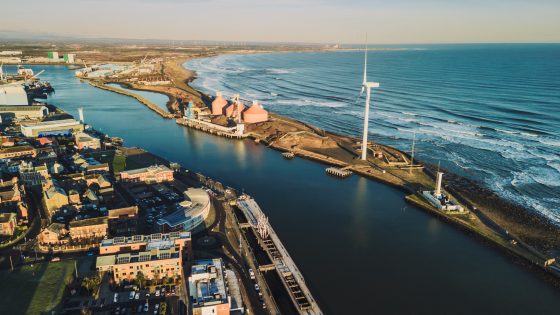
Image above: Port of Blyth in Northumberland.
Like what you’ve read? To receive New Civil Engineer’s daily and weekly newsletters click here.