
A new study has revealed that using an electric fan in hot temperatures could increase the risk of suffering a deadly heart attack.
Researchers from the University of Sydney recruited 20 participants to test how fans affect body temperature, heart rate, sweating and comfort when used in a hot and humid environment.
The study participants were asked to complete four separate three-hour trials in a climate chamber set to 39.2°C and 49 per cent humidity.
For two of the sessions they were well hydrated, and had drank the recommended amount of fluids for 24 hours before the trial, and could also drink during the trial.
For the other two, they were required to be dehydrated, avoiding fluids and foods with a high water content in the 24 hours before the trial and were forbidden from drinking during the trial.
In each hydration state, the participants were tested with and without a fan.
The study, which was outlined in a research letter published by journal Emergency Medicine, aimed to see whether hydration status changes the effect of fan use in hot, humid conditions—especially since it’s known that fans can sometimes worsen heat stress.
A series of temperatures were measured, including their heart rate, rectal temperature, whole body sweat rate, thermal discomfort, and thirst level.
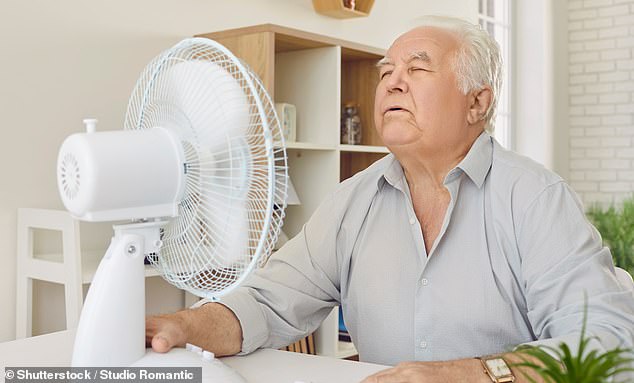
A new study has warned of the dangers of fans in hot temperatures when you are dehydrated
The data revealed that fan use while dehydrated can worsen heart strain, which can eventually lead to heart attacks.
Furthermore, the researchers concluded that using a fan increased sweat losses by about 60 per cent, which might mean using a fan could be harmful if you’re dehydrated.
The study lead, Connor Graham PhD said: ‘Most extreme heat decedents do not have air conditioning but often own electric fans.
‘Fan use can reduce heat-related elevations in thermal and cardiovascular strain at temperatures up to approximately 39 to 40 °C.
‘In hotter conditions, fans should be turned off, as they can worsen heat stress.’
This, Mr Graham explained, is because the high temperature of the air causes the body to heat up faster than it can cool itself by sweating.
This isn’t the first link made between electric fans and death.
Scientific studies have found that fan use can reduce heat and heart strain in temperatures up to around 39 (102.2F), but once the mercury edges past 40C (104F) it’s better to turn them off.
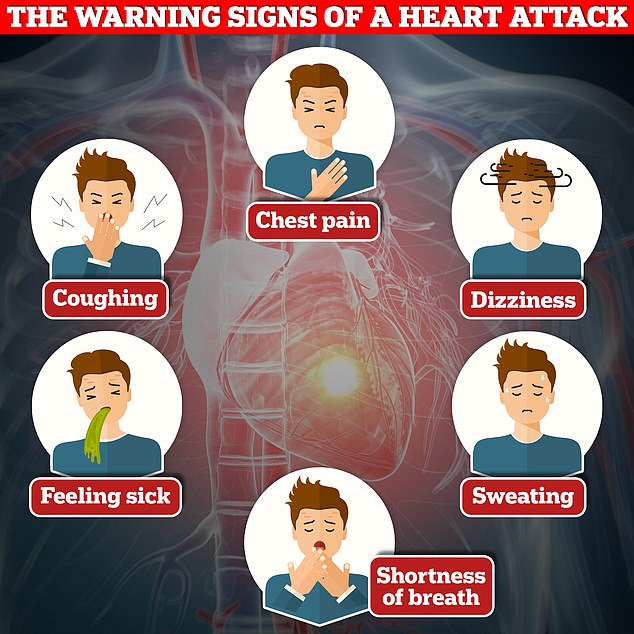
More than 7.6 million people in the UK are living with heart or circulatory diseases, according to the British Heart Foundation
Researchers have also recommended only using fans when it’s below 39C for healthy adults below 40 years old and 38C (100.4F) for older adults 65 or older.
They also warned fans should only be used in temperatures above 37C in older adults on anticholinergic medications like oxybutynin for bladder control.
Earlier this week, an amber heat-health warning was issued for five regions of England by the UK Health Security Agency (UKSA) and the Met Office.
In response, Dr Paul Coleman, a public health expert at the watchdog, said: ‘These temperatures can result in serious health outcomes across the population.’
This is particularly a problem for, he said ‘those who are vulnerable, such as the elderly or those with serious health conditions’.
So he advised people to check in on friends, families or neighbours who are vulnerable to make sure they are coping well.
To stay safe in the hot weather, the watchdog recommends, keeping your home cool by closing windows and curtains in rooms that face the sun.
They also urged people to know the symptoms of heat exhaustion or heat stroke and what to do if you know or someone else has them.
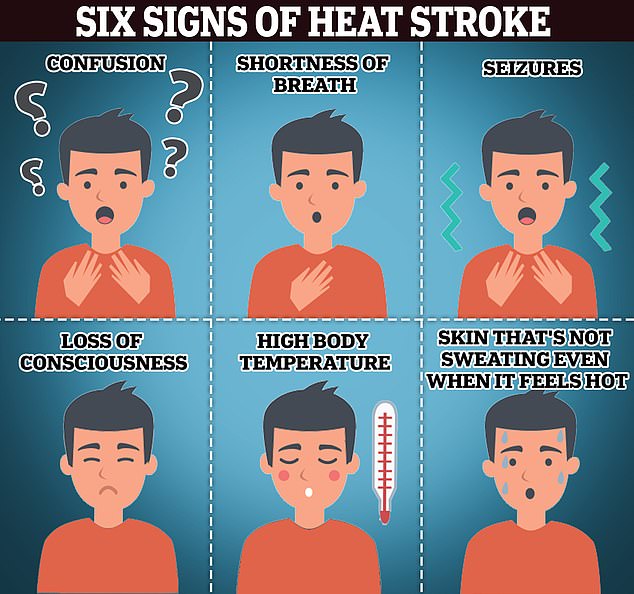
In response to soaring temperatures across the UK health officials have urged people to know the tell-tale signs of a heat stroke
Heat stroke occurs when the body loses its ability to cool itself, and its inner temperature—which usually hovers around 37C—rapidly increases to over 40C.
The heart begins frantically pumping blood to try to cool it against the skin’s surface.
The increased temperatures can also damage internal organs, leading to irreparable damage, or even catastrophic failure.
According to the NHS, tell-tale signs of the precursor to heat stroke, heat exhaustion, include tiredness, a high temperature, excessive sweating, being thirsty and weakness.
Others include fast breathing, rapid heart rate, being headaches, nausea, vomiting, clammy and/or pale skin, as well as cramps in the arms, legs and stomach.
While symptoms are often the same in adults and children, those under 18 may become irritable too.
If someone is showing these signs, the NHS advice is to cool them down and give them fluids.
They add that heat exhaustion will not typically need emergency medical help if you can cool down within 30 minutes.
But if symptoms persist or worsen after 30 minutes, it may have turned into a heat stroke—which can be life threatening so you should call 999 immediately.
It can be fatal because when your body’s temperature regulation system fails, it can lead to dangerously high temperatures that can cause organ damage.
Other signs of heat stroke are a very high temperature, hot skin that’s not sweating and might look red, rapid heartbeat, fast breathing, shortness of breath, confusion, lack of coordination, seizures or fits, and loss of consciousness.