
Father’s Day is one of the most widely observed holidays in the U.S., though it tends to receive less cultural attention than Mother’s Day. Like Mother’s Day, it can stir a complicated mix of emotions.
For some, Father’s Day is simple. It is a day of gratitude, celebration, and connection. For others, it is emotionally complicated because the person being celebrated was present in some ways but unavailable in others. He may have provided financially, lived in the home, or appeared responsible to the outside world, while still being emotionally distant, reactive, controlling, self-absorbed, or immature behind closed doors.
Present and healthy fathers are often less dramatic than people expect. They are not perfect. Their strengths lie in emotional availability, consistency, accountability, and safety. They show up, not only physically but emotionally. They can regulate themselves, repair when they cause harm, and make room for their child’s individuality.
The more complicated fathers are harder to name. They may not fit the obvious image of absence or abuse, but their children may still carry lasting emotional wounds. These fathers often struggle with empathy, accountability, emotional regulation, vulnerability, consistency, and attunement to their children’s needs.
This is where Father’s Day can become painful: when the father was there, but not fully available.
The Distant Father
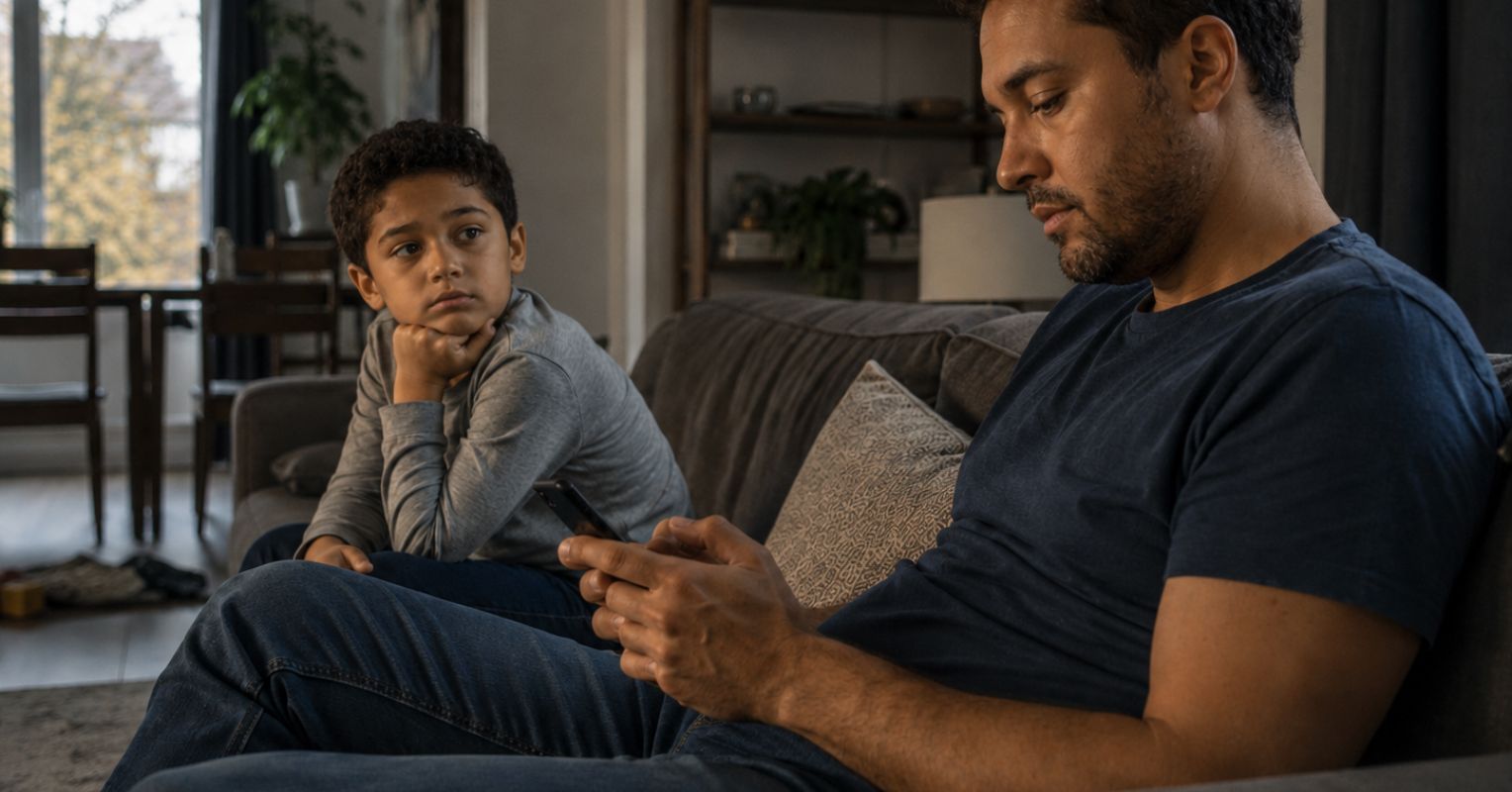
The distant father is physically present but emotionally absent. He may be a provider. He may offer physical safety. He may attend events, live in the home, or fulfill certain responsibilities. Yet he rarely asks meaningful questions, offers comfort, expresses affection, or shows sustained emotional interest.
These fathers often believe that being in the home is enough. They may watch television, play video games, scroll on their phones, work long hours, or remain emotionally unavailable even when sitting in the same room. Conversations may stay practical, corrective, or superficial. Deeper conversations may only occur when rules have been broken, and punishment is required.
The Reactive Father
The reactive father responds to stress, frustration, or disagreement with anger, irritation, defensiveness, withdrawal, or mood swings. His emotional state can shape the entire household.
In these families, wives, partners, and children often learn to monitor their father’s mood, avoid triggers, and shrink themselves to keep the peace. The home may look stable from the outside, while everyone inside is walking on eggshells.
These fathers may blame others for their outbursts. They may insist they were “just tired,” “just joking,” “not yelling,” or “pushed too far.” Instead of taking accountability, they make others responsible for managing their emotions. For children, this is called parentification.
The Controlling Father
The controlling father often confuses control with care. He may demand unwavering obedience, restrict independence, criticize choices, and treat the child as an extension of himself rather than a separate person.
These fathers are often authoritarian in their parenting style, marked by high control and low emotional responsiveness. This is the “because I said so” approach to parenting. Questions are interpreted as disrespect. Autonomy is treated as rebellion. The father’s authority becomes more important than the child’s development.
Criticism may be disguised as guidance. Harshness may be framed as discipline. Emotional distance may be labeled as a strength. The child may be punished not only for misbehavior, but for having opinions, preferences, emotions, or boundaries.
Authoritarian parenting may teach children how to obey, but it does not always teach them how to think, communicate, regulate emotions, or trust themselves.
The Self-Absorbed Father
The self-centered father prioritizes his own needs, image, comfort, and ego. He may have a carefully curated public identity as successful, respected, generous, or admirable. Inside the family, however, his children may feel unseen unless they are affirming him.
These fathers may expect admiration and become defensive or resentful when they feel criticized. Their children may learn never to say anything that could embarrass them, challenge them, or puncture the image they want others to see.
Some self-absorbed fathers compete with their children rather than celebrate them. Others use their children’s accomplishments as proof of their own success. A child’s milestone becomes another opportunity for the father to center himself.
Even during difficult moments, his pain may be prioritized. A child’s struggles may be minimized because his feelings, stress, or sacrifices are treated as more important.
Children of self-absorbed fathers may grow up feeling useful, impressive, or responsible, but not truly known.
Why Emotional Absence Leaves Lasting Marks
Present-but-emotionally-absent fathers can be especially confusing. It is often easier to understand the pain of a father who left, or the fear caused by a father who was overtly abusive. The more confusing wound comes from the father who was physically present but emotionally unavailable.
Adult children of emotionally neglectful or emotionally immature fathers may struggle with people-pleasing, emotional avoidance, fear of conflict, difficulty trusting others, overachievement, hypervigilance, or attraction to emotionally unavailable partners. What helped them survive childhood may later interfere with intimacy, self-expression, and emotional safety in adulthood.
Why Father’s Day Can Feel Like a Trigger
As an adult, holidays can activate grief over what was missing in childhood. Father’s Day cards, sermons, social media posts, commercials, and family gatherings can become reminders of a relationship that never felt as safe, close, or loving as it was supposed to be.
The grief is not always about what happened. Sometimes it is about what did not happen.
It is the conversation that never came.
The apology that was never offered.
The protection that was inconsistent.
The interest that was absent.
The affection that felt conditional.
That kind of grief can be difficult to explain, especially when others say, “At least he was there.”
But physical presence is not the same as emotional presence.
Healing Without Denial
Healing does not require denial. It does not require pretending the relationship was closer, safer, or healthier than it actually was. It does not require minimizing what happened simply because someone else had it worse.
You can acknowledge what your father provided while still telling the truth about what he could not give.
The relationship you have with your father in adulthood is a reflection of the relationship he built with you in childhood. That does not mean change is impossible, but it does mean that closeness cannot be demanded simply because of biology, tradition, or a holiday.
In adulthood, you get to redefine the relationship. You can grieve what you never had. You can set limits around your time, attention, emotional labor, and access. You can decide what kind of contact feels healthy, honest, and sustainable.
You Are Allowed to Tell the Truth
Father’s Day does not have to force emotional dishonesty. You do not have to perform gratitude that erases your grief. You do not have to pretend a relationship is simple when it has been complicated for years.
Healing may bring conflict, confusion, guilt, and pressure from others. You may wrestle with what you think you “should” do versus what feels emotionally honest.
But telling the truth about your experience is not disrespect. It is clarity.