
The owner’s references provided a starting point, highlighting Japanese influences, old-world materials, and rich, saturated colour. It was a brief that suited Heidi’s instincts well, and she began to conceive the answer to her question: a blend of antique and vintage pieces, a sophisticated colour palette, intriguingly textured materials, and a judicious use of bold pattern. Restraint was key: ‘It couldn’t be a maximalist house,’ notes Heidi. ‘It doesn’t have the architecture to support that.’
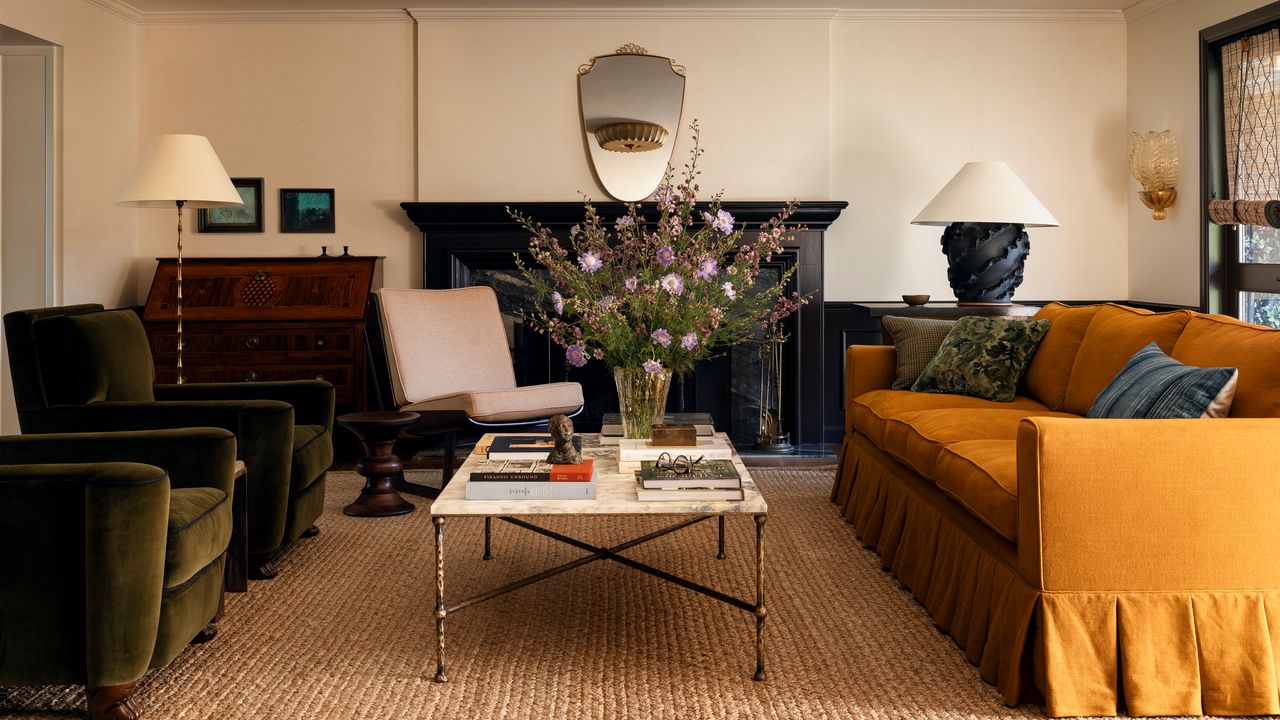
Heidi’s approach was to make use of plenty of pattern, but balance the richer spaces with quieter, calmer ones nearby. Large-scale, painterly patterns are one of the striking elements of the house – mostly used on the walls to maximise their impact, rather than on furniture and textiles – they stop short of dominating the interior. The entrance hall sets the tone with Långelid von Brömssen’s botanical ‘Toromiro’ wallpaper, and the dining room continues the idea with a classically elegant chinoiserie paper. The living room between them acts as punctuation, a calm pause amidst the rich pattern. ‘It feels like a breath of fresh air,’ says Heidi.
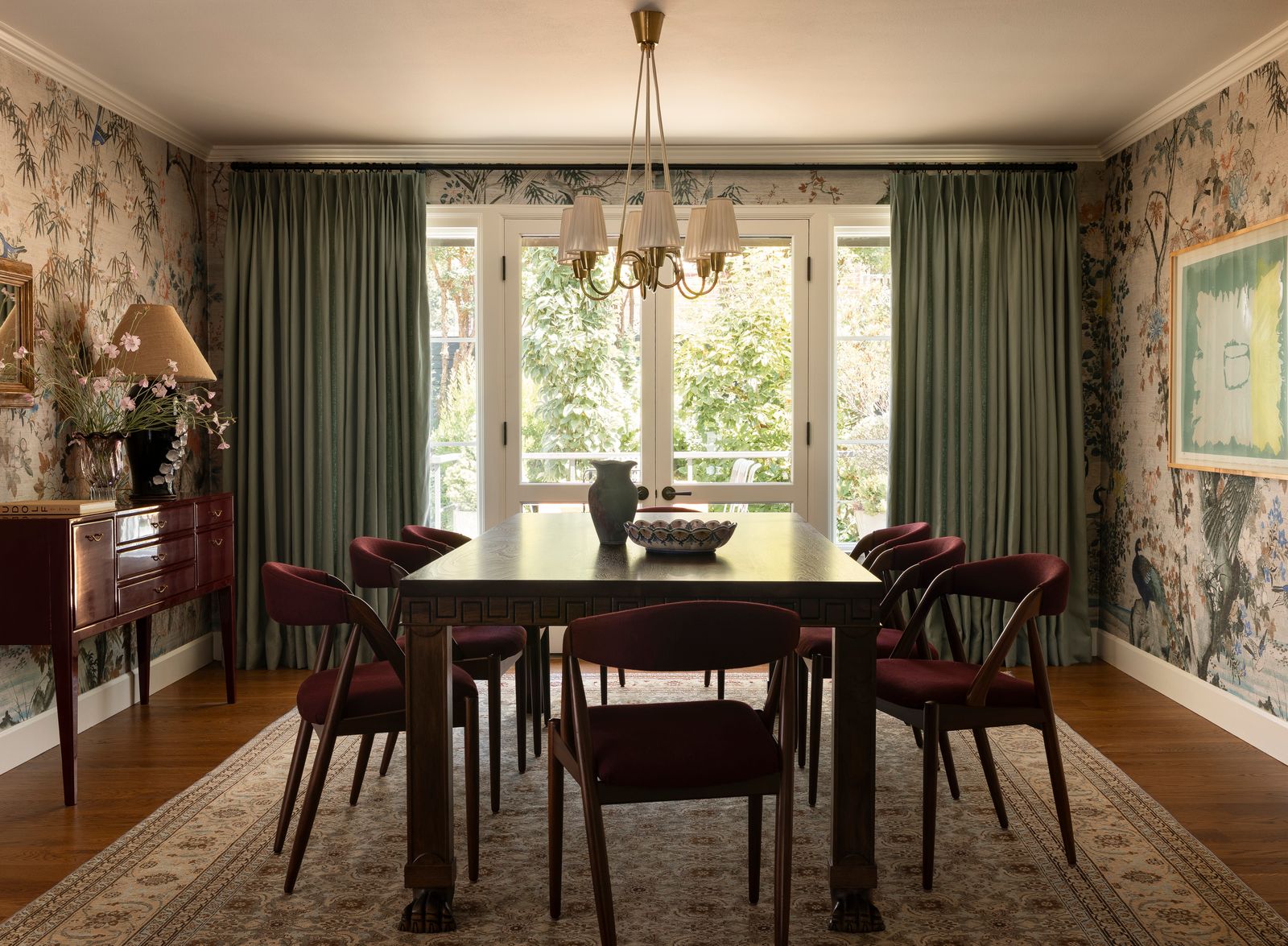
In the dining room, a ‘Yamadori’ chinoiserie wallcovering by Watts 1874 forms the background for a custom dining table by Heidi Cailier Design and mid-century dining chairs.
Haris Kenjar
The kitchen is perhaps the most exciting demonstration of Heidi’s ability to introduce drama in unexpected ways. Relatively small and boxy, the room seemed especially unpromising at first, but Heidi’s decision to commit to exuberant pattern on the upper walls was transformative, and even more so was the decision to do it not with wallpaper but with hand-painted tiles. Commissioned for the kitchen from Wales-based artist Freyja Lee, whose work Heidi had discovered on Instagram, these tiles now work as a centrepiece for the house. ‘The client balked at it initially,’ Heidi admits. ‘It was literally the one thing she wasn’t sure about. And now I think it’s everybody’s favourite.’
A loose motif can be a brilliant way to make a house feel cohesive, and Heidi has carried the botanical theme into other rooms, with another Chinoiserie-inspired wallpaper making a jewel box out of the downstairs loo, while softer landscape murals add atmosphere to the bedrooms, and delicate leaves trail around the bathroom walls. Varied in scale and intensity, these patterns form a subtle thread throughout the house, while allowing for the differing moods of each space. The more public rooms of the entrance hall, dining room and kitchen are dramatic and confident, but the main bedroom, by contrast, has a pleasingly restful feel, with a misty mural inspired by the trees and landscapes of the Pacific Northwest. It has an immersive effect, but its muted palette makes it suitable for the calm mood of the bedroom.