
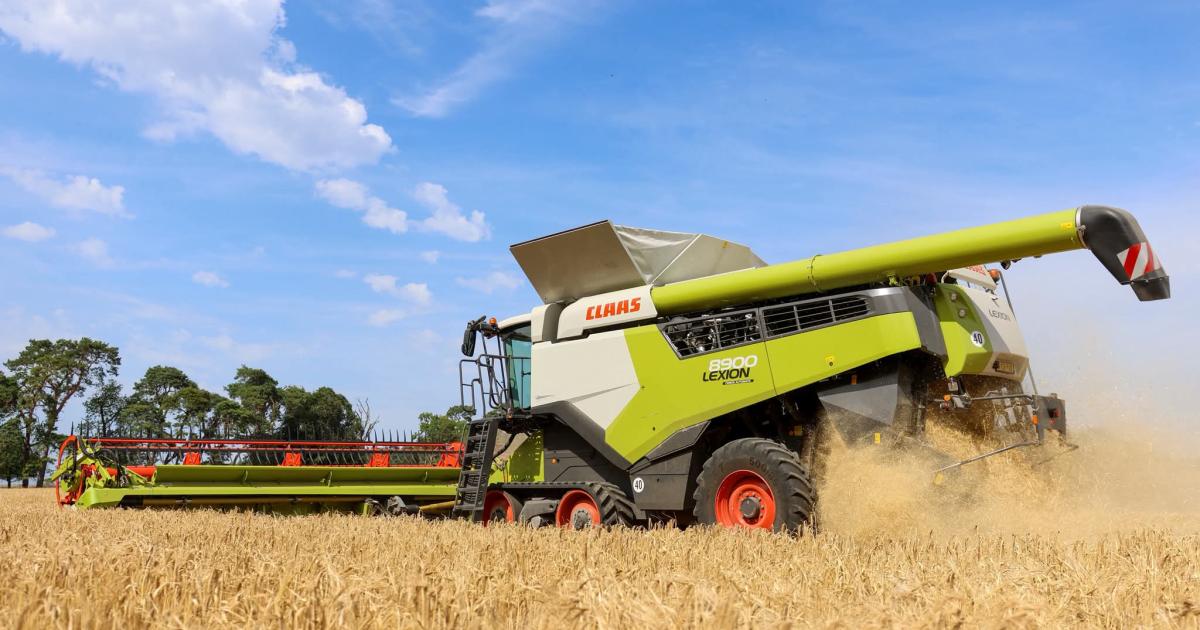
Combines were dusted off at the Elveden Estate near Thetford ready to begin work on its winter barley today.
The estate’s managing director Andrew Blenkiron fears the worst for his yields.
SIGN UP HERE FOR YOUR DAILY BUSINESS BULLETIN
A combine starts harvest in a winter barley field on the Elveden Estate near Thetford (Image: British Agri Photography)
Last year, the crop was devastated after a similar June heatwave which hit yields and prompted an early harvest starting on June 28.
They were down 40% on the average where they were able to provide some irrigation and 60% where they weren’t.
He is expecting a similar dire result this year. A heatwave in 2022 wreaked the same destruction.
The effects of the current heatwave have been exacerbated by an extremely dry spring on the 22,500 acre estate with just 8mm of rain throughout April and May combined.
But June helped revive the wheat crop somewhat this year with about 50mm of rainfall.
“Given the dry weather during the growing season things don’t look promising at all, a great shame because everything looked so well in early April,” he says.
By contrast, irrigated crops are looking well, he says, but it’s taking a lot to keep them moist – with potatoes receiving 20 -25mm of water every four days.
Onions have also had two more applications than in most years.
A combine starts harvest in a winter barley field on the Elveden Estate near Thetford (Image: British Agri Photography)
The barley crop is “dead, basically”, he says. “It died quite a while ago.
“Hopefully it’s on a par with last year and no less.”
The estate’s light, sandy soils mean water drains away very quickly compared to farms on heavy, clay soil which retains moisture much better – so is worse hit by droughts and heatwaves.
The expected yields from this year’s crop are particularly disappointing given the great early promise they showed before the weather took a turn for the worse in April.
“It’s just so disappointing – we started the spring exceptionally well. It shows that farming is at the forefront of climate change.”
Trailers and grain stores have been cleaned and washed down ready to receive the new crop over the coming weeks.
“It’s going to be all systems go this week,” says Andrew..
“We’ll be starting early potatoes very soon as well and when it cools down a bit we have got some onions we need to get into store. We can’t do it at the moment because it’s too hot – they land on the ground and they cook.”
He adds: “The wheat is hanging on reasonably well but it’s dying back pretty quickly now. he rain two or three weeks ago has really given it a bit of a boost.”
How crops have fared UK-wide varies greatly, he says. He visited Yorkshire recently and cereal crops there were looking “exceptional”. Rainfall in East Anglia has varied as well – even on parts of his own farm.