
ALMOST four decades after establishing its services in Fermanagh, Action Mental Health (AMH) continues to provide a lifeline for local people facing mental health challenges.
As part of the ‘Herald’s monthly ‘Making a Difference’ feature, we look this week at how AMH has evolved significantly since its beginnings in Downpatrick in 1963, starting as a small service at a time of heavy stigma around mental illness, and growing into one of the North’s leading mental health charities.
Today, it delivers a broad range of programmes combining therapeutic support, education, employability training and wellbeing services.
Its New Horizons centres, located across nine sites including Enniskillen, offer structured programmes ranging from vocational skills and accredited learning to creative therapies and confidence-building workshops.
AMH New Horizons Fermanagh was established in 1991 and was initially based in Enniskillen town centre, mobinh its current site in Cherrymount Road, Drumcoo, the following year.
Alongside this, AMH also provides counselling for children, young people and adults, as well as wellbeing initiatives delivered in schools, workplaces and community settings.
While the organisation’s reach is wide, its approach is centred on the individual, supporting people to recover at their own pace.
Finding hope
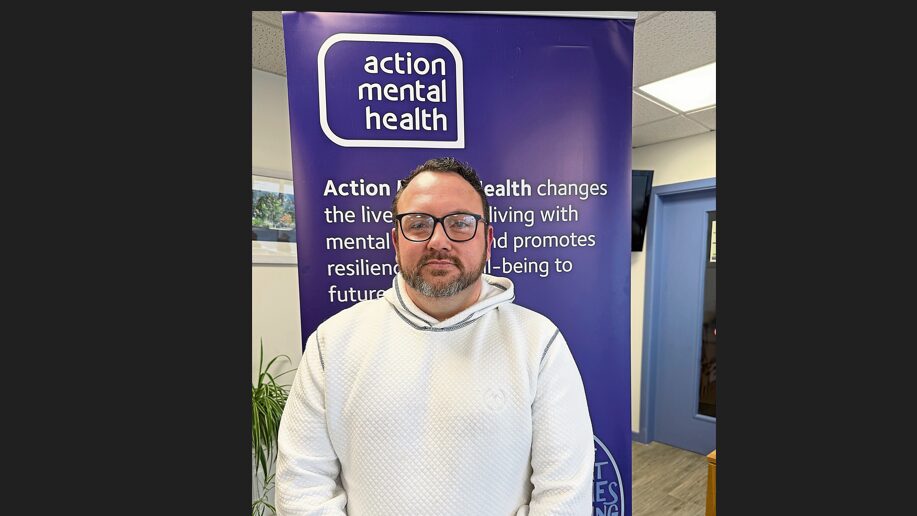
For one Newtownbutler man in his late 30s, Don McDermott, the organisation has marked a turning point in a journey shaped by isolation, anxiety and recovery.
After being referred to Action Mental Health in 2024, Don sought support for severe isolation and anxiety, having reached a point where even leaving home felt difficult.
“The counsellor thought AMH would be the right place for me, not just for professional support, but to be around others who understood what I was going through,” he told the ‘Herald.
Don’s first impression of AMH was uncertainty. Entering a new environment during a period of poor mental health was a challenge in itself.
“Once you find your feet, you realise everyone there has their own reasons for attending,” HE SAID.
“Nobody is judging you. It becomes a safe space where you can do as much or as little as you’re able for that day.”
Building confidence
That sense of safety, he said, is central to recovery.
Don began with pottery sessions, which quickly became an important anchor in his routine.
The hands-on nature of the activity helped him focus and step away from intrusive thoughts.
“Pottery was brilliant because it gave me something tangible to concentrate on,” he said.
“I wasn’t stuck inside my own head all the time. I was making something, learning something, and that made a big difference.”
As his confidence grew, he joined computer classes, personal development, exercise, yoga and Tiffany glass art, rebuilding structure and routine, attending creative writing workshops sharing poetry publicly at Enniskillen Library.
“For me, writing has been incredibly helpful,” he said.
“It allows me to express things I couldn’t otherwise put into words. That’s been a huge part of getting better.” >crosshead<
Don believes attitudes towards mental health are improving, but says men still face particular barriers when it comes to speaking openly.
“I think we’ve come a long way, but there’s still a stigma for men,” he said.
“There’s this old idea that being ‘manly’ means burying your emotions and getting on with things. That if you admit you’re struggling, you’ve failed in some way. That kind of thinking needs to go.
“Talking about my own experiences is important to me now. It shows that it’s okay to ask for help.
“Your difficulties don’t define you. They’re something you’re dealing with, not who you are.”
Over time at AMH, he has gradually rebuilt confidence and begun re-engaging with everyday life.
“When I first went, I was frozen in a way. I couldn’t see how I would get back to normal life,” he said.
“But slowly, step by step, things started to change.
“There’s no pressure there. You’re allowed to move at your own pace.”
Support
He says the impact of AMH comes not only from structured programmes but from the combination of professional support, peer understanding and simple human connection.
“It might sound simple, but it has changed my life,” he said.
“It helped me get back to living again.”
Don is also quick to praise the staff who supported him.
“They go above and beyond what you would expect,” he said.
“It doesn’t feel like just a job to them, they genuinely care. Services like this are vital, especially in places like Fermanagh, where people need accessible support close to home.”