
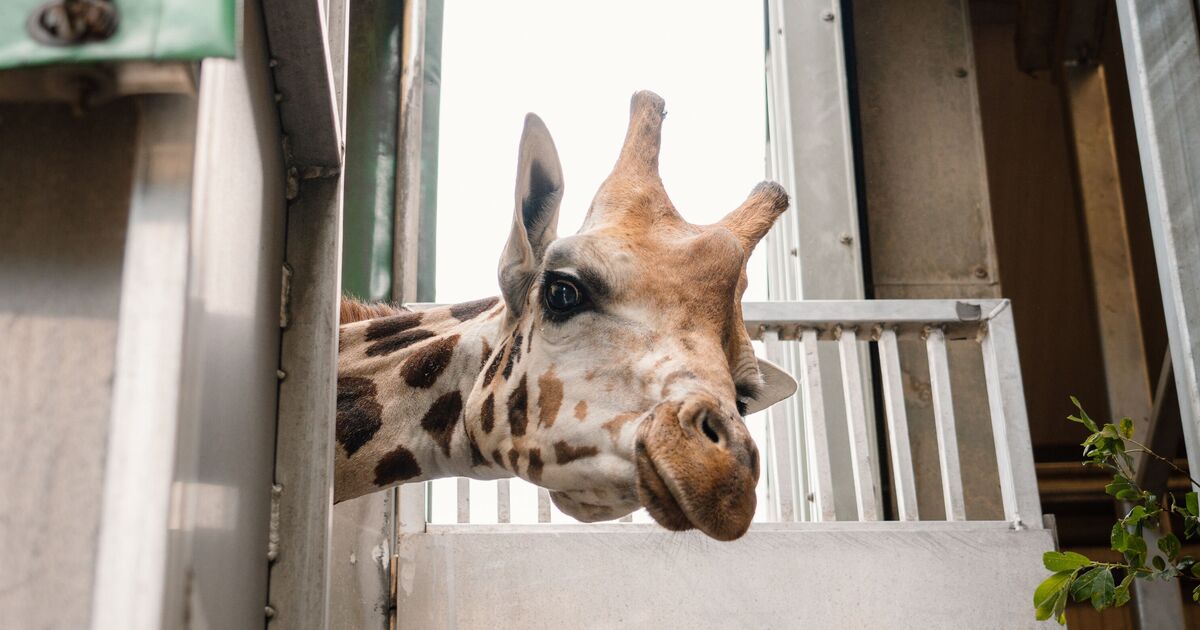
When Longleat pioneered the world’s first drive-through safari 60 years ago, it was an instant hit. For the first time in Britain people could view wild predators up close and personal from the comfort of their own vehicles. And while the big attraction at the Wiltshire estate was, of course, the African lions, mischievous monkeys would famously jump on cars, ripping off windscreen wipers and tearing at roof boxes to the delight of children and horror of their parents.
It was Henry Thynne, 6th Marquess of Bath, who came up with the idea of a safari park where people could drive through a pride of lions in their own cars, to help save his enormous Elizabethan estate from mounting death duties and taxes. And he was personally on hand to greet motorists and collect entry fees on the first day it opened in 1966.
“What was great about his idea was it completely changed the game,” says lead carnivore keeper Caleb Hall today. “Now it was the animals who were free to roam around and the people were enclosed – in their cars.”
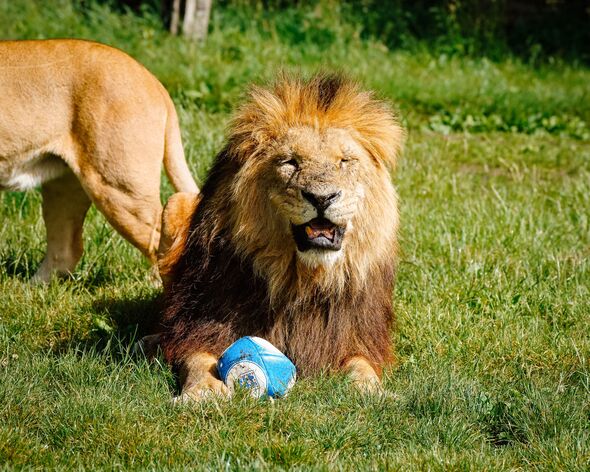
Longleat lion Harry Mane gets into the World Cup spirit! (Image: – Longleat.)
To mark the safari park’s milestone anniversary, today Caleb is running the Lewa marathon in Kenya, considered one of the toughest races in the world due to its high altitude, punishing heat and and uneven dirt tracks. Caleb is running for the Tusk Trust, the British conservation charity that funds progressive wildlife and habitat protection programs across Africa, and which works closely with Longleat. “I am so excited as I will hopefully see plenty of African big game along the way,” he says, explaining that the race operates inside Lewa Wildlife Conservancy, a 62,000-acre private wildlife sanctuary located in northern Kenya.
The renowned conservation reserve and UNESCO World Heritage Site is famous for protecting endangered species, particularly the black rhino. And it is rhinos in general that Caleb intends to keep a close eye on alongside the elephants, giraffe, buffalo that roam through the park. “There will be about 1,500 runners at the start and some of those will be doing a half marathon but that many runners will keep the rhinos away at first,” he says. But later on when we are more spaced out is when the rhinos might wander back to the trail. Hopefully the rangers will keep them and the lions back or I might be running even faster,” he laughs.
Caleb, who trains by running up and down Longleat’s hills in the heat, is hoping to raise £1,750 for Tusk and will be cheered on by his girlfriend Beth who works for the charity. “I was supposed to do this marathon in 2024 but literally as I got off the plane in Kenya we were told it had been cancelled due to political unrest which was disappointing but it is great to be running it in Longleat’s 60th year,” he smiles. “I should hopefully be well acclimatised due to the hot weather we’ve been having here too.”
The 38-year-old has been at Longleat for 17 years, working his way up after starting as a ticket collector and visitor guide. He grew up on a farm in Dorset and has always loved animals, originally training as a safari guide in South Africa. But it was watching the birth of a lioness called Malika on the BBC TV show Animal Park at Longleat that made him want to work there. “It is amazing that I saw Malika being born on TV and ended up working with her until she died last year,” he says. “She was my favourite of all the lions as she inspired my career in the first place. Several of her children live at Longleat so she has left her legacy. What I love about Longleat is its commitment to conservation. That is what is important to me and why I am running on Saturday and to raise awareness for the brilliant conservation work Tusk does.”
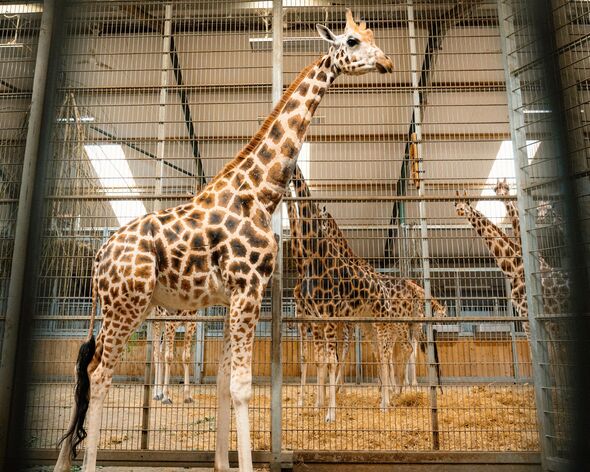
‘I wish I was a little bit taller.’ Stanley has his work cut out at Longleat with nine females to try to impregnate (Image: Tom Anders)
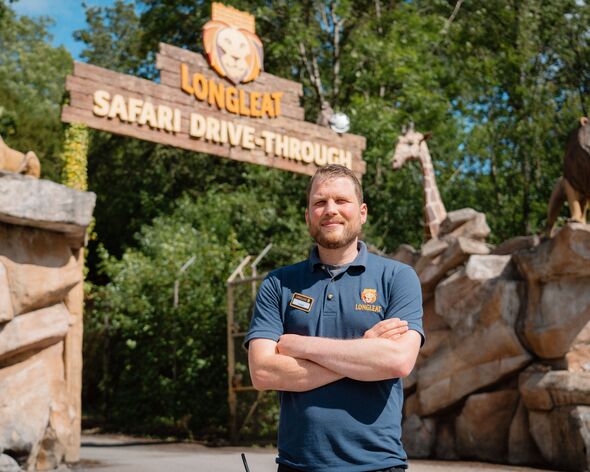
Caleb Hall will run the Lewa marathon in Kenya to raise funds for the British conservation charity Tusk Trust (Image: Tom Anders)
Longleat cares for more than 120 species of critically endangered or vulnerable wild animals. One of the estate’s most important breeding programmes right now is the Nubian giraffe. The species is critically endangered with only around 455 left in the wild across east Africa, so a bull giraffe named Stanley arrived at Longleat earlier this month as part of an international operation to boost their dwindling numbers.
“We have nine females so Stanley really has his work cut out for him,” explains lead hoof keeper Eloise Kilbane. “He is already showing promise though and has tried to mate with two of the females, Odele and Mary. But because he is only four though and so not as tall as the females he hasn’t quite got the technique yet but he is making friends and practicising.”
Currently standing at nearly 4m (13ft) tall, Stanley still has some growing to do as male Nubian giraffes can reach heights of up to 6m (20ft) – the tallest of all giraffe subspecies. “When giraffes mate there are a lot of flailing legs so it can be quite awkward,” laughs Eloise. “When they are mating you certainly know about it.” Stanley came to Longleat on June 10 from Chester Zoo as part of the European Breeding Programme. Sadly the safari park lost its previous bull Thorn in 2024. He fathered 29 calves over the course of his life before his death at the age of 23. It is hoped that Stanley’s arrival will propagate the Tower – as the collective noun for giraffes is known.
Eloise, 35, has worked at Longleat for 12 years after studying zoology at university. Raised in nearby city Bath, she was a regular visitor to the park as a child and always wanted to work there. “I started out working with the lions,” she recalls of her arrival to Longleat. “I remember the first time I was close to one as we were trying to get them back in their house and one of them just looked at me and let out this deafening roar. I was trying really hard not to show any fear but my whole body was trembling. They often roar at dawn and dusk but that first time scared the life out of me.”
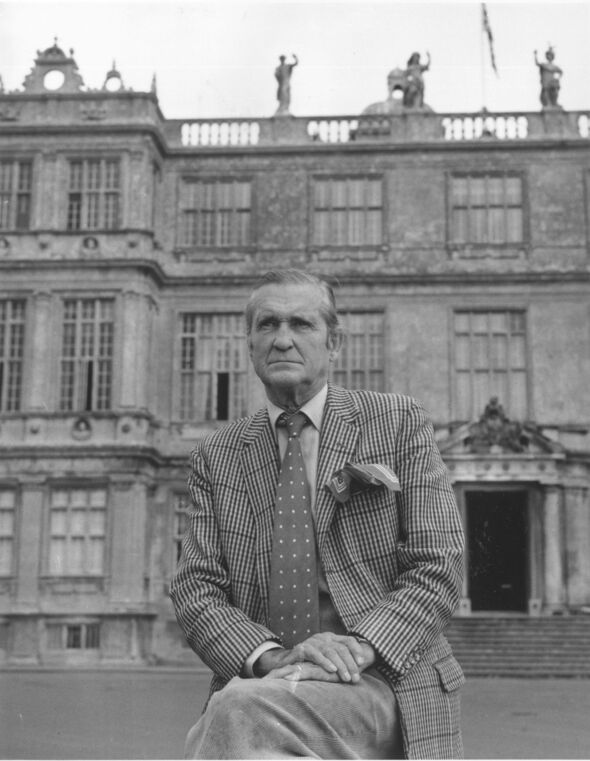
Henry Frederick Thynne, 6th Marquess of Bath, outside his home at Longleat (Image: Getty Images)
As well as being Britain’s first drive-through safari park, Longleat House was also one of the first stately homes to be opened to the public on April 1, 1949. Now the home of the 8th Marquess of Bath, its attractions also include a railway. And while Longleat welcomes nearly one million visitors each year, the idea of his happening was once unthinkable. In fact, the introduction of lions to the park in 1966 sparked such outrage that Parliament even discussed the risk of dangerous predators escaping into the Wiltshire countryside.
Working with renowned circus showman Jimmy Chipperfield, Henry Thynne sourced the large cats from big game dealers in Uganda and European zoos. Some of the original big cats were acquired from the set of the famous Born Free film. Six decades on the park cares for 18 lions across two prides. To mark the 60th anniversary, Longleat has introduced two lionesses from the southern sub-species and guests are being asked to help name them from a shortlist of six possibilities drawn up by the carnivore keepers.
“It is really exciting to have new lions arrive in our anniversary year,” says Darren Beasley, head of animal operations. “When we opened in 1966, we were the first drive-through safari outside of Africa and to see lions prowling through bluebells is such a special sight and now to be creating a new pride is extraordinary. These two girls have come from Denmark and are two-years-old. We are looking forward to settling them in and getting to know them before looking for a male to join them. And we know how much people enjoy seeing them in our safari.” Just remember to keep your windows wound up!