
For all the sophistication that Asia’s wealth planning industry has developed over the past two decades, one stubborn truth remains: most families still do not act in time. The structures exist, the advisory expertise is available, and the risks of inaction are well understood, yet the majority of first-generation wealth holders defer the most consequential decisions until it is too late to implement them properly.
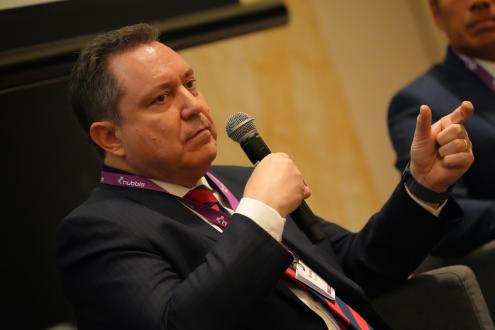
At the recent Hubbis Wealth Planning and Structuring Forum held in Singapore, Zac Lucas, Partner in International Private Wealth at Spencer West LLP, offered a candid and at times sobering assessment of these dynamics. Speaking as part of the opening panel discussion, Lucas drew on his experience advising high-net-worth families across Southeast Asia and beyond to lay bare the realities of succession planning, the evolution of fiduciary structures, and the persistent gap between best practice and actual client behaviour.
Key Takeaways
Inaction Remains the Dominant Outcome: Despite understanding the risks, the majority of first-generation wealth holders take no meaningful steps to address succession, leaving families dangerously exposed.
Upstream Advice Is Replacing Retail Solutions: The most engaged families are moving beyond off-the-shelf trust structures towards strategic conversations about the long-term direction of their wealth, including whether to transition from a business family to a financial family.
Private Trust Companies Are Gaining Traction: For multi-branch, multi-generation families, private trust company structures are emerging as the preferred vehicle for representative governance and transparent decision-making.
Capacity and Timing Create Acute Legal Risks: Aging founders with diminishing cognitive capacity present some of the most challenging scenarios in private wealth, raising difficult questions about legal authority and late-stage planning.
AI Will Transform Compliance and Operations, But Advisory Remains Human: Clients are already arriving with AI-generated legal analysis, but the final sign-off on complex planning will continue to require professional accountability.
The Upstream Shift
Lucas opened his contributions by describing a meaningful evolution in the nature of the advice that families are seeking. Where once the starting point was a product, a trust structure, a reserve power arrangement, the most engaged families are now beginning with a more fundamental question: where is this family going with its wealth?
“The family’s principal wealth is obviously tied up in businesses,” Lucas explained. “And we have gotten to a point in Southeast Asia where certainly families are realising that the next generation are not likely to turn up in droves to run the business.”
This recognition is forcing families to confront a question many have avoided: is this as rich as we will ever be? For families where 90 percent of their wealth remains concentrated in a single operating business, the absence of interested or capable successors creates a strategic vulnerability that no downstream structuring can resolve.
The natural response, Lucas noted, is for families to evaluate whether to begin “decanting” from a business family into a financial family, a transition that typically involves diversifying assets, establishing a family office, and professionalising portfolio management. This shift represents a significant opportunity for the advisory industry and for Singapore as a jurisdiction, but it demands advice that goes well beyond transactional execution.
Private Trust Companies and the Governance Imperative
For families that do engage, Lucas identified a growing preference for private trust company structures. In a multi-branch, multi-generation family, such structures allow for representative decision-making, transparency across family lines, and a framework with a realistic chance of surviving beyond a single generation.
“You can put in some fairly sophisticated governance rules so that there is representative decision-making,” Lucas explained. “It is rather transparent, and you have half a chance of it lasting more than one generation and avoiding disputes.”
He was careful, however, to distinguish between high-substance implementations and more cynical uses of the same vehicle. In some cases, particularly among smaller mainland Chinese families, private trust company structures have been adopted primarily as a means of exerting total control, with the same individual wearing multiple hats as settlor, protector and effective decision-maker.
“That gets dangerous,” he warned. “What we are talking about is high substance, high touch structures, not a way of having a private trust company or a reserve power trust where you are also protector at the same time to appear with different caps.”
The families genuinely suited to these structures, he suggested, are typically those with assets of 50 million dollars and upward, willing to invest in real substance and governance rather than seeking a veneer of sophistication over unchanged behaviour.
The Human Cost of Delay
It was in his discussion of families that fail to act that Lucas was at his most direct. He acknowledged that the vast majority of first-generation wealth holders understand the risks, and that their failure to plan is not born of ignorance. The barriers are emotional, not intellectual.
“The ones that do something are actually a small minority,” he observed. “The majority do nothing, and there are a lot of emotional issues around why they are doing nothing. It is simply not because they are unintelligent.”
The consequences are severe. Lucas described encountering aging founders in their late eighties being asked to engage with fiduciary concepts and purpose trusts in offshore jurisdictions, with little prospect of meaningful comprehension. “You have got half a chance of getting through,” he said. “That is the biggest challenge we have got.”
More distressing still were cases involving surviving spouses left without preparation or understanding, vulnerable to competing claims from children and other family members, with no governance framework to mediate. The legal dimensions are acute. Questions of capacity are constantly present: a lucid moment in conversation can be immediately undermined by a disorienting remark, leaving advisors uncertain whether late-stage planning will withstand future challenge.
These are not edge cases, Lucas stressed. They represent the most common outcome across the region, and the dynamics are as prevalent in Africa and other emerging markets as in Southeast Asia.
Second-Generation Responsibility
Lucas was equally pointed in his assessment of the next generation’s role. While much of the industry’s focus has been on persuading first-generation wealth holders to act, he argued that second-generation family members bear their own share of responsibility.
“Second gens are doing nothing because they do not see it as their problem,” he said. “And it really is their problem.”
The implication is that the advisory conversation needs to broaden. Rather than directing all energy towards aging founders, practitioners should also be engaging the next generation directly, helping them understand that succession is not something that happens to them, but something they must actively participate in shaping.
AI and Professional Accountability
On artificial intelligence, Lucas offered a distinctive perspective. He predicted that AI will ultimately be capable of generating much of the substantive advice currently provided by law firms and advisory practices. Clients are already uploading trust deeds to AI tools and arriving with machine-generated analysis.
“AI is like a junior lawyer at this point, maybe a little bit more senior now,” he observed. “It gets upset by things that are really not upsetting.”
The logical endpoint, he suggested, is that advisory practices will evolve into a form of third-party insurer, providing the professional accountability that AI-generated advice cannot yet deliver. “The final sign-off will always have to be someone with an insurance policy,” he noted.
In the nearer term, he identified compliance, anti-money laundering and client onboarding as the areas most likely to benefit, describing the current state of these processes as “something of a nightmare” that technology is well placed to alleviate.
The Honest Prognosis
Lucas closed with characteristic directness. Asked to identify the most common wealth planning mistake that sophisticated families still make, his answer was immediate: leaving it too late, or failing to acknowledge that they are never going to act at all.
“Just leaving it too late, that is the biggest problem we are seeing,” he said. “Or not fessing up to the fact that we are not going to do it at all. So, second gen, over to you.”
It was a fitting conclusion from a practitioner whose candour throughout the session served as a reminder that the most valuable advice is not always the most comfortable to hear.