
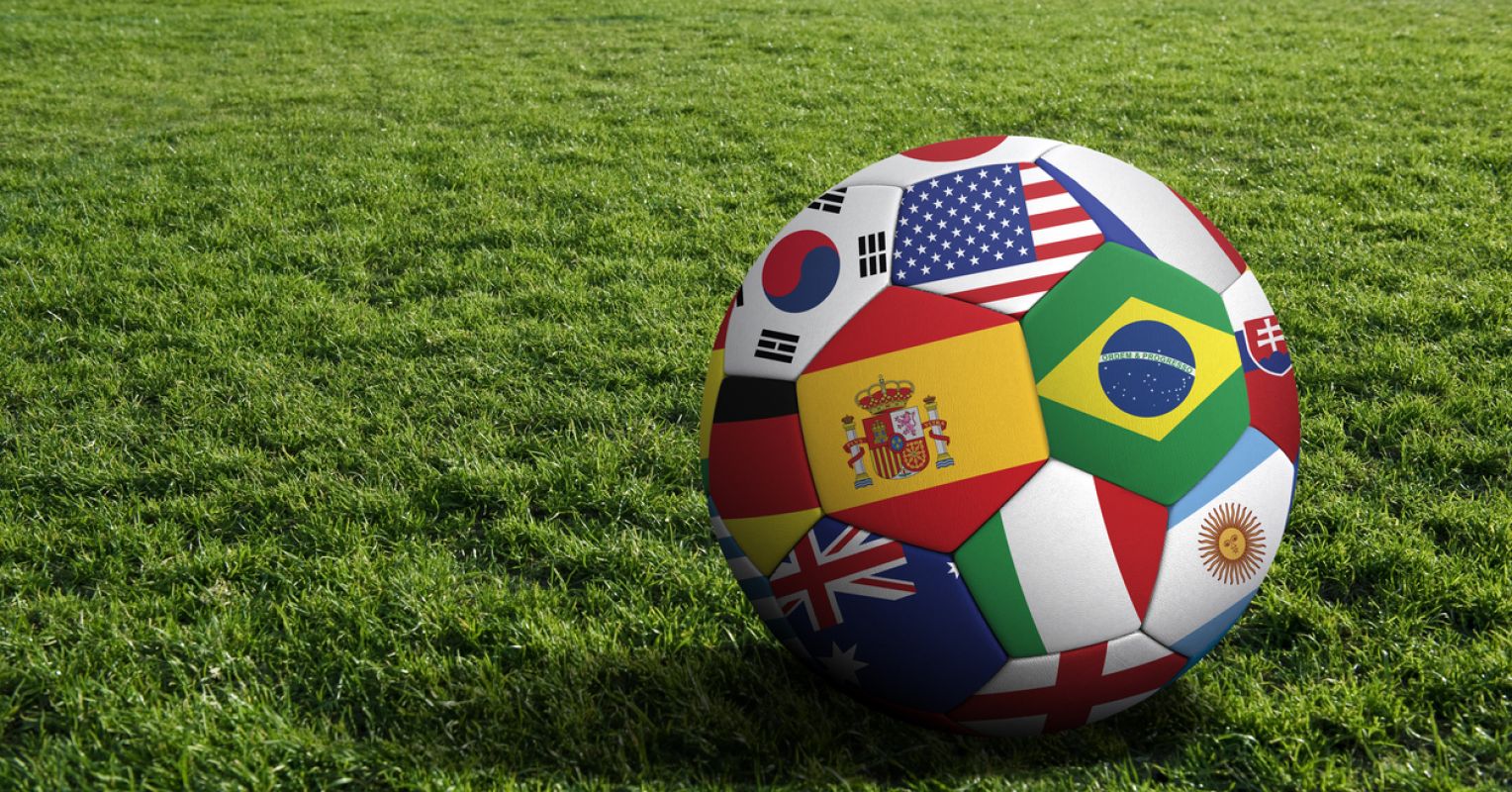
The FIFA World Cup is celebrated as a festival of sport, unity, and international friendship. Millions gather around screens, wear national colors, sing anthems, and ride the emotional roller coaster of hope, joy, outrage, and despair. Yet beneath the flags and fireworks lies something much older than soccer itself. The tournament taps into evolved psychological systems for status, coalition, and intergroup competition.
That is why politicians are so drawn to it. Soccer gives leaders access to something every politician wants but cannot easily manufacture: collective emotion. A winning team can make an entire nation feel stronger, more confident, and more united. Stand close enough to that success, and some of the glory may rub off.
Borrowing Glory
Psychologists have long known that people like to associate themselves with successful groups. After their university football team wins, students are more likely to say, “We won.” After a loss, they suddenly switch to “They lost.” This tendency is known as basking in reflected glory, or BIRGing.
It may sound trivial, but it reveals something fundamental about human psychology. Our identities are remarkably flexible. We expand our sense of self through successful groups, making their victories feel like our own.
Political leaders exploit exactly the same psychology. They do not need to score goals or lift trophies. They simply need to be photographed beside the winners. But the strategy comes with risks. Glory is contagious, but so is failure. A national defeat can quickly become a political embarrassment.
History offers many examples of leaders trying to turn sporting success into political capital—from Mussolini’s 1934 World Cup to Putin’s 2014 Winter Olympics. Although leaders may try to influence sporting events, they cannot fully script them. That uncertainty is precisely what makes sporting victories such powerful political symbols.
Why Soccer Feels Like War
From an evolutionary perspective, soccer is a remarkably realistic simulation of intergroup competition. Two coalitions compete for status before a public audience. There are clear group boundaries, visible symbols of identity, coordinated teamwork, and a public outcome that changes prestige. Although we consciously know it is “only a game,” older psychological systems often respond as though something deeply meaningful has happened to our group.
For some supporters, this becomes what psychologists call identity fusion: the team becomes part of the self. That helps explain why fans travel across continents, spend money they cannot really afford, and sometimes even fight over the outcome of a match.
This psychology reflects our evolutionary past. For most of human history, survival depended on belonging to cooperative groups that competed with rival groups over territory, resources, and status. Team sports tap into these ancient coalition-building instincts.
At the same time, sport serves an important social function. It channels competition into rituals governed by rules rather than violence. As George Orwell famously observed, soccer is “war minus the shooting.” The stadium is not a battlefield, but neither is it psychologically neutral.
Expanding the Tribe
Yet the same psychology that divides the world into “us” and “them” can also expand the boundaries of “us.”
During this year’s World Cup, tens of thousands of Dutch supporters transformed Kansas City, Dallas, and Houston into seas of orange. What was striking was not only the spectacle itself, but how many Americans enthusiastically joined the celebrations, wearing orange shirts, learning Dutch chants, and cheering for the Netherlands as honorary members of the Orange Army.
Sport and Competition Essential Reads
From an evolutionary perspective, this is just as interesting as fierce rivalry. Humans are remarkably flexible in forming new alliances. Under the right conditions, strangers can quickly become teammates. The World Cup does not simply create enemies; it also creates temporary coalitions that cross national boundaries.
When Games Become Political
The darker side appears when collective status is threatened. A controversial referee decision can feel like injustice. A painful defeat can feel like national humiliation. Sport rarely causes political conflict by itself, but it can amplify tensions that already exist.
The 1969 Football War between Honduras and El Salvador remains the classic example. The underlying causes were political and economic, but World Cup qualifying matches became the emotional trigger that transformed existing grievances into open conflict.
We did not have to wait long for an illustration during this World Cup. Following South Korea’s unexpected exit from the 2026 World Cup, President Lee Jae Myung publicly declared himself “utterly baffled” by the team’s performance, criticized the national coach, questioned personnel decisions, and ordered a government investigation. Within hours, the coach resigned. The reaction was about far more than tactics. Sporting defeats often become symbolic defeats for the nation—and, by extension, for those who lead it.
This helps explain why political leaders appear in locker rooms, wrap themselves in national flags, and celebrate alongside victorious athletes. They are not merely enjoying the spectacle. They are participating in an ancient status ritual that links their own reputation to the fortunes of the group.
Civilization’s Greatest Team Sport
There is, however, reason for optimism.
The World Cup demonstrates that human rivalry can be civilized. We evolved to care deeply about status, coalition, and group identity. Those tendencies have not disappeared. Instead, institutions such as sport provide rules, referees, rituals, and shared norms that allow intense competition without widespread violence.
A Middle East Cup including Israel, Palestine, Lebanon, Iran, and Iraq would not solve the region’s conflicts. Of course not. But as a symbol, it would matter. It would say that rivals can confront one another without destroying one another. In human affairs, that is already progress.
Perhaps civilization works not by eliminating human nature, but by giving it better outlets.
The World Cup reminds us that humans did not evolve as isolated individuals. We evolved to belong to teams, compete with rival groups, and celebrate collective victories. Soccer activates these ancient psychological systems. That is why politicians seek to borrow its glory, victories feel intensely personal, and defeats resonate far beyond the final whistle.
The game has changed over thousands of years. The psychology behind it has not.
Many of the ideas discussed here are explored in greater depth in FC Sapiens: What Football Tells Us About Human Nature (international edition: Bloomsbury, 2027).