

Like so many people today, I am constantly aware of the danger of AI taking my job. So last weekend I decided to do something more dependable in today’s AI-powered economy: learn to code. Except I didn’t learn to code, not really. I learned Claude Code. And – sorry to get to this so late – but it’s so true, everything that everyone has been saying.
This wasn’t the first time I’d committed to learning to code. Numerous previous attempts – and a career spent around people very competent with computers – mean that I have an understanding of code that is roughly similar to my understanding of Italian; I can generally understand what people are talking about, and know broadly the right things to say, but my sentences fall apart under any kind of scrutiny.
Anyway, learning to use Claude Code is something else, more like hiring a translator.
Anyway, here’s how Claude Code works: open it up, follow the detailed instructions it gives on how to set it up, and then ask for something. The machine churns away and produces an app. Ask for something else, and it churns a little more and makes your edits.
Your ideas are turned into reality in an instant. This is what they call vibecoding: engineering by feel, or by simply describing.
 (Andrew Griffin)
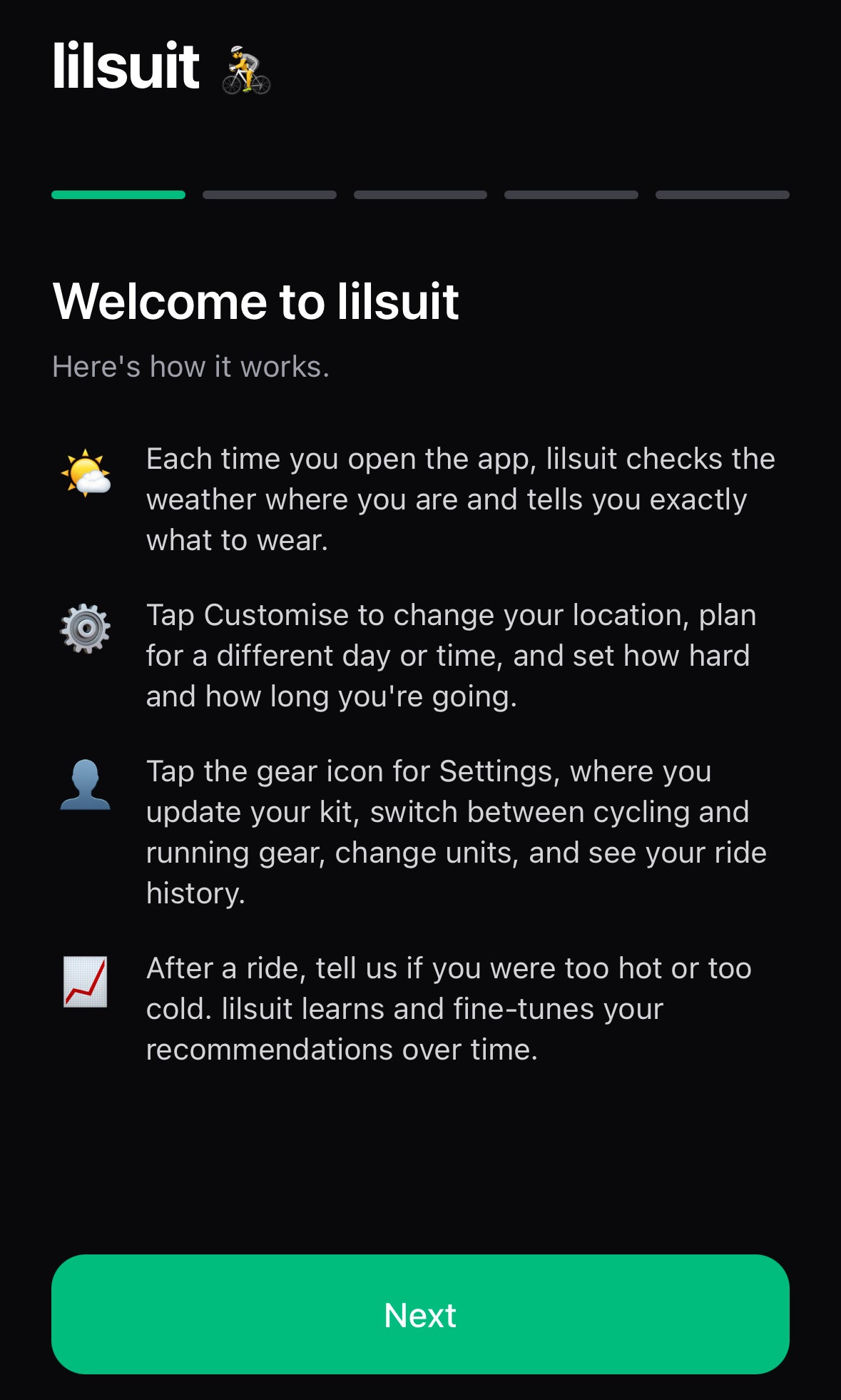
My idea is a website that tells you what clothes you should be running or cycling in, depending on the weather. (It turned out to be accidentally topical, given the heatwave, but the idea has been sitting in my head for years.) And that’s all I said to Claude: “I want to make an app called lilsuit, which tells you what clothes to wear when you go on a bike ride.”
Other kinds of generative AI are, in my opinion, useful but ultimately surface-level: it’s nice that a system can produce a sonnet or a film on demand, but there is always something fundamentally uninteresting about them
The system asked me a few questions, primarily about how I wanted it to actually work and how I would make it available to users, and then it got to building. It took a little more work, but only 90 minutes or so of it. Most of that was spent refining and adding features, as well as the now-nostalgic and traditional effort of actually putting it on the internet.
It was thrilling to make. I eagerly want to do more – and, now, the only limit is really the ideas, not their execution.
 Claude’s coding service is designed to work with ease – a case of typing in your idea and allowing the result to generate (Reuters)
The whole thing feels astonishing. And I was a little astonished to be astonished: the other kinds of generative AI are, in my opinion, useful but ultimately surface-level: it’s nice that a system can produce a sonnet or a film on demand, but there is always something fundamentally uninteresting about them. In that sense, there is something quite precisely different in making an app with Claude Code.
The trouble is perhaps that thinking and words are entwined, for both the people who write them and the people who receive them. That’s why writing that is bad and honest is so preferable to writing that is capable and disingenuous. A messily written message of apology, for instance, contains hints and heft that might not be there when you ask a machine to say sorry on your behalf; in fact, it is often within the mess, in the things half-said or badly phrased, that the real meaning lives.
Code is also in some sense an expression of meaning, of course, but it operates at another level of abstraction. For the most part, it works, or it doesn’t.
I am very aware that I am, in one sense, in the worst position to be talking about this stuff. I sit right on that dangerous spike in the chart used to explain the Dunning-Kruger effect. I am too stupid to know the ways I am stupid.
But this is, of course, the exact point. Claude Code allows even those who don’t know what they’re doing to make something new. That might in many ways be a terrible idea. But it is at least a thrilling one.