
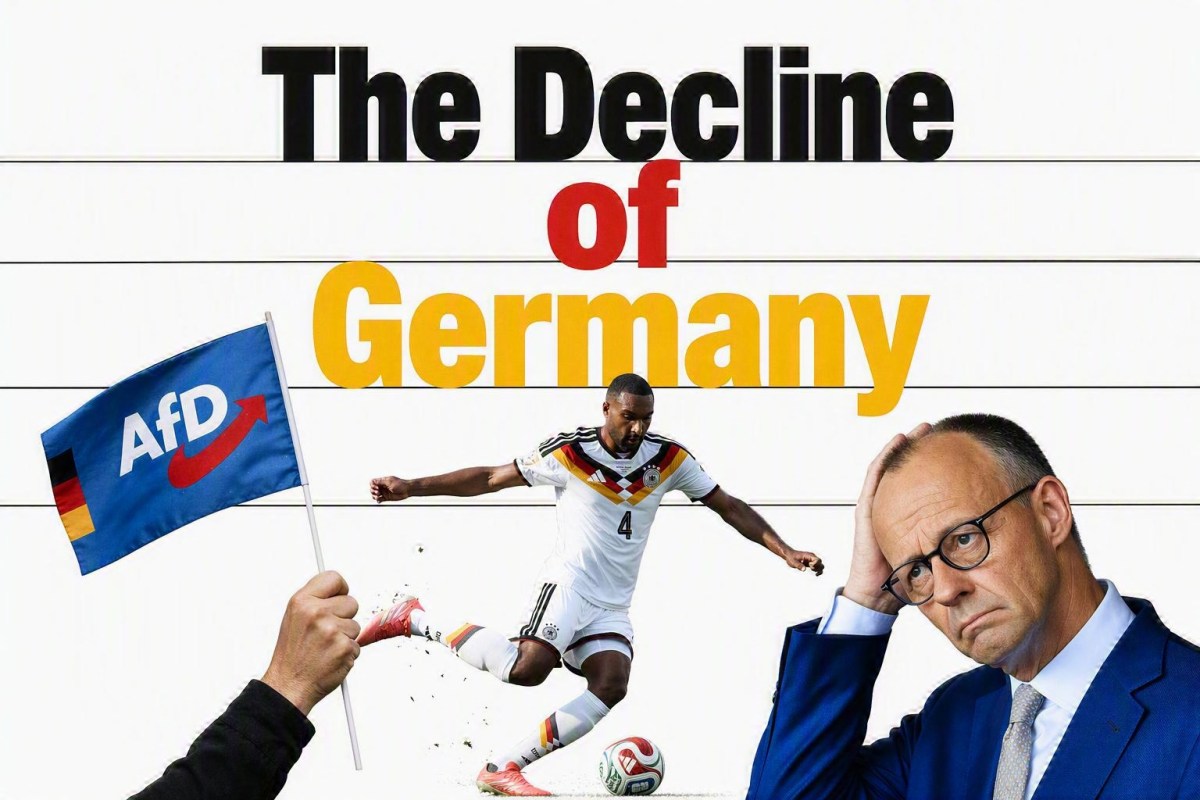
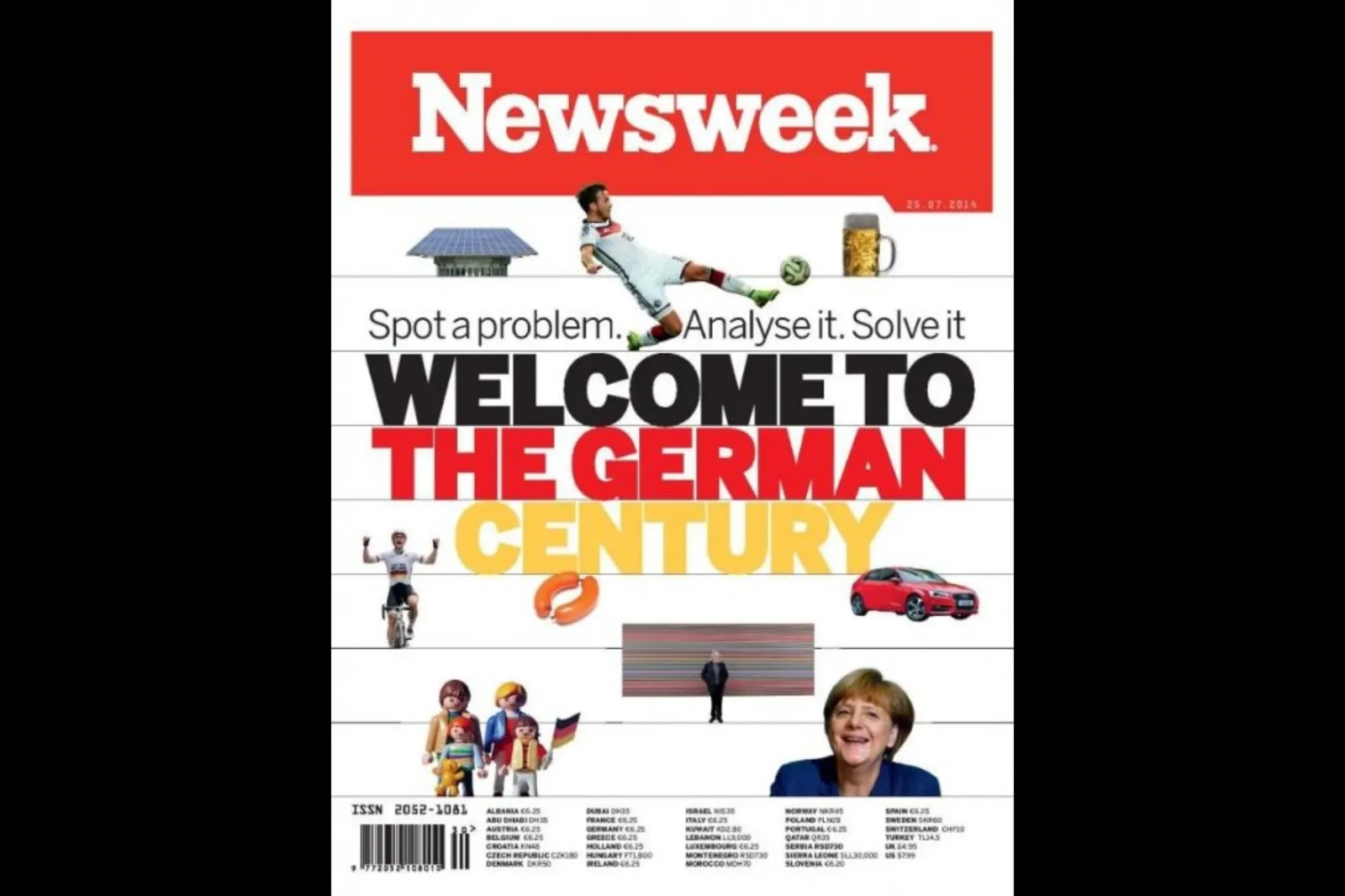
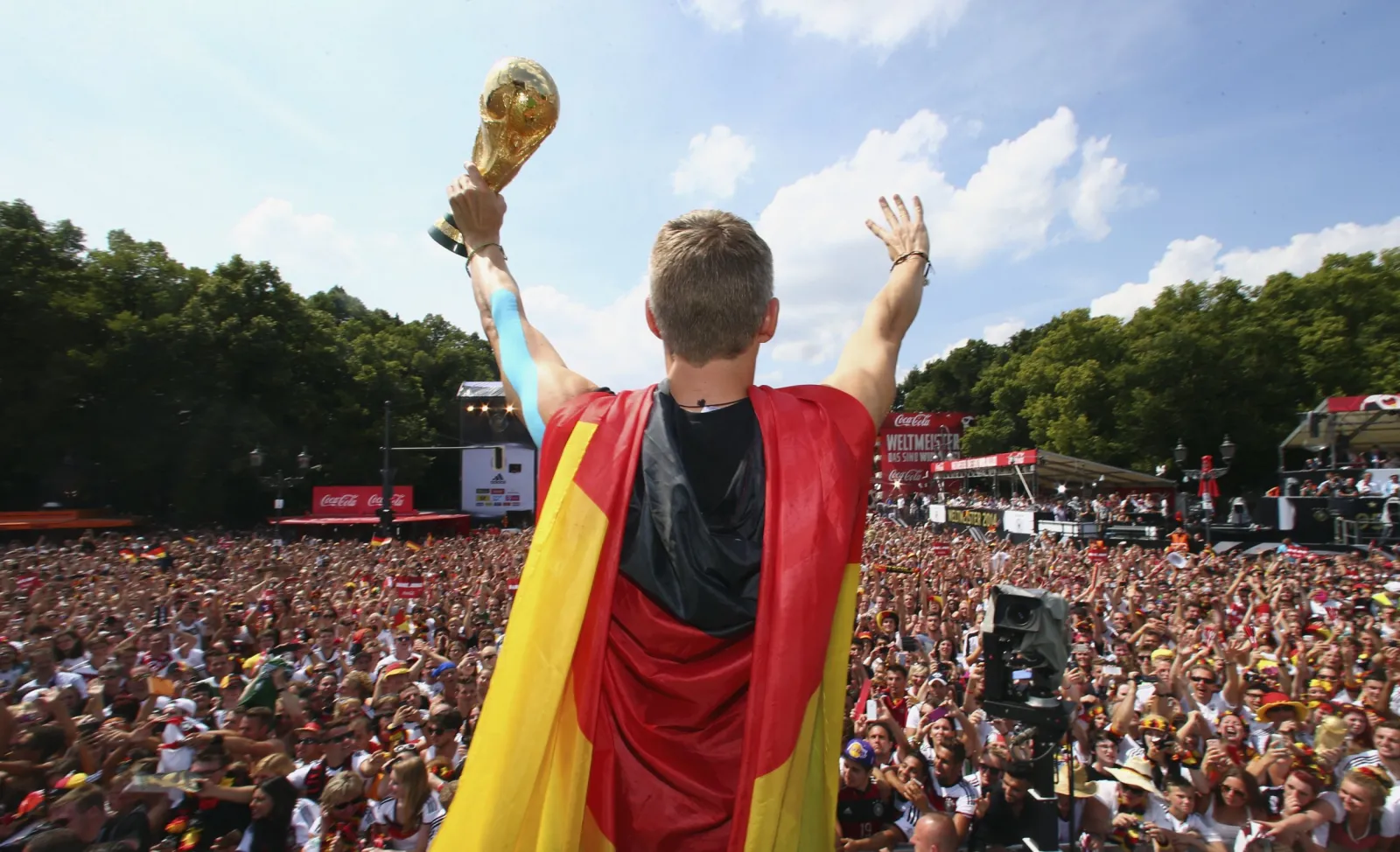
When Germany lifted the World Cup trophy in Rio de Janeiro in July 2014, Newsweek hailed this as the dawn of a “century of German success.”
To players, pundits and politicians alike, the moment was considered a critical juncture, after which Germany’s dominance in sport—and in a variety of other arenas—would be unrivalled within the continent as its technocratic model of problem-solving became a blueprint on the world stage.
“In 2014 Germany was in the middle of a phase of steady economic growth, falling unemployment and falling government debt, and it’s economic and political position seemed secure.” said Clemens Fuest, President of the Munich-based Ifo Institute for Economic Research.
Read More on World
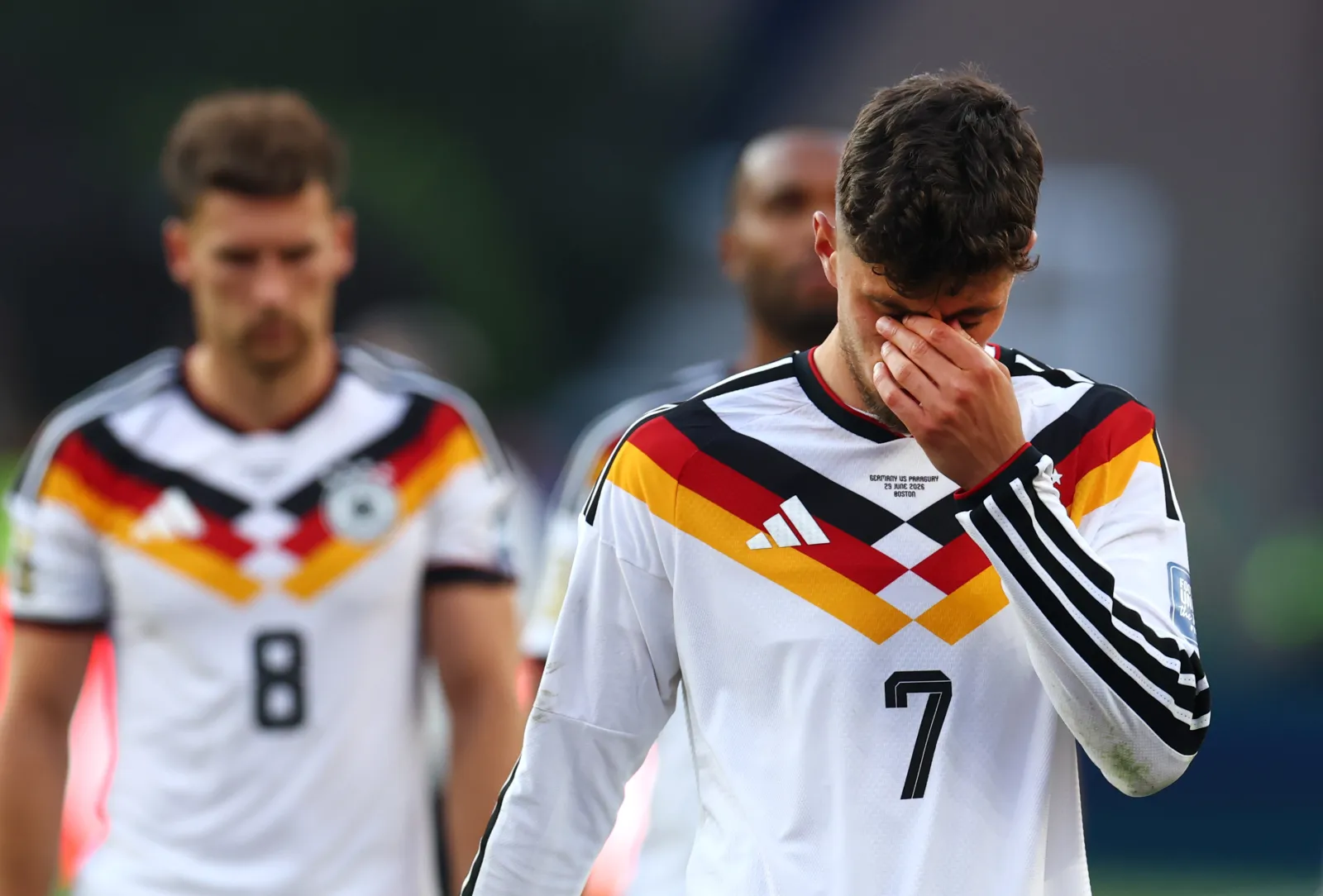
But the country has just crashed out early of yet another World Cup, losing 4–3 on penalties to Paraguay after a 1–1 draw. This marks its first ever penalty defeat in a World Cup, and comes at the end of a trying period for “die Mannschaft.” Between 1954 and 2014, Germany reached the World Cup semifinals in 12 of its 16 appearances, but has not won a World Cup knockout match since their 2014 triumph and suffered group-stage exits in both 2018 and 2022.
This latest humiliation is the sign of a broader, unmistakable decline that extends beyond football.
 Germany’s 2014 Elation
Following their 1-0 victory against Argentina—which came after a barnstorming, 7-1 win over the Brazilian hosts—the consensus from observers was that the team had set the standard for technical mastery that would define international football from then on.
And this was considered not just a matter of sporting prowess, but rather emblematic of the country’s reputation as a well-calibrated model of order in an unruly world.
Even the World Bank joined in the praise, dubbing their success a “triumph of strategy,” and considering the victory a microcosm of its mastery of “hyperefficient” national planning.
Meanwhile, Germany had cemented its status as an economic powerhouse, underpinned by a robust export sector, labor market strength and world-leading manufacturing expertise.
Politically, within Europe, Germany had served as the European Union’s chief mediator during the eurozone debt crisis, and enjoyed high levels of comity with Brussels as well as Washington.
And its then-leader, Chancellor Angela Merkel, was widely described as the world’s most powerful woman and considered, by some, the de facto “leader of Europe.”
“The last win of the national team coincided with the emergence of a new Germany—bullish about the future,” said Sudha David-Wilp, senior fellow at The German Marshall Fund of the United States.
“Germany profited from globalization and was unconcerned about growing geopolitical risks,” she told Newsweek. “Germany was extremely popular with then-Chancellor Merkel at the helm, and its diverse football team gave the country license for national pride, usually taboo due to its dark history.”
But while 2014 was seen as exemplifying and calcifying its status as a one of the world’s most respected and economically dynamic powers, the 12 years since have eroded much of the success that underpinned these assumptions. And the nation state, like its sporting embodiment, has struggled to recapture the aura of inevitability that once made it Europe’s undisputed standard-bearer.
As Fuest tells Newsweek, “the decline of the football team does mirror the decline of economic performance and political cohesion in Germany.”
An Economy Losing Momentum
For much of the 21st century, Germany’s “Modell Deutschland” was built on industrial strength and export dominance.
But today, that model is under strain.
“Since 2019, the German economy has stopped growing,” said Fuest. “There were some ups and downs but GDP today is at the level of 2019, private investment has even fallen back to the level of 2015.
“In that regard, Germany has gone through a lost decade.”
Official forecasts from the EU show Germany emerging only slowly from a period of stagnation and recession, with growth projected at just 0.6 percent in 2026 after years of weak performance.
“Since the COVID-19 pandemic, Germany has recorded one of the weakest recoveries among advanced economies,” according to a May report from the EU, which noted that Chinese competition and U.S. tariffs, alongside rising energy prices, have resulted in “broad stagnation.”
And hopes of a post-pandemic rebound were further scuttled by Russia’s invasion of Ukraine in 2022. Germany previously sourced over half its natural gas and around a third of its oil from Moscow, and the loss of these resources forced it into a costly transition which raised industrial input prices and eroded competitiveness on the global stage. Chinese domestic manufacturing replaced German imports in key sectors as the country battled stronger competition in former domains like machinery, chemicals, and high-end manufacturing.
In the mid-2010s, Germany was seen as Europe’s default supplier for industrial equipment. And while it remains indispensable in certain areas, it is no longer the uncontested go‑to and now sits behind both the U.S. and China in terms of machinery exports.
Deindustrialization Pressures
Nowhere is the shift clearer than in Germany’s flagship industries.
Stagnant sales and declining market share have left the country’s automotive sector—long considered the backbone of its prosperity—in crisis.
Car production has been on a downward trend, dropping from a peak of 5.65 million vehicles in 2017 to a forecast 4.1 million in 2026.
At the same time, the transition to electric vehicles—marked by several strategic U-turns by the country’s major carmakers—has exposed structural weaknesses, leaving legacy manufacturers caught between high costs and declining demand.
And noting the ongoing losses across critical markets like the U.S. and China, EY analyst Constantin Gall told Reuters this month that, for Germany, “2026 will be another crisis year for the automotive industry.”
Political Fracture and Social Strain
This economic drift has been accompanied by political fragmentation.
The rise of the far-right Alternative for Germany (AfD) has reshaped the country’s political landscape, with the party achieving record levels of support and claiming victory in regional elections.
Polling indicates that AfD now leads in Bundestag voting intentions. The British broadcaster John Kampfner has described the party as “poised for power,” and said that their victory in the September regional elections would prove “a critical fork in the road for far-right populist movements across Europe.”
Immigration has become a defining political fault line, cutting across traditional party boundaries and contributing to the collapse of what in 2014 appeared a high degree of political consensus driven by the “Grand Coalition” of Merkel’s center-right CDU/CSU and the center-left SPD.
The refugee crisis of 2015-2016 “transformed” politics within the country, according to Hans Kundnani, a senior research fellow at the Royal Institute of International Affairs in London, who told Newsweek that the AfD’s continued rise points to “massive backlash against non-white immigration.”
And this political fragmentation extends beyond the country’s borders.
In 2014—the “height of German hubris”—many suffered under the belief that Europe could be “run by Berlin.”
As a result of its diminishing sway over European peers, Kundnani, author of The Paradox of German Power (2014), said that this always-false notion of a continental “hegemon” is now apparent “to more people than it was back then.”
“Germany within Europe is in a much weaker position than in 2014,” he said, noting the country’s increased deference to France in terms of defense and on economic matters since 2016 in particular.
A Cautionary Tale
Germany is still a wealthy, highly developed country with formidable strengths: a skilled workforce, strong institutions, and deep industrial expertise.
It remains the world’s third largest exporter and economy by GDP—even jumping ahead of Japan in the latter category since 2014—as well as the most influential EU member state and the closest thing the continent has to a leader.
And the country has “woken up to geopolitical realities and has stepped up significantly with investments in its military,” according to David-Wilp, who said recent boosts to defense spending prove Germany “is no longer uninhibited about becoming a military leader in Europe.”
But the contrast with 2014 remains stark.
Economic headwinds, industrial disruption, political fragmentation, and a visible decline in footballing fortunes all point to a country grappling with a world that has changed faster than its institutions.
And as Jonathan Tah’s penalty sailed over the bar in Boston, ending another World Cup campaign, the symbolism was hard to ignore: a nation once defined by precision and inevitability now facing uncertainty and, increasingly, doubt.