
A good workman never blames his tools. However, a good GC rider can blame the route – particularly if you’re averse to cobbles, time-trials or an early mountain rendezvous. Every year, the Tour de France’s parcours changes, which can come to the benefit or detriment of some riders. Some years have more time-trialling, some have more climbing. It’s Tour de France roulette.
The route, or parcours in French, is designed by ASO’s Thierry Gouvenou, who works alongside bidding councils to design a three-week loop around France that should endeavour to create a fierce GC battle throughout. These battlegrounds can come in the high mountains of France’s many mountain ranges, or the cobblestones of the country’s north, the newly-discovered gravel roads, or against the clock in a time-trial.
As we gear up for the 2026 Tour de France, which starts in Barcelona on Saturday 4th July, we’re going to take a look back over the last ten Tour de France routes and rank them based on their parcours. We’ll attempt to judge them on stages alone, on whether they respect a balance of profile types, harness a good GC fight, or whether do a good job of showing off the diversity of France.
10. 2017
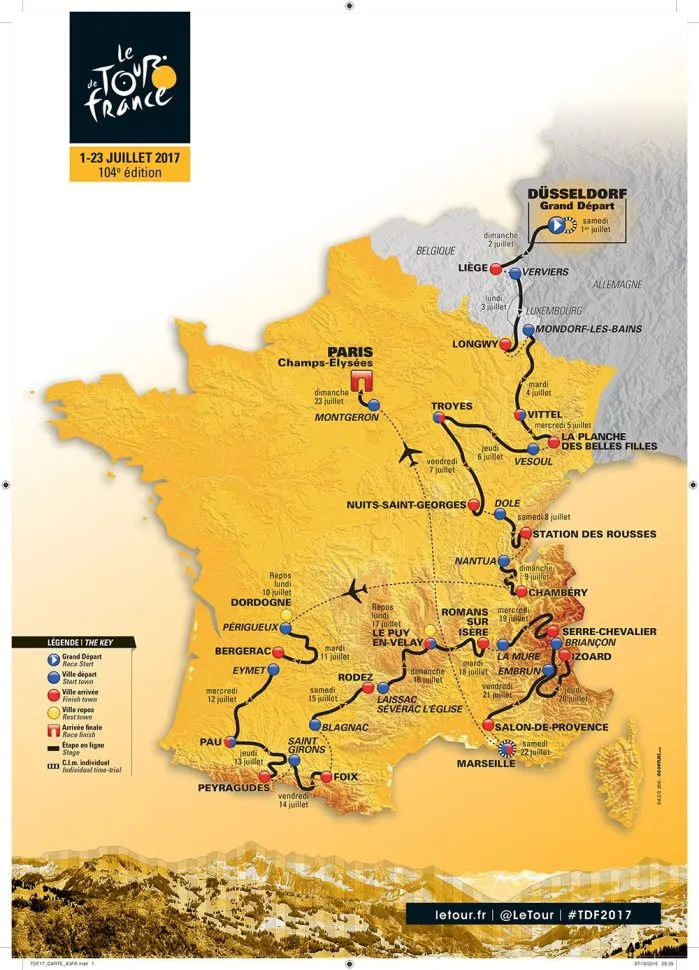
The route for the 2017 Tour de France was diabolical. When it was revealed, it was heralded as the anti-Froome parcours, with a small amount of time-trialling and just four summit finishes. In the end, the four summit finishes felt like far too little in a race that can now be seen as Froome’s weakest during the peak of Sky’s dominance.
Instead of finishing uphill, a lot of this route focused on downhill finishes. Some of these were exciting, but it meant that groups of six or so were coming to the line together on stages that were supposed to thin out the field. The only saving grace of this 2017 habit was the short Bastille Day showcase in Foix, which caught out a weakened Froome.
As for the remainder of the route, there were far too many sprint stages piled together. That’s great if your name is Marcel Kittel, but it proved a little tiresome once we saw the German gallop away day after day on the flat.
I think the 2017 Tour de France has been quickly forgotten for many reasons. The parcours didn’t help. There just weren’t enough places for serious gaps to be made.
9. 2026
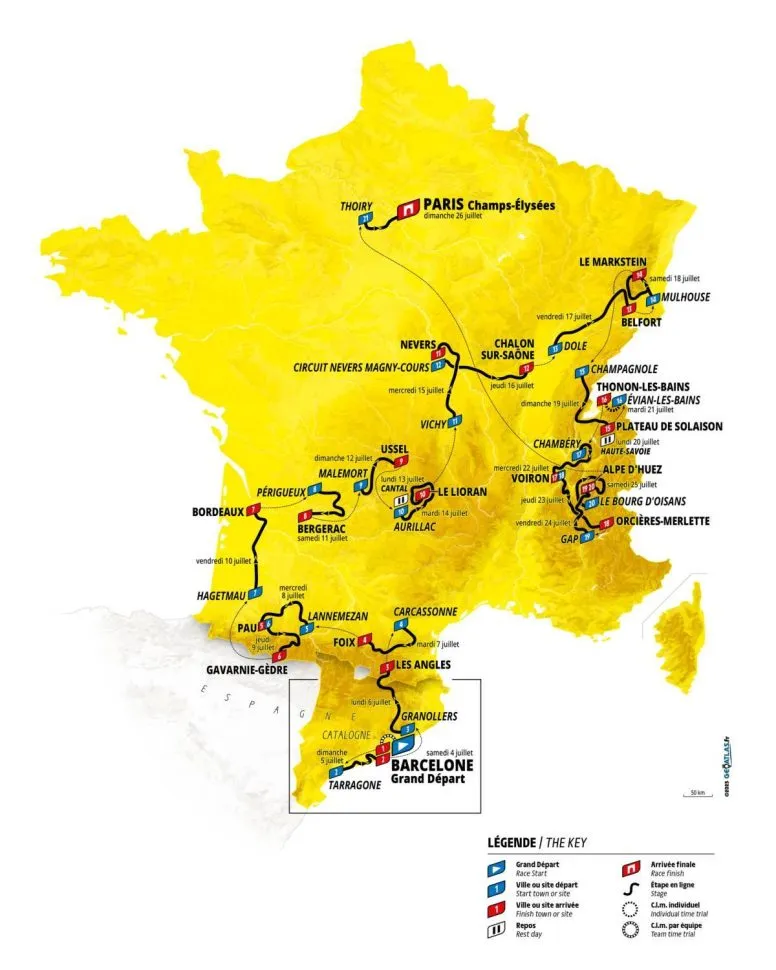
The 2026 route lacks real pizzazz on the whole.
The Grand Départ in Barcelona seems a little unimaginative, given the similar start to the 2023 Vuelta, while the opening mountain stage seems a bit premature given the current age of Pog-cineration.
On the whole though, there are simply too many sprint stages between the key GC stages. I mean, after Stage 5 is dealt with, the Tour enters a real lull of formulaic sprint finales towards the end of week one. The same can be said for a lot of week two, which is bookmarked by mountain stages, but filled with rather lacklustre profiles.
I guess the race organisers are hoping to keep us on the edge of our seats for a stellar final week, where the GC action seems to be concentrated. The race’s only time-trial is placed there, which should give Remco Evenepoel some motivation to stay in the race this time.
After that, it’s boom-boom-boom through the Alps, with a string of summit finishes. Three come back-to-back, with the useful gimmick of having consecutive arrivals to Alpe d’Huez. However, leaving the queen stage to Stage 20 could be a risky game to play if our winner is already crowned by that point.
Ultimately, many of these iconic summit finishes seem to be let down by poor build-up. Perhaps the race is scared of a repeat of 2024, but the lack of any preliminary mountains ahead of Alpe d’Huez and the Plateau de Solaison seems like a missed opportunity for timeless GC stages.
8. 2025
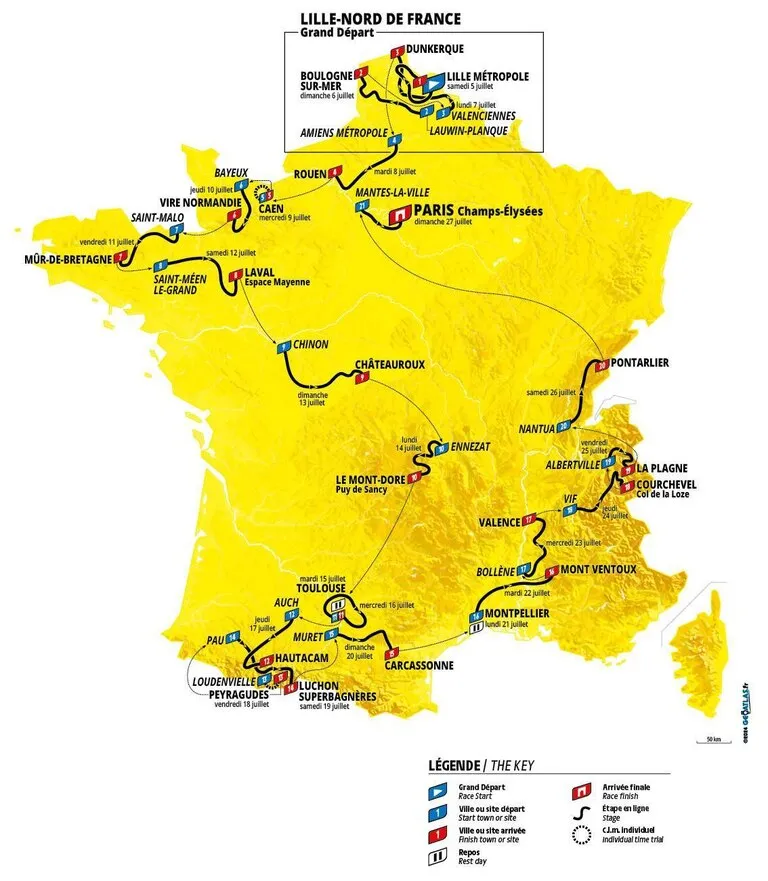
It looked as though the Classics men had all their Christmases in one during the opening week of the 2025 Tour de France, given the sheer number of punchy finales. That resulted in some great battles between Pogačar and Van der Poel, but it meant the GC had to wait until week two.
Once it got there, the trifecta of summit finishes in the Pyrenees looked juicy on paper, with a mountain time-trial to really give us a sense of where the GC was at. In the end, this heavy-handed approach to the Pyrenees meant that most of the GC blows were dealt in the middle of week two, leaving the peloton pretty shook up for the final week.
Once they got there, the final week ended up being pretty underwhelming. Sure, a visit to Mont Ventoux was a great spectacle on Stage 16, but Stage 18’s queen stage with 5,500m of elevation gain scared the peloton into submission.
That stage somewhat delivered, but it meant the Tour’s peak was a few days before its real conclusion in Paris. That wasn’t helped by the placement of a flat-ish transitional stage on the penultimate day. It didn’t take a genius to realise that it was going to be a non-starter for the big guys in GC, but perhaps they were hoping for a more rampant homecoming in Paris, with the Montmartre loop introduced for the first time.
Nevertheless, this route won’t go down as one of the greats. It tried to be overly ambitious and that backfired. That said, it felt like one of the most widespread routes on this list, which I’m sure will make the Tour de France puritans happy.
7. 2018
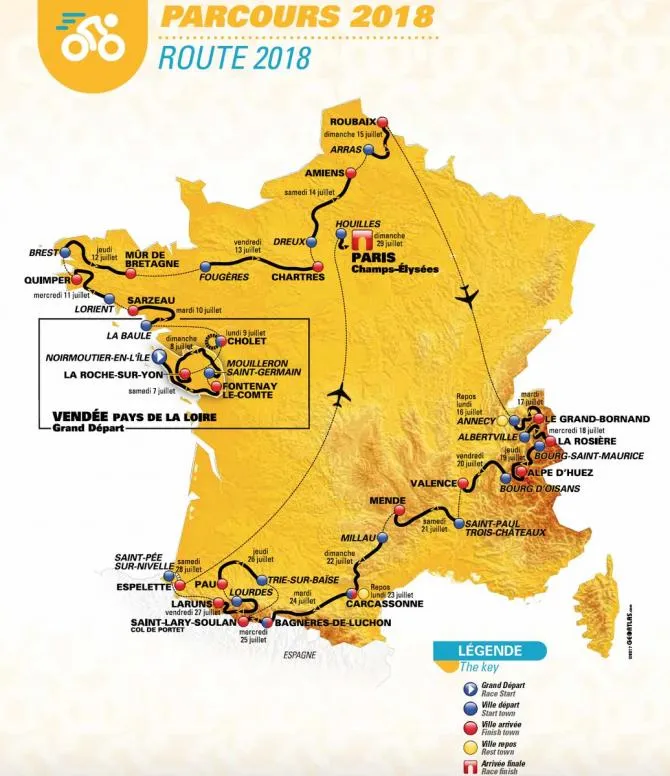
After years of Chris Froome dominance at the hands of Team Sky, ASO switched things up for 2018. They added bonus second sprints, a grid-start and a cobbled stage to the 2018 route.
A lot of that was plopped into week one, which saw the GC battle put on hold until the pavé was dealt with on Stage 9 and the first summit finish came into view on Stage 11. Two stages in the Alps seemed pivotal enough to settle the GC, but the race ultimately lost steam throughout the remainder of week two as transitional stages returned few key moments. Not least, the boring set of stages placed on the Tour’s third weekend.
Short mountain stages were all the rage in the late 2010s, and Stage 17’s 65km-long race up the Col du Portet proved to be a great stage, although its F1-style start proved a damp squib. Yet, the organisers might have been too experimental by having the final mountain stage finish with an underwhelming descent to Laruns.
Nevertheless, the race left its only individual time-trial until the penultimate day, which seemed a sensible choice given Team Sky’s and equally Tom Dumoulin’s prowess against the clock. However, since they were the ones left in the podium race, it turned out to be a snooze fest rather than a banana skin.
You can’t fault the route designers for trying something radically different. However, I feel the innovations they added in ended up being more farcical than sensible.
6. 2021
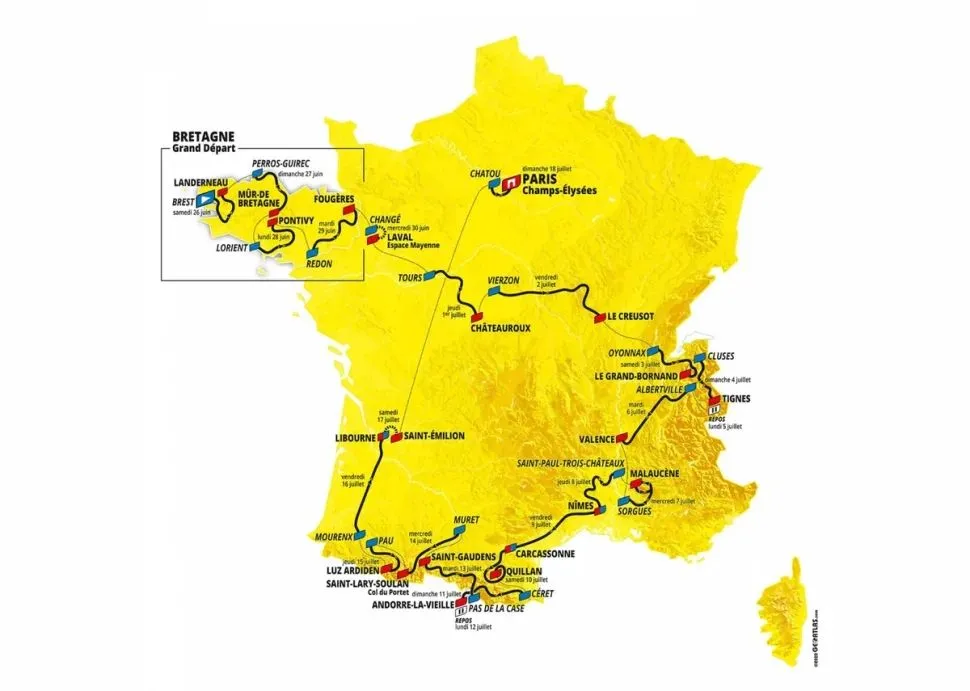
Boy-oh-boy, was the first week of this Tour de France brilliant. Sure, some of that might come from the realisation of the racing, but it looked good on paper. In the age of Pogačar, Roglič, Van Aert and Van der Poel, the race leaned into some punchy finales during this first week, which was a great decision in hindsight.
A time-trial was thrown into this opening week for extra spice, while a Classics-like stage to Le Creuset tabled a real change of pace for a Tour’s opening week – and a real challenge at that.
The downsides come in the second week, where there were few opportunities for GC gaps. That’s with the exception of the double dose of Mont Ventoux, which felt like it was carrying the meat of this Tour de France sandwich. That looked like a great innovation at first glance, but its downhill finish annulled any gaps made over the climb, which Vingegaard can attest to.
The final week was strangely configured too. The Pyreneen challenges were all too similar on Stages 17 and 18, while the final three stages felt like a procession, given their relatively uninfluential profiles.
5. 2024
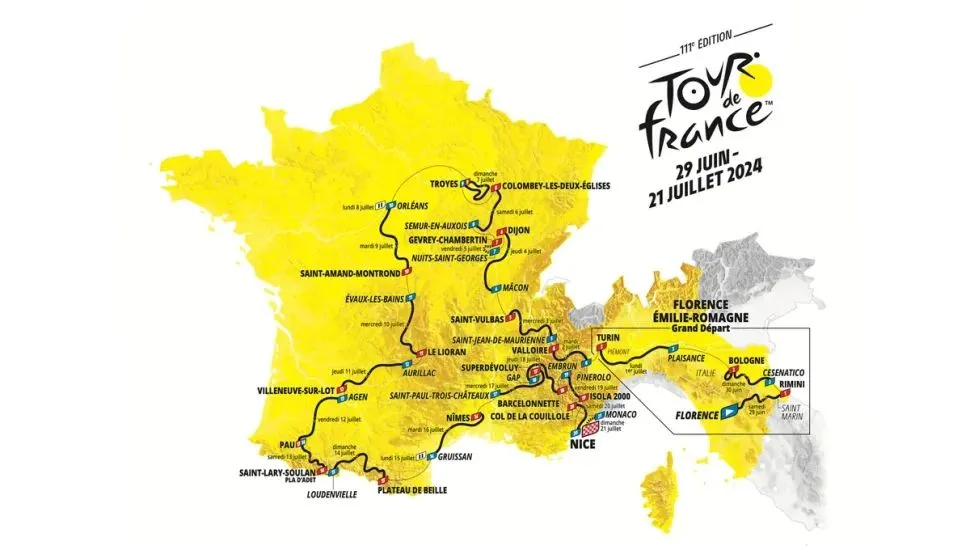
In the hopes of repeating a stellar 2023 Tour de France, the race organisers went all-in on the mountains in 2024. That was a fair assumption given the expected arrival of a top Pogačar and Vingegaard, but the seven mountain stages, six of which culminated in summit finishes, proved a bit samey by the end of the race.
The first week was tough enough to be a Grand Tour in its own right, with some pivotal tests in the Grand Départ host nation Italy, a Galibier passage on Stage 4, a time-trial midway through week one, and a gravel foray on Stage 9. By the end of that first week then, it was no shock then to see the GC standings had already been blown to smithereens.
The second week saw another breathless GC fight, but all felt won and done by the time we had back-to-back summit finishes in the Pyrenees off the back of a tough midweek test in the Massif Central, which created gaps much larger than many foresaw.
In the end, I’d say the 2024 race was too hard for most. Once we knew Pogačar was the strongest on Stage 4, the top four remained in formation for the remainder of the race. Ultimately, ending in two very similar mountain stages proved a bit fatiguing, with everyone seeming to be on their last legs by that point, having dealt with the high mountains since Stage 4.
That said, the Nice finale made for an interesting change of pace. A time-trial finale should really be the done thing, even despite the recent move to a Classics-style finale in Montmartre. If they could find a way to merge the two, we could be on for a winning formula in future editions.
Overall, this route had potential, but Pogačar’s dominance ruined what could have been a great parcours for a closely-contested GC race. On this occasion, the big mountain gamble proved a bust.
4. 2019
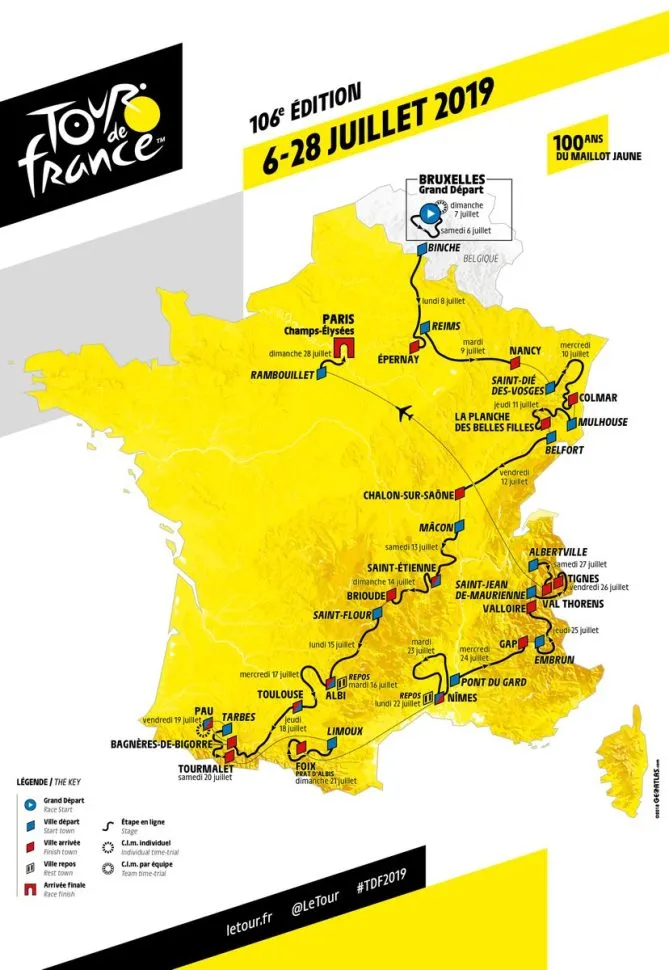
The 2019 Tour de France was designed in homage to the yellow jersey and its most famous wearer, Eddy Merckx. The opening we had in Brussels proved eventful, with a Grand Départ featuring plenty of must-see Belgian sights, including the Kapelmuur in Geraardsbergen.
Once we exited the thick Belgian crowds, the Tour de France handed the puncheurs plenty of opportunities on the days to Épernay and Saint-Étienne, which both proved fruitful for French star Julian Alaphilippe.
The first week was light on the mountaintop finishes, bar the exception of the newly discovered gravelled annex to the Planche des Belles Filles. That really didn’t matter in the end, and the GC remained tight coming into the second week in the country’s southern half. The race’s only individual time-trial allowed for some hills to be added in, a rarity in recent Tour time-trials in 2019, while the Pyrenean stages shook out the GC legs once more, with a spectacular fight up the Col du Tourmalet on Stage 14.
The parcours led the peloton up to a big Alpine farewell, which should have showcased a rare sighting of the Col d’Iseran before a long-awaited return to Val Thorens’s gravel extension on the final day. The weather really played havoc with what could have been a stellar final two mountain stages, but the Tour was still a success thanks to its route as well as its riders.
Now, I’d say the 2019 route showcased a real mix in terrain, and demonstrated a shift towards the Grand Tours we’d see in the 2020s, which leant into fewer time-trials, punchy finales and some gravel cameos. You could say this was the genesis for plenty of Tours to come.
3. 2022
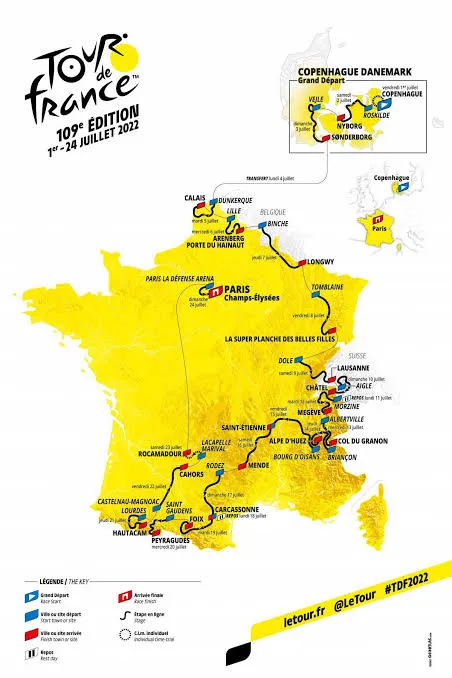
The 2022 Tour de France ticked many boxes. In some regard, it was a traditional route, with an opening week filled with sprint stages and opportunities for rouleurs and time-trial specialists to have their time in the spotlight following the race’s prologue.
A return to the pavé on Stage 5 proved fruitful for fans, while the sharp uphill challenges offered a leg-up for a repeat of the Wout and Mathieu battles that characterised the opening phase of the 2021 parcours. In the end, that appeared more one-sided to Wout than ASO would have envisioned, but it allowed some teasing of Pogačar’s improved versatility that we were expecting coming into that year’s race.
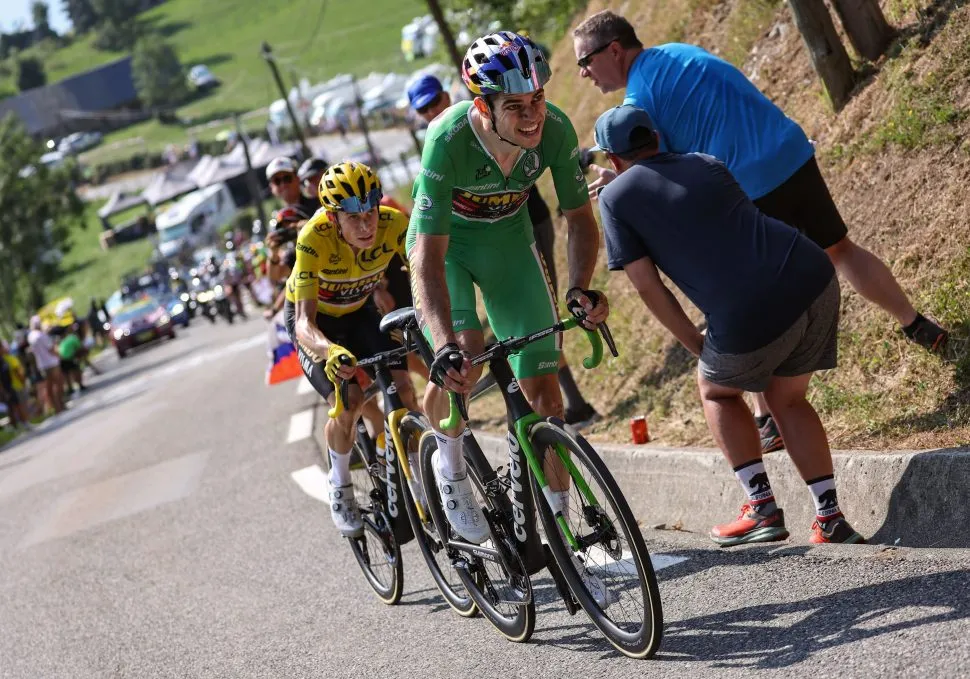 Thomas Samson/AFP via Getty Images
In terms of the mountain stages, they were spread out in week two, offering some breathing space between the spectacles offered up by the expected favourites of Pogačar and Vingegaard. A rare visit to the Col du Granon turned into a cult classic, while an Alpe d’Huez cameo on Stage 12 proved a fan favourite for spectators both on the roadside and at home.
Sprint stages offset the GC tension coming into the final mountain challenges. Yet, those days in France’s southern mountain range were tough enough to distil some iconic moments at hallmark finishes like teh Peyregudes and Hautacam.
On the whole, the 2022 route seemed quite safe on paper, but it delivered a well-balanced parcours filled with opportunities for all riders. the GC action was suspended throughout, with enough time-trialling and mountaintop finishes to create a fair battle for the yellow jersey. On top of that, it gave a fair chunk of France a possibility to shine in a route that truly highlighted the four corners of the country (plus Denmark).
2. 2023
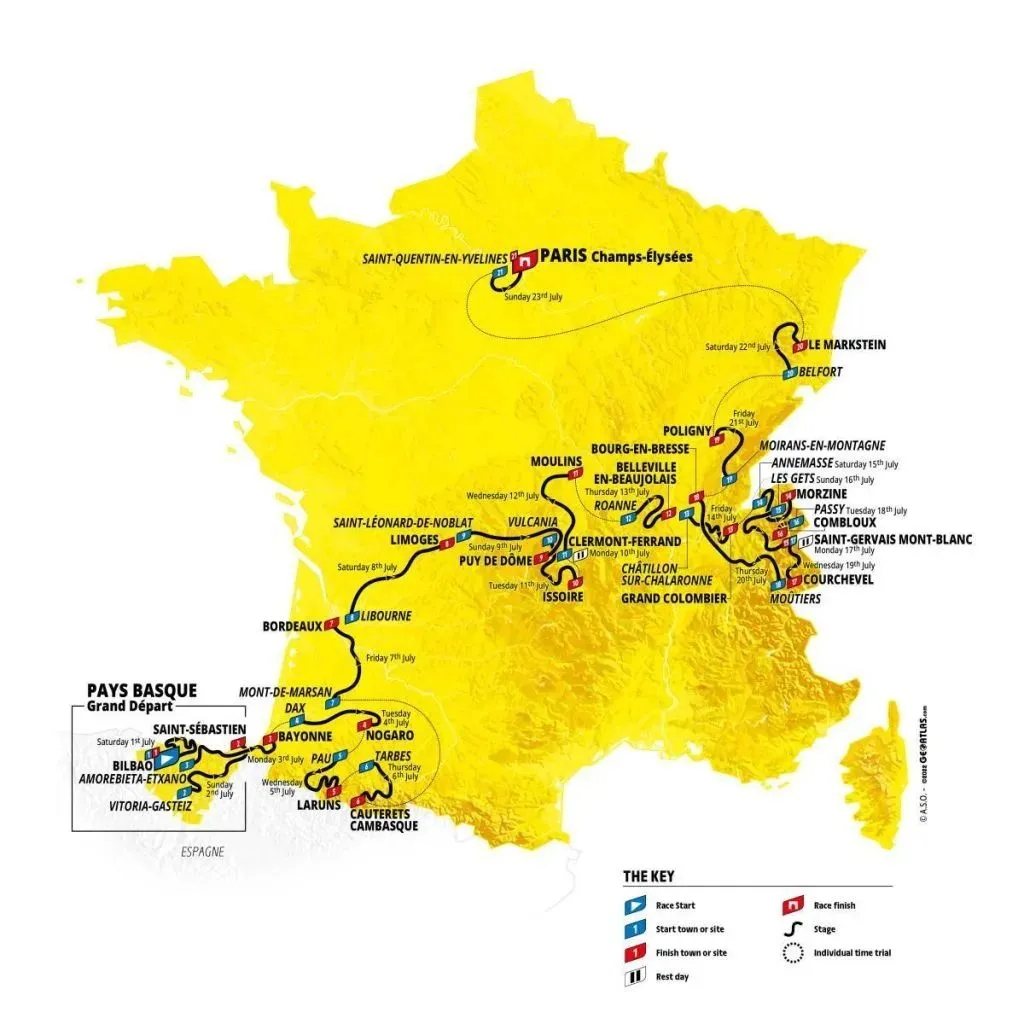
After the epic GC battle of 2022 between Jonas Vingegaard and Tadej Pogačar, the 2023 Tour de France route was sculpted for the climbers. A total of 56,000m of elevation gain was tabled, resulting in eight mountain stages, five of which ended uphill.
Naturally, the Grand Départ in the Basque Country allowed a peek through the curtains at the GC fight, with some real mountain obstacles handed in the opening days. Some opportunities for the fastmen offset that before the inevitable crossing of the Pyrenees by day five and a chance for the GC to tear wide open. Plus, the return of Puy de Dome on Stage 9 proved to be a gamble worth taking for the race organisers, who worked with local authorities to re-open this iconic climb beside Clermont-Ferrand. That worked perfectly as a show closer for a blockbuster opening week, which served up the ideal mix of sprint, mountain and punchy finales during the opening week. A chance for everyone to shine right from the off, you could say.
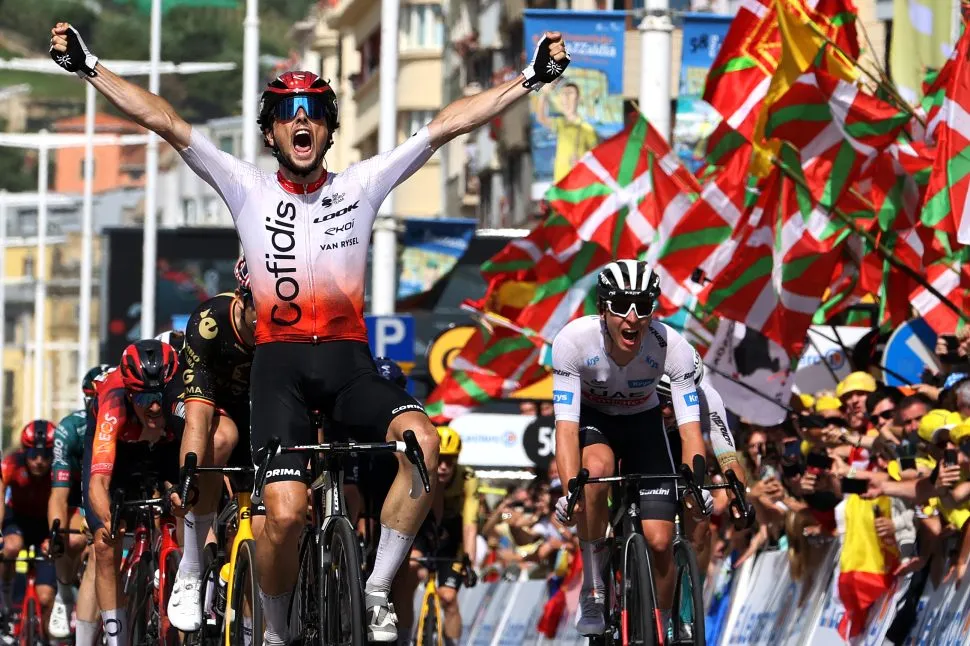 Michael Steele/Getty Images
Designing the race’s middle week has often proved a struggle, but the momentum was sustained on this occasion. That was attributed to a string of punchy stages through the Massif Central and the Beaujolais, which animated some great breakaway fights, before the GC was handed yet another chance to bubble away before the race’s second rest day in the Alps.
The final week was also expertly designed. The race’s only time-trial, a hilly one at that, welcomed the riders into an Alp-filled final week, which culminated in a brutal queen stage to Courchevel. While the GC was ultimately won there, thanks to Pogačar’s capitulation on the Col de la Loze, the final stages sustained some element of GC risk, with the Vosges proving a refreshing end to this 2023 Tour de France and the ideal send-off for Thibaut Pinot, who hails from the area.
This route could have served up a one-sided battle in any other year, but given the closeness of the GC duopoly held by UAE and Jumbo at this time, it delivered one of the most compelling GC narratives we’ve seen at a modern Tour de France. That, however, was at the expense of everyone else, who found themselves miles behind due to the severity of the endless mountaintop finishes.
1. 2020
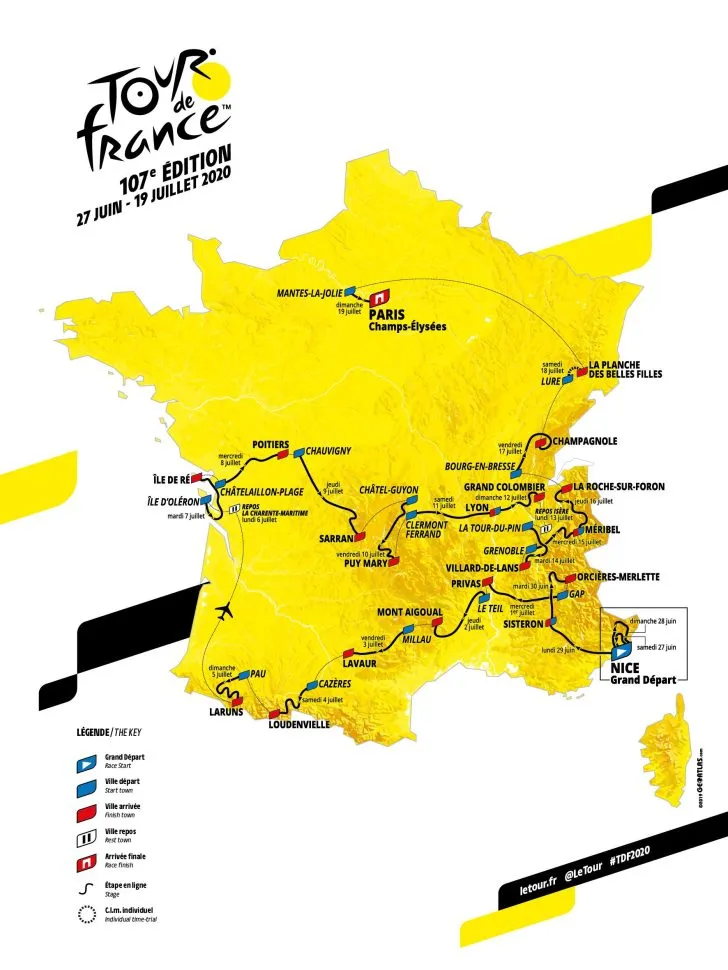
It was remarkable that the 2020 Tour de France preserved most of its original route because the pandemic came just a few months after the route’s announcement in the autumn of 2019. At that point in time, the parcours appeared to be designed for French hopes. Looking back on it, it seemed as though many of the stages we ended up with were carved out for more Julian Alaphilippe and Thibaut Pinot wonders after the incredible 2019 edition.
Some of that, at least the Alaphilippe part of the deal, was respected in the punchy Grand Départ in Nice, while a sprinkling of summit finishes and mountain tests in week one managed to capitalise on the bunch’s sharp form peak after the season got restarted just a month before.
This route brought back some forgotten Tour climbs. Orcières-Merlette, Mont Aigoual, the Col de Marie Blanque and the Grand Colombier were great additions to this race, and have remained in the map designers’ minds or the following editions after their strong return in 2020. In the case of the Col de la Loze, the 2020 edition saw its debut, and the beginning of a new Tour classic akin to Alpe d’Huez or Mont Ventoux.
Whoever suggested ending this Tour de France on a mountain time-trial deserves a big pat on the back, because this certainly delivered. Although I suspect the organisers had hoped for a crowning of local boy Thibaut Pinot rather than the Roglič downfall that ensued.
All things considered, the 2020 parcours was daring, well-balanced, and offered some great moments across the board. ASO managed to bring the race to new places, while highlighting some of France’s greatest cities, not least the Tour shy Lyon and Nice, onto the parcours once again. The GC battle’s delivery certainly helps this route to stand out in hindsight, but its mix of profiles and regions makes this a fabulous parcours.