
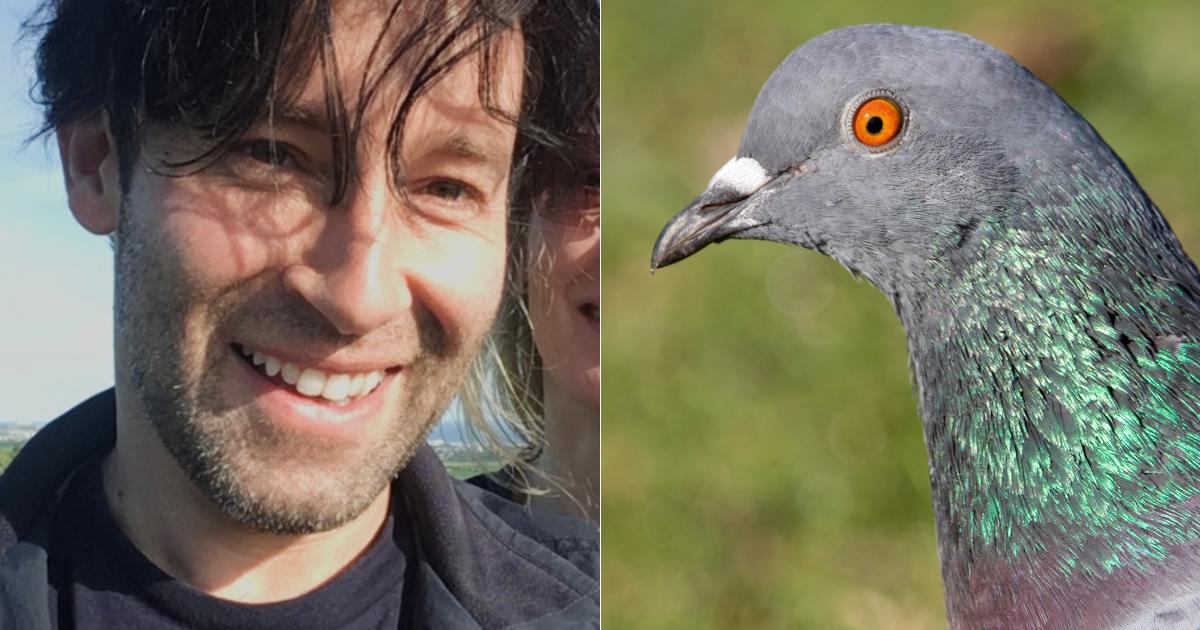
An anonymous post appeared on several Facebook groups on Monday evening (June 29), claiming that West Hove Golf Club was planning a “pigeon cull” at its site the following morning at 6.30 am.
The club said a pest control company had suggested the most effective solution might involve killing a number of pigeons — an approach the club ultimately decided not to pursue.
The post spread rapidly, prompting a flurry of activity from local animal lovers and activists who wanted to prevent any killing from occurring.
Large numbers of comments were left beneath recent posts on the club’s Facebook page, with concerned members of the public accusing the club of orchestrating a mass killing of pigeons and urging it not to proceed.
Multiple people also contacted the club by email overnight and left calls.
The clubhouse at West Hove Golf Club, where there have been issues with pigeons (Image: Hassocks)
By the morning of Tuesday, June 30, the club announced that “the planned pigeon management activity has been postponed while we review alternative options,” adding that non-lethal methods would now be pursued.
Paul Khanna, a 53-year-old writer from Brighton, is a member of pigeon rescue group South Coast Stringfoot Sessions, which is affiliated with Brighton and Hove Wildlife & Rescue Service (WARS).
He heard about the possible “cull” last night, and so went to the golf club at 6 am this morning to investigate.
He said he encountered two groundskeepers, who said the proposed pigeon-related activity had been postponed.
Paul Khanna went to the golf club at 6am after seeing a post online (Image: Supplied)
“It’s disturbing,” Paul said of the idea of a cull.
“I cannot think of any justification.”
He argued that pigeons are more deserving of sympathy than they typically receive.
“Pigeons are quite an odd animal,” Paul said. “They were basically domesticated by humans in the last 200 years, and now they’re domestic animals abandoned in public.
“They get a bad rap.”
Paul argued that the club, which sits within the South Downs National Park, had a broader responsibility to its surroundings.
“A golf club has lots of land and they are privileged to look after this land — but that includes the creatures on it,” he said.
“Before birdies, there were birds.”
West Hove Golf Club is located in the South Downs National Park (Image: Paul Gillett)
Zoe, a 34-year-old project manager from Brighton who did not provide her surname, was another who grew concerned after seeing the post circulating on social media.
“It’s not particularly great when there are other options,” she said.
She added: “Brighton and Hove is a very compassionate place — it seems to be very wildlife-friendly as a community.
“So it’s quite disappointing to see.”
Zoe added: “I can’t personally see what pigeons could be doing that could be so difficult to manage.
“They’re peaceful birds, they’re very intelligent.
“And the fact that we as humans bred and domesticated them and used them during war, and then we just vilify them and treat them as pests, is kind of disappointing.”
A spokesperson for the club said that pigeons need to be managed at the golf course (Image: Muhammad Mahdi Karim)
However, a spokesperson for West Hove Golf Club refuted the idea that a mass pigeon culling had been planned.
The club had engaged a licensed pest control company to help it deal with ongoing problems caused by pigeons in the clubhouse, whose presence had been obstructing necessary maintenance work.
It was the pest control company which had suggested the most effective solution might involve killing a number of pigeons — an approach the club ultimately decided not to pursue.
The Argus understands that an email had been sent to club members warning them of possible shooting activity in the early morning.
A spokesperson said: “West Hove Golf Club had planned to undertake pigeon management works within the clubhouse to address ongoing health, hygiene and maintenance issues caused by pigeons in and around the building.
“The club engaged a specialist pest control company to assess the situation and recommend the most appropriate course of action.
“As part of that process, a range of management methods was considered.
“Following feedback received from members of the public, the club decided not to proceed with any lethal methods and instead instructed the contractor to continue with non-lethal measures.
“The club remains committed to finding a responsible, effective, and sustainable solution to manage the issue.”