

For most of her life, Mariel Hemingway treated wellness like a problem to be solved. She pushed herself harder and overrode her exhaustion to try to prove that strength meant never slowing down. The actress, who earned an Academy Award nomination at 17 for her role in Woody Allen’s Manhattan, spent years operating from survival mode.
These days, her philosophy has flipped entirely. “My routine used to be about fixing something. Now it’s about listening,” Hemingway told me.
That single reframe sits at the heart of how she now approaches mental and physical health. She has come to see the body not as something to be managed, but as something that speaks. “What I eventually realized is that the body is always communicating,” she explained. The symptoms most of us are taught to power through, she believes, are messages we have learned to silence. As she put it, “Anxiety, fatigue, brain fog, tension aren’t inconveniences; they’re information.”
Why mental health is just as physical as it is emotional
No filter, mid-hike. “The body is incredibly intelligent,” Hemingway said of the shift that reshaped her approach to wellness.
(Courtesy of Mariel Hemingway)
“We tend to separate the mind and the body, but they’re not separate systems,” Hemingway noted. Mood, clarity, and the capacity to handle stress, she pointed out, are shaped by the nervous system, hormones, sleep, inflammation, and nutrient levels working in concert.
What troubles her is how quickly people turn that struggle into self-blame. “Mental health isn’t just about your thoughts. Your biology matters,” she stressed. She has found that the flip side is genuinely hopeful. “When the body is supported, it becomes much easier to access steadiness, clarity, and resilience,” Hemingway added.
The link between inflammation, brain fog, and mood
Researchers have increasingly drawn connections between chronic inflammation and conditions like depression and anxiety. Hemingway understands that deeply because she has lived it.
“I’ve experienced firsthand how much inflammation and depletion can affect the way you think and feel,” she revealed. When the body is overwhelmed, it surfaces as low mood, irritability, anxiety, and exhaustion, all symptoms we are quick to interpret as purely emotional. “Sometimes we think something is emotionally wrong when the body is actually asking for support,” she reflected.
Hemingway is careful not to dismiss emotional work, which she considers essential. However, her experience pointed her toward integration rather than separation. “True healing happens when we stop separating the emotional from the physical,” she said.
Brain fog, in particular, gets treated as a throwaway buzzword. Hemingway treats it as a signal worth heeding. “Brain fog is information. It’s the body asking us to pay attention,” she explained. The turning point for her was trading the instinct to push through for a sense of curiosity about what her body was actually trying to say.
What gut health and nutrient absorption have to do with how you feel
The gut plays a direct role in producing the neurotransmitters that regulate how we feel. For Hemingway, recognizing that connection rewrote her understanding of her own emotional life.
“I realized that what I was feeling emotionally wasn’t always emotional,” she shared. For years, she approached wellness from the outside in, convinced the right mindset would be enough. What shifted was the recognition that the physical self belongs in the discussion. As she described it, “the body is part of every conversation about mental health.”
When the gut is struggling or the system is overloaded, she has found, the effects ripple outward into focus, energy, anxiety, and resilience. Supporting her body differently, she said, restored a sense of connection she had been missing. Her definition of wellness has softened in the process. “Not perfection. Just creating the conditions where your body and mind can work together instead of against each other,” she offered.
The morning ritual Mariel Hemingway swears by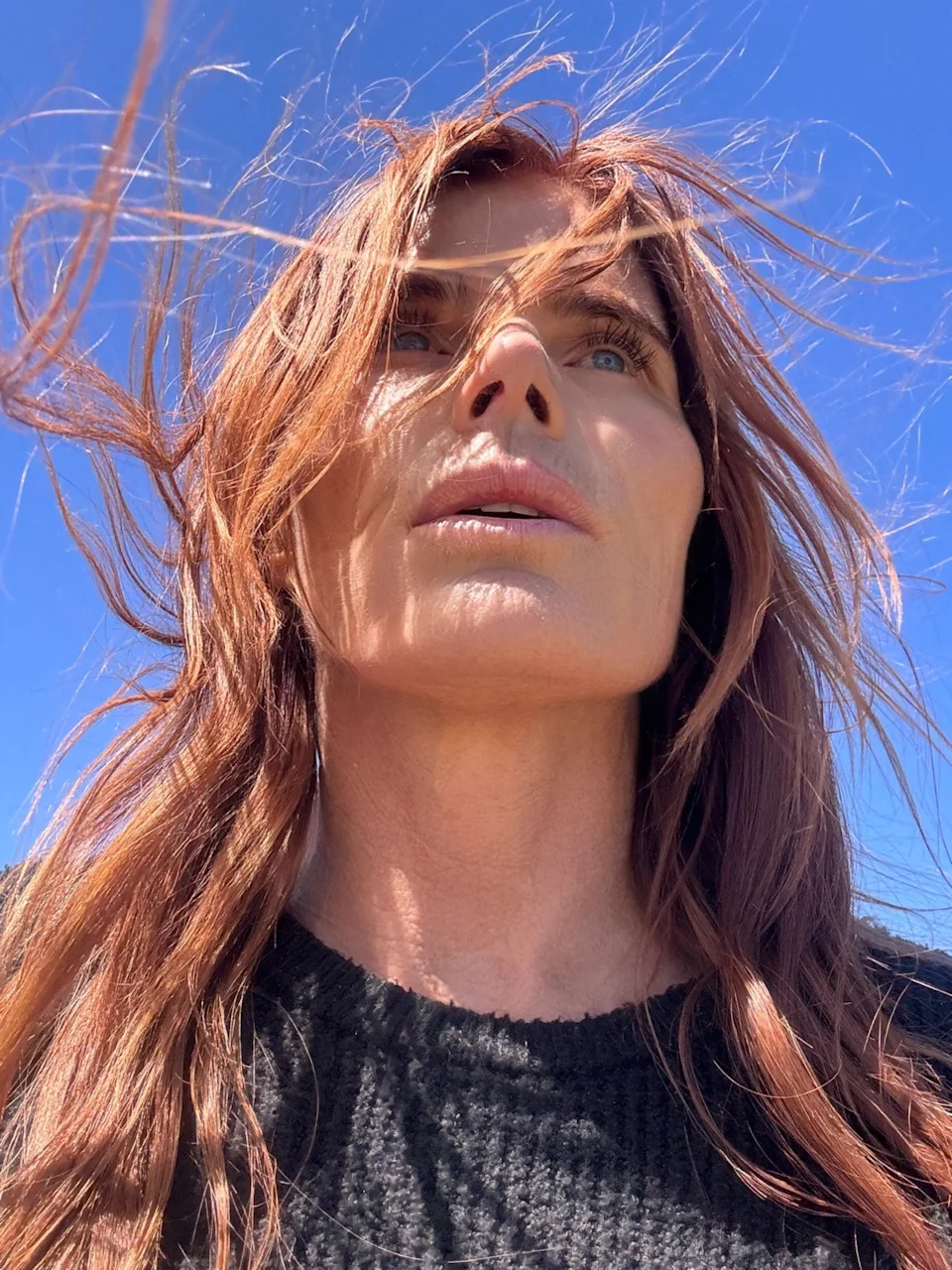
Morning light, no phone in sight. “I protect my mornings now,” Hemingway said.
(Courtesy of Mariel Hemingway)
Ask Hemingway to name the single daily practice that has moved the needle most on her clarity, mood, and physical health, and she does not hesitate. “Giving myself space before I give myself to the world,” she explained.
She protects a pocket of silence before the day’s demands rush in. “I protect my mornings now. I don’t immediately reach for my phone,” she noted. Instead, she moves her body, breathes, writes, and gets outside when she can.
That rhythm, she has come to believe, sets the tone for everything that follows. “I’ve learned that how I begin my day shapes everything that follows,” she said. “Clarity isn’t something you force.” She has found that it arrives when the nervous system feels supported rather than overwhelmed.
Why she stopped chasing wellness ‘optimization’
The wide-open country Hemingway returns to for quiet. “The practices that have helped me most are the ones that create more connection, not more control.”
(Courtesy of Mariel Hemingway)
The modern wellness industry runs on intensity. Think of the fasting windows, ice baths, and biohacking protocols engineered to push the body to its limits. Hemingway once bought into that mentality. Eventually, she recognized that she was simply recycling the same stressed mindset that had depleted her in the first place.
“The body is incredibly intelligent,” she said, and as she sees it, the trouble begins when optimization curdles into a fresh source of pressure. “People start treating themselves like machines that need to be hacked instead of human beings who need support, rest, nourishment, and awareness.”
“The practices that have helped me most are the ones that create more connection, not more control,” she shared. That orientation extends to how she thinks about trauma and the body. Drawing on research suggesting that stress and trauma can shape our biology, Hemingway sees real possibility for change.
“I do think we carry the imprint of our experiences in the body,” she acknowledged, before adding the part she finds most freeing: “What gives me hope is knowing that we’re not trapped there forever. Healing has never been about becoming someone else.”
Staying mentally sharp and present as you age
“It’s about being fully here for your life.” For Hemingway, unhurried time outdoors is nonnegotiable.
(Courtesy of Mariel Hemingway)
There is enormous pressure on women, and on public figures especially, to perform an unbroken youthfulness. Hemingway is interested in something else entirely. “Longevity for me isn’t about trying to outrun aging. It’s about being fully here for your life,” she said.
She has shed a great deal in recent years: the compulsion to prove herself, to push harder, to appear flawless, and to perform contentment she did not feel. “What matters to me now is presence,” she shared. “Mental sharpness comes from reducing noise and stress, not constantly forcing more.”
Her advice for women who feel ‘off’ but can’t explain why
For any woman who senses something is wrong but cannot put a finger on it, Hemingway has a clear starting point. “Pay attention to what your body has been trying to tell you,” she urged.
She has observed how so many women have become fluent in overriding themselves, pushing through exhaustion, anxiety, and disconnection until that override starts to feel like normal life. Her counsel is to meet that gap with curiosity rather than criticism. “Start with awareness instead of judgment,” she advised. Slow down enough to notice what you actually feel, support the nervous system, and build in moments of quiet.
Above all, she resists the idea that the answer is more effort. “Most of us don’t need more pressure. We need more connection to ourselves,” Hemingway concluded. She now devotes a lot of energy, through her writing and her weekly Tea Circle gatherings for women, to helping others stop performing and start listening.
More about our expert: Mariel Hemingway is an American actress, author, and longtime mental health advocate. The granddaughter of literary icon Ernest Hemingway, she earned a Golden Globe nomination at 14 for her breakout role in Lipstick (1976) and an Academy Award nomination for Best Supporting Actress for Woody Allen’s Manhattan (1979), followed by acclaimed turns in Personal Best (1982), Star 80 (1983), and the series Civil Wars. In recent decades she has shifted her focus toward holistic health, contributing to the documentary Running from Crazy, which explores her family’s history with mental illness, and leading wellness programs and her weekly Tea Circle for women. On her personal wellness journey, she has partnered with Quicksilver Scientific, a nutraceutical company known for pioneering nano-liposomal supplement delivery technology.
Please note: This article is intended for informational and inspirational purposes only and reflects Mariel Hemingway’s personal experiences and perspective. It is not medical advice and is not a substitute for guidance from a qualified healthcare professional. If you are experiencing symptoms or considering changes to your wellness routine, supplements, hormones, or mental health care, please consult your doctor first. Be well, and take what serves you.
Thanks for reading! I invite you to follow me on Yahoo so you never miss my latest articles.