
The next few weeks are likely to see a huge shake-up at the top of government, with new faces in most of the great Departments of State with Andy Burnham expected to take the role of prime minister.
But often it is the changes in less high-profile parts of government that have the biggest impact on households.
In particular, we are likely to see someone new responsible for pensions across the Department for Work and Pensions and the Treasury – the third such minister in just two years.
And it is in areas like pensions where there is potential to reverse some previous policy errors and to put future policy on a much firmer long-term footing.
If anything in life should be a long-term business, it is saving for our retirement. Yet, our retirement plans currently have to be reconsidered on at least an annual basis as successive chancellors tinker with the pension system.
It may seem surprising to say that the biggest priority at such a time is to avoid too much change – but sometimes the best thing you can do is nothing at all.
Below, I have outlined six things I think Burnham – if he takes power – should look at to fix pensions.
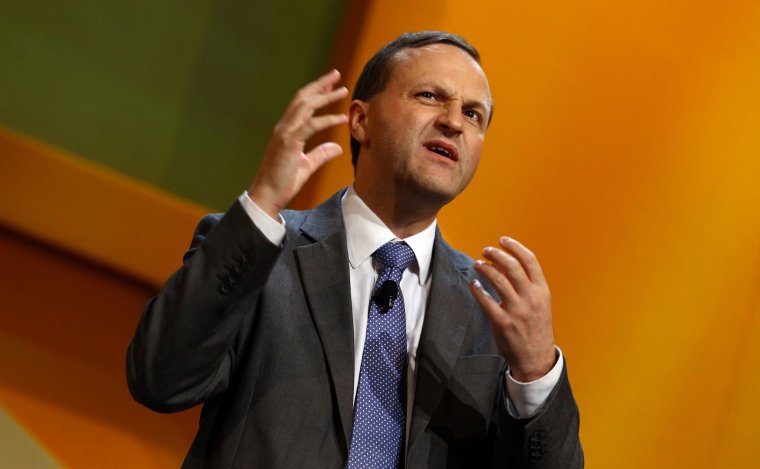 The new chancellor should promise not to make any changes to pension tax relief, says former pensions minister Steve Webb
Take away uncertainty
A real step forward would be for a new chancellor to announce that for the rest of this Parliament there will be no changes to pension tax relief – which essentially means your pension provider claims back the income tax you’ve already paid on the money.
At a stroke, gone would be the destabilising pre-Budget speculation about the future of tax-free pension lump sums or higher rate tax relief. Ideally, this period of stability would go much further, but even three years of respite would be a win.
Ditch plans to mandate where pensions are invested
There are some areas of pensions policy where it would be good to see a new ministerial team take a fresh look, and first and foremost is the deeply damaging new legislation that will allow future Governments to ‘mandate’ or compel certain pension schemes to invest our money in ways that the Government approves of.
Although the present Government assures us that this is just a ‘reserve’ power, which it doesn’t plan to use, the very fact of taking this power sets a very worrying precedent. It is simply not the business of Government to tell pension scheme trustees and pension providers how to invest our money, and the sooner this power is withdrawn altogether, the better.
Change inheritance tax rules
The other policy that needs to be reviewed is the decision in the 2024 Budget to include pensions in the Inheritance Tax (IHT) net.
Although there are arguments about whether pensions have started to be used as an IHT avoidance vehicle, the way the new policy will work is likely to be a nightmare for thousands of bereaved families each year.
From April 2027, people sorting out a loved one’s estate will need to track down all of their pensions, contact all the providers, get pension valuations and information about beneficiaries, feed all of this into an HMRC calculator and then potentially organise the payment of IHT from each pension pot.
The whole thing is likely to be a disaster and will have to be rethought, so it would be better if that thinking was done now, rather than putting bereaved families through misery.
A change of personnel at the top of Government gives chance for a new direction, and in certain areas that will be welcome. But, in general, what we need more than anything in pensions is continuity and stability rather than permanent revolution.
Listen to the Pension Commission
A step towards long-term stability would be to carry through the work of the major Pensions Commission, which is due to report in early 2027. The Commission, which brings together expertise from trades unions, employers and academia, has been tasked with coming up for a blueprint to take us through to the 2050s.
If a broad consensus can be secured, this provides us with the best hope of tackling the under-saving crisis that currently besets millions of people of working age.
Get people saving more
As part of that mix, I hope the new Government will have the courage to set out a timetable for workplace pension contribution rates to be stepped up from the current 8 per cent minimum.
Under auto-enrolment, currently workers aged 22 and over, earning at least £10,000, are automatically signed up to their company pension scheme. They contribute 5 per cent of their pay and their employer 3 per cent, but this is not enough.
It is likely that employers, employees and the Government will eventually all have to contribute more, so the sooner everyone knows what is coming and can plan accordingly, the better.
Finish the Pension Dashboard
There is also the potential for the new Government to finally deliver on a policy that has been years in the making: the ‘Pensions Dashboard’. This will enable people to see all of their pensions in one place and could help them track down lost pension pots and consolidate all the pots they may have built up if they have changed jobs frequently.
The dashboard could be a key tool to getting people engaged with their pension savings, so let’s hope that the new administration gets it over the line as soon as possible.
Steve Webb is a partner at pension consultants LCP and was Pensions Minister from 2010-2015