
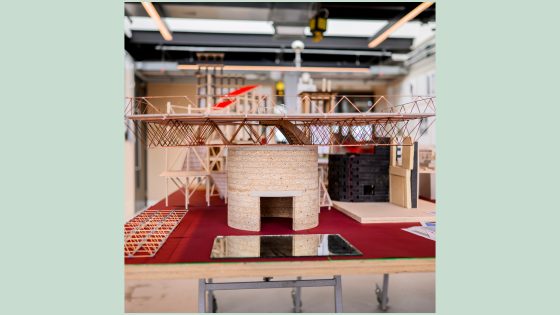
It’s the afternoon after ‘industry day’ at Kingston University London’s architecture summer exhibition, and business cards, CVs and portfolio booklets have joined the models and drawings on display throughout the art school’s upper floors. The 150 or so graduating third years and 50 fifth-year students are anxious to get their name out there. Society president and third-year student Maria Alexe says her cohort are ‘all kind of scared’ about their job prospects. ‘Last year it was easier to get a job,’ she says. ‘This year it’s been getting harder.’
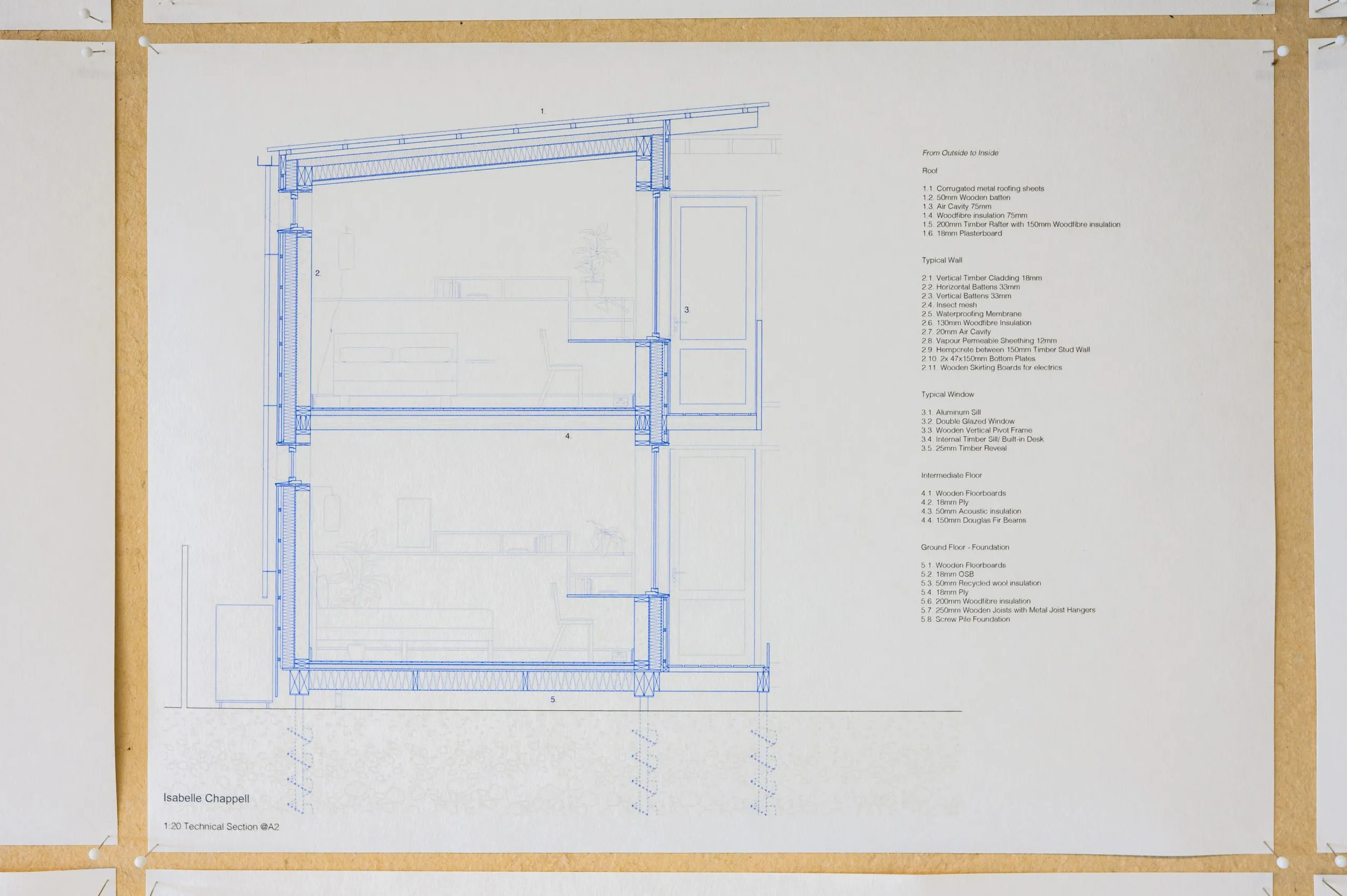
Little wonder then that this is a strictly practice-focused show, demonstrating Kingston’s well-reputed strength in formal thinking, representation, and the other core competencies of architectural practice. Walking me through a second-year studio, undergraduate course leader Alex Gore points out some impressively resolved detail sections that look ready to be handed to a contractor. ‘Super employable,’ he notes.
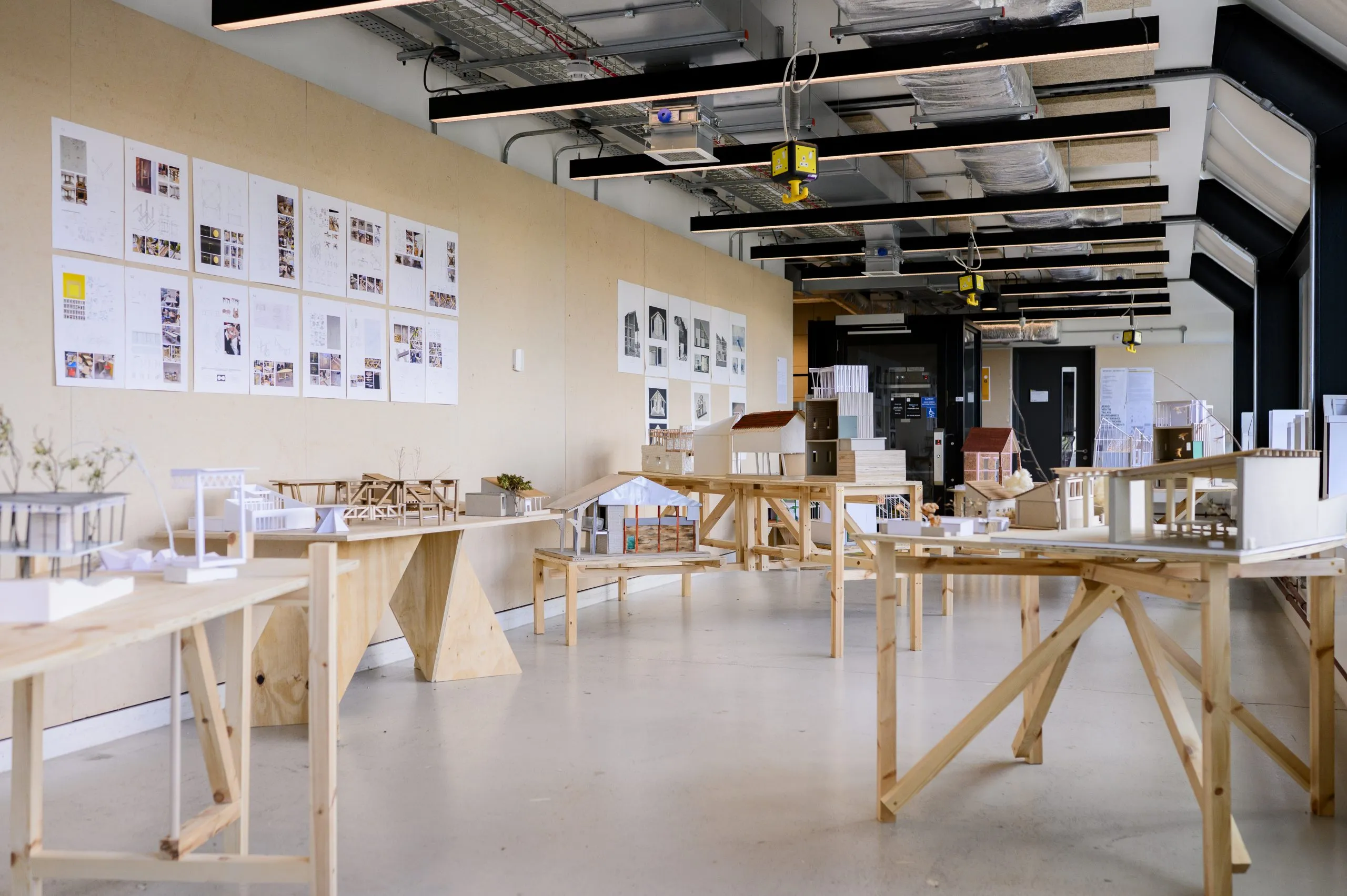
The strategy is present across the school’s output, which eschews grand leaps of imagination in favour of a realism about getting good things built. A highly successful project tasked groups of first-year students with designing a table from scrap workshop timber. Each group then handed those drawings to a second group who – without conferring with the first – created a tender package for delivery to a third group, who finally built it. It’s an early crash course in the troubles of communicating formal ideas and construction details between disciplines.
The collective briefs continue into a housing-focused second year, with students splitting into units to take on their first major design projects only halfway through their undergraduate study. One of the second-year design studios, taught by Elena Gauci and Edward Farleigh-Dastmalchi of practice Fardaa, was located in the Hebridean Isle of Mull, where students designed housing for both tourists and local islanders on one site. The economic and social relationships between these groups pose rich questions about how to site and design these buildings, and the exhibition presents exciting formal responses – one super-extended thatched blackhouse model is especially delightful. However, the thought that tutor Gauci tells me her students gave to these tensions is left out in favour of the final objects.
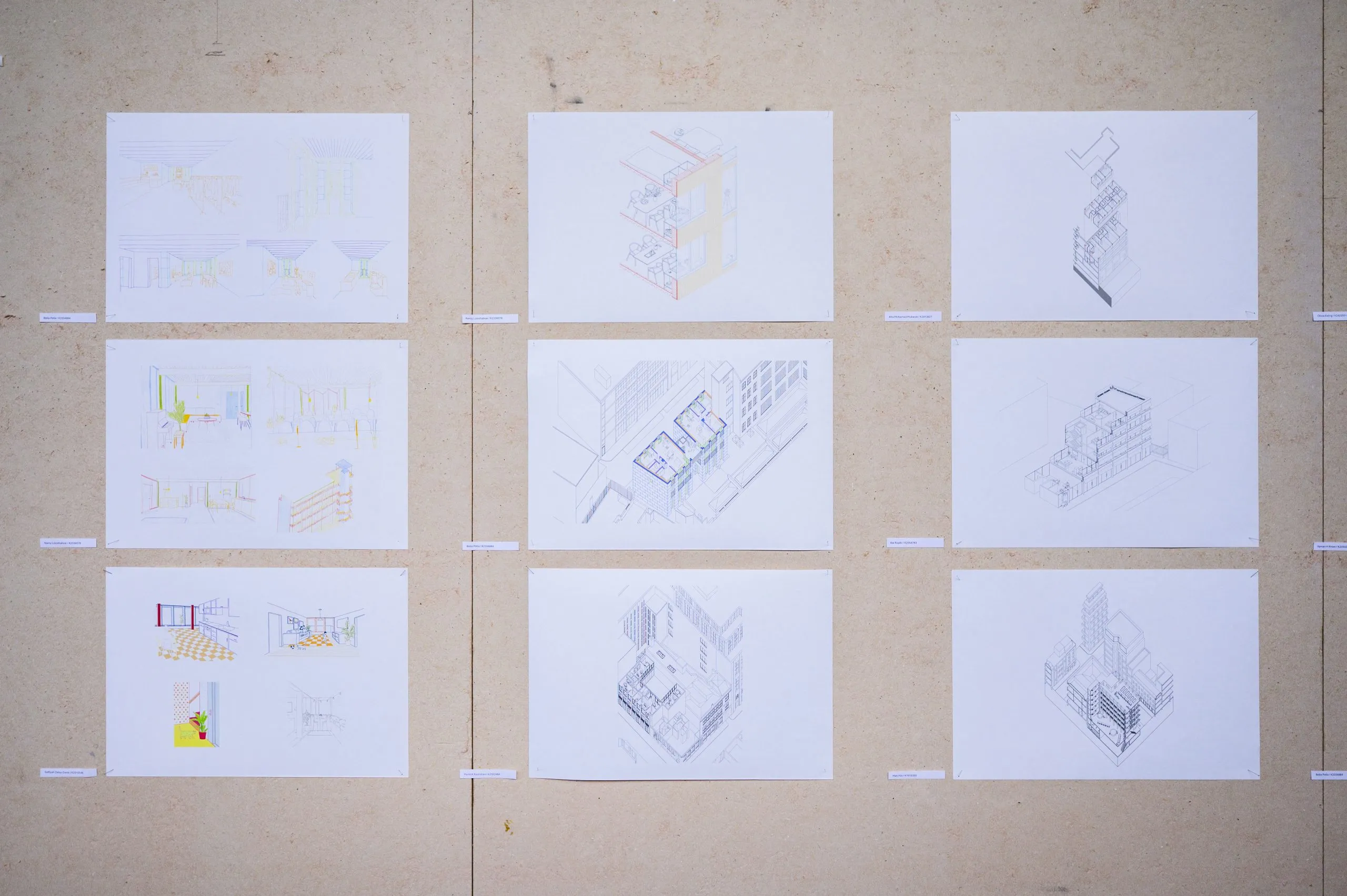
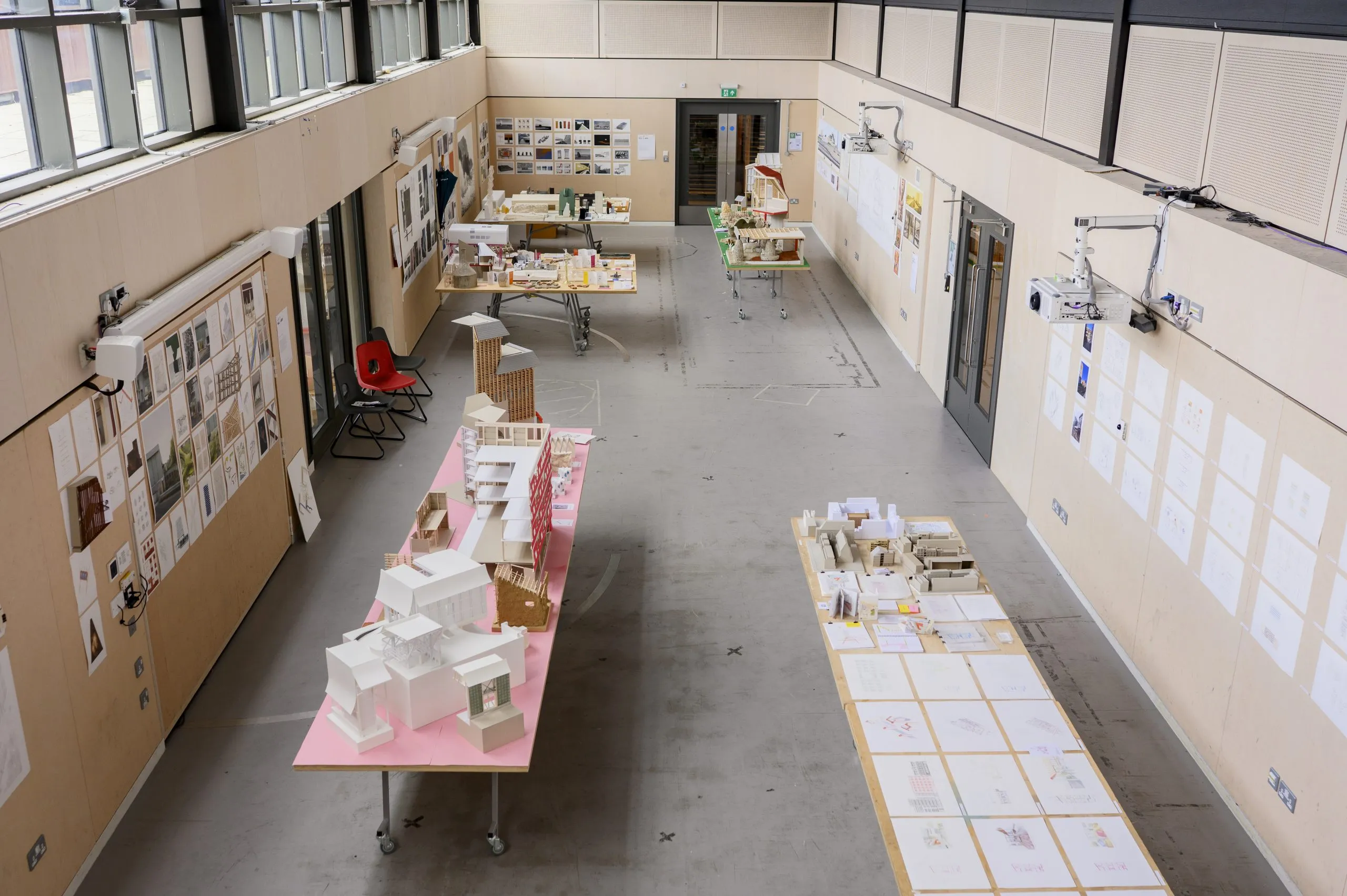
This absence of contextualising text, process work, or strategic argumentation continues into the school’s major design units, which integrate students across third, fourth and fifth years. Instead, the abundance of excellent drawings and models continues in units rehabilitating postwar estates, designing productive spaces for the English winemaking boom, and working with peri-urban conditions in Kingston and Hastings.
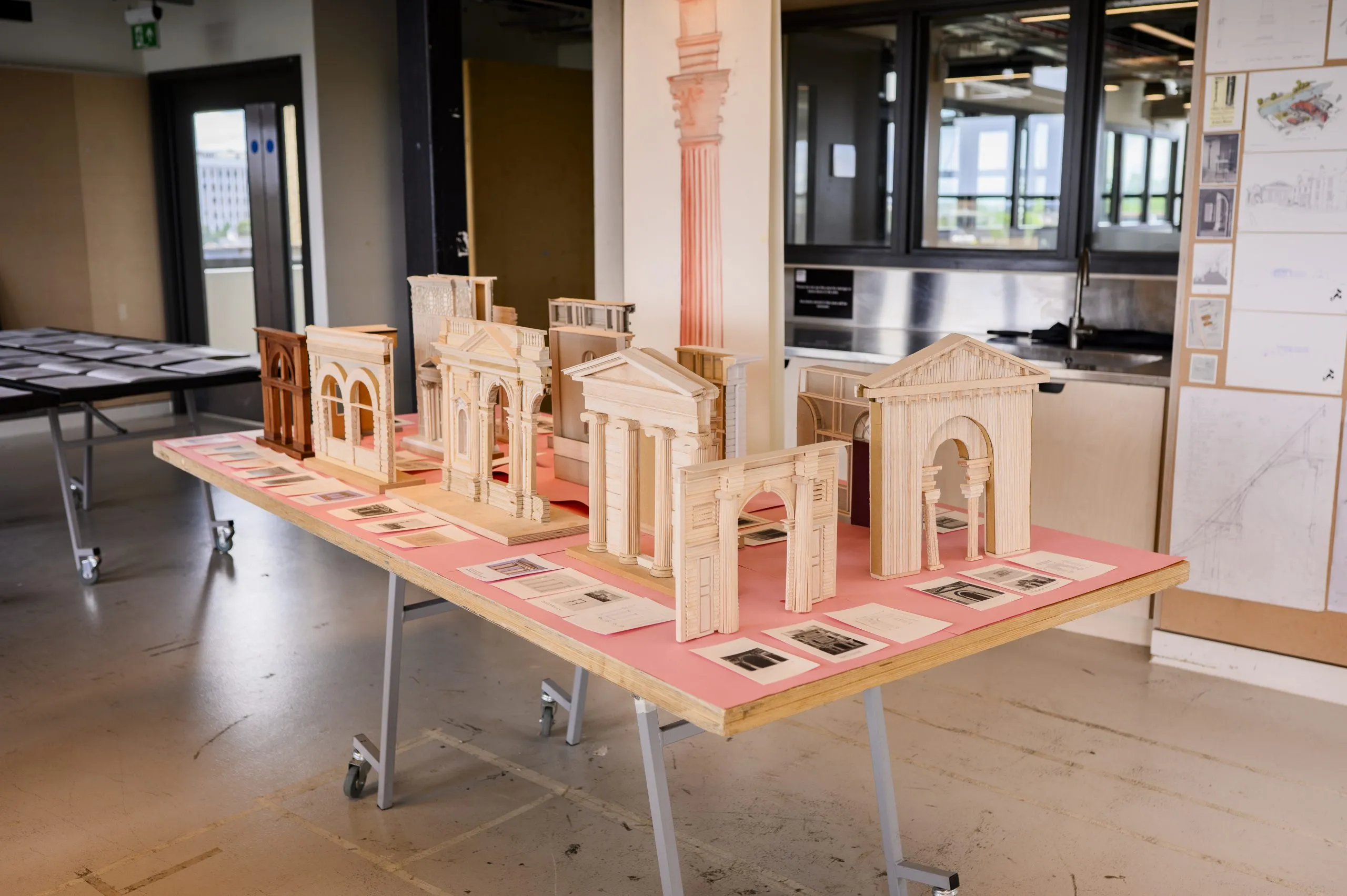
The school’s long-standing Classical architecture unit, taught by Timothy Smith and Jonathan Taylor of architecture practice Smith & Taylor, shows off some highly refined and materially sensitive work, while Andrew Clancy and Bushra Mohamed take on the formal potential of the wall, resulting in some exceptional renders and sophisticated spatial outputs.
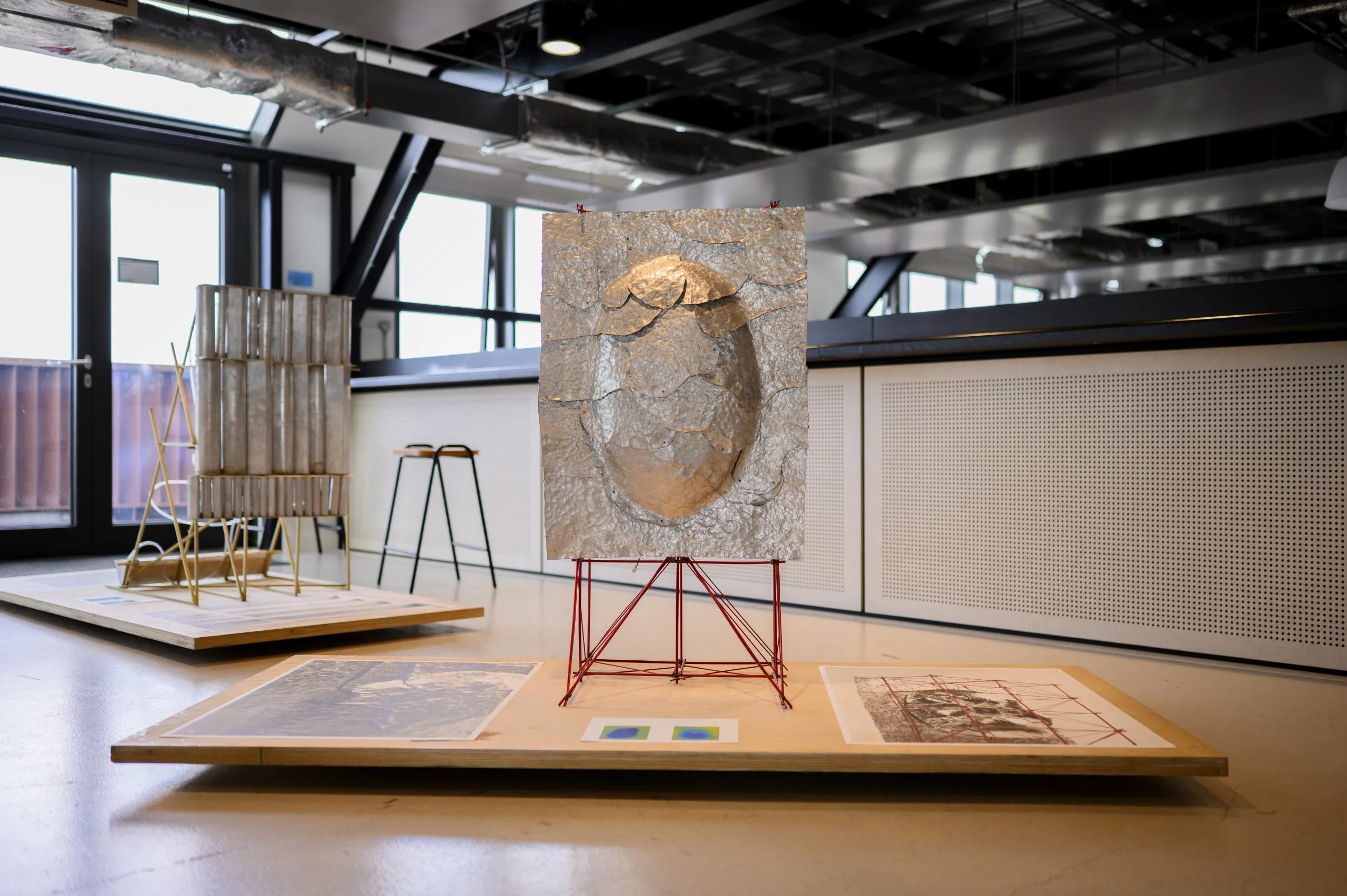
The work is universally refined, controlled and professional, supported by the Kingston School of Art’s impressive workshop and technical facilities, and opportunities for informal collaboration with students in photography, interior design and fine art. Thermal cameras form the backbone of a fourth-year technical brief in which students try to reproduce a drawn-up heat map by varying the insulating qualities of a façade study. On a mezzanine overlooking the school’s double-height seminar-cum-studio space, the result is shown in a curious range of space-age frame-supported objects. It’s the only moment the show gets anywhere close to abstraction.
The impressive range and mastery of skills they display might make Kingston’s students more competitive in an increasingly challenging job market. Course leader Gore touts students receiving job offers and interviews at David Chipperfield Architects and Foster + Partners, but also mentions, unprompted, a stat from a recent AJ report on the 2,600 applications received last year for nine Part 1 architectural assistant jobs at JTP.
‘There are too many architects,’ he admits, and yet Kingston is graduating them in ever higher numbers. The undergraduate body is now 460 students, according to Gore, up from 335 in 2023, and a new £42 million Grafton Architects-designed studio building is on the way to accommodate them. While its exhibition works all it can to market these graduates for careers in practice, ultimately many will move on to other things. Third-year Zofia Lumini Gregorio gives me a flat ‘no’ when I ask if she wants to be an architect.
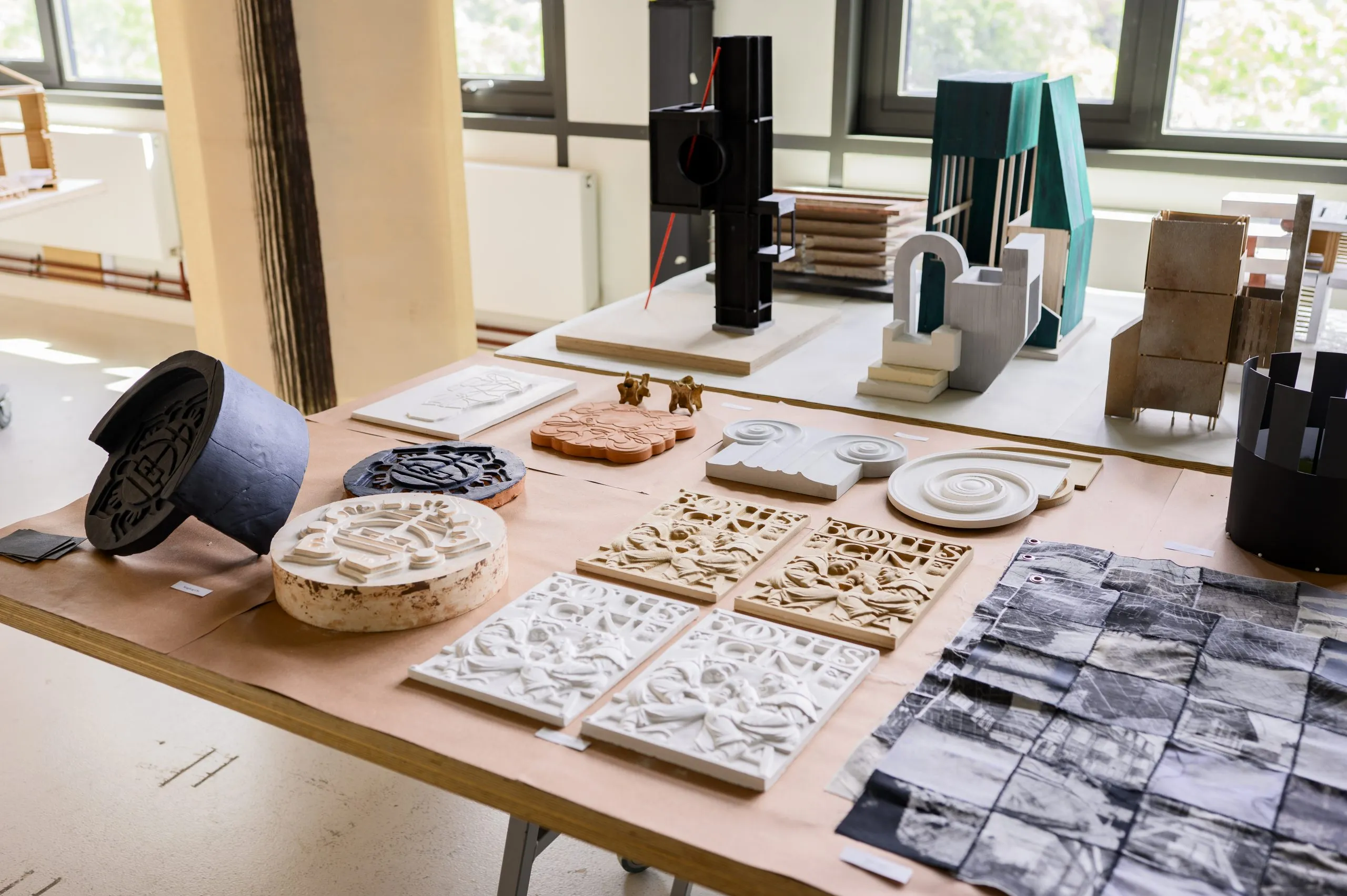
Though plenty of serious thinking on economics, social policy, history, and community building goes on in the school’s robust and grounded design briefs, it’s the high-quality finished product that wins out here.
Reuben J Brown is a multimedia journalist and former digital editor at The Architectural Review
The Kingston School of Art’s degree show ran from 6 to 12 June 2026 at its Knights Park Campus in Kingston upon Thames