
Nancy Mendoza, 44, from Abertillery, lives with hypermobility spectrum disorder (HSD), fibromyalgia, and other chronic illnesses that cause constant pain and fatigue.
Her symptoms began at age seven, but she did not receive a full diagnosis until she was 32.
Ms Mendoza said: “I have a number of conditions which cause chronic pain and fatigue—hypermobility spectrum disorder and fibromyalgia, among other things.
“It’s about an eight-year diagnosis on average for people with EDS and HMS, but stories like mine where it takes 25 years to diagnosis are really not that uncommon.”
She described a lack of a joined-up care system within the NHS for her conditions.
She said: “Particularly with hypermobility spectrum disorder, there’s really not a clear care pathway within the NHS right now.
“I see a lot of different specialists and none of them talk to each other. There’s no joined-up care.
“Nobody is taking responsibility for us in the NHS, and we’re a bit stuffed all the way through the process.”
One major gap in care has been around mobility support.
Although her mobility has declined, she does not qualify for an NHS wheelchair because she can still walk indoors.
Nancy said: “If you don’t have need to use a wheelchair inside the home, you don’t qualify for NHS mobility services.
“One of the keys things for me is to be able to do exercise where I get my heart rate up and to have mobility aid to access the outdoors – it has forced me to find new and different ways to live my life”.
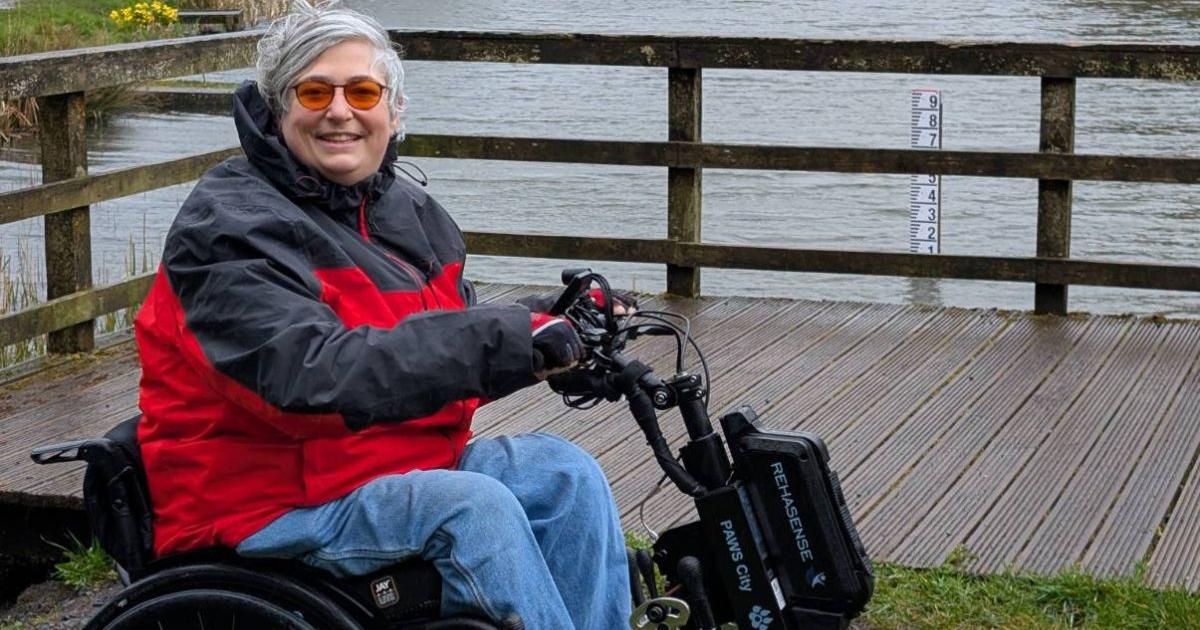
A woman has spoken out about the “cracks” in NHS care after waiting 25 years for a diagnosis. (Image: Nancy Mendoza)
Ms Mendoza also explained how important getting out and about is for supporting her mental health.
She turned to crowdfunding to purchase suitable equipment after being unable to access it through official channels.
Nancy said: “I’ve been super independent since I was really young, it’s psychologically really difficult to ask for help.
“I feel really touched and really grateful I have so many people in my life, some of whom I haven’t seen for years, who want to help and who love me.”
She is now calling for a better care pathway for chronic illness patients in Wales – one of which is currently being developed by NHS Wales and EDS UK (Ehlers-Danlos Support).
Nancy said: “The first step is to push really hard for this primary care pathway to be pushed through in NHS Wales. This will ensure we’re getting the joined-up care that we need.
“[This includes] looking at mobility aid, and other assistive devices and technologies that can make a difference.”
Ms Mendoza believes that there also has to be more of an effort to understand chronic illnesses and how to support support patients living with them in the long term.
She said: “I think there is just overall a lesson to be learned about chronic illness – with long Covid that has moved things on a bit in the right direction because some of those services are beginning to look at broader illnesses to develop really good management strategies.”
The South Wales Argus contacted EDS UK for more information.
A spokesperson said: “In Wales, the Welsh Government said people with HSD and EDS can face “long and complicated journeys to diagnosis.
“It also said a draft community health pathway has been developed with clinical experts and EDS UK to help people receive more consistent care closer to home.
“But the pathway still needs formal agreement and clinical endorsement before it can be put into place.
“We say, this is welcome progress. While we welcome the commitment to resolving outstanding issues, people with EDS and HSD in Wales urgently need clarity on what remains unresolved, who is responsible for progressing the pathway, and when publication can realistically be expected.
“People in Wales need the pathway published and implemented, so that GPs and patients have something practical to use”.
The South Wales Argus contacted the Welsh Government for an update.
The Welsh Government said: “NHS Wales is working to improve the experience of people with hypermobility spectrum disorders and Ehlers-Danlos Syndrome, who can face long and complicated journeys to diagnosis.
“A draft community health pathway has been developed with clinical experts across rheumatology, physiotherapy, and primary care, alongside Ehlers-Danlos Support UK, to help people receive more consistent care, closer to home, with access to specialist expertise where needed.
“Work is ongoing with partners to secure formal agreement so the pathway can be put into place with the appropriate clinical endorsement.”