
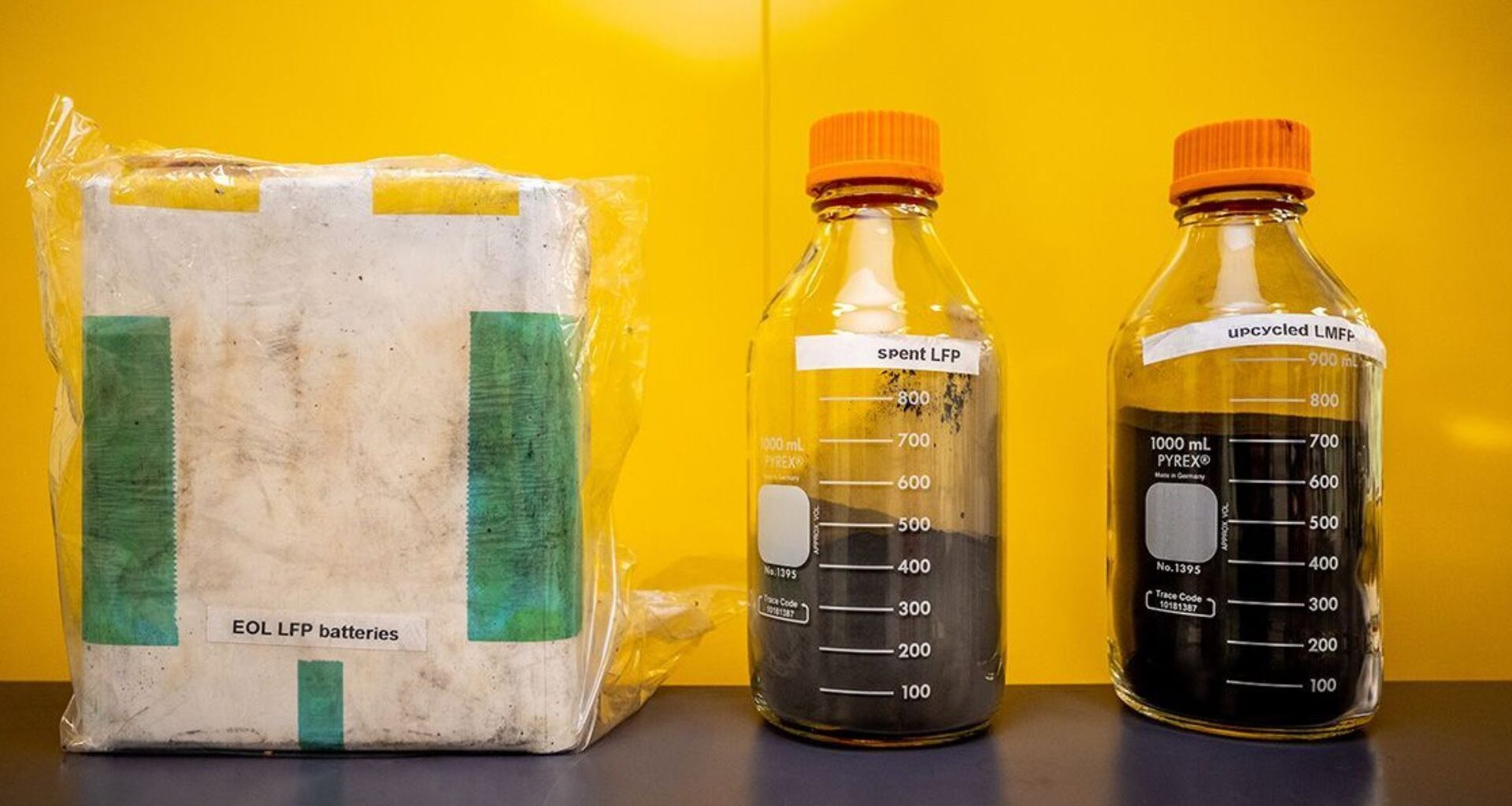
With millions of electric vehicle batteries nearing the end of their use, researchers have found a way to recycle them so they work even better than before. Scientists at the University of California San Diego created a process that turns used lithium iron phosphate (LFP) battery material into lithium manganese iron phosphate (LMFP). This new battery type can store more energy while keeping the safety and long life that made LFP batteries popular.
The research offers a new way to recycle batteries. Rather than breaking old batteries down into raw materials and then making new cathodes, the team upgrades the existing cathode into a better material. This method could cut down on waste, use less energy, and make retired EV batteries more valuable.
Cleaner process aims to reduce waste
LFP batteries are among the most commonly used in electric vehicles and large energy storage systems. They cost less than many other lithium-ion batteries because they do not need expensive metals like cobalt or nickel. Now, they make up almost half of the world’s lithium-ion battery market. As more of these batteries wear out, finding efficient ways to recycle them is becoming more important.
Most recycling methods use high heat or strong chemicals to recover valuable materials. “These processes are not environmentally friendly,” said Wei Li, the study’s first author and a postdoctoral researcher in Zheng Chen’s lab at UC San Diego. Li explained that they use a lot of energy and create a lot of waste and emissions.
Chen’s research group had previously developed a method to restore old LFP batteries to fresh LFP material. But the recycled batteries kept the same chemistry as before.
“After regeneration, it was still LFP,” Li said. The new method upgrades the material to LMFP, which can store more energy. “This could offer a more valuable end use for spent batteries,” Chen added.
Turning used cathodes into a better material
The recycling process begins by opening the battery packs and taking out the tightly rolled layers inside, known as a jelly roll. Researchers cut these layers into sheets, soak them in water, and gently shake the material to separate the cathode coating from the aluminum foil.
“The aluminum foil can also be recycled separately,” Li explained.
The remaining cathode material is dried and ground into a fine black powder. Researchers then add lithium, manganese, and phosphate salts to provide the ingredients for LMFP.
The team ran into a big challenge because the added salts and the original LFP material have different crystal structures.
“Their structures are incompatible,” Li revealed. “If mixed directly, the atomic distribution of the end product will not be uniform and will have worse electrochemical performance.”
To fix this, the researchers first prepare an intermediate compound, lithium manganese phosphate (LMP), with a crystal structure similar to LFP. They finely grind and mix the powder, then heat it. “This is where the exciting chemistry happens,” Chen said.
As the powder is heated, LMP forms first and mixes evenly with the LFP. Manganese atoms slowly take the place of some iron, creating a uniform LMFP structure. A thin layer of carbon also forms around each particle, helping the material conduct electricity and protecting it during many charging cycles.
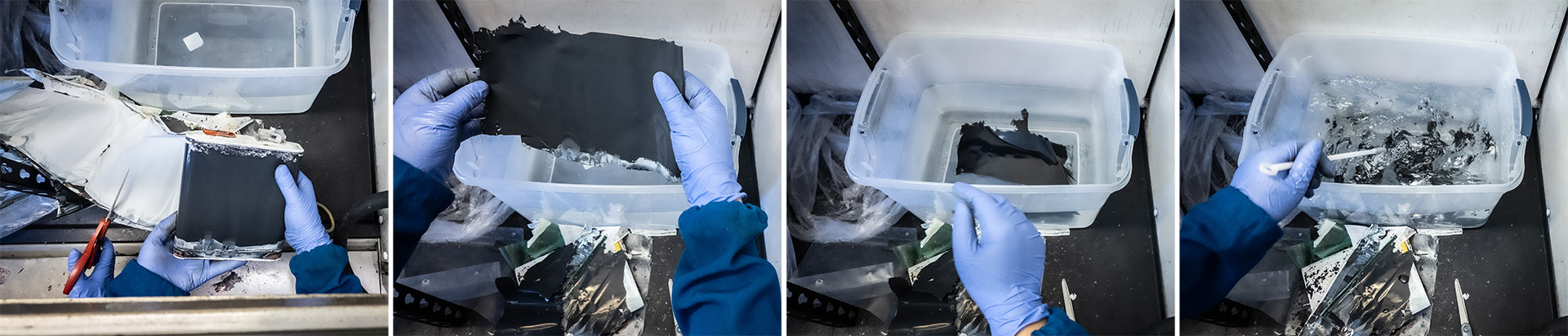 How spent cathode material is recovered from an end-of-life LFP battery. Left to right: the battery pack’s contents are unrolled, cut into smaller sheets, soaked in water, and stirred. Image credit: University of California San Diego
Results show promise for large-scale battery recycling
The upgraded LMFP material stored more energy than the original LFP and kept its durability and safety. Researchers tested the method using LFP batteries from different manufacturers and scaled up the process to kilogram quantities.
The recycled material also worked well in both small lab coin cells and larger pouch cells, which are similar to the batteries used in electric vehicles and large energy storage systems.
The research team now plans to make the process more efficient and get more material from it. They also want to improve the material’s composition and structure to boost performance and prepare the technology for large-scale recycling.
The research was published in the journal Joule.