
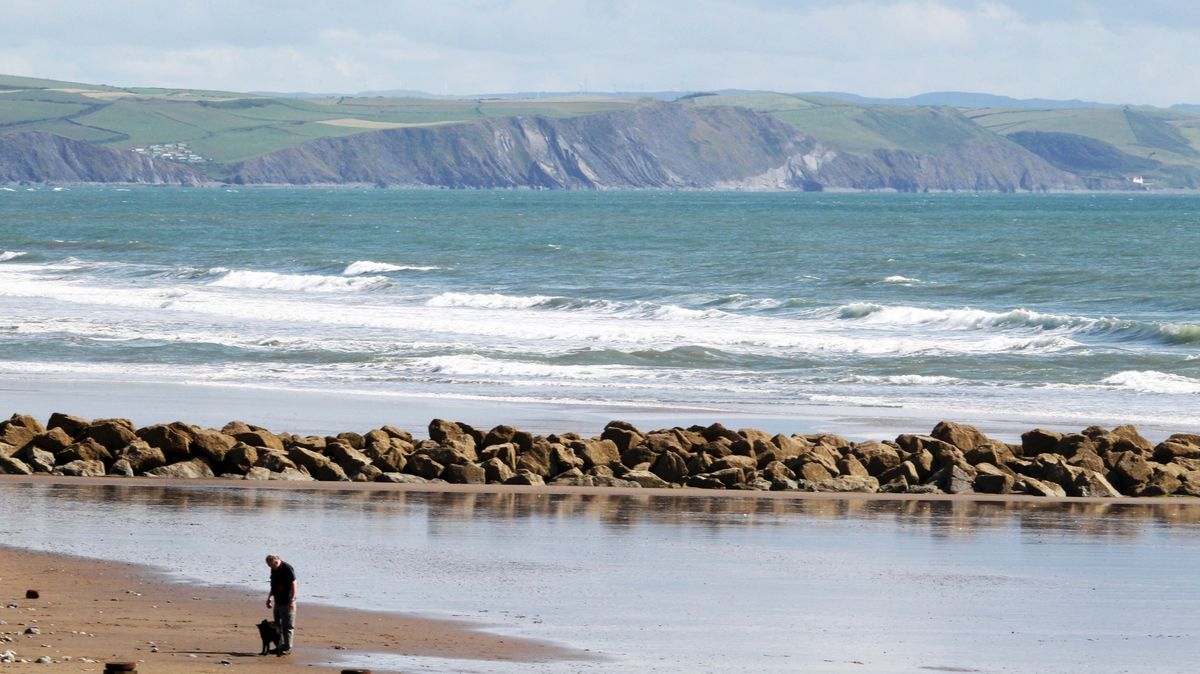
A dangerous rip current almost claimed the lives of several children swimming off the Gwynedd coast, it’s been claimed. Three local men sprang into action when the youngsters got into trouble at Tywyn’s long sandy beach.
A beach regular said “four or five” children were rescued in separate incidents at the tail-end of last week’s recent heatwave. The incidents reignited calls for a lifeguarding presence at a beach where rip currents are said to be “not uncommon”.
Rescuers say they were “shocked” by the series of incidents that unfolded on Saturday, June 27. Online, locals said that, but for their intervention, “we would be looking at another drowning”.
Online, a woman said: “Parents need to keep an eye on their children….. sitting on the beach and oblivious to the danger their children were actually in.” Another added: “Things could have gone very differently today!”
Over the years Tywyn’s rip currents have led to a number of tragedies. In July 2015, a 74-year-old grandfather died while trying to rescue two girls caught out by a rip current. Sign up for the North Wales Live newsletter sent twice daily to your inbox
Richard Guest, a former bank manager originally from Bethel, held onto one girl until a lifeboat arrived but he didn’t survive the ordeal. His daughter continues to lobby for the beach to be “properly lifeguarded”.
Three years later, after three teenagers were airlifted to hospital after getting into difficulty, a petition was raised calling for lifeguards on the beach. This cited a 2014 RNLI study pointing out the dangers of a rip current associated with a rock breakwater at the beach.

A rip current at Cemetery beach in Aberdyfi, Gwynedd, at at half tide(Image: Aberdyfi Lifeboat)
Rips are strong currents running out to sea, which can quickly drag people away from the shallows and out to deeper water. The RNLI said: “They tend to flow at 1–2mph but can reach 4–5mph, which is faster than an Olympic swimmer.”
Conditions at Tywyn beach last Saturday were relatively benign – tides, surf and wind were moderate. What happened subsequently prompted calls for better signage on the beach to prevent people thinking it’s safe when it’s not.
On social media, a woman said: “It’s a disgrace that children’s lives are being put at risk to save the cost of a couple of signs.” The beach does have a small sign warning of rips but locals want notices to be more prominent.
Red flags are also flown at Tywyn to signal danger. Locals claim the flags are routinely ignored as they are rarely taken down.
RNLI lifeguards operate on more than 30 Welsh beaches. Most are in South Wales, though lifeguards operate in Ceredigion and Denbighshire. Daily patrols at Rhyl and Prestatyn beaches start on July 4 and continue until September 6, between 10am-6pm each day.

Tywyn Coastguard Rescue Team says it has ‘our fair share’ of rip currents between Aberdyfi and Tywyn, Gwynedd. To show what they look like, Aussie surf scientist Prof Rob Brander (aka Dr Rip) used purple dye to highlight a rip current(Image: Rob Brander/Tywyn Coastguard Rescue Team)
Lifeguards vs beach wardens
With the responsibility for lifeguard provision resting with county councils, Tywyn Town Council has long lobbied Cyngor Gwynedd to allocate resources. As the county has a coastline stretching over almost 300km and encompassing scores of beaches, the council’s Maritime Service has adopted a different approach.
A spokesperson said: “An annual and specific risk assessment is carried out for individual beaches which identifies relevant hazards as well as associated mitigation measures. The identified measures then form the basis of the beach management and safety arrangements along the coast.
“Cyngor Gwynedd employs between 35-40 seasonal beach wardens who carry out a wide range of roles and duties, but do not include lifeguards. Such an approach is consistent with other local authorities in north west Wales.
“Cyngor Gwynedd continues to work closely with the RNLI and other agencies to promote safety on our beaches and along the coastline. This involves raising awareness of the inherent hazards that exist at seaside locations and encouraging visitors to our beaches to respect the environment, respect other beach users and take notice of relevant guidance and safety signage.”
How to get free from a rip current
The RNLI says rip currents can be difficult to spot but usually appear a channel of churning, choppy water on the sea’s surface.
The lifesaving charity has the following tips to “break the grip of a rip”.
Don’t try to swim against it or you’ll get exhausted.If you can stand, wade don’t swim.If you can, swim parallel to the shore until free of the rip and then head for shore.Raise your hand, shout for help.
A Tywyn surfer filmed himself entering a rip current to highlight the dangers and show how to get out. This can be seen here.